Maria Janion - Böcker
Visar alla böcker från författaren Maria Janion. Handla med fri frakt och snabb leverans.
5 produkter
5 produkter
1 239 kr
Skickas inom 7-10 vardagar
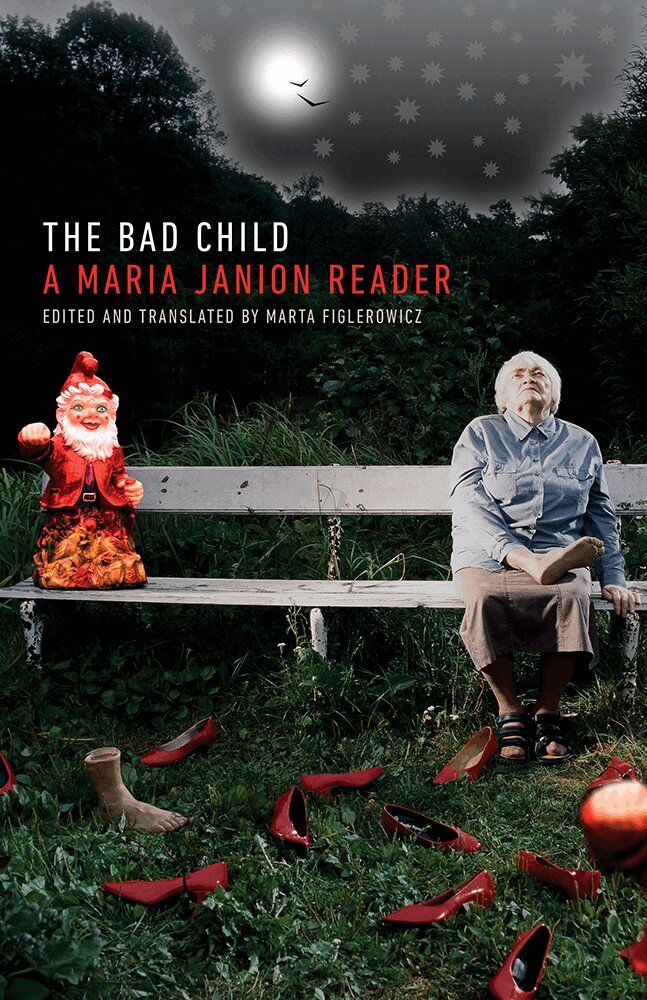
Collected writings from a visionary thinker about the perilous edge between patriotism and fascism How do nationalism and patriotism shape our understanding of identity, and when do they drift into dangerous territory? Marta Figlerowicz gathers a selection of writings from Maria Janion, one of Eastern Europe’s most profound and original intellectuals, to explore this fine line. Between her birth in Vilnius in 1926 and her death in Warsaw in 2020, Janion witnessed some of the most consequential events of the turbulent twentieth century: the rise of authoritarian nationalism in Poland, German occupation during World War II, Soviet control, and Poland’s uneasy integration into the West. As Western countries face their own nationalist resurgences, Janion’s writing holds tools to help move through this historical condition. The Bad Child offers sharp insights into how societies develop and assert their identities and histories-often at the cost of the people. Janion’s reflections on fascism, popular culture, and national self-fashioning presciently name and critique regional dynamics that have most recently resulted in the war between Russia and Ukraine, and they broadly expose the illusions that cultures can promote and the dangerous slide from national pride to exclusionary right-wing politics. A queer woman and survivor of World War II, a leftist who resisted Soviet orthodoxy, Janion lends a uniquely disruptive voice to contemporary discussions of fascism, and her insights resonate far beyond her Eastern European roots. Retail e-book files for this title are screen-reader friendly with images accompanied by short alt text and/or extended descriptions.
298 kr
Skickas inom 7-10 vardagar
Collected writings from a visionary thinker about the perilous edge between patriotism and fascism How do nationalism and patriotism shape our understanding of identity, and when do they drift into dangerous territory? Marta Figlerowicz gathers a selection of writings from Maria Janion, one of Eastern Europe’s most profound and original intellectuals, to explore this fine line. Between her birth in Vilnius in 1926 and her death in Warsaw in 2020, Janion witnessed some of the most consequential events of the turbulent twentieth century: the rise of authoritarian nationalism in Poland, German occupation during World War II, Soviet control, and Poland’s uneasy integration into the West. As Western countries face their own nationalist resurgences, Janion’s writing holds tools to help move through this historical condition. The Bad Child offers sharp insights into how societies develop and assert their identities and histories-often at the cost of the people. Janion’s reflections on fascism, popular culture, and national self-fashioning presciently name and critique regional dynamics that have most recently resulted in the war between Russia and Ukraine, and they broadly expose the illusions that cultures can promote and the dangerous slide from national pride to exclusionary right-wing politics. A queer woman and survivor of World War II, a leftist who resisted Soviet orthodoxy, Janion lends a uniquely disruptive voice to contemporary discussions of fascism, and her insights resonate far beyond her Eastern European roots. Retail e-book files for this title are screen-reader friendly with images accompanied by short alt text and/or extended descriptions.
Positionen Polnischer Literaturwissenschaft Der Gegenwart
Methodenfragen Der Literaturgeschichtsschreibung
Inbunden, Tyska, 1977
1 749 kr
Skickas inom 7-10 vardagar
Del 3 - Cross-Roads
Hero, Conspiracy, and Death: The Jewish Lectures
Translated by Alex Shannon
Inbunden, Engelska, 2014
719 kr
Skickas inom 5-8 vardagar
With Hero, Conspiracy and Death: The Jewish Lectures, the author has written a book of sweeping significance for readers interested in Polish history, Jewish history, and the Holocaust in which she asks troubling questions: Can a Jew be both a Jew and a Pole? Are we right to talk of «worthy» and «unworthy» death in the Holocaust? What are the implications of Adam Mickiewicz’s philo-Semitism? In Zygmunt Krasiński’s anti-Semitism, do we see the «specter of elimination»? Are humanist and enlightenment values useful in analyzing the Holocaust, or did the experience of Nazi genocide render them obsolete? Tracing the history of anti-Jewish stereotypes in early nineteenth-century Poland (and beyond), the author offers answers to these questions that are bold, clear and compassionate.
144 kr
Skickas