Maria Van Der Schaar - Böcker
Visar alla böcker från författaren Maria Van Der Schaar. Handla med fri frakt och snabb leverans.
5 produkter
5 produkter
534 kr
Skickas inom 10-15 vardagar
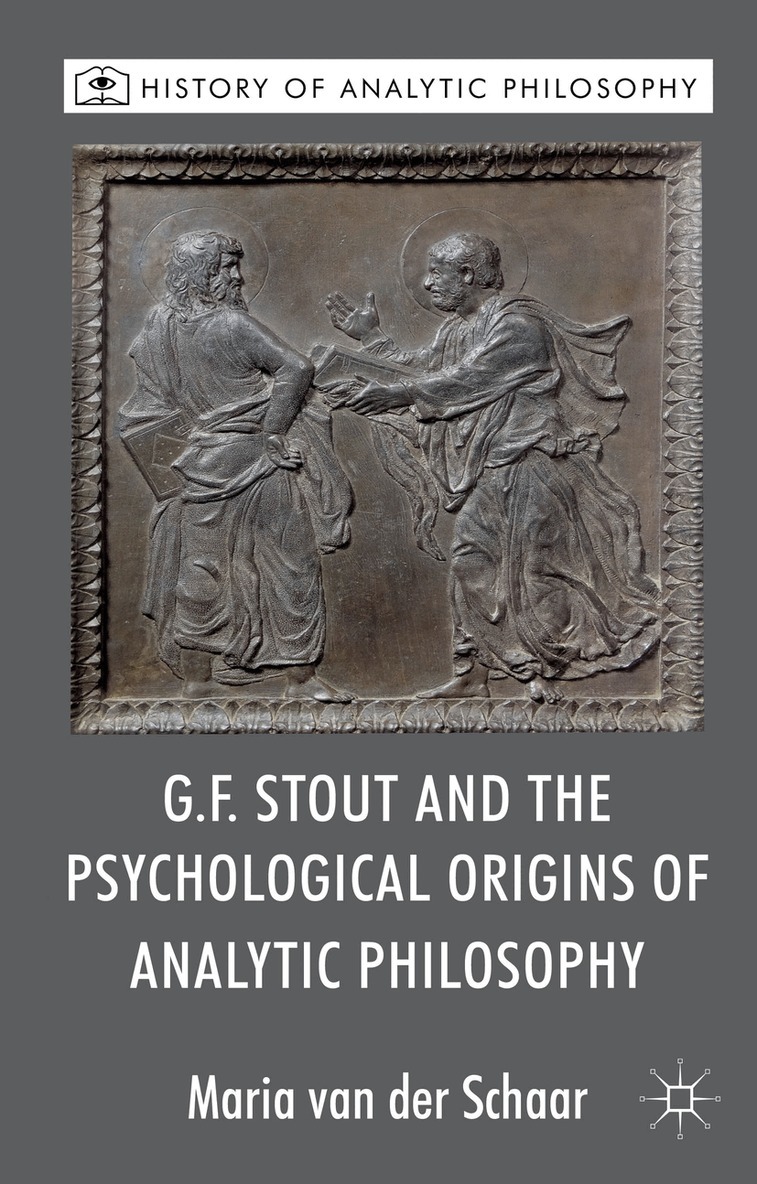
An investigatation of the influence of psychology and early phenomenology on the origins of analytic philosophy. This book is also of value for those interested in judgement, proposition, psychologism, logical realism, the problem of error, Gestalt theories, and tropes.
534 kr
Skickas inom 10-15 vardagar
An investigatation of the influence of psychology and early phenomenology on the origins of analytic philosophy. This book is also of value for those interested in judgement, proposition, psychologism, logical realism, the problem of error, Gestalt theories, and tropes.
Del 103 - Polish Analytical Philosophy
Kazimierz Twardowski: A Grammar for Philosophy
Inbunden, Engelska, 2015
1 558 kr
Skickas inom 5-8 vardagar
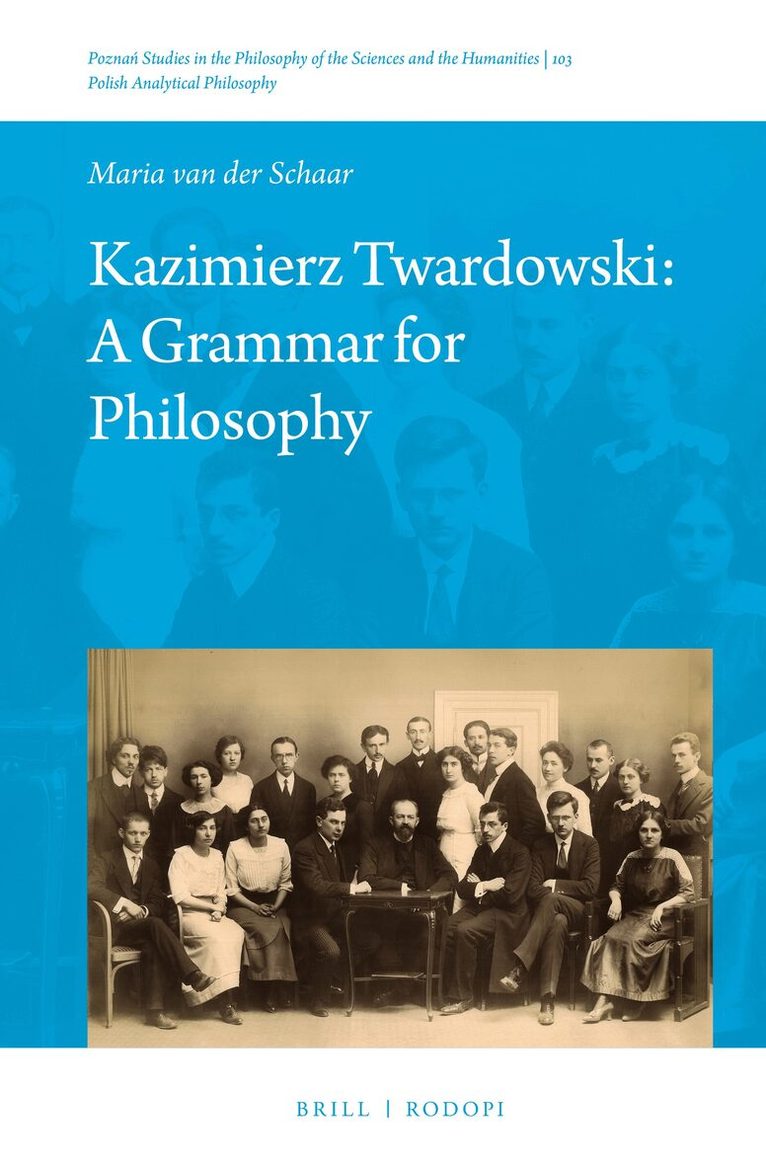
Kazimierz Twardowski (1866-1938) is the founder of the Lvov-Warsaw School with its strong tradition in logic and its scientific approach to philosophy. Twardowski’s unique way of doing philosophy, his method, is of central importance for understanding his impact as a teacher. This method can be understood as a philosophical grammar, which is also how Leibniz conceived his universal language of thought.Analytic philosophy in the twentieth century can be characterized by its opposition to psychologism, on the one hand, and its opposition to metaphysics, on the other. This is changing now, as questions within the philosophy of mind and metaphysics are raised by analytic philosophers today.Maria van der Schaar shows in her book that we can improve our analytic methods by making use of Twardowski’s philosophical grammar. Twardowski’s positive attitude to psychology and metaphysics may also help us to develop an analytic metaphysics and to get a better understanding of the relation between psychology and philosophy.
Del 31 - Logic, Epistemology, and the Unity of Science
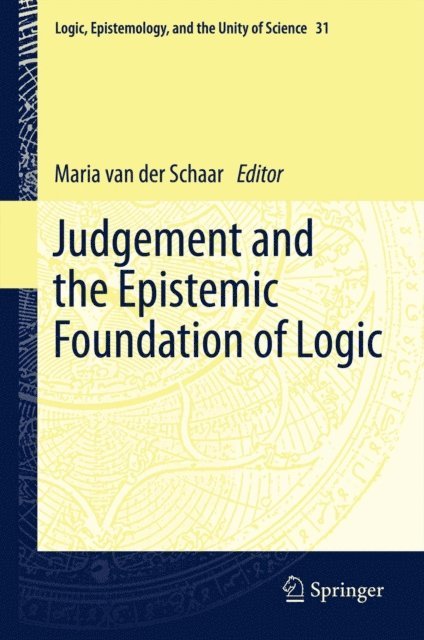
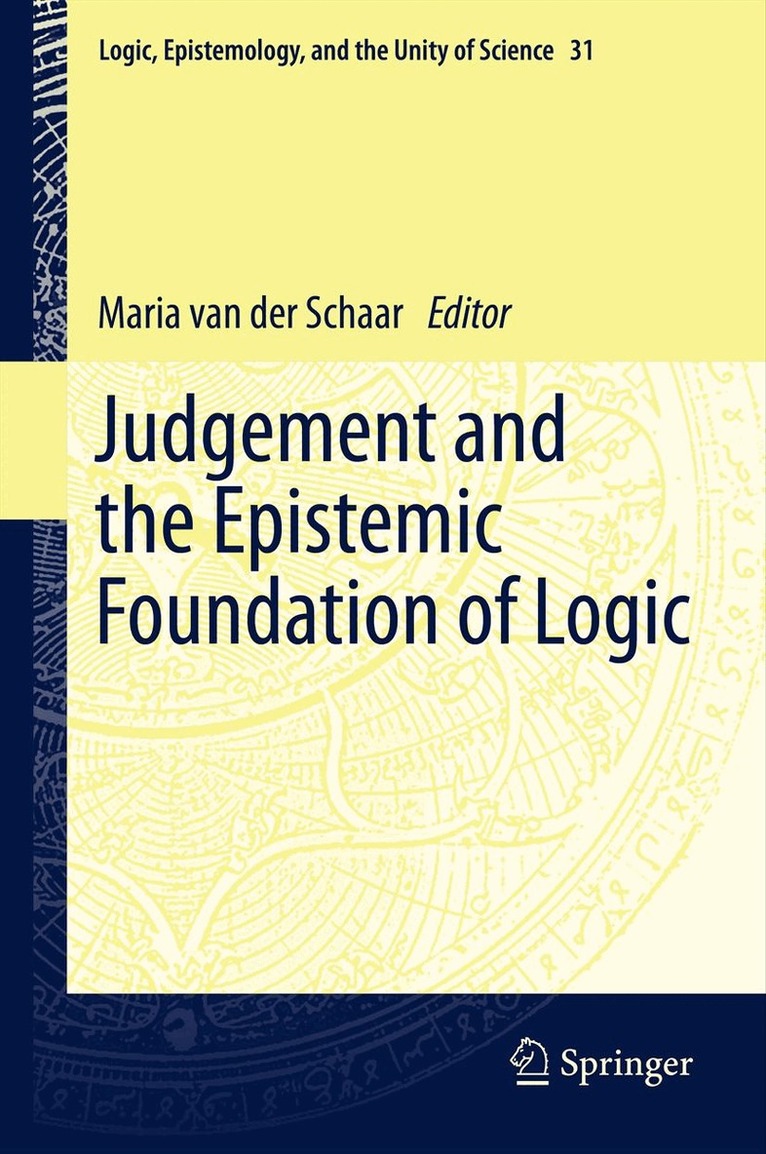
Judgement and the Epistemic Foundation of Logic
Inbunden, Engelska, 2012
1 062 kr
Skickas inom 10-15 vardagar
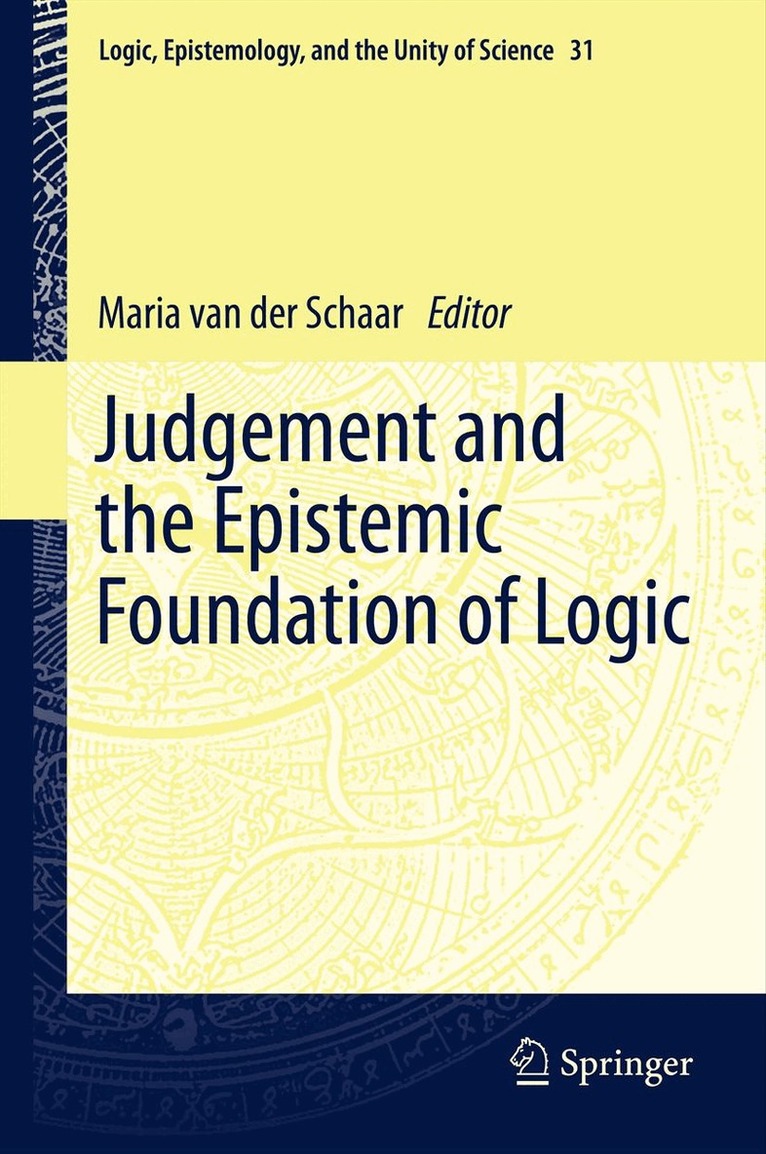
This compelling reevaluation of the relationship between logic and knowledge affirms the key role that the notion of judgement must play in such a review. The commentary repatriates the concept of judgement in the discussion, banished in recent times by the logical positivism of Wittgenstein, Hilbert and Schlick, and the Platonism of Bolzano. The volume commences with the insights of Swedish philosopher Per Martin-Löf, the father of constructive type theory, for whom logic is a demonstrative science in which judgement is a settled feature of the landscape. His paper opens the first of four sections that examine, in turn, historical philosophical assessments of judgement and reason; their place in early modern philosophy; the notion of judgement and logical theory in Wolff, Kant and Neo-Kantians like Windelband; their development in the Husserlian phenomenological paradigm; and the work of Bolzano, Russell and Frege. The papers, whose authors include Per Martin-Löf, Göran Sundholm, Michael Della Rocca and Robin Rollinger, represent a finely judged editorial selection highlighting work on philosophers exercised by the question of whether or not an epistemic notion of judgement has a role to play in logic. The volume will be of profound interest to students and academicians for its application of historical developments in philosophy to the solution of vexatious contemporary issues in the foundation of logic.
Del 31 - Logic, Epistemology, and the Unity of Science
Judgement and the Epistemic Foundation of Logic
Häftad, Engelska, 2014
1 062 kr
Skickas inom 10-15 vardagar
This compelling reevaluation of the relationship between logic and knowledge affirms the key role that the notion of judgement must play in such a review. The commentary repatriates the concept of judgement in the discussion, banished in recent times by the logical positivism of Wittgenstein, Hilbert and Schlick, and the Platonism of Bolzano. The volume commences with the insights of Swedish philosopher Per Martin-Löf, the father of constructive type theory, for whom logic is a demonstrative science in which judgement is a settled feature of the landscape. His paper opens the first of four sections that examine, in turn, historical philosophical assessments of judgement and reason; their place in early modern philosophy; the notion of judgement and logical theory in Wolff, Kant and Neo-Kantians like Windelband; their development in the Husserlian phenomenological paradigm; and the work of Bolzano, Russell and Frege. The papers, whose authors include Per Martin-Löf, Göran Sundholm, Michael Della Rocca and Robin Rollinger, represent a finely judged editorial selection highlighting work on philosophers exercised by the question of whether or not an epistemic notion of judgement has a role to play in logic. The volume will be of profound interest to students and academicians for its application of historical developments in philosophy to the solution of vexatious contemporary issues in the foundation of logic.