Marian Duggan - Böcker
Visar alla böcker från författaren Marian Duggan. Handla med fri frakt och snabb leverans.
5 produkter
5 produkter
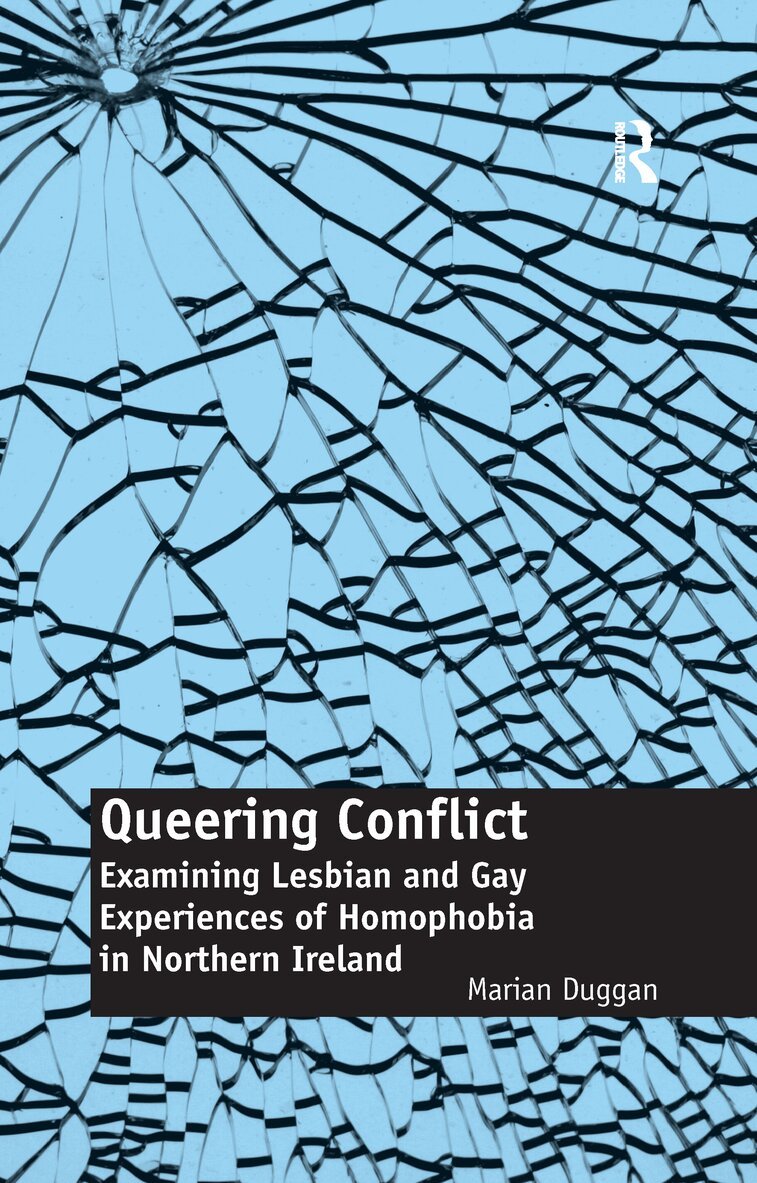
Queering Conflict
Examining Lesbian and Gay Experiences of Homophobia in Northern Ireland
Häftad, Engelska, 2017
671 kr
Skickas inom 10-15 vardagar
Queering Conflict offers a unique culturally specific analysis into the ways in which homophobia in Northern Ireland has been informed and sustained during the latter half of the twentieth century. This book takes the failure of the British Government to extend the 1967 Sexual Offences Act to Northern Ireland as its central point to demonstrate the subtle, but important, differences governing attitudes towards homosexuality in Northern Ireland. Both homophobia and hate crimes are shown to be situated within the framework of Northern Ireland's socio-political history as well as part of an overall culture of violence which existed as a result of 'the Troubles'. Duggan shows how the influence of moral and religious conservatism born out of sectarian divisions led to homophobia becoming an integral part of community cohesion and identity formation. Decades of political instability led to the marginalization of rights for lesbians and gay men, but the peace process has led to the development of a discourse of equality which is slowly allowing sexual minorities to situate themselves within the new Northern Ireland.
Queering Conflict
Examining Lesbian and Gay Experiences of Homophobia in Northern Ireland
Inbunden, Engelska, 2012
2 155 kr
Skickas inom 10-15 vardagar
Queering Conflict offers a unique culturally specific analysis into the ways in which homophobia in Northern Ireland has been informed and sustained during the latter half of the twentieth century. This book takes the failure of the British Government to extend the 1967 Sexual Offences Act to Northern Ireland as its central point to demonstrate the subtle, but important, differences governing attitudes towards homosexuality in Northern Ireland. Both homophobia and hate crimes are shown to be situated within the framework of Northern Ireland's socio-political history as well as part of an overall culture of violence which existed as a result of 'the Troubles'. Duggan shows how the influence of moral and religious conservatism born out of sectarian divisions led to homophobia becoming an integral part of community cohesion and identity formation. Decades of political instability led to the marginalization of rights for lesbians and gay men, but the peace process has led to the development of a discourse of equality which is slowly allowing sexual minorities to situate themselves within the new Northern Ireland.
1 374 kr
Skickas inom 5-8 vardagar
The way we think about crime and the way that society responds to it are imbued with values that can determine what is considered important and what gets attention. Sometimes values that are claimed may not be the values expressed in practice, as we see in the multiple and confusing discourses about victims and offenders, punishment and protection, rights and responsibilities. This collection of writings considers values in crime theory, criminal justice and research practice, uncovering the many different 'sides' – to echo Howard Becker's famous phrase – that criminologists, policy makers and researchers take. It spans Marxist, postmodernist and feminist perspectives on criminology, analyses of the dynamics of race, gender and age, research methods and ethics, the working of the criminal justice system and engages with current debates about new challenges for criminology, such as the green movement and Islamophobia.This is a timely and thought-provoking collection which will be of interest to academics and students in criminology and criminal justice, and on professional courses, such as probation and youth justice practice.
480 kr
Skickas inom 7-10 vardagar
The way we think about crime and the way that society responds to it are imbued with values that can determine what is considered important and what gets attention. Sometimes values that are claimed may not be the values expressed in practice, as we see in the multiple and confusing discourses about victims and offenders, punishment and protection, rights and responsibilities. This collection of writings considers values in crime theory, criminal justice and research practice, uncovering the many different 'sides' – to echo Howard Becker's famous phrase – that criminologists, policy makers and researchers take. It spans Marxist, postmodernist and feminist perspectives on criminology, analyses of the dynamics of race, gender and age, research methods and ethics, the working of the criminal justice system and engages with current debates about new challenges for criminology, such as the green movement and Islamophobia.This is a timely and thought-provoking collection which will be of interest to academics and students in criminology and criminal justice, and on professional courses, such as probation and youth justice practice.
1 177 kr
Skickas inom 5-8 vardagar
Nils Christie’s (1986) seminal work on the ‘Ideal Victim’ is reproduced in full in this edited collection of vibrant and provocative essays that respond to and update the concept from a range of thematic positions.Each chapter celebrates and commemorates his work by analysing, evaluating and critiquing the current nature and impact of victim identity, experience, policy and practice. The collection expands the focus and remit of ‘victim studies’, addressing key themes around race, gender, faith, ability and age while encompassing new and diverse issues. Examples include sex workers as victims of hate crimes, victims’ experiences of online fraud, and recognising historic child sexual abuse victims in Ireland.With contributions from an array of academics including Vicky Heap (Sheffield Hallam University), Hannah Mason-Bish (University of Sussex) and Pamela Davies (Northumbria University), as well as a Foreword by David Scott (The Open University), this book evaluates the contemporary relevance and applicability of Christie’s ‘Ideal Victim’ concept and creates an important platform for thinking differently about victimhood in the 21st century.