Mariana Ortega - Böcker
Visar alla böcker från författaren Mariana Ortega. Handla med fri frakt och snabb leverans.
10 produkter
10 produkter
Theories of the Flesh
Latinx and Latin American Feminisms, Transformation, and Resistance
Inbunden, Engelska, 2020
1 396 kr
Skickas inom 7-10 vardagar
"A theory in the flesh means one where the physical realities of our lives all fuse to create a politic born of necessity," writes activist Cherríe L. Moraga. This volume of new essays stages an intergenerational dialogue among philosophers to introduce and deepen engagement with U.S Latinx and Latin American feminist philosophy, and to explore their "theories in the flesh." It explores specific intellectual contributions in various topics in U.S. Latinx and Latin American feminisms that stand alone and are unique and valuable; analyzes critical contributions that U.S. Latinx and Latin American interventions have made in feminist thought more generally over the last several decades; and shows the intellectual and transformative value of reading U.S Latinx and Latin American feminist theorizing.The collection features a series of essays analyzing decolonial approaches within U. S. Latinx and Latin American feminist philosophy, including studies of the functions of gender within feminist theory, everyday modes of resistance, and methodological questions regarding the scope and breadth of decolonization as a critical praxis. Additionally, essays examine theoretical contributions to feminist discussions of selfhood, narrativity, and genealogy, as well as novel epistemic and hermeneutical approaches within the field. A number of contributors in the book address themes of aesthetics and embodiment, including issues of visual representation, queer desire, and disability within U. S. Latinx and Latin American feminisms. Together, the essays in this volume are groundbreaking and powerful contributions in the fields of U.S Latinx and Latin American feminist philosophy.
Theories of the Flesh
Latinx and Latin American Feminisms, Transformation, and Resistance
Häftad, Engelska, 2020
415 kr
Skickas inom 5-8 vardagar
"A theory in the flesh means one where the physical realities of our lives all fuse to create a politic born of necessity," writes activist Cherríe L. Moraga. This volume of new essays stages an intergenerational dialogue among philosophers to introduce and deepen engagement with U.S Latinx and Latin American feminist philosophy, and to explore their "theories in the flesh." It explores specific intellectual contributions in various topics in U.S. Latinx and Latin American feminisms that stand alone and are unique and valuable; analyzes critical contributions that U.S. Latinx and Latin American interventions have made in feminist thought more generally over the last several decades; and shows the intellectual and transformative value of reading U.S Latinx and Latin American feminist theorizing.The collection features a series of essays analyzing decolonial approaches within U. S. Latinx and Latin American feminist philosophy, including studies of the functions of gender within feminist theory, everyday modes of resistance, and methodological questions regarding the scope and breadth of decolonization as a critical praxis. Additionally, essays examine theoretical contributions to feminist discussions of selfhood, narrativity, and genealogy, as well as novel epistemic and hermeneutical approaches within the field. A number of contributors in the book address themes of aesthetics and embodiment, including issues of visual representation, queer desire, and disability within U. S. Latinx and Latin American feminisms. Together, the essays in this volume are groundbreaking and powerful contributions in the fields of U.S Latinx and Latin American feminist philosophy.
1 091 kr
Kommande
Art practices reveal the entwinement of perception and understanding, opening possibilities for new ways of enacting the political. An artwork can serve as more than solely an aesthetic object: in the public sphere it beckons us to resist, challenge, and change the world around us. Wide-ranging in scope and application, Life in Art showcases how, at the intersection of art and phenomenology, sociopolitical issues can be examined anew. Thirteen diverse, international, established and emerging academics and artists reveal how art opens possibilities for breaking colonial logics, resisting injustice, and addressing climate catastrophe. Through their multilayered and multidisciplinary phenomenological analyses, these original essays reveal how a variety of artworks from diverse fields – dance, sculpture, performance, photography, literature, architecture, film, and virtual reality – can engage perception in ways that transform the self and the world. Some essays focus on specific artworks; others consider theoretical questions that frame the intersection of aesthetics and phenomenology; and still more expand on the ways art can lead to political and social action.Offering a multiplicity of diverse views on the intersections between phenomenology and aesthetics, Life in Art highlights how this entanglement fosters our desires to mend, repair, and make new worlds.
485 kr
Kommande
Art practices reveal the entwinement of perception and understanding, opening possibilities for new ways of enacting the political. An artwork can serve as more than solely an aesthetic object: in the public sphere it beckons us to resist, challenge, and change the world around us. Wide-ranging in scope and application, Life in Art showcases how, at the intersection of art and phenomenology, sociopolitical issues can be examined anew. Thirteen diverse, international, established and emerging academics and artists reveal how art opens possibilities for breaking colonial logics, resisting injustice, and addressing climate catastrophe. Through their multilayered and multidisciplinary phenomenological analyses, these original essays reveal how a variety of artworks from diverse fields – dance, sculpture, performance, photography, literature, architecture, film, and virtual reality – can engage perception in ways that transform the self and the world. Some essays focus on specific artworks; others consider theoretical questions that frame the intersection of aesthetics and phenomenology; and still more expand on the ways art can lead to political and social action.Offering a multiplicity of diverse views on the intersections between phenomenology and aesthetics, Life in Art highlights how this entanglement fosters our desires to mend, repair, and make new worlds.
1 057 kr
Tillfälligt slut
Philosophers and social theorists of color examine how racism can creep into defensive forms of nationalism."What does it mean today to be an 'American' when one does not represent or embody the norm of 'Americanness' because of one's race, ethnicity, culture of origin, religion, or some combination of these? What is the norm of 'Americanness' today, how has it changed, and how pluralistic is it in reality?" - from the IntroductionIn this volume philosophers and social theorists of color take up these questions, offering nuanced critiques of race and nationalism in the post-9/11 United States focused around the themes of freedom, unity, and homeland. In particular, the contributors examine how normative concepts of American identity and unity come to be defined and defended along increasingly racialized lines in the face of national trauma, and how nonnormative Americans experience the mistrust that their identities and backgrounds engender in this way. The volume takes an important step in recognizing and challenging the unreflective notions of nationalism that emerge in times of crisis.
382 kr
Tillfälligt slut
Philosophers and social theorists of color examine how racism can creep into defensive forms of nationalism."What does it mean today to be an 'American' when one does not represent or embody the norm of 'Americanness' because of one's race, ethnicity, culture of origin, religion, or some combination of these? What is the norm of 'Americanness' today, how has it changed, and how pluralistic is it in reality?" - from the IntroductionIn this volume philosophers and social theorists of color take up these questions, offering nuanced critiques of race and nationalism in the post-9/11 United States focused around the themes of freedom, unity, and homeland. In particular, the contributors examine how normative concepts of American identity and unity come to be defined and defended along increasingly racialized lines in the face of national trauma, and how nonnormative Americans experience the mistrust that their identities and backgrounds engender in this way. The volume takes an important step in recognizing and challenging the unreflective notions of nationalism that emerge in times of crisis.
566 kr
Skickas inom 3-6 vardagar
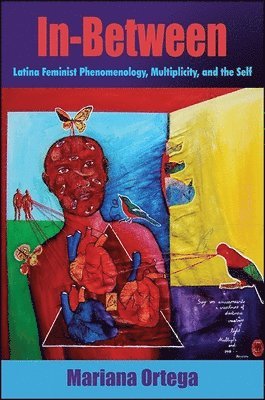
Draws from Latina feminism, existential phenomenology, and race theory to explore the concept of selfhood.This original study intertwining Latina feminism, existential phenomenology, and race theory offers a new philosophical approach to understanding selfhood and identity. Focusing on writings by Gloría Anzaldúa, María Lugones, and Linda Martín Alcoff, Mariana Ortega articulates a phenomenology that introduces a conception of selfhood as both multiple and singular. Her Latina feminist phenomenological approach can account for identities belonging simultaneously to different worlds, including immigrants, exiles, and inhabitants of borderlands. Ortega's project forges new directions not only in Latina feminist thinking on such issues as borders, mestizaje, marginality, resistance, and identity politics, but also connects this analysis to the existential phenomenology of Martin Heidegger and to such concepts as being-in-the-world, authenticity, and intersubjectivity. The pairing of the personal and the political in Ortega's work is illustrative of the primacy of lived experience in the development of theoretical understandings of who we are. In addition to bringing to light central metaphysical issues regarding the temporality and continuity of the self, Ortega models a practice of philosophy that draws from work in other disciplines and that recognizes the important contributions of Latina feminists and other theorists of color to philosophical pursuits.
1 057 kr
Tillfälligt slut
Draws from Latina feminism, existential phenomenology, and race theory to explore the concept of selfhood.This original study intertwining Latina feminism, existential phenomenology, and race theory offers a new philosophical approach to understanding selfhood and identity. Focusing on writings by Gloría Anzaldúa, María Lugones, and Linda Martín Alcoff, Mariana Ortega articulates a phenomenology that introduces a conception of selfhood as both multiple and singular. Her Latina feminist phenomenological approach can account for identities belonging simultaneously to different worlds, including immigrants, exiles, and inhabitants of borderlands. Ortega's project forges new directions not only in Latina feminist thinking on such issues as borders, mestizaje, marginality, resistance, and identity politics, but also connects this analysis to the existential phenomenology of Martin Heidegger and to such concepts as being-in-the-world, authenticity, and intersubjectivity. The pairing of the personal and the political in Ortega's work is illustrative of the primacy of lived experience in the development of theoretical understandings of who we are. In addition to bringing to light central metaphysical issues regarding the temporality and continuity of the self, Ortega models a practice of philosophy that draws from work in other disciplines and that recognizes the important contributions of Latina feminists and other theorists of color to philosophical pursuits.
1 725 kr
Skickas inom 3-6 vardagar
In Carnalities, Mariana Ortega presents a phenomenological study of aesthetics grounded in the work of primarily Latinx artists. She introduces the idea of carnal aesthetics informed by carnalities, creative practices shaped by the self’s affective attunement to the material, cultural, historical, communal, and spiritual. For Ortega, carnal aesthetics offers a way to think about the affective and bodily experiences of racialized selves. Drawing on Gloria AnzaldÚa, Chela Sandoval, JosÉ Esteban MuÑoz, Alia Al-Saji, Helen Ngo, Maurice Merleau-Ponty, Roland Barthes, and others, Ortega examines photographic works on Latinx subjects. She analyzes the photography of Laura Aguilar, VerÓnica Gabriela CÁrdenas, and Susan Meiselas, among others, theorizing photography as a carnal, affective medium that is crucial for processes of self-formation, resistance, and mourning in Latinx life. She ends with an intimate reading of photography through a reflection of her own crossing from Nicaragua to the United States in 1979. Motivated by her experience of loss and exile, Ortega argues for the importance of carnal aesthetics in destabilizing and transforming normative, colonial, and decolonial subjects, imaginaries, and structures.
359 kr
Skickas
In Carnalities, Mariana Ortega presents a phenomenological study of aesthetics grounded in the work of primarily Latinx artists. She introduces the idea of carnal aesthetics informed by carnalities, creative practices shaped by the self’s affective attunement to the material, cultural, historical, communal, and spiritual. For Ortega, carnal aesthetics offers a way to think about the affective and bodily experiences of racialized selves. Drawing on Gloria AnzaldÚa, Chela Sandoval, JosÉ Esteban MuÑoz, Alia Al-Saji, Helen Ngo, Maurice Merleau-Ponty, Roland Barthes, and others, Ortega examines photographic works on Latinx subjects. She analyzes the photography of Laura Aguilar, VerÓnica Gabriela CÁrdenas, and Susan Meiselas, among others, theorizing photography as a carnal, affective medium that is crucial for processes of self-formation, resistance, and mourning in Latinx life. She ends with an intimate reading of photography through a reflection of her own crossing from Nicaragua to the United States in 1979. Motivated by her experience of loss and exile, Ortega argues for the importance of carnal aesthetics in destabilizing and transforming normative, colonial, and decolonial subjects, imaginaries, and structures.