Marianne Janack - Böcker
Visar alla böcker från författaren Marianne Janack. Handla med fri frakt och snabb leverans.
7 produkter
7 produkter
939 kr
Skickas inom 7-10 vardagar
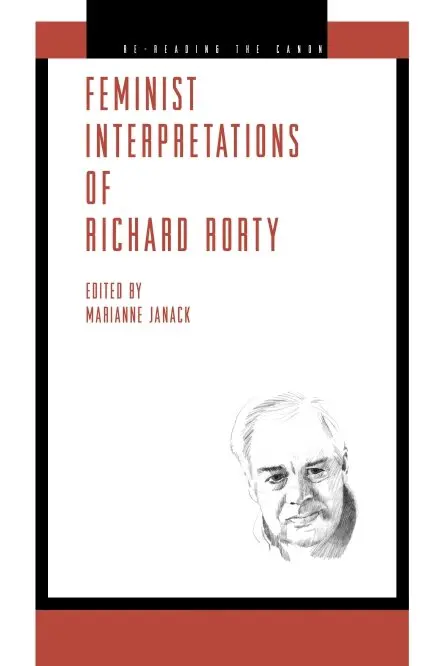
When Richard Rorty died on June 8, 2007, obituaries lionized him as one of the 'world's most influential cultural philosophers', and as a thinker whose work covered a wide and varied terrain of literature, philosophy, politics, aesthetics, and cultural critique. Most famous for his rejection of the analytic tradition, Rorty had a relationship to the philosophical canon, and the discipline of philosophy, that was as fraught and full of tensions as it is for most feminist philosophers. Rorty chose to use his 1990 Tanner Lecture on Human Values (the text of which is the first chapter in this volume) to side with feminists Marilyn Frye, Catherine MacKinnon, and Adrienne Rich, who tried to show the importance of opening up new logical space within which women's voices could be heard. ""Feminist Interpretations of Richard Rorty"" presents classic and new essays on Rorty's engagement with feminist philosophy, including essays about the relevance for feminism of pragmatism, philosophy, rhetoric, realism, and liberalism. The chapters in this volume not only take up Rorty's conversation with feminism; they also capture, in a more distilled form, the debates that were the central concern of feminist theory in the late twentieth century and that continue to demand our responses, perhaps in slightly different forms, in the beginning of the twenty-first. In addition to the editor, the contributors are John C. Adams, Linda Martin Alcoff, Sharyn Clough, Nancy Fraser, Sabina Lovibond, Alessandra Tanesini, Georgia Warnke, and Stephen R. Yarbrough.
676 kr
Skickas inom 5-8 vardagar
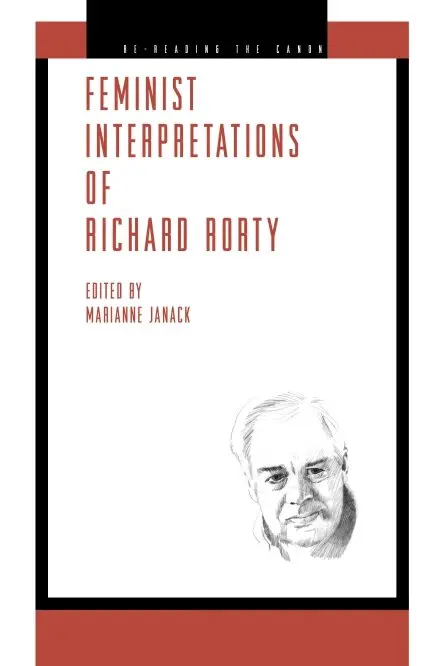
When Richard Rorty died on June 8, 2007, obituaries lionized him as one of the 'world's most influential cultural philosophers', and as a thinker whose work covered a wide and varied terrain of literature, philosophy, politics, aesthetics, and cultural critique. Most famous for his rejection of the analytic tradition, Rorty had a relationship to the philosophical canon, and the discipline of philosophy, that was as fraught and full of tensions as it is for most feminist philosophers. Rorty chose to use his 1990 Tanner Lecture on Human Values (the text of which is the first chapter in this volume) to side with feminists Marilyn Frye, Catherine MacKinnon, and Adrienne Rich, who tried to show the importance of opening up new logical space within which women's voices could be heard. ""Feminist Interpretations of Richard Rorty"" presents classic and new essays on Rorty's engagement with feminist philosophy, including essays about the relevance for feminism of pragmatism, philosophy, rhetoric, realism, and liberalism. The chapters in this volume not only take up Rorty's conversation with feminism; they also capture, in a more distilled form, the debates that were the central concern of feminist theory in the late twentieth century and that continue to demand our responses, perhaps in slightly different forms, in the beginning of the twenty-first. In addition to the editor, the contributors are John C. Adams, Linda Martin Alcoff, Sharyn Clough, Nancy Fraser, Sabina Lovibond, Alessandra Tanesini, Georgia Warnke, and Stephen R. Yarbrough.
1 112 kr
Skickas inom 7-10 vardagar
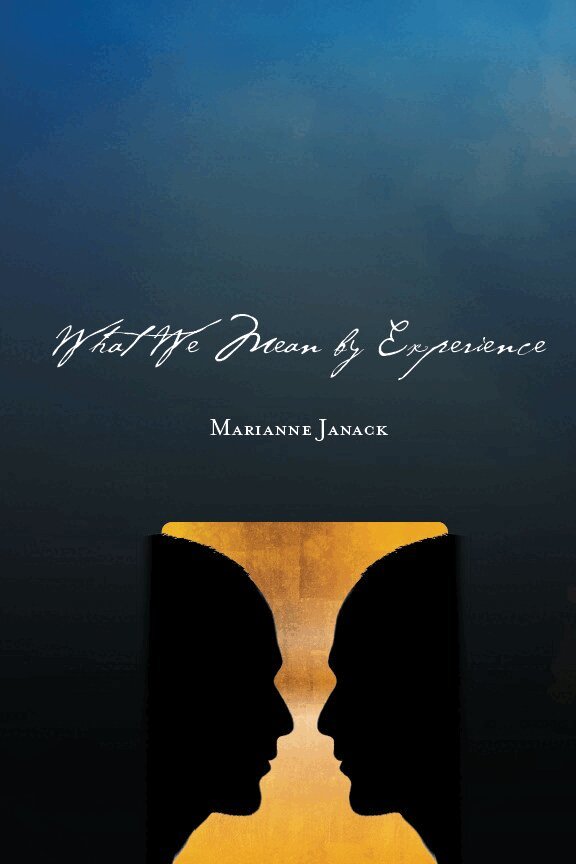
Social scientists and scholars in the humanities all rely on first-person descriptions of experience to understand how subjects construct their worlds. The problem they always face is how to integrate first-person accounts with an impersonal stance. Over the course of the twentieth century, this problem was compounded as the concept of experience itself came under scrutiny. First hailed as a wellspring of knowledge and the weapon that would vanquish metaphysics and Cartesianism by pragmatists like Dewey and James, by the century's end experience had become a mere vestige of both, a holdover from seventeenth-century empiricist metaphysics. This devaluation of experience has left us bereft, unable to account for first-person perspectives and for any kind of agency or intentionality.This book takes on the critique of empiricism and the skepticism with regard to experience that has issued from two seemingly disparate intellectual strains of thought: anti-foundationalist and holistic philosophy of science and epistemology (Kuhn and Rorty, in particular) and feminist critiques of identity politics. Both strains end up marginalizing experience as a viable corrective for theory, and both share notions of human beings and cognition that cause the problem of the relation between experience and our theories to present itself in a particular way. Indeed, they render experience an intractable problem by opening up a gap between a naturalistic understanding of human beings and an understanding of humans as cultural entities, as non-natural makers of meaning. Marianne Janack aims to close this gap, to allow us to be naturalistic and hermeneutic at once. Drawing on cognitive neuroscience, the pragmatist tradition, and ecological psychology, her book rescues experience as natural contact with the world.
270 kr
Skickas inom 7-10 vardagar
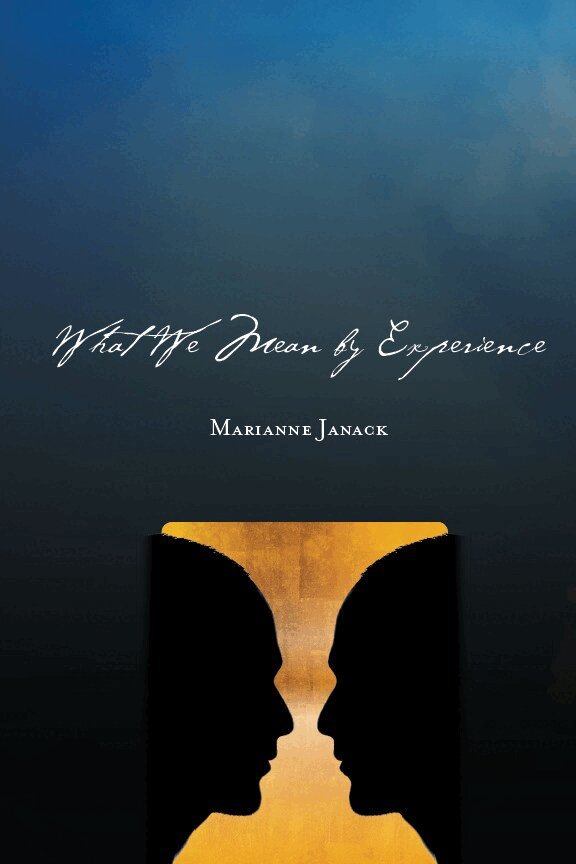
Social scientists and scholars in the humanities all rely on first-person descriptions of experience to understand how subjects construct their worlds. The problem they always face is how to integrate first-person accounts with an impersonal stance. Over the course of the twentieth century, this problem was compounded as the concept of experience itself came under scrutiny. First hailed as a wellspring of knowledge and the weapon that would vanquish metaphysics and Cartesianism by pragmatists like Dewey and James, by the century's end experience had become a mere vestige of both, a holdover from seventeenth-century empiricist metaphysics. This devaluation of experience has left us bereft, unable to account for first-person perspectives and for any kind of agency or intentionality.This book takes on the critique of empiricism and the skepticism with regard to experience that has issued from two seemingly disparate intellectual strains of thought: anti-foundationalist and holistic philosophy of science and epistemology (Kuhn and Rorty, in particular) and feminist critiques of identity politics. Both strains end up marginalizing experience as a viable corrective for theory, and both share notions of human beings and cognition that cause the problem of the relation between experience and our theories to present itself in a particular way. Indeed, they render experience an intractable problem by opening up a gap between a naturalistic understanding of human beings and an understanding of humans as cultural entities, as non-natural makers of meaning. Marianne Janack aims to close this gap, to allow us to be naturalistic and hermeneutic at once. Drawing on cognitive neuroscience, the pragmatist tradition, and ecological psychology, her book rescues experience as natural contact with the world.
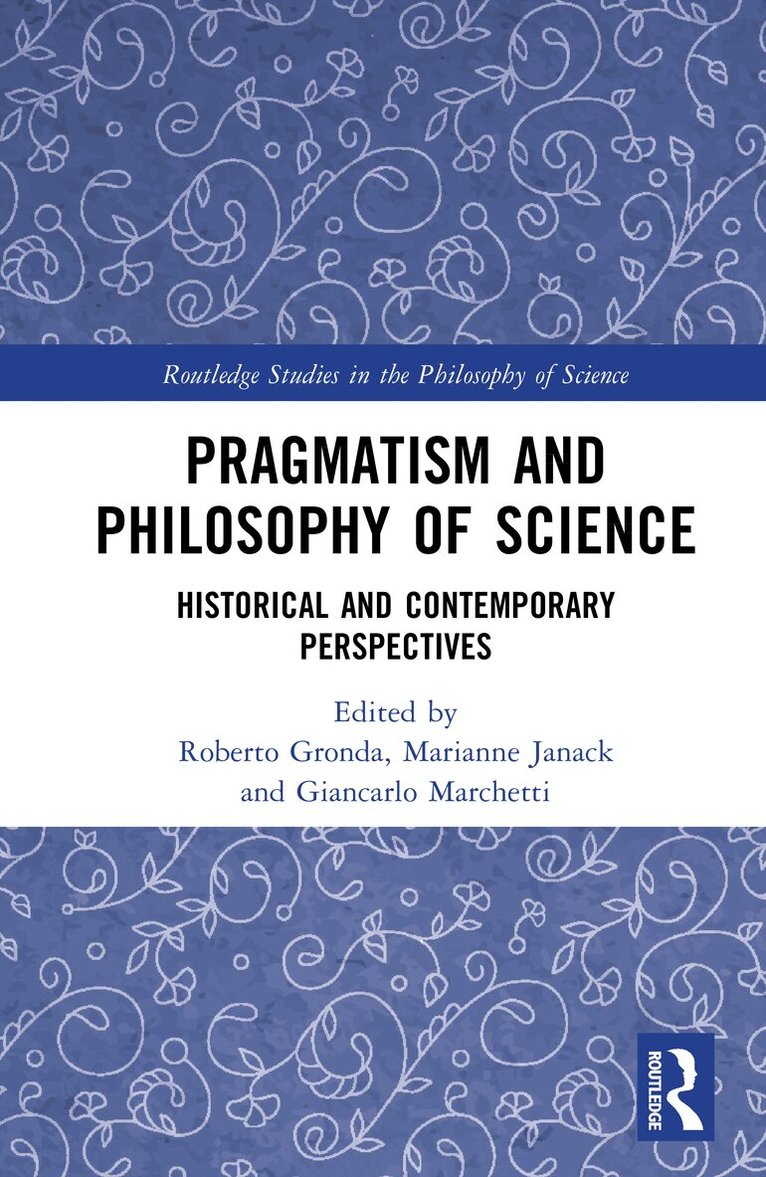
Pragmatism and Philosophy of Science
Historical and Contemporary Perspectives
Inbunden, Engelska, 2025
2 088 kr
Skickas inom 10-15 vardagar
This volume provides a broad and comprehensive overview of the many ways in which pragmatism has influenced contemporary debates in the philosophy of science.Pragmatism has been undergoing a considerable revival in philosophical debates for the last two decades. Philosophers of science are now turning to pragmatism as a source of general insights and technical tools to address some of the thorniest problems of the discipline from a new and fresh perspective. This volume traces how pragmatism—in its classical and contemporary versions—serves as a useful toolbox for philosophers of science. It is divided into three thematic sections. The first section contains essays addressing topics belonging to the general philosophy of science. The second section features chapters that deal with themes and concepts from special sciences, ranging from natural sciences to sociology and from mathematics to religious studies. Finally, the third section analyzes the societal role of science and scientific activity.Pragmatism and Philosophy of Science will appeal to scholars and advanced students working on philosophy of science, pragmatism, and history of philosophy.
299 kr
Skickas inom 5-8 vardagar
489 kr
Skickas inom 5-8 vardagar