Marie A. Kelleher - Böcker
Visar alla böcker från författaren Marie A. Kelleher. Handla med fri frakt och snabb leverans.
3 produkter
3 produkter
780 kr
Skickas inom 10-15 vardagar
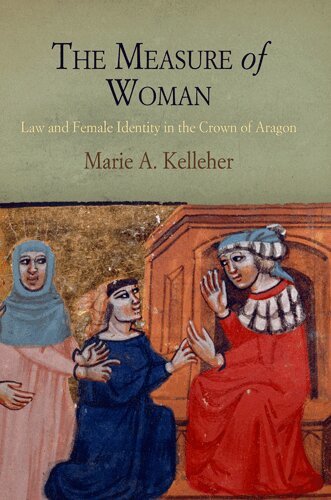
By the end of the Middle Ages, the ius commune-the combination of canon and Roman law-had formed the basis for all law in continental Europe, along with its patriarchal system of categorizing women. Throughout medieval Europe, women regularly found themselves in court, suing or being sued, defending themselves against criminal accusations, or prosecuting others for crimes committed against them or their families. Yet choosing to litigate entailed accepting the conceptual vocabulary of the learned law, thereby reinforcing the very legal and social notions that often subordinated them.In The Measure of Woman Marie A. Kelleher explores the complex relationship between women and legal culture in Spain's Crown of Aragon during the late medieval period. Aragonese courts measured women according to three factors: their status in relation to men, their relative sexual respectability, and their conformity to ideas about the female sex as a whole. Yet in spite of this situation, Kelleher argues, women were able to play a crucial role in shaping their own legal identities while working within the parameters of the written law.The Measure of Woman reveals that women were not passive recipients-or even victims-of the legal system. Rather, medieval women actively used the conceptual vocabulary of the law, engaging with patriarchal legal assumptions as part of their litigation strategies. In the process, they played an important role in the formation of a gendered legal culture that would shape the lives of women throughout Western Europe and beyond for centuries to come.
545 kr
Skickas inom 10-15 vardagar
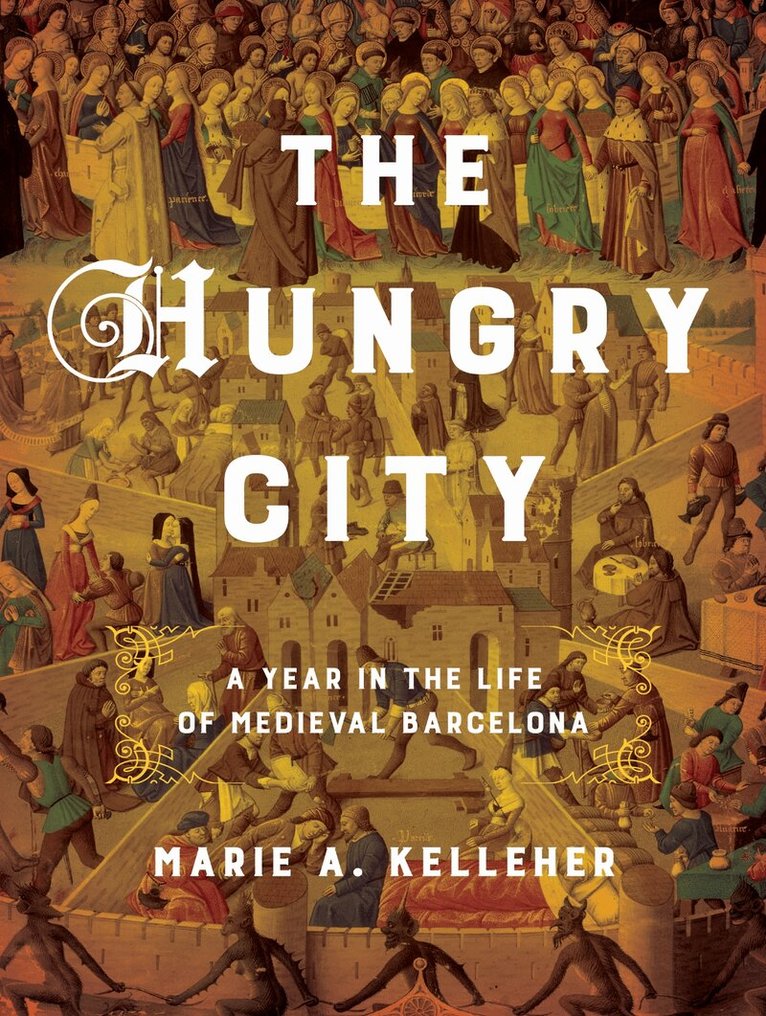
The Hungry City is the story of medieval Barcelona, retold through the lens of food and famine. Between the summer of 1333 and the spring of 1334, severe weather-related grain shortages spread throughout the Mediterranean, and Barcelona's leaders struggled to bring food to the city as its residents grew increasingly desperate. Employing the perspectives of historical actors whose stories are drawn from the records of that catastrophic year, Marie A. Kelleher uses Barcelonans' varied responses to crisis in the food system to present multiple ways of understanding the city—as a physical space, as the center of a network of Mediterranean commerce, as one powerful entity within a broader monarchy, as a site of religious encounter, and as a complex social body. Even as the central figure in each chapter offers their own version of the city, the separate strands of these multiple Barcelonas intertwine to reveal the fabric of the city as a whole.The medieval city was defined by its network of human relationships—between its rulers and ruled; its merchants, artisans, and laborers; its religious and secular authorities; its insider and outsider groups—and by its overlapping local and regional geographies. Barcelona in the fourteenth century was no different, and The Hungry City draws together multiple lives and narrative strands to focus on a single point in time, what one Catalan chronicler referred to as "the first bad year," providing a dynamic new perspective on the history of Barcelona and the medieval Mediterranean.
1 222 kr
Skickas inom 5-8 vardagar