Marie Boas Hall – författare
Visar alla böcker från författaren Marie Boas Hall. Handla med fri frakt och snabb leverans.
7 produkter
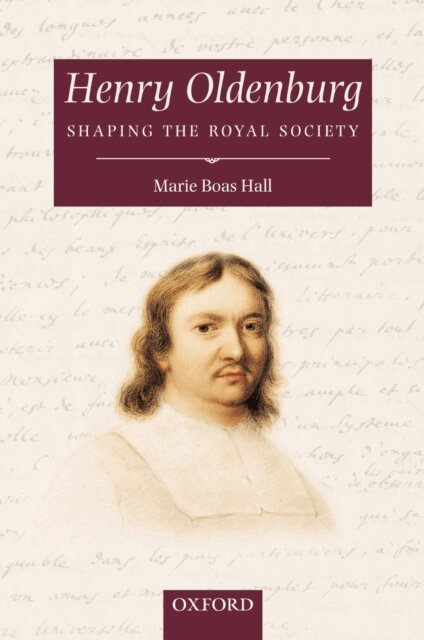
Henry Oldenburg
Shaping the Royal Society
E-bok, 2002
2360 kr
Lägg i varukorg
Henry Oldenburg, born in 1619 in Bremen, Germany, first came to England as a diplomat on a mission to see Oliver Cromwell. He stayed on in England and in 1662 became the Secretary of the Royal Society, and its best known member to the entire learned world of his time. Through his extensive …
Henry Oldenburg
Shaping the Royal Society
Inbunden, 2002
3744 kr
Lägg i varukorg
Henry Oldenburg, born in 1619 in Bremen, Germany, first came to England as a diplomat on a mission to see Oliver Cromwell. He stayed on in England and in 1662 became the Secretary of the Royal Society, and its best known member to the entire learned world of his time. Through his extensive …
Promoting Experimental Learning
Experiment and the Royal Society, 1660-1727
Inbunden, 1991
1308 kr
Lägg i varukorg
In spite of all that has been written in the past decades about the first half-century of the Royal Society's existence, no one has so far examined just what took place at the Society's weekly meetings nor how far they fulfilled the expressed aim of promoting 'experimental learning'. Students of …
All Scientists Now
The Royal Society in the Nineteenth Century
Häftad, 2002
871 kr
Lägg i varukorg
The history of the Royal Society in the nineteenth century is published as a full-length account for the first time in this book. Dr Marie Boas Hall has meticulously explored this fascinating period, using the Royal Society's own records. In 1800 the Royal Society was a leisurely club for …
Promoting Experimental Learning
Experiment and the Royal Society, 1660-1727
Häftad, 2002
601 kr
Lägg i varukorg
In spite of all that has been written in the past decades about the first half-century of the Royal Society's existence, no one has so far examined just what took place at the Society's weekly meetings nor how far they fulfilled the expressed aim of promoting 'experimental learning'. Students of …