Marilynn Desmond - Böcker
Visar alla böcker från författaren Marilynn Desmond. Handla med fri frakt och snabb leverans.
4 produkter
4 produkter
1 033 kr
Skickas inom 10-15 vardagar
Ovid's Art and the Wife of Bath examines how Ovid's Ars amatoria shaped the erotic discourses of the medieval West. The Ars amatoria circulated in medieval France and England as an authoritative treatise on desire; consequently, the sexualities of the medieval West are haunted by the imperial Roman constructions of desire that emerge from Ovid's text. The Ars amatoria ironically proposes the erotic potential of violence, and this aspect of the Ars proved to be enormously influential. Ovid's discourse on erotic violence provides a script for Heloise's epistolary expression of desire for Abelard. The Roman de la Rose extends the directives of the Ars with a rhetorical flourish and poetic excess that tests the limits of Ovidian irony. While Christine de Pizan critiqued the representations of erotic violence in the Rose, Chaucer appropriates the Ovidian discourse from the Roman de la Rose to construct the Wife of Bath—a female figure that today's readers find uncannily familiar. Well written and provocative, this book will interest scholars of premodern literature, especially those who work on Medieval English and French, as well as classical, texts. Marilynn Desmond draws on feminist and queer theory, which places Ovid's Art and the Wife of Bath at the cutting edge of debates in gender and sexuality.
528 kr
Skickas inom 10-15 vardagar
Ovid's Art and the Wife of Bath examines how Ovid's Ars amatoria shaped the erotic discourses of the medieval West. The Ars amatoria circulated in medieval France and England as an authoritative treatise on desire; consequently, the sexualities of the medieval West are haunted by the imperial Roman constructions of desire that emerge from Ovid's text. The Ars amatoria ironically proposes the erotic potential of violence, and this aspect of the Ars proved to be enormously influential. Ovid's discourse on erotic violence provides a script for Heloise's epistolary expression of desire for Abelard. The Roman de la Rose extends the directives of the Ars with a rhetorical flourish and poetic excess that tests the limits of Ovidian irony. While Christine de Pizan critiqued the representations of erotic violence in the Rose, Chaucer appropriates the Ovidian discourse from the Roman de la Rose to construct the Wife of Bath—a female figure that today's readers find uncannily familiar. Well written and provocative, this book will interest scholars of premodern literature, especially those who work on Medieval English and French, as well as classical, texts. Marilynn Desmond draws on feminist and queer theory, which places Ovid's Art and the Wife of Bath at the cutting edge of debates in gender and sexuality.
415 kr
Skickas inom 7-10 vardagar
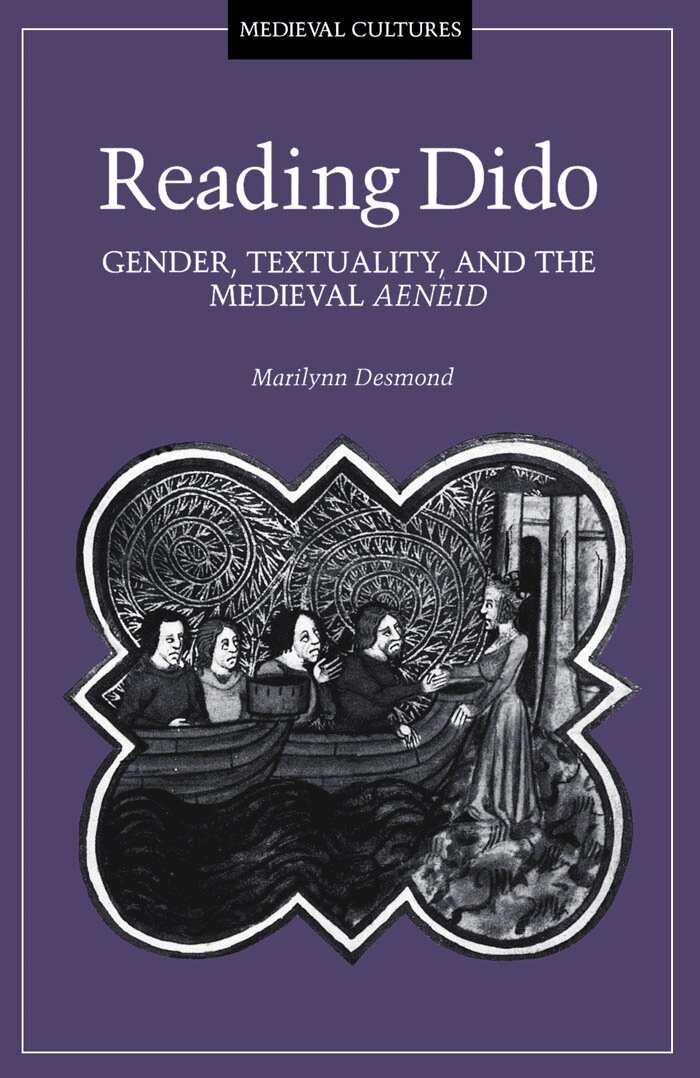
Describes the variations in the figure of Dido as she emerges from ancient literary texts.If we view the Aeneid-the poem of empire, conquest, and male hierarchy-as the West's quintessential canonical text and Latin primer, then the history of Virgil readership should tell us much about the concept of education in the West. In this book, Marilynn Desmond reveals how a constructed and mediated tradition of reading Virgil has conditioned various interpretations among readers responding to medieval cultural and literary texts. In particular, she shows how the story of Dido has been marginalized within canonical readings of the Aeneid. Reaching back to the Middle Ages and vernacular poetic readings of Dido, Desmond recovers an alternative Virgil from historical tradition and provides another paradigm for reading the Aeneid.Desmond follows the figure of Dido as she emerges from ancient historical and literary texts (from Timaeus and Justin to Virgil and Ovid) and circulates in medieval textual cultures. Her study ranges from the pedagogical discourses of Latin textual traditions (including Servius, Augustine, Bernard Silvestris, and John of Salisbury) to the French and English vernacular cultures inscribed in the Roman d'Eneas, the Histoire ancienne jusqu'À CÉsar, and the work of Dante, Chaucer, Gavin Douglas, Caxton, and Christine de Pizan. The positions of all these readers point to the cultural specificity and historical contingency of all traditions of reading; thus, this book demonstrates how medieval traditions of reading Dido offer the modern reader a series of countertraditions that support feminist, antihomophobic, and postcolonial interpretive gestures.
476 kr
Skickas inom 7-10 vardagar
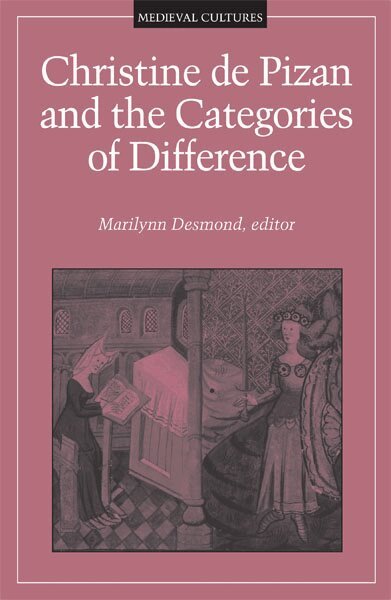
Establishes the place of this medieval writer within considerations of “difference.”Christine de Pizan, an Italian-born writer in French in the early fifteenth century, composed lyric poetry, debate poetry, political biography, and allegory. At times complicit, at times subversive, at times revisionary, her texts constantly negotiate the hierarchical and repressive discourses of late medieval court culture. How they do so is the focus of this volume, which places Christine’s work in the context of larger discussions about medieval authorship, identity, and categories of difference.Contributors from the fields of history, literature, legal theory, art history, and medieval studies offer a truly interdisciplinary perspective on the Christine corpus. Their essays address Christine’s textual interventions into the discourses of warfare and rape, her anxiety about the efficacy of education, and her adoption of a vernacular prose style. The authors situate Christine’s texts within medieval medical discourse, debates between theology and philosophy, the tradition of Ovidian discourse, and the iconography of late medieval manuscript culture. They also explore the ways in which her work was shaped by institutional patronage, by its reception in early print culture, and by later compilation. Establishing Christine de Pizan’s corpus as part of the legacy of critical feminist discourse, this volume ultimately demonstrates the great value of premodern textual cultures for postmodern accounts of difference.Contributors: Michel-AndrÉ Bossy, Brown U; Cynthia J. Brown, U of California,Santa Barbara; Mary Anne C. Case, U of Virginia; Thelma Fenster, Fordham U; Mary Weitzel Gibbons; Monica H. Green, Duke U; Judith L. Kellogg, U of Hawaii, Manoa; Roberta Krueger, Hamilton College; Deborah McGrady, Western Michigan U; Benjamin M. Semple, Yale U; Charity Cannon Willard; Diane Wolfthal, Arizona State U.