Marion Montgomery - Böcker
Visar alla böcker från författaren Marion Montgomery. Handla med fri frakt och snabb leverans.
13 produkter
13 produkter
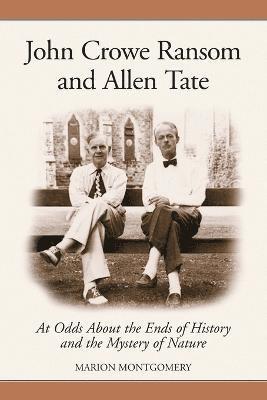
John Crowe Ransom and Allen Tate
At Odds about the Ends of History and the Mystery of Nature
Häftad, Engelska, 2003
533 kr
Skickas inom 5-8 vardagar
The Fugitives were an influential literary group that began at Vanderbilt University in the 1920s. Although the philosophically driven alliance was short-lived, two of its members, John Crowe Ransom and Allen Tate, went on to become influential Southern poets and theorists.In this work, a self-proclaimed third-generation Fugitive-Agrarian concentrates on the history and mystery of nature. The author supports the recovery of fundamental principles required for the economic, social and political health of our communities. He explores Fugitive-Agrarian concepts of nature, history, science, industry, person, family and community. His discussion focuses particular attention on John Crowe Ransom and Allen Tate and how they diverged in their philosophies of intellect and the written word.
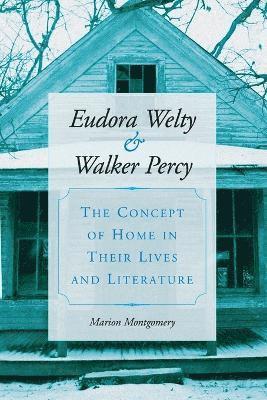
Eudora Welty and Walker Percy
The Concept of Home in Their Lives and Literature
Häftad, Engelska, 2003
533 kr
Skickas inom 5-8 vardagar
Eudora Welty and Walker Percy were friends but very different writers, even though both were from the Deep South and intensely interested in the relation of place to their fiction. This work explores in each the concept of home and the importance of home to the homo viator ("man on his way"), and anti-idealism and anti-romanticism.The differences between Welty and Percy and in their fiction were revealed in the habits of their lives. Welty spent her life in Jackson, Mississippi, and was very much a member of the community. Percy was a wanderer who finally settled in Covington, Louisiana, because it was, as he called it, a "noplace." The author also asserts that Percy somewhat envied Welty and her stability in Jackson, and that for him, place was such a nagging concern that it became a personal problem to him as homo viator.
533 kr
Skickas inom 5-8 vardagar
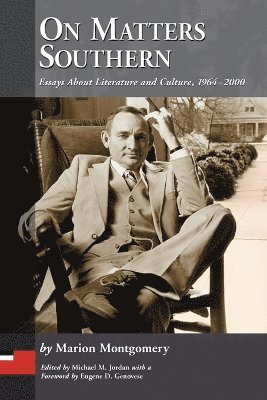
Marion Montgomery, family man, citizen, professor, literary critic, poet, philosopher, is a prolific defender of the poetic, cultural and critical vision of the Fugitive poets, the Southern Agrarian writers, and the New Critics of the 20th century. He has published more than 20 major works of criticism in the past 40 years.This volume presents 16 of his essays, selected and edited by Michael M. Jordan with a foreword by noted historian Eugene D. Genovese. It is a good introduction to the thinking and writing of a man who speaks for southern conservatism with passion and imagination, with head and heart, exercising both faith and reason.This work is divided into five sections--"The Author at Work and at Home," "On Place and Region," "On Fugitives, Agrarians, and New Critics," "On Individual Authors" and "On Books and Schooling." In the essays Montgomery discusses the importance of place in all serious literature, but especially in southern letters. He notes differences between southern and northern fiction. He pays tribute to Andrew Lytle, Madison Jones, and M.E. Bradford, and explicates the fiction of Walker Percy. Taken together, the essays reveal Montgomery's gifts and temperament: a keen intellect combined with a reverential awareness of the importance of tradition.
1 062 kr
Tillfälligt slut
In the spirit of St. Thomas Aquinas, the writings of Flannery O'Connor's concern for place can best be seen in the immediacies of things and persons. It is in relation to St. Thomas' teaching, then, that O'Connor becomes comfortable in her "place," Andalusia, that small farm just outside the small town of Milledgeville in middle Georgia. The abiding relationship between place--Andalusia or elsewhere--and a person comes out of human nature itself, evidenced in a person's experiences of things in this place at this time.With that as background, this detailed analysis of O'Connor's works lays to rest the author's own self-deprecating description of herself as a "hillbilly" Thomist. Instead we see in O'Connor's writing a highly sophisticated mind, an inconvenience to the many critics who dismiss her as anti-intellectual.
436 kr
Skickas inom 5-8 vardagar
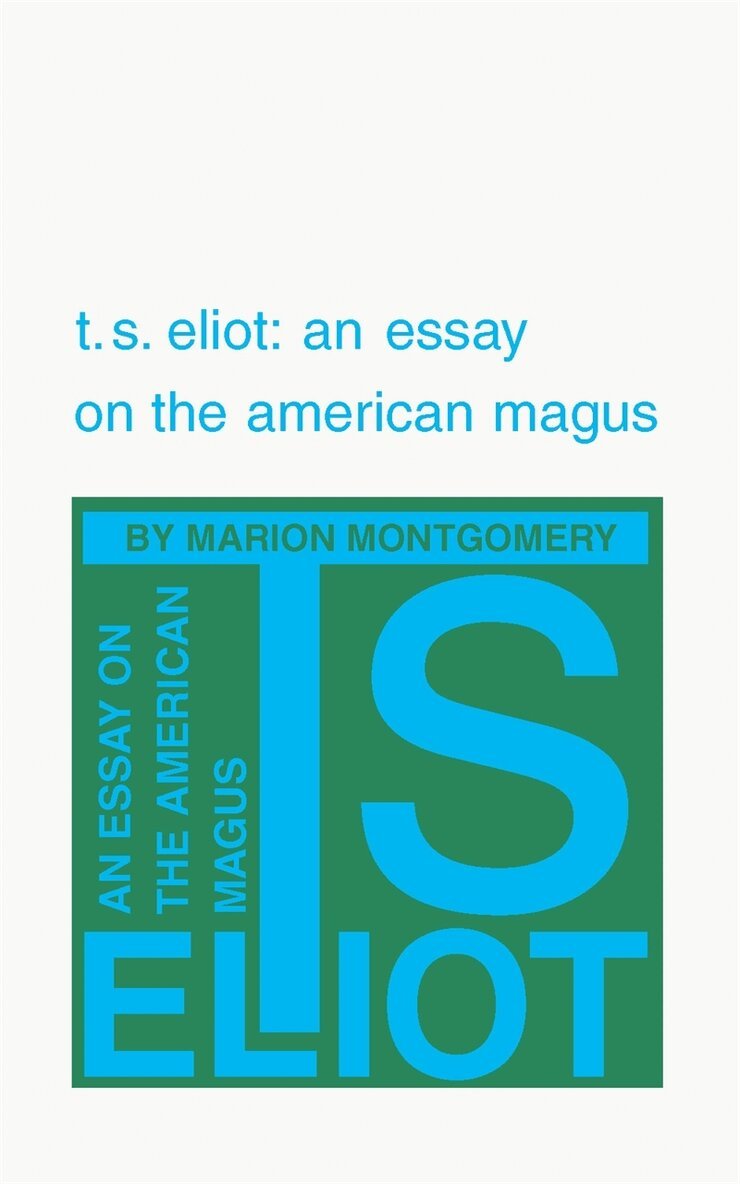
This brilliantly allusive and gracefully written study is focused on T. S. Eliot's developing commitment to Christianity, but the essay is by no means procrustean or reductive in its strategies, nor is it theological.Montgomery shows how Eliot's intellectual and emotional uneasiness in the early poems is reflected in such technical devices as point of view and imagery. The questions of the poem's voice and the poet's mask (which are often ironic in nature) become less pressing as time goes on, and finally Eliot comes to a dynamic stillness—a frozen point in the sea of change that is variously called nature, history, and society. This stillness embodies the poet's rendering of Christian incarnation—the Word within the word. The author finds too that Eliot's imagery grows richer during the progress of his spiritual journey. As the imagery becomes more religious it also grows more complex and more concrete.Eliot in the end decides the poet's personal struggle to know his world is more important than the poetry which "does not matter," as he says in East Coker. Paradoxically the poetry of T. S. Eliot takes on an increasingly classical quality as it steadily becomes more personal and Christian. Montgomery accordingly shows how Eliot ultimately arrives "where he started and sees the place for the first time."
453 kr
Skickas inom 5-8 vardagar
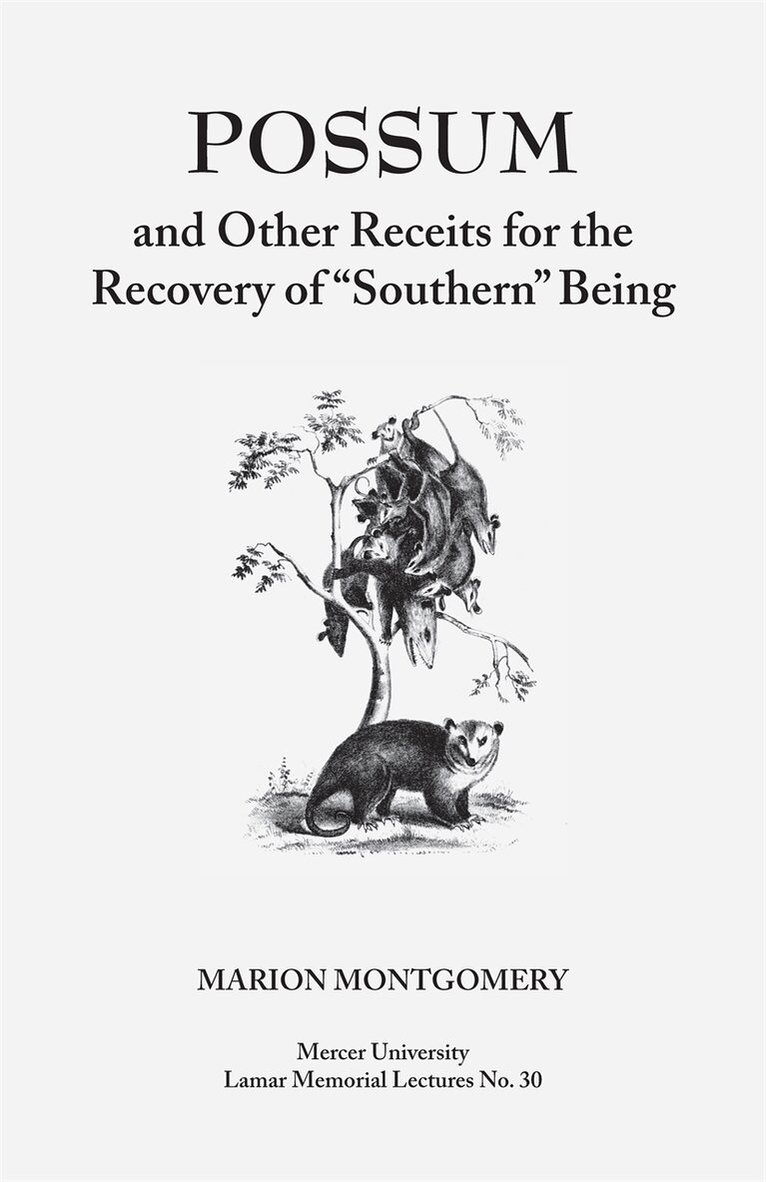
In this volume, Marion Montgomery ponders two very different varieties of possum as the starting point for a literary, philosophical, and poetic inquiry into the nature of Southernness. The first possum is the familiar marsupial, native to the American South, in whose modest status can be seen an image of the lowly ground to which all our dreams must remain anchored. The second possum is the first-person singular present of the Latin verb posse; rendered as "I am able," this possum embodies the movement in which men, since the Old Adam, have elevated themselves beyond their estate, taking for themselves sole credit for the world they see around them.Prescribing a way of thought by which men can regain the balance that modernity has led them to relinquish, Possum, and Other Receits for the Recovery of "Southern" Being posits a concept of Southernness that is a state of the soul rather than a result of geography, a Southernness in which man's mind and his moments of vision are kept in harmony with nature, with the reality of the world given to man.
578 kr
Skickas inom 5-8 vardagar
This book embodies a sequence of closely related essays which explore the modern poet's uneasy awareness of a tradition-the romantic tradition-with which he must contend. The author's premise is that the romantic age extends from The Divine Comedy through Wordsworth to Eliot. The roots of contemporary questions about the self and alienation are seen to extend at least as far back as Dante, who is the first poet to choose the ego as a focus for poetry of epic dimensions.In the course of the study Montgomery considers the growing emphasis upon the self's becoming the focus of poetry until this shift culminated in the literature of the most autobiographical century in western letters—the twentieth. Dante, Wordsworth, and Eliot are discussed at length, individually and in relation to one another, as principal instances of the reflective poet. The critic also considers other illustrative figures such as Milton, Coleridge, Keats, Whitman, Pound, Joyce, and Hemingway. These and other writers have traveled along the romantic road anticipated by The Divine Comedy. Finally, the author suggests, the road may end in a labyrinth so far as the contemporary writer is concerned.In his increasing concern with the problems of the self and of the mind, the poet has been forced to invent new modes and techniques, which as the author demonstrates, grow out of his response to the psychological and metaphysical preoccupations of his age.
776 kr
Skickas inom 10-15 vardagar
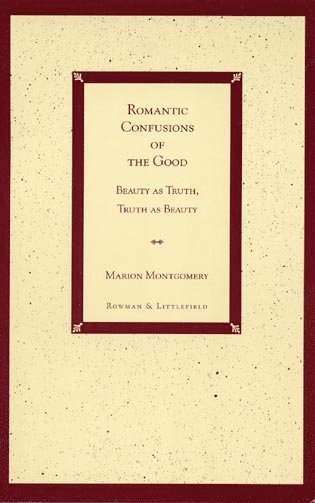
With special attention to the Romantic poets from Wordsworth and Coleridge down to Pound and Eliot, distinguished scholar Marion Montgomery explores the disorientation of image and metaphor from reality. The book focuses on the virtues and limits of the intuitive intellect as they are explicated by Thomas Aquinas in relational intellect, and the 'Romantic' poet's dependence upon the intuitive and rational modes of intellectual action, two species of 'romanticism' centering in presumptuous autonomy emerge: that of the poet and that of the scientist.
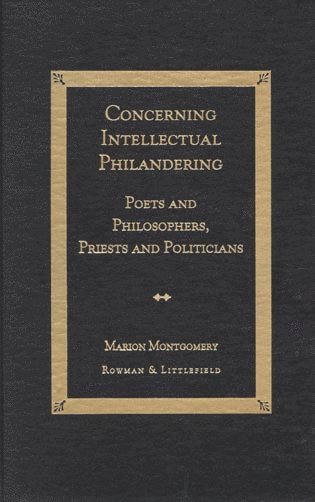
Concerning Intellectual Philandering
Poets and Philosophers, Priests and Politicians
Inbunden, Engelska, 1998
1 544 kr
Skickas inom 10-15 vardagar
In this companion volume to Romantic Confusions of the Good (Rowman & Littlefield, 1997), distinguished scholar Marion Montgomery continues his exploration of Romantic poetry, including that of Eliot, Pound, Keats, Donne, Wordsworth, and Williams, from a Thomistic perspective. Of particular interest to Montgomery are intellect and its relation to reality, intuition and rational thought, analogy, and attribution. This is a valuable addition to the literature on Romantic poetry.
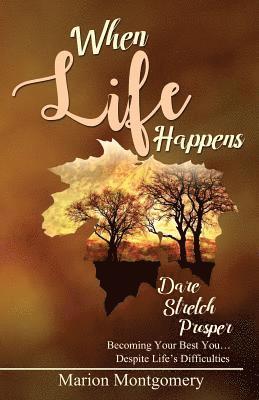
When Life Happens: Dare Stretch Prosper Becoming Your Best You...Despite Life's Difficulties
Häftad, Engelska, 2017
238 kr
Skickas inom 3-6 vardagar
563 kr
Skickas inom 3-6 vardagar
415 kr
Skickas inom 3-6 vardagar
443 kr
Skickas inom 11-20 vardagar
The concern in this essay is for our age as one suffering an intellectual severance between our response to existential reality in which the beauty of a created particular thing is divorced from the Cause of that thing's existence. The separation speaks of a deracination of homo viator - the person on his way. It is a consequence of what may be called the Modernist Ideology of the Self, by which the ideological reduction of reality usurps the mystery of soul into the concept of self. This severance of beauty from Beauty, implying the general dislocation of homo viator, is seen as the separation of grace from nature. Montgomery considers Tolstoy as representative of the Modernist man, confused by an intellectual climate that isolates the person from the self. Tolstoy, in is romancing of reality, becomes so burdened by his sense of guilt in being seduced into the scandal of beauty that he is almost overwhelmed by despair.This compared with Friedrich Schiller, whose romanticism encompasses not only the romanticism of the West but also the East, adopts Kant's philosophy to justify feeling, not as Tolstoy would (elevating it at the expense of reason), but by intensifying a severe reason as a gnostic ploy to gain power over feeling. Against these two, Montgomery casts St. Thomas as the one who would restore the givenness of reality and provide an authentic vision of the good, the true, and the beautiful, to recover an ordinate and vital intent governing homo viator in his quest for the Good, the True, and the Beautiful.