Marisa Faggini - Böcker
Visar alla böcker från författaren Marisa Faggini. Handla med fri frakt och snabb leverans.
6 produkter
6 produkter
1 064 kr
Skickas inom 10-15 vardagar
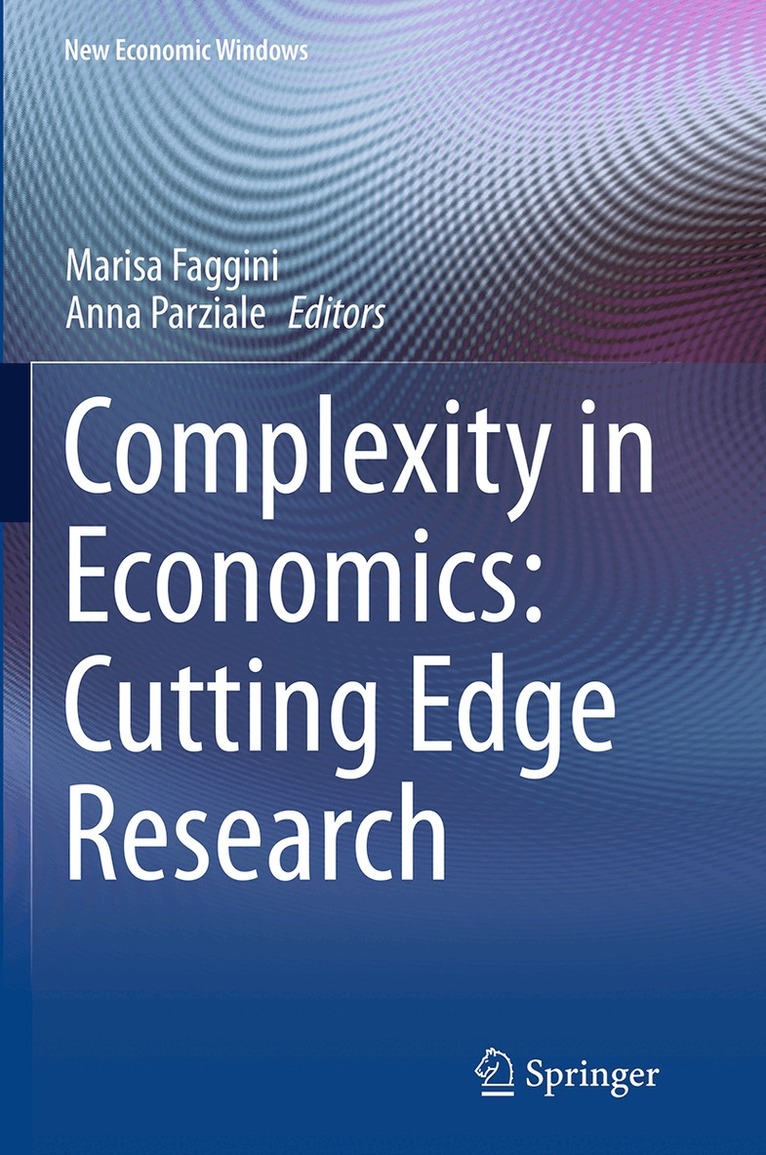
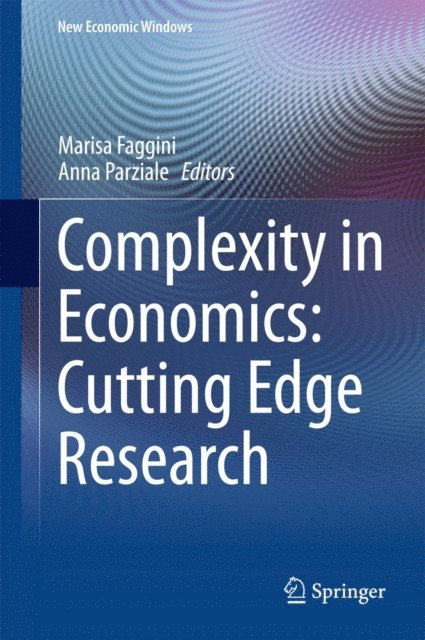
Complexity in Economics: Cutting Edge Research
1 064 kr
Skickas inom 10-15 vardagar
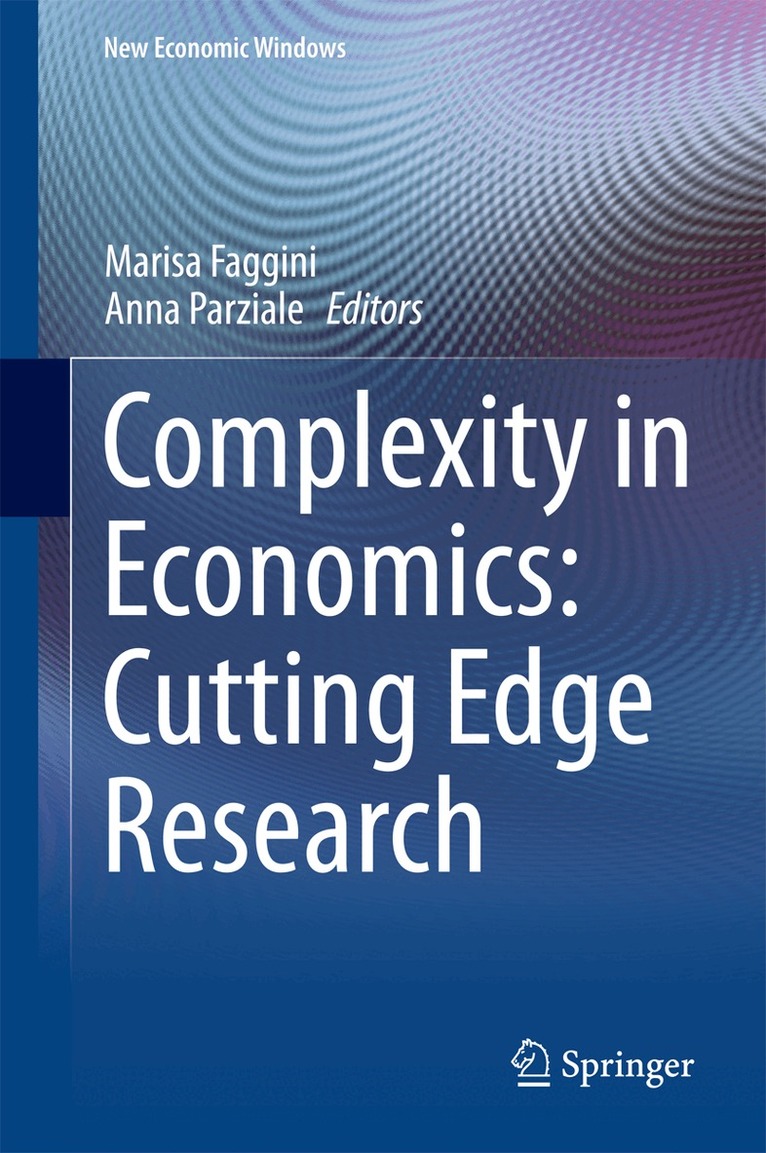
In this book, leading experts discuss innovative components of complexity theory and chaos theory in economics.The underlying perspective is that investigations of economic phenomena should view these phenomena not as deterministic, predictable and mechanistic but rather as process dependent, organic and always evolving.The aim is to highlight the exciting potential of this approach in economics and its ability to overcome the limitations of past research and offer important new insights. The book offers a stimulating mix of theory, examples and policy.By casting light on a variety of topics in the field, it will provide an ideal platform for researchers wishing to deepen their understanding and identify areas for further investigation.
1 064 kr
Skickas inom 10-15 vardagar
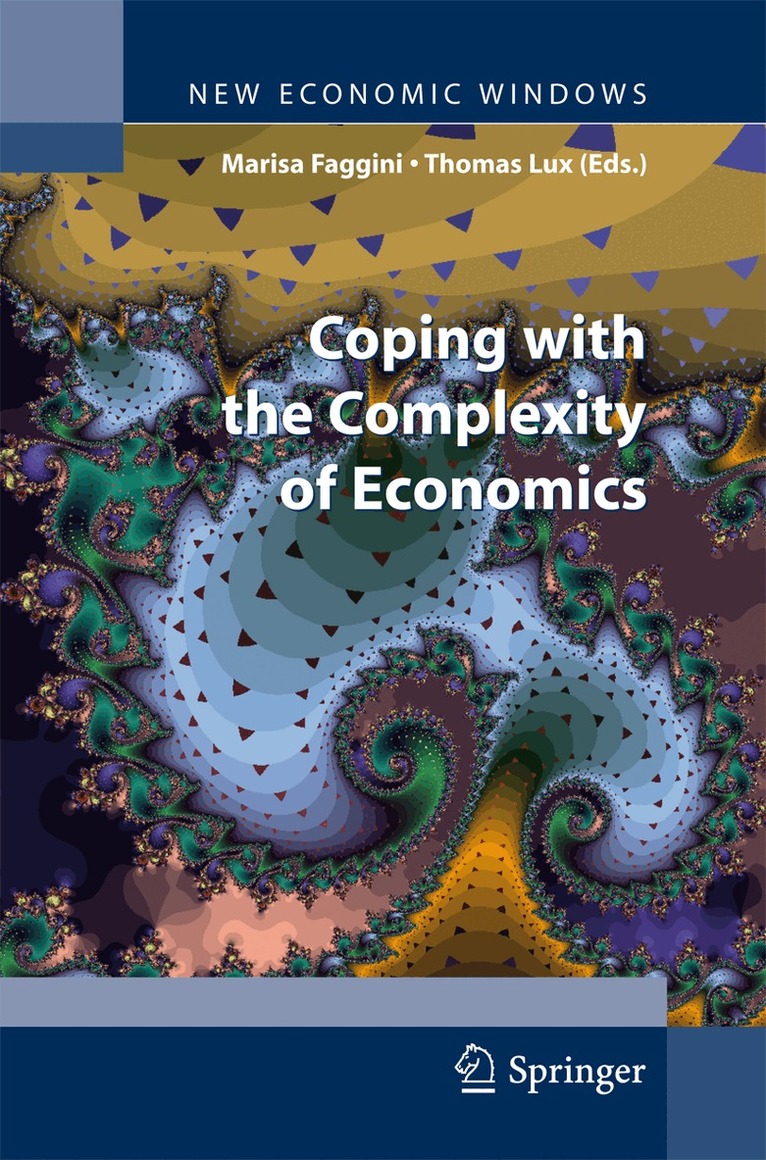
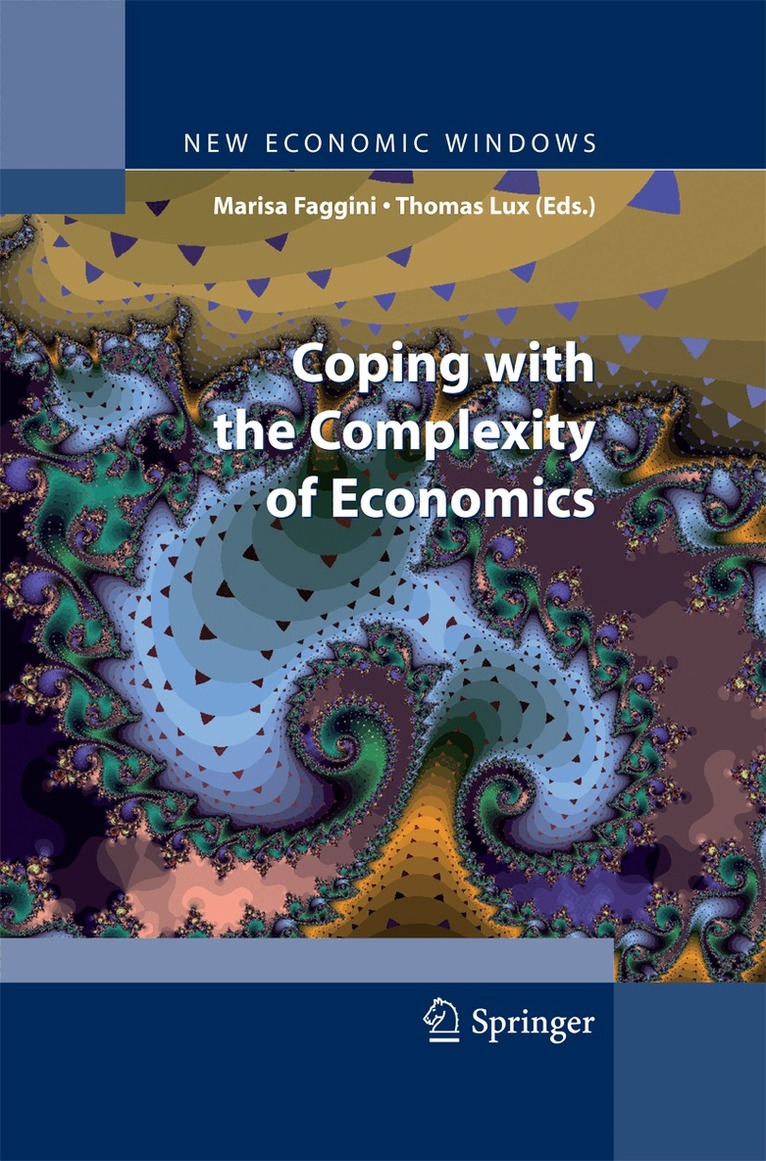
Throughout the history of economics, a variety of analytical tools have been borrowed from the so-called exact sciences. As Schoe?er (1955) puts it: “They have taken their mathematics and their ded- tive techniques from physics, their statistics from genetics and agr- omy, their systems of classi?cation from taxonomy and chemistry, their model-construction techniques from astronomy and mechanics, and their methods of analysis of the consequences of actions from en- neering”. The possibility of similarities of structure in mathematical models of economic and physical systems has been an important f- tor in the development of neoclassical theory. To treat the state of an economy as an equilibrium, analogous to the equilibrium of a mech- ical system has been a key concept in economics ever since it became a mathematically formalized science. Adopting a Newtonian paradigm neoclassical economics often is based on three fundamental concepts. Firstly, the representative agent who is a scale model of the whole society with extraordinary capacities, particularly concerning her - pability of information processing and computation. Of course, this is a problematic reduction as agents are both heterogeneous and bou- edly rational and limited in their cognitive capabilities. Secondly, it often con?ned itself to study systems in a state of equilibrium. But this concept is not adequate to describe and to support phenomena in perpetual motion.
1 578 kr
Skickas inom 10-15 vardagar
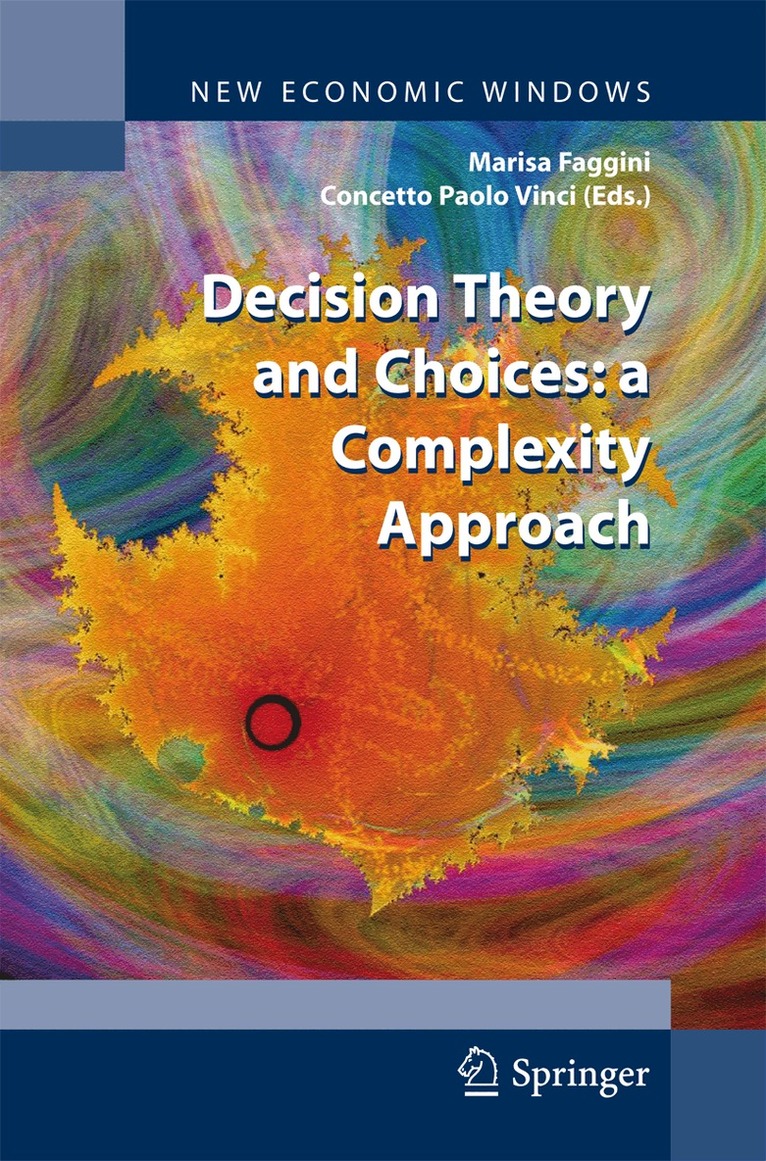
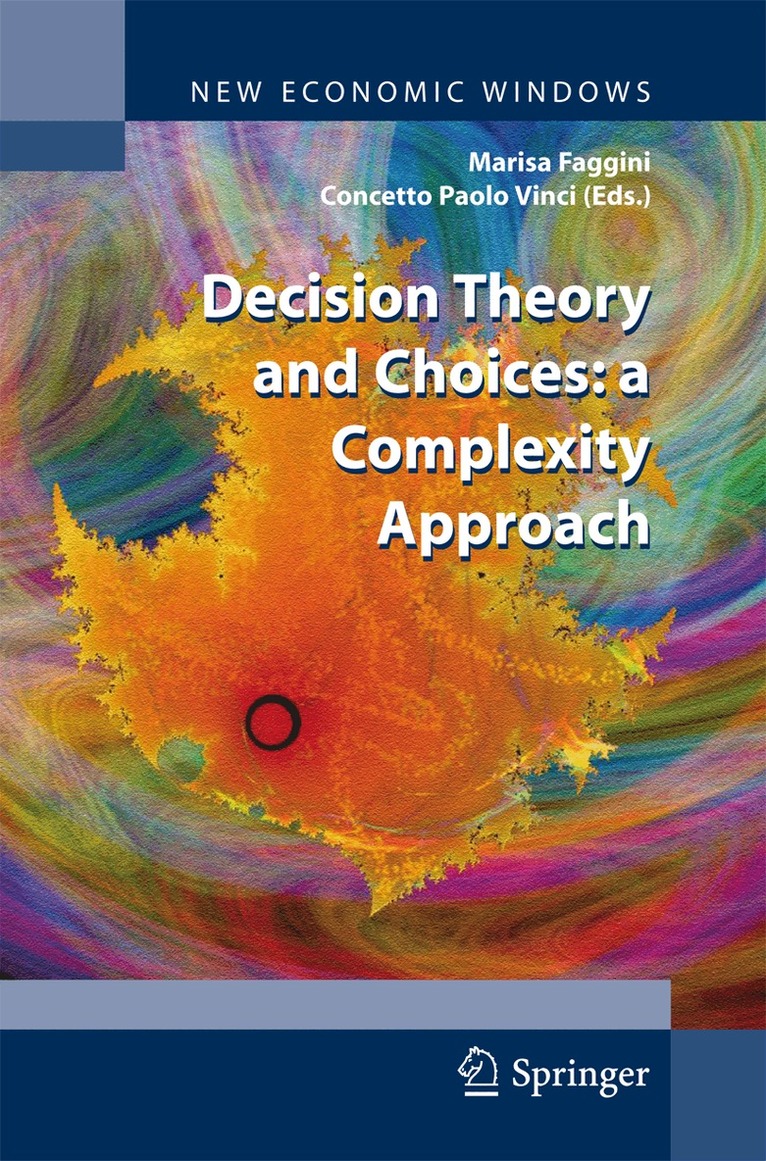
In economics agents are assumed to choose on the basis of rational calculations aimed at the maximization of their pleasure or profit. Formally, agents are said to manifest transitive and consistent preferences in attempting to maximize their utility in the presence of several constraints. They operate according to the choice imperative: given a set of alternatives, choose the best. This imperative works well in a static and simplistic framework, but it may fail or vary when 'the best' is changing continuously. This approach has been questioned by a descriptive approach that springing from the complexity theory tries to give a scientific basis to the way in which individuals really choose, showing that those models of human nature is routinely falsified by experiments since people are neither selfish nor rational. Thus inductive rules of thumb are usually implemented in order to make decisions in the presence of incomplete and heterogeneous information sets.
995 kr
Skickas inom 10-15 vardagar
Throughout the history of economics, a variety of analytical tools have been borrowed from the so-called exact sciences. As Schoe?er (1955) puts it: “They have taken their mathematics and their ded- tive techniques from physics, their statistics from genetics and agr- omy, their systems of classi?cation from taxonomy and chemistry, their model-construction techniques from astronomy and mechanics, and their methods of analysis of the consequences of actions from en- neering”. The possibility of similarities of structure in mathematical models of economic and physical systems has been an important f- tor in the development of neoclassical theory. To treat the state of an economy as an equilibrium, analogous to the equilibrium of a mech- ical system has been a key concept in economics ever since it became a mathematically formalized science. Adopting a Newtonian paradigm neoclassical economics often is based on three fundamental concepts. Firstly, the representative agent who is a scale model of the whole society with extraordinary capacities, particularly concerning her - pability of information processing and computation. Of course, this is a problematic reduction as agents are both heterogeneous and bou- edly rational and limited in their cognitive capabilities. Secondly, it often con?ned itself to study systems in a state of equilibrium. But this concept is not adequate to describe and to support phenomena in perpetual motion.
1 170 kr
Skickas inom 10-15 vardagar
In economics agents are assumed to choose on the basis of rational calculations aimed at the maximization of their pleasure or profit.