Marit Tolo Østebø - Böcker
Visar alla böcker från författaren Marit Tolo Østebø. Handla med fri frakt och snabb leverans.
3 produkter
3 produkter
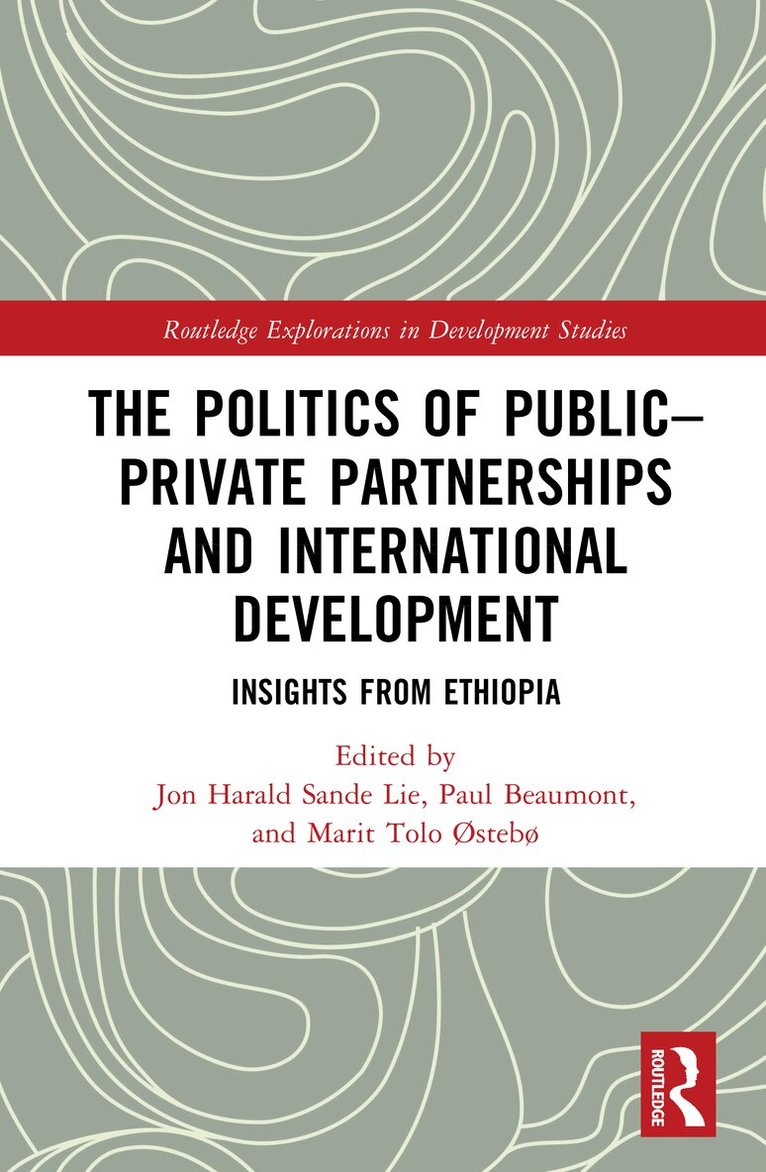
Politics of Public–Private Partnerships and International Development
Insights from Ethiopia
Inbunden, Engelska, 2026
2 258 kr
Kommande
With the launch of Agenda 2030, public-private partnerships were heralded as an important means to realise the Sustainable Development Goals and to provide more sustainable development financing in the global south.This book explores public-private partnerships from the bottom up, drawing on extensive empirical research in Ethiopia to illuminate the diversity of practices, arrangements and contradictions that the public-private partnership agenda enables, generates, and occludes. Despite the omnipresence of PPP talk among governments and international organisations, donor and recipient agencies, and private actors, there exists no universally agreed definition of PPP, and in practice it encompasses a remarkable diversity of activities and arrangements. This book zooms in on public-private partnerships in Ethiopia, considering what actors they bring together, what power dynamics they produce, how it alters them, what it says about state-society relations and how it infuses the individual Ps of PPPs with context specific meaning. By investigating how public-private partnerships play out in practice, the book sheds new light on how this ambiguous but proliferating discourse is changing the meanings, processes, and mechanisms of international development.This book illuminates the unseen consequences of translating bold sustainable development goals strategies into practice, and will be of interest to researchers and practitioners of international development.
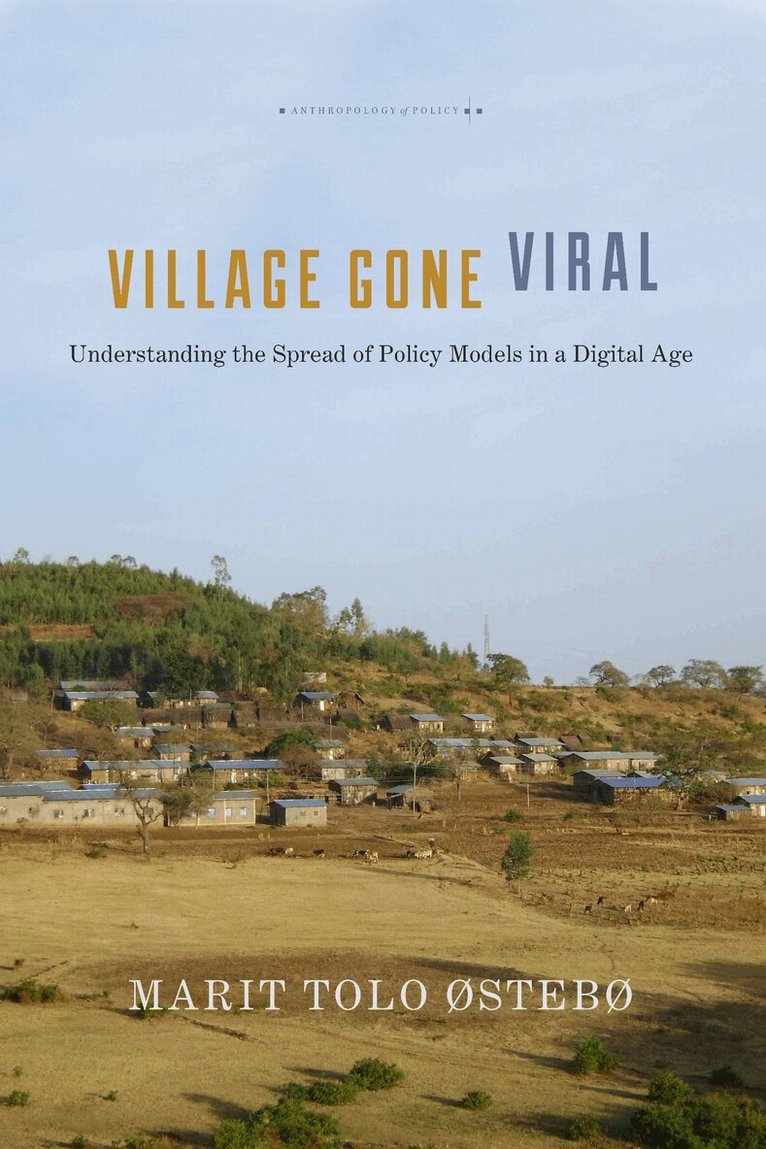
Village Gone Viral
Understanding the Spread of Policy Models in a Digital Age
Inbunden, Engelska, 2021
1 378 kr
Skickas inom 7-10 vardagar
In 2001, Ethiopian Television aired a documentary about a small, rural village called Awra Amba, where women ploughed, men worked in the kitchen, and so-called harmful traditional practices did not exist. The documentary radically challenged prevailing images of Ethiopia as a gender-conservative and aid-dependent place, and Awra Amba became a symbol of gender equality and sustainable development in Ethiopia and beyond.Village Gone Viral uses the example of Awra Amba to consider the widespread circulation and use of modeling practices in an increasingly transnational and digital policy world. With a particular focus on traveling models—policy models that become "viral" through various vectors, ranging from NGOs and multilateral organizations to the Internet—Marit Tolo Østebø critically examines the hidden dimensions of models and model making. While a policy model may be presented as a "best practice," one that can be scaled up and successfully applied to other places, the local impacts of the model paradigm are far more ambivalent—potentially increasing social inequalities, reinforcing social stratification, and concealing injustice. With this book, Østebø ultimately calls for a reflexive critical anthropology of the production, circulation, and use of models as instruments for social change.
323 kr
Skickas inom 7-10 vardagar
In 2001, Ethiopian Television aired a documentary about a small, rural village called Awra Amba, where women ploughed, men worked in the kitchen, and so-called harmful traditional practices did not exist. The documentary radically challenged prevailing images of Ethiopia as a gender-conservative and aid-dependent place, and Awra Amba became a symbol of gender equality and sustainable development in Ethiopia and beyond.Village Gone Viral uses the example of Awra Amba to consider the widespread circulation and use of modeling practices in an increasingly transnational and digital policy world. With a particular focus on traveling models—policy models that become "viral" through various vectors, ranging from NGOs and multilateral organizations to the Internet—Marit Tolo Østebø critically examines the hidden dimensions of models and model making. While a policy model may be presented as a "best practice," one that can be scaled up and successfully applied to other places, the local impacts of the model paradigm are far more ambivalent—potentially increasing social inequalities, reinforcing social stratification, and concealing injustice. With this book, Østebø ultimately calls for a reflexive critical anthropology of the production, circulation, and use of models as instruments for social change.