Marita Sturken - Böcker
Visar alla böcker från författaren Marita Sturken. Handla med fri frakt och snabb leverans.
8 produkter
8 produkter
1 656 kr
Skickas inom 5-8 vardagar
Practices of Looking, Third Edition, bridges visual, communication, media, and cultural studies to investigate how images and the activity of looking carry meaning within and between different arenas in everyday life. The third edition has been updated to represent the contemporary visual cultural landscape and includes topics like the increasingly rapid global circulation of media, the rise of design and DIY cultures, digital media art and activism, and challenges to photojournalism and news media. Challenging yet accessible, Practices of Looking, Third Edition, is ideal for courses across a range of disciplines.
1 256 kr
Skickas inom 5-8 vardagar
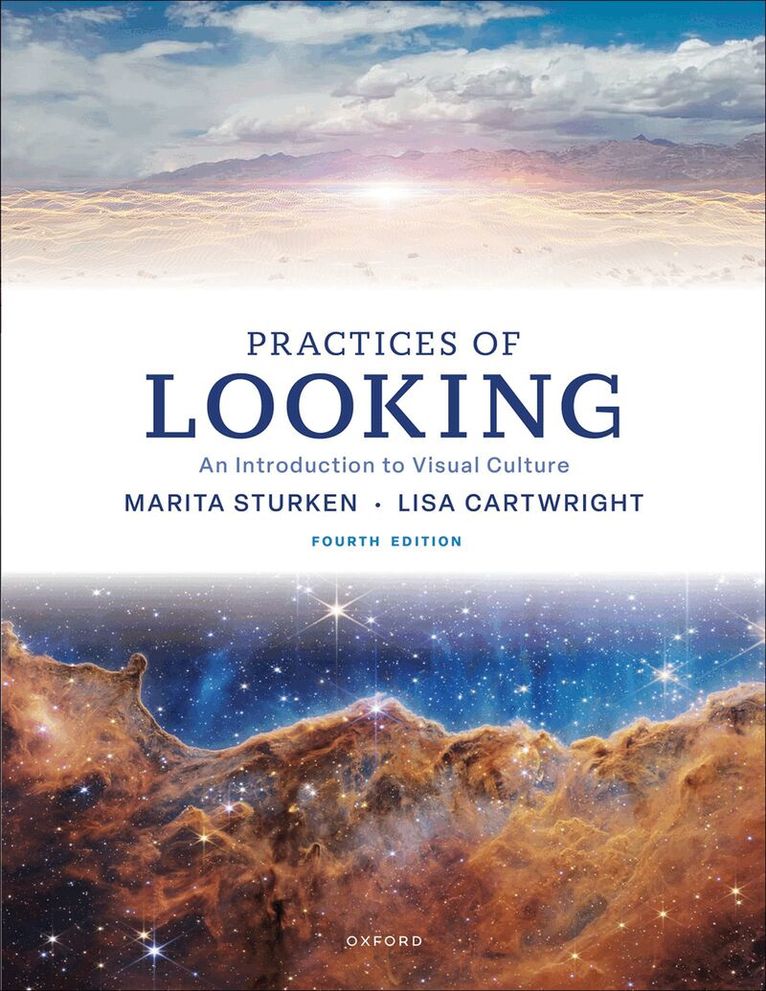
An engaging introduction to the study of visual culture, Practices of Looking bridges visual, communication, media, and cultural studies to investigate how images and the activity of looking carry meaning within and between different arenas in everyday life. The fourth edition has been updated to represent the contemporary visual cultural landscape and includes topics like the increasingly rapid global circulation of media, the rise of design and DIY cultures, digital media art and activism, and challenges to photojournalism and news media. Engaging and accessible, Practices of Looking is ideal for courses across a range of disciplines.
Tangled Memories
The Vietnam War, the AIDS Epidemic, and the Politics of Remembering
Häftad, Engelska, 1997
282 kr
Skickas inom 7-10 vardagar
Analyzing the ways U.S. culture has been formed and transformed in the 80s and 90s by its response to the Vietnam War and the AIDS epidemic, Marita Sturken argues that each has disrupted our conventional notions of community, nation, consensus, and 'American culture.' She examines the relationship of camera images to the production of cultural memory, the mixing of fantasy and reenactment in memory, the role of trauma and survivors in creating cultural comfort, and how discourses of healing can smooth over the tensions of political events. Sturken's discussion encompasses a brilliant comparison of the Vietnam Veterans Memorial and the AIDS Quilt; her profound reading of the Memorial as a national wailing wall - one whose emphasis on the veterans and war dead has allowed the discourse of heroes, sacrifice, and honor to resurface at the same time that it is an implicit condemnation of war - is particularly compelling. The book also includes discussions of the Kennedy assassination, the Persian Gulf War, the Challenger explosion, and the Rodney King beating.While debunking the image of the United States as a culture of amnesia, Sturken also shows how remembering itself is a form of forgetting, and how exclusion is a vital part of memory formation.
Tourists of History
Memory, Kitsch, and Consumerism from Oklahoma City to Ground Zero
Häftad, Engelska, 2007
415 kr
Skickas inom 7-10 vardagar
In Tourists of History, the cultural critic Marita Sturken argues that over the past two decades, Americans have responded to national trauma through consumerism, kitsch sentiment, and tourist practices in ways that reveal a tenacious investment in the idea of America’s innocence. Sturken investigates the consumerism that followed from the September 11th attacks; the contentious, ongoing debates about memorials and celebrity-architect designed buildings at Ground Zero; and two outcomes of the bombing of the Alfred P. Murrah Federal Building in Oklahoma City: the Oklahoma City National Memorial and the execution of Timothy McVeigh.Sturken contends that a consumer culture of comfort objects such as World Trade Center snow globes, FDNY teddy bears, and Oklahoma City Memorial t-shirts and branded water, as well as reenactments of traumatic events in memorial and architectural designs, enables a national tendency to see U.S. culture as distant from both history and world politics. A kitsch comfort culture contributes to a “tourist” relationship to history: Americans can feel good about visiting and buying souvenirs at sites of national mourning without having to engage with the economic, social, and political causes of the violent events. While arguing for the importance of remembering tragic losses of life, Sturken is urging attention to a dangerous confluence-of memory, tourism, consumerism, paranoia, security, and kitsch-that promulgates fear to sell safety, offers prepackaged emotion at the expense of critical thought, contains alternative politics, and facilitates public acquiescence in the federal government’s repressive measures at home and its aggressive political and military policies abroad.
Terrorism in American Memory
Memorials, Museums, and Architecture in the Post-9/11 Era
Inbunden, Engelska, 2022
982 kr
Skickas inom 10-15 vardagar
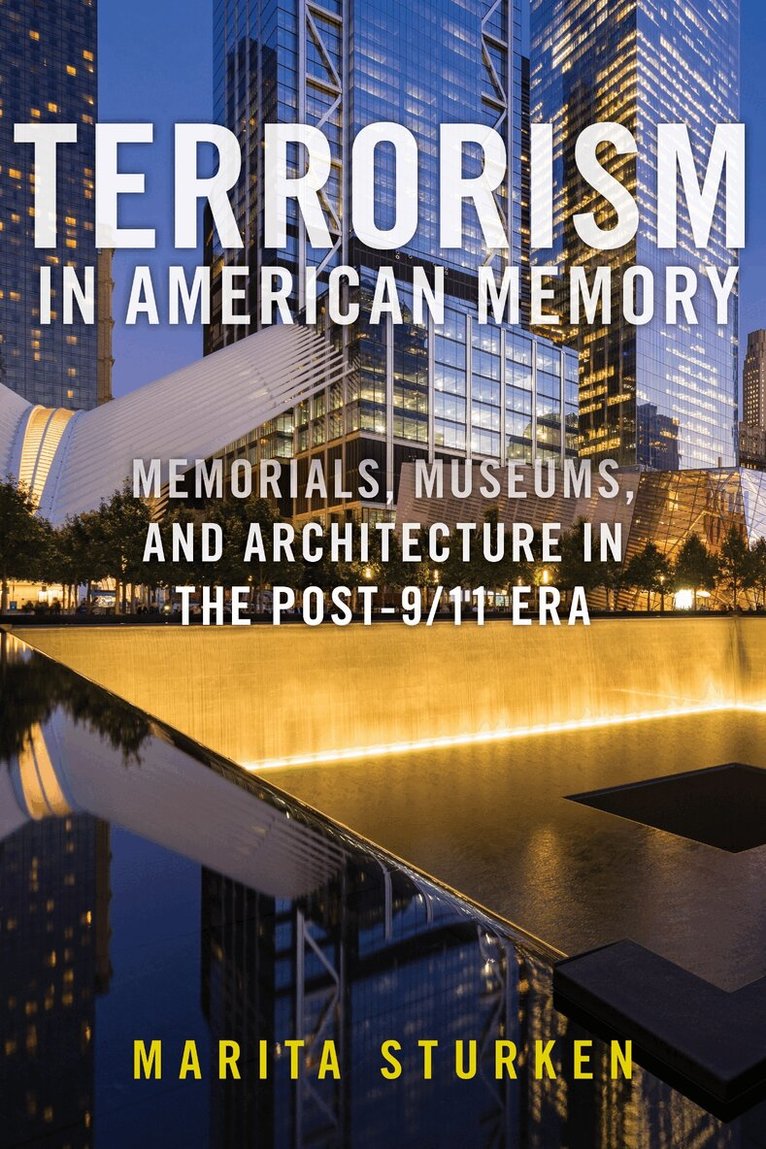
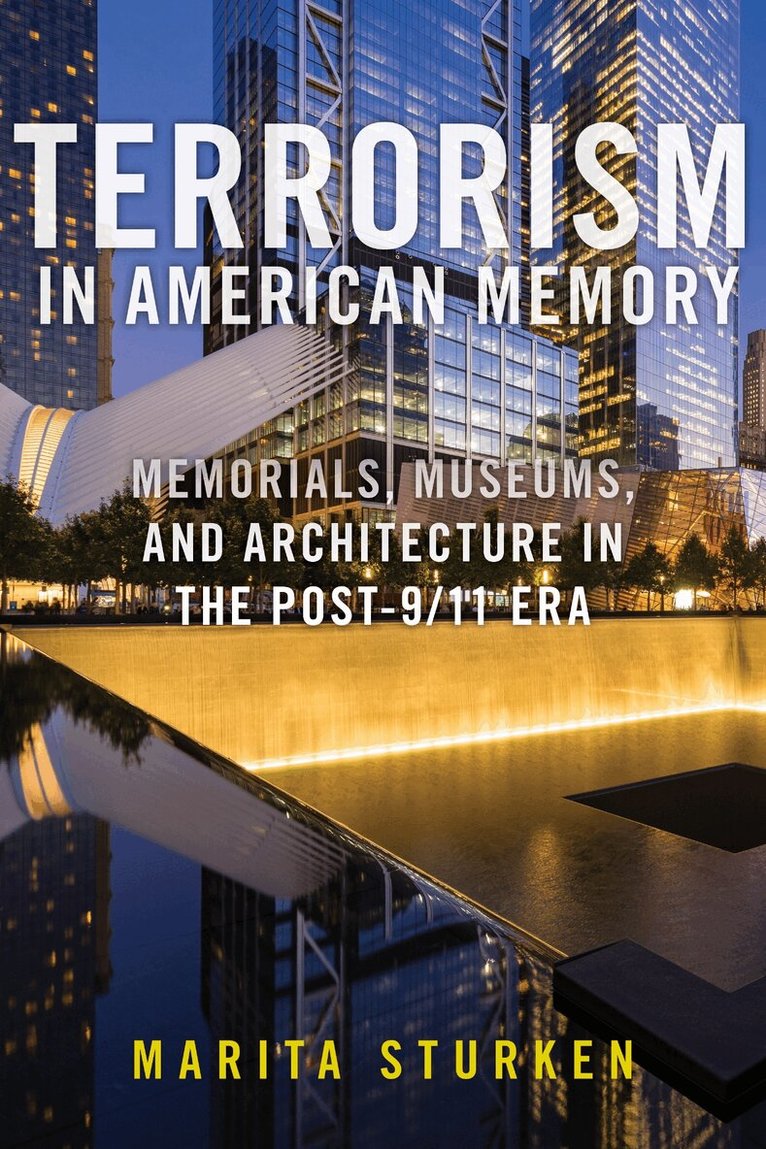
The role of cultural memory in American identityTerrorism in American Memory argues that the terrorist attacks of 9/11 and all that followed in its wake were the primary force shaping United States politics and culture in the post-9/11 era. Marita Sturken maintains that during the past two decades, when the country was subjected to terrorist attacks and promulgated ongoing wars of aggression, we have veered into increasingly polarized factions and been extraordinarily preoccupied with memorialization and the politics of memory. The post-9/11 era began with a hunger for memorialization and it ended with massive protests over police brutality that demanded the destruction of historical monuments honoring racist historical figures. Sturken argues that memory is both the battleground and the site for negotiations of national identity because it is a field through which the past is experienced in the present. The paradox of these last two decades is that it gave rise to an era of intensely nationalistic politics in response to global terrorism at the same time that it released the containment of the ghosts of terrorism embedded within US history. And within that disruption, new stories emerged, new memories were unearthed, and the story of the nation is being rewritten. For these reasons, this book argues that the post-9/11 era has come to an end, and we are now in a new still undefined era with new priorities and national demands. An era preoccupied with memory thus begins with the memorial projects of 9/11 and ends with the radical intervention of the National Memorial for Peace and Justice, informally known as the Lynching Memorial, in Montgomery, Alabama, a project that, unlike the nationalistic 9/11 Memorial and Museum in New York, dramatically rewrites the national script of American history. Woven within analyses of memorialization, memorials, memory museums, art projects on memory, and architectural projects is a discussion about design and architecture, the increased creation of memorials as experiences, and the role of architecture as national symbolism and renewal. Terrorism in American Memory sheds light on the struggles over who is memorialized, who is forgotten, and what that politics of memory reveals about the United States as an imaginary and a nation.
Terrorism in American Memory
Memorials, Museums, and Architecture in the Post-9/11 Era
Häftad, Engelska, 2022
332 kr
Skickas inom 7-10 vardagar
The role of cultural memory in American identityTerrorism in American Memory argues that the terrorist attacks of 9/11 and all that followed in its wake were the primary force shaping United States politics and culture in the post-9/11 era. Marita Sturken maintains that during the past two decades, when the country was subjected to terrorist attacks and promulgated ongoing wars of aggression, we have veered into increasingly polarized factions and been extraordinarily preoccupied with memorialization and the politics of memory. The post-9/11 era began with a hunger for memorialization and it ended with massive protests over police brutality that demanded the destruction of historical monuments honoring racist historical figures. Sturken argues that memory is both the battleground and the site for negotiations of national identity because it is a field through which the past is experienced in the present. The paradox of these last two decades is that it gave rise to an era of intensely nationalistic politics in response to global terrorism at the same time that it released the containment of the ghosts of terrorism embedded within US history. And within that disruption, new stories emerged, new memories were unearthed, and the story of the nation is being rewritten. For these reasons, this book argues that the post-9/11 era has come to an end, and we are now in a new still undefined era with new priorities and national demands. An era preoccupied with memory thus begins with the memorial projects of 9/11 and ends with the radical intervention of the National Memorial for Peace and Justice, informally known as the Lynching Memorial, in Montgomery, Alabama, a project that, unlike the nationalistic 9/11 Memorial and Museum in New York, dramatically rewrites the national script of American history. Woven within analyses of memorialization, memorials, memory museums, art projects on memory, and architectural projects is a discussion about design and architecture, the increased creation of memorials as experiences, and the role of architecture as national symbolism and renewal. Terrorism in American Memory sheds light on the struggles over who is memorialized, who is forgotten, and what that politics of memory reveals about the United States as an imaginary and a nation.
322 kr
Skickas inom 7-10 vardagar
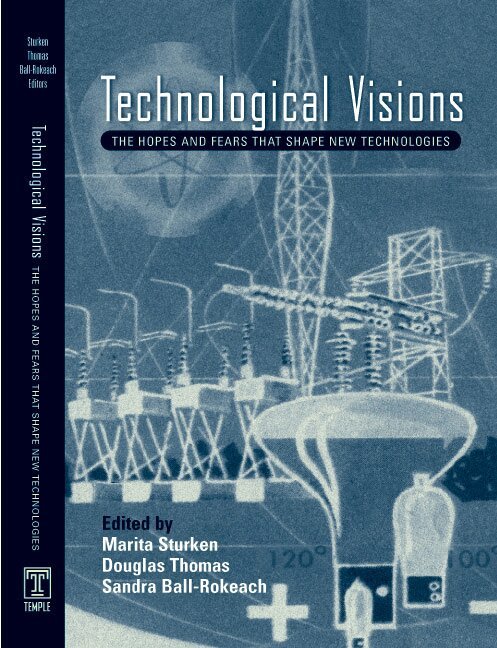
For as long as people have developed new technologies, there has been debate over the purposes, shape, and potential for their use. In this exciting collection, a range of contributors, including Sherry Turkle, Lynn Spigel, John Perry Barlow, Langdon Winner, David Nye, and Lord Asa Briggs, discuss the visions that have shaped "new" technologies and the cultural implications of technological adaptation. Focusing on issues such as the nature of prediction, community, citizenship, consumption, and the nation, as well as the metaphors that have shaped public debates about technology, the authors examine innovations past and present, from the telegraph and the portable television to the Internet, to better understand how our visions and imagination have shaped the meaning and use of technology. Author note: Marita Sturken is Associate Professor in the Annenberg School for Communication at the University of Southern California and the author of "Tangled Memories: The Vietnam War, the AIDS Epidemic, and the Politics of Remembering" and "Practices of Looking: An Introduction to Visual Culture" (with Lisa Cartwright).Douglas Thomas is Associate Professor in the Annenberg School for Communication at the University of Southern California. He is author of three books, most recently "Hacker Culture". Sandra Ball-Rokeach is a Professor and Director of the Communication Technology and Community Program in the Annenberg School for Communication at the University of Southern California. She is author of several books, including "Theories of Mass Communication" (with M.L. De Fleur).
189 kr
Skickas inom 7-10 vardagar
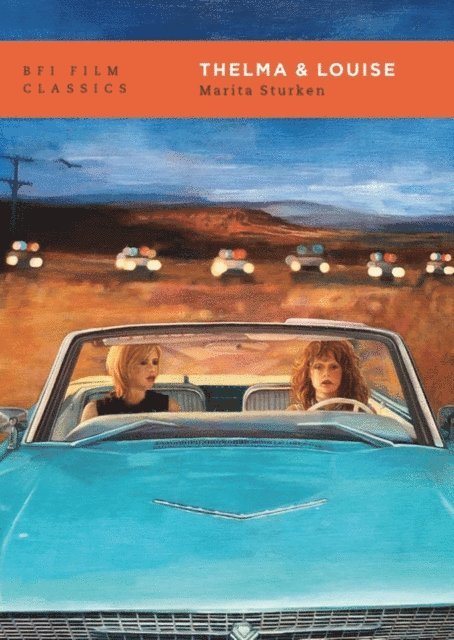
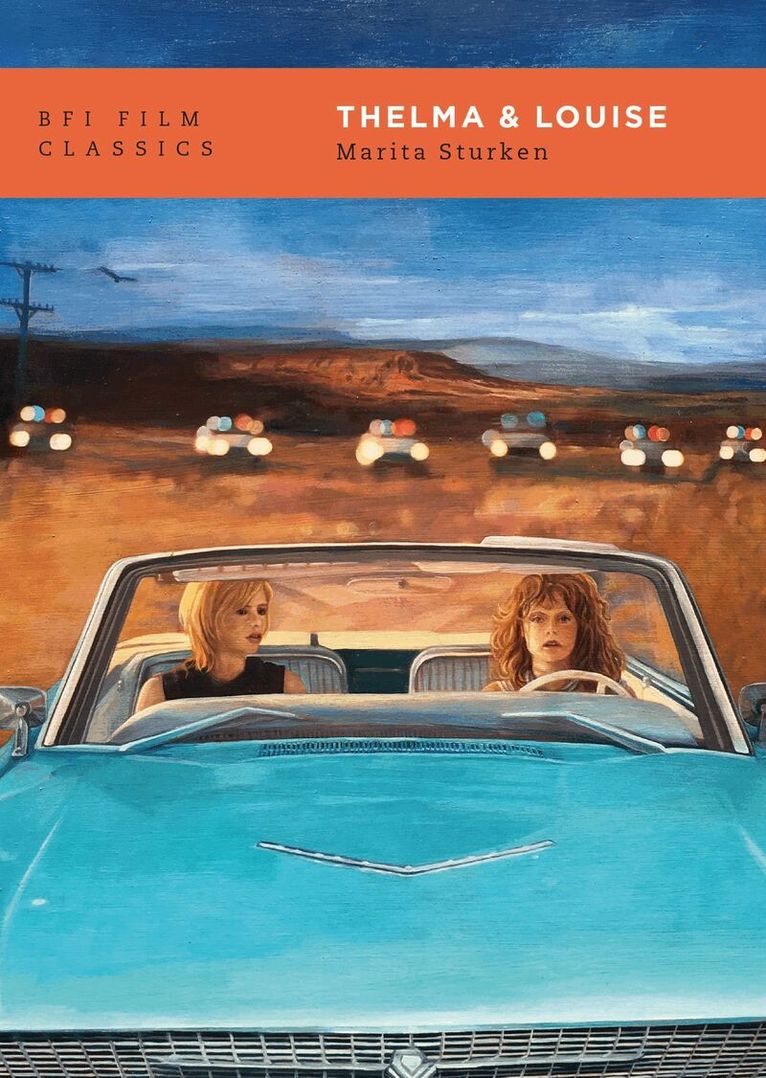
Thelma & Louise, directed by Ridley Scott and written by Callie Khouri, sparked a remarkable public discussion about feminism, violence, and the representation of women in cinema on its release in 1991. Subject to media vilification for its apparent justification of armed robbery and manslaughter, it was a huge hit with audiences composed largely but not exclusively of women who cheered the fugitive central characters played by Susan Sarandon and Geena Davis. Marita Sturken examines Thelma & Louise as one of those rare films that encapsulates the politics of its time. She discusses the film's reworking of the outlaw genre, its reversal of gender roles, and its engagement with the complex relationship of women, guns adn the law. The insights of director Scott, screenwriter Khouri as well as Davis and Sarandon are deployed in an analysis of Thelma & Louise and the controversies it sparked. This is a compelling study of a landmark in 1990s American cinema.In her foreword to this new edition, Sturken looks back on the film's reception at the time of its release, and considers its continuing resonances and topicality in the age of #MeToo.