Lisa Cartwright - Böcker
Visar alla böcker från författaren Lisa Cartwright. Handla med fri frakt och snabb leverans.
6 produkter
6 produkter
1 656 kr
Skickas inom 5-8 vardagar
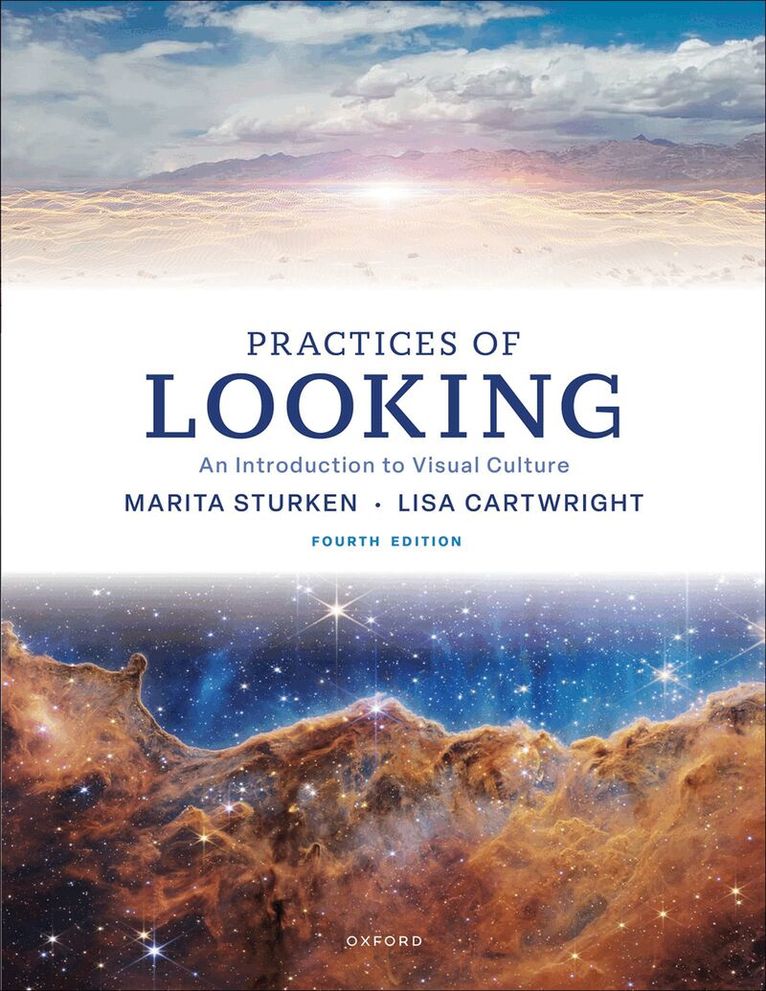
Practices of Looking, Third Edition, bridges visual, communication, media, and cultural studies to investigate how images and the activity of looking carry meaning within and between different arenas in everyday life. The third edition has been updated to represent the contemporary visual cultural landscape and includes topics like the increasingly rapid global circulation of media, the rise of design and DIY cultures, digital media art and activism, and challenges to photojournalism and news media. Challenging yet accessible, Practices of Looking, Third Edition, is ideal for courses across a range of disciplines.
1 256 kr
Skickas inom 5-8 vardagar
An engaging introduction to the study of visual culture, Practices of Looking bridges visual, communication, media, and cultural studies to investigate how images and the activity of looking carry meaning within and between different arenas in everyday life. The fourth edition has been updated to represent the contemporary visual cultural landscape and includes topics like the increasingly rapid global circulation of media, the rise of design and DIY cultures, digital media art and activism, and challenges to photojournalism and news media. Engaging and accessible, Practices of Looking is ideal for courses across a range of disciplines.
1 197 kr
Skickas inom 10-15 vardagar
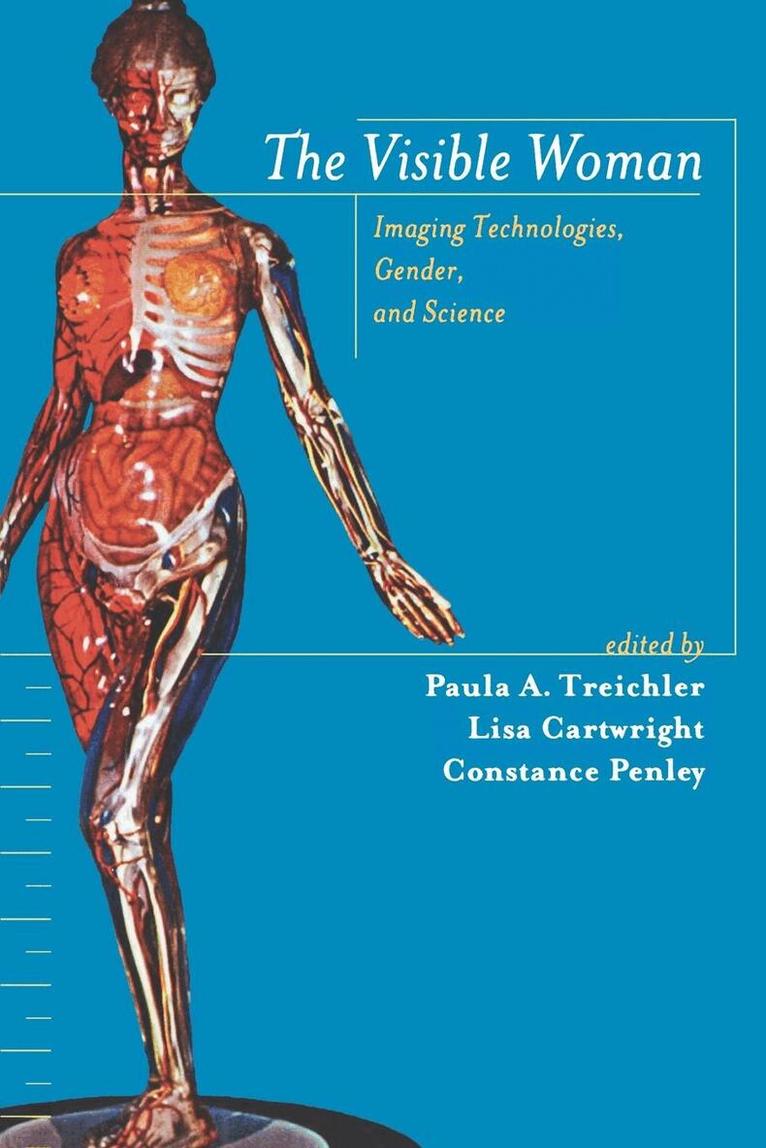
Hand in hand with such health crises as HIV/AIDS, breast cancer, and the resurgence of tuberculosis has come an explosion of scientific and medical technologies. As technology documents illness with ever greater precision and clarity, the knowledge and vocabulary of patients is being similarly expanded by activists, consumer advocates, and artists working with new electronic technologies.Into this breach steps The Visible Woman, collecting professional, academic, and lay viewpoints on gender and the role of visual and textual representation in contemporary health and science. From fetal photography and mammography to mental retardation and chronic fatigue syndrome, The Visible Woman reveals how identities are constructed in medical research and public health initiatives, as well as in popular press accounts of health. New ways of seeing the body, through medical imaging, plastic and sexual surgery, and services for people with disabilities, are all informed, the book argues, by a broader cultural fascination with visuality and media.Emphasizing the authors' first-hand experiences as medical practitioners, activists, scholars, and patients, The Visible Woman breaks with more established approaches that cast patients as passive objects of medical inquiry, and medical professionals as perpetrators of institutional exploitation in the name of the public good. Asking what it means to be on both ends of the microscope, The Visible Woman highlights the complex perspectives of medical and scientific practitioners who themselves exist both inside and outside their workplaces and professional identities.The contributors are Michael Bérubé, Lisa Cartwright, Stacie A. Colwell, Richard Cone, Anne Eckman, Valerie Hartouni, Janet Lyon, Emily Martin, Gaye Naismith, Mark Rose, Ella Shohat, Vivian Sobchack, Carol Stabile, Sandy Stone, and Paula A. Treichler.
416 kr
Skickas inom 7-10 vardagar
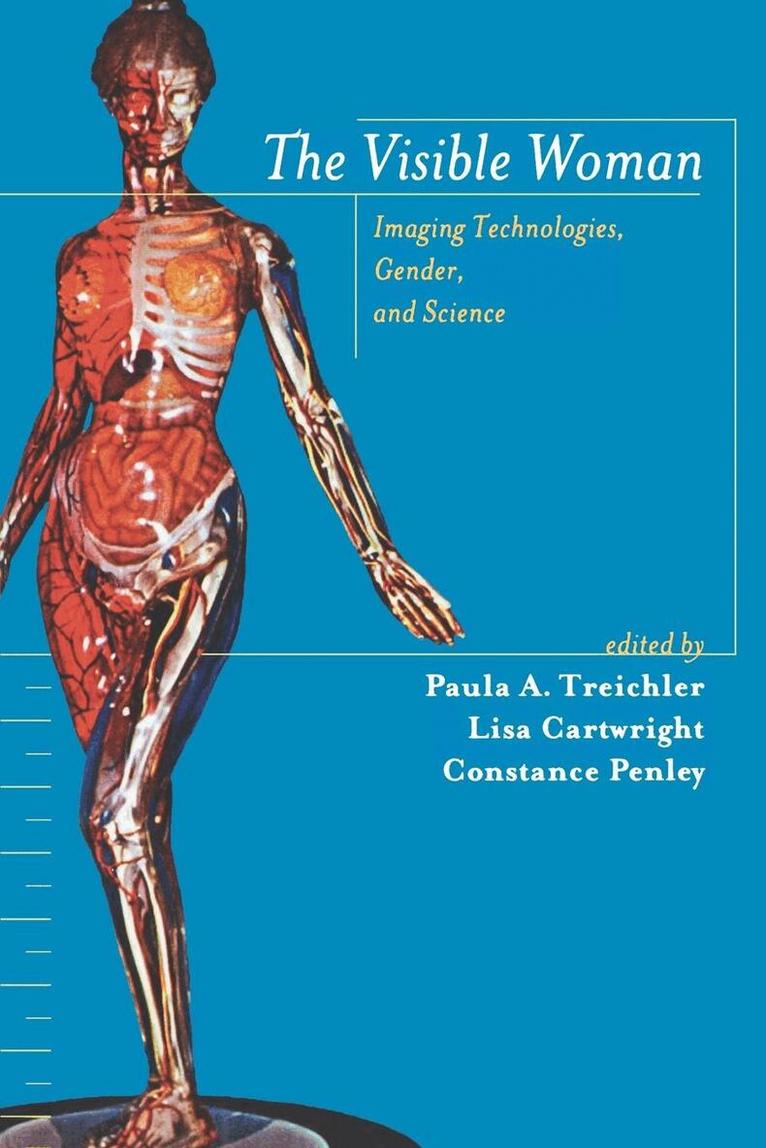
Hand in hand with such health crises as HIV/AIDS, breast cancer, and the resurgence of tuberculosis has come an explosion of scientific and medical technologies. As technology documents illness with ever greater precision and clarity, the knowledge and vocabulary of patients is being similarly expanded by activists, consumer advocates, and artists working with new electronic technologies.Into this breach steps The Visible Woman, collecting professional, academic, and lay viewpoints on gender and the role of visual and textual representation in contemporary health and science. From fetal photography and mammography to mental retardation and chronic fatigue syndrome, The Visible Woman reveals how identities are constructed in medical research and public health initiatives, as well as in popular press accounts of health. New ways of seeing the body, through medical imaging, plastic and sexual surgery, and services for people with disabilities, are all informed, the book argues, by a broader cultural fascination with visuality and media.Emphasizing the authors' first-hand experiences as medical practitioners, activists, scholars, and patients, The Visible Woman breaks with more established approaches that cast patients as passive objects of medical inquiry, and medical professionals as perpetrators of institutional exploitation in the name of the public good. Asking what it means to be on both ends of the microscope, The Visible Woman highlights the complex perspectives of medical and scientific practitioners who themselves exist both inside and outside their workplaces and professional identities.The contributors are Michael Bérubé, Lisa Cartwright, Stacie A. Colwell, Richard Cone, Anne Eckman, Valerie Hartouni, Janet Lyon, Emily Martin, Gaye Naismith, Mark Rose, Ella Shohat, Vivian Sobchack, Carol Stabile, Sandy Stone, and Paula A. Treichler.
266 kr
Skickas inom 7-10 vardagar
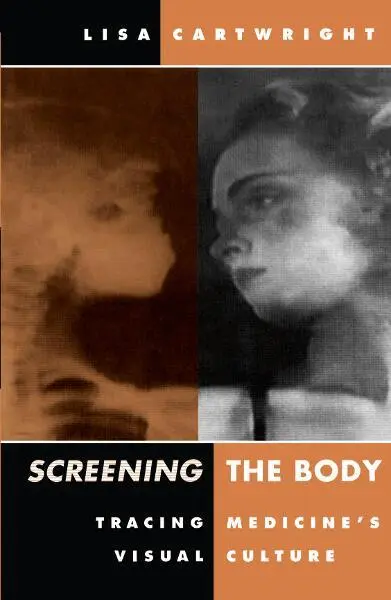
Moving images are used as diagnostic tools and locational devices every day in hospitals, clinics, and laboratories. But how and when did they come to be established and accepted sources of knowledge about the body in medical culture? How are the specialized techniques and codes of these imaging techniques determined, and whose bodies are studied, diagnosed, and treated with the help of optical recording devices?Screening the Body traces the fascinating history of scientific film during the late nineteenth and early twentieth centuries to show that early experiments with cinema are important precedents of contemporary medical techniques such as ultrasound and PET scanning. Lisa Cartwright brings to light eccentric projects in the history of science and medicine, such as Thomas Edison's sensational attempt to image the brain with X rays before a public audience, and the efforts of doctors to use the motion picture camera to capture movements of the body, from the virtually imperceptible flow of blood to epileptic seizures.Drawing on feminist film theory, cultural studies, the history of film, and the writings of Foucault, Cartwright illustrates how this scientific cinema was part of a broader tendency in society toward the technological surveillance, management, and physical transformation of the individual body and the social body. She unveils an area of film culture that has rarely been discussed but that will leave readers with a new way of seeing the everyday practice of diagnostic imaging that we all inevitably encounter in clinics and hospitals.
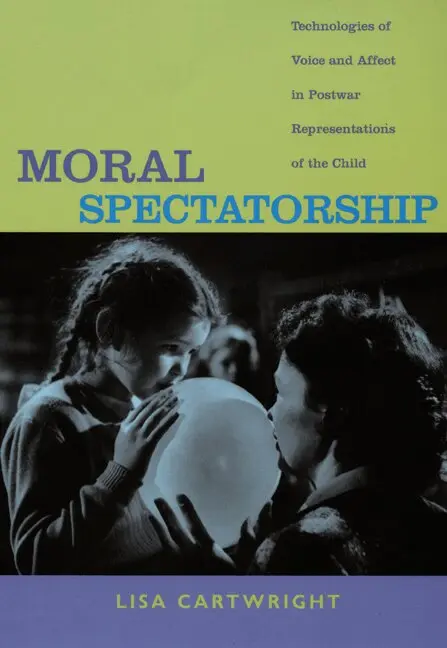
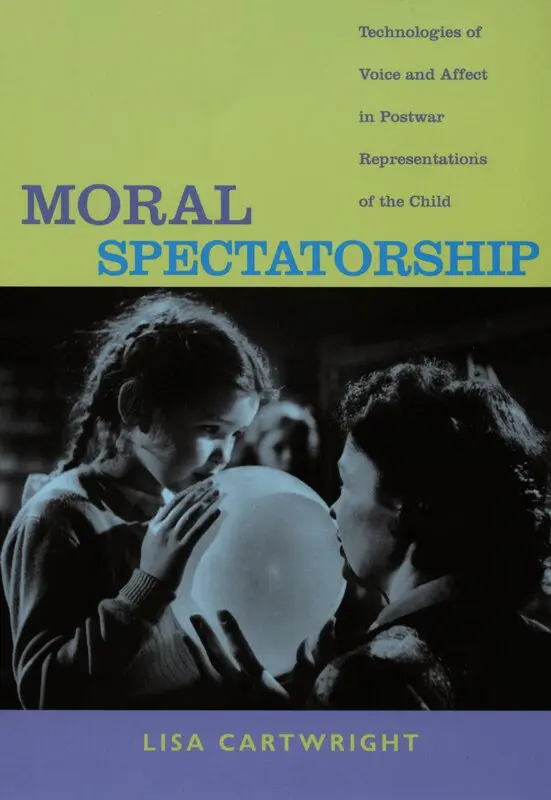
Moral Spectatorship
Technologies of Voice and Affect in Postwar Representations of the Child
Häftad, Engelska, 2008
387 kr
Skickas inom 7-10 vardagar
Why were theories of affect, intersubjectivity, and object relations bypassed in favor of a Lacanian linguistically oriented psychoanalysis in feminist film theory in the 1980s and 1990s? In Moral Spectatorship, Lisa Cartwright rethinks the politics of spectatorship in film studies. Returning to impasses reached in late-twentieth-century psychoanalytic film theory, she focuses attention on theories of affect and object relations seldom addressed during that period. Cartwright offers a new theory of spectatorship and the human subject that takes into account intersubjective and affective relationships and technologies facilitating human agency. Seeking to expand concepts of representation beyond the visual, she develops her theory through interpretations of two contexts in which adult caregivers help bring children to voice. She considers several social-problem melodramas about deaf and nonverbal girls and young women, including Johnny Belinda, The Miracle Worker, and Children of a Lesser God. Cartwright also analyzes the controversies surrounding facilitated communication, a technological practice in which caregivers help children with communication disorders achieve “voice” through writing facilitated by computers. This practice has inspired contempt among professionals and lay people who charge that the facilitator can manipulate the child’s speech.For more than two decades, film theory has been dominated by a model of identification tacitly based on the idea of feeling what the other feels or of imagining oneself to be the other. Building on the theories of affect and identification developed by AndrÉ Green, Melanie Klein, Donald W. Winnicott, and Silvan Tomkins, Cartwright develops a model of spectatorship that takes into account and provides a way of critically analyzing the dynamics of a different kind of identification, one that is empathetic and highly intersubjective.