Marjolein Oele - Böcker
Visar alla böcker från författaren Marjolein Oele. Handla med fri frakt och snabb leverans.
6 produkter
6 produkter
353 kr
Skickas
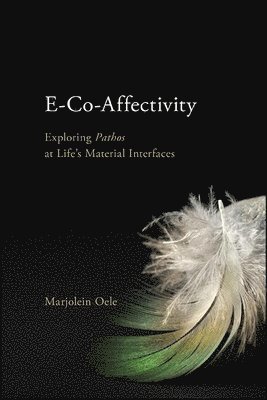
Offers an interdisciplinary investigation of affectivity in various forms of life.E-Co-Affectivity is a philosophical investigation of affectivity in various forms of life: photosynthesis and growth in plants, touch and trauma in bird feathers, the ontogenesis of human life through the placenta, the bare interface of human skin, and the porous materiality of soil. Combining biology, phenomenology, Ancient Greek thought, new materialisms, environmental philosophy, and affect studies, Marjolein Oele thinks through the concrete, living places that show the receptive, responsive power of living beings to be affected and to affect. She focuses on these localized interfaces to explain how affectivity emerges in places that are always evolving, creative, porous, and fluid. Every interface is material, but is also "more" than its current materiality in cocreating place, time, and being. After extensively describing the effects of the milieu and community within which each example of affectivity takes place, in the final chapter Oele adds a prescriptive, ethical lens that formulates a new epoch beyond the Anthropocene, one that is sensitive to the larger ecological, communal concerns at stake.
1 456 kr
Skickas inom 3-6 vardagar
Offers an interdisciplinary investigation of affectivity in various forms of life.E-Co-Affectivity is a philosophical investigation of affectivity in various forms of life: photosynthesis and growth in plants, touch and trauma in bird feathers, the ontogenesis of human life through the placenta, the bare interface of human skin, and the porous materiality of soil. Combining biology, phenomenology, Ancient Greek thought, new materialisms, environmental philosophy, and affect studies, Marjolein Oele thinks through the concrete, living places that show the receptive, responsive power of living beings to be affected and to affect. She focuses on these localized interfaces to explain how affectivity emerges in places that are always evolving, creative, porous, and fluid. Every interface is material, but is also "more" than its current materiality in cocreating place, time, and being. After extensively describing the effects of the milieu and community within which each example of affectivity takes place, in the final chapter Oele adds a prescriptive, ethical lens that formulates a new epoch beyond the Anthropocene, one that is sensitive to the larger ecological, communal concerns at stake.
Del 92 - Contributions to Phenomenology
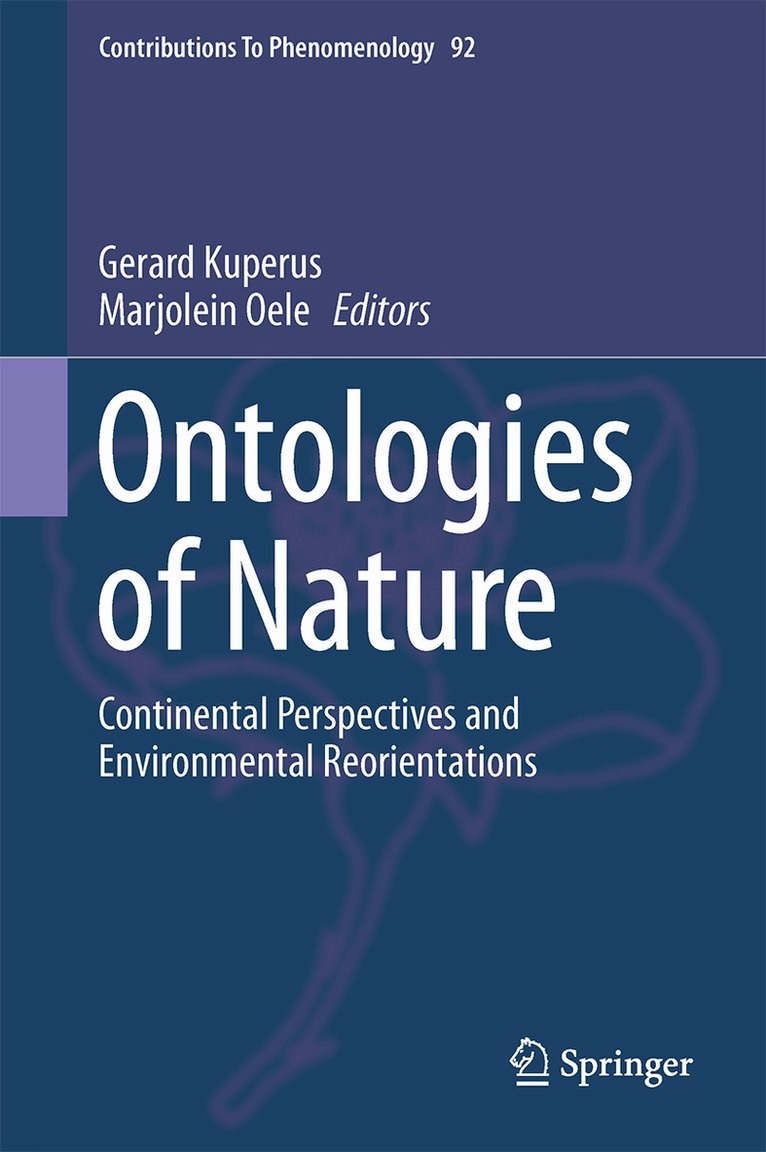
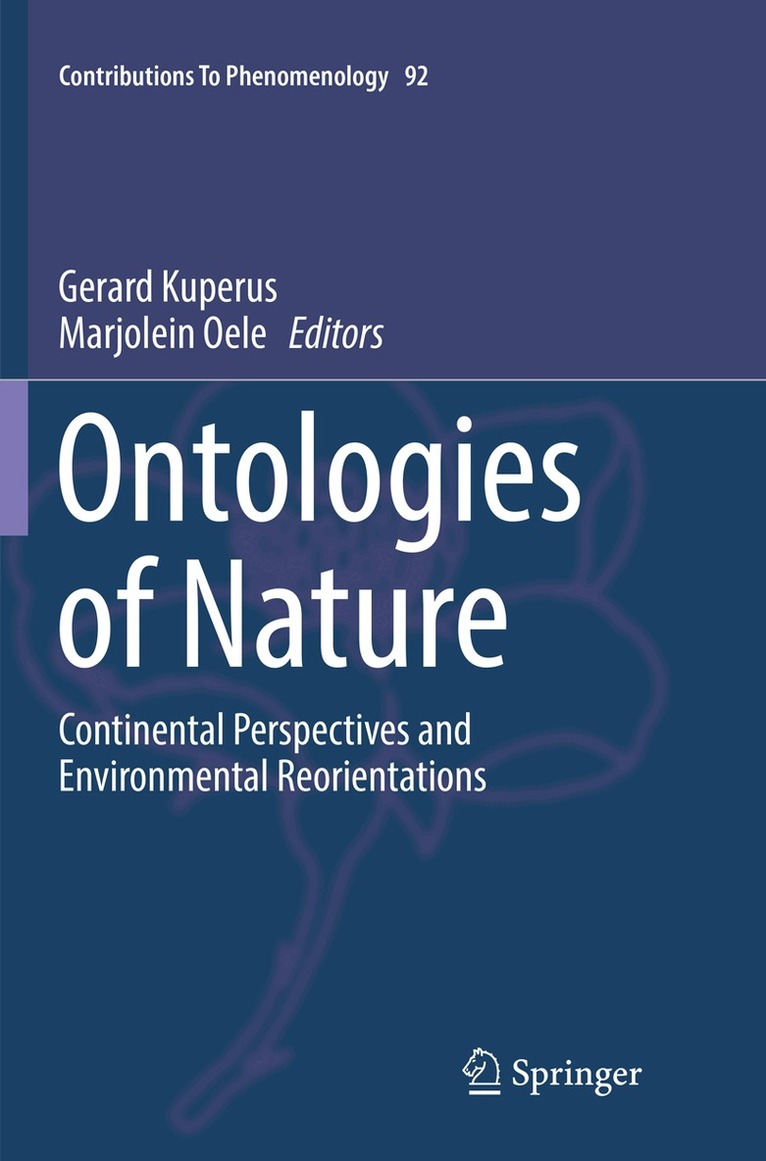
Ontologies of Nature
Continental Perspectives and Environmental Reorientations
Inbunden, Engelska, 2017
958 kr
Skickas inom 10-15 vardagar
By providing ontologies of nature from the perspective of the history of philosophy and of contemporary philosophy alike, the book shows that such perspectives need to be seen in dialogue with each other in order to offer a deeper and more comprehensive philosophy of nature.
Del 92 - Contributions to Phenomenology
Ontologies of Nature
Continental Perspectives and Environmental Reorientations
Häftad, Engelska, 2018
958 kr
Skickas inom 10-15 vardagar
By providing ontologies of nature from the perspective of the history of philosophy and of contemporary philosophy alike, the book shows that such perspectives need to be seen in dialogue with each other in order to offer a deeper and more comprehensive philosophy of nature.
360 kr
Skickas
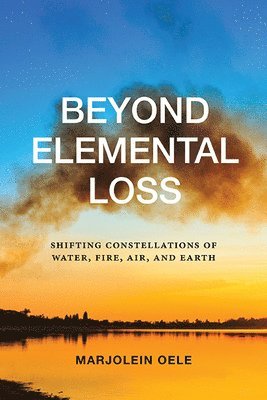
Offers an important and innovative contribution to environmental philosophy by investigating loss in times of anthropogenic climate change through the elements of water, fire, air, and earth.Beyond Elemental Loss offers an important and innovative contribution to environmental philosophy by investigating loss in times of anthropogenic climate change through the elements of water, fire, air, and earth. Marjolein Oele argues that the current experience of loss prompts a reassessment of the conventional meaning and conceptualization of loss. She proposes that such loss is best understood through infinitesimal, diachronic shifts occurring in the elemental constellations that structure the world-water, fire, air, and earth-and humanity's incremental inability to cognitively and affectively make sense of this world increasingly transformed by anthropogenic forces. Through a generous yet critical reading of a broad range of interdisciplinary sources tracing changes in our relationship to the elemental over time, Oele's scholarship plumbs the history of philosophy as much as it pulls from Indigenous philosophies, continental thought, mythologies, anthropological and historical sources, science, and ecology. The book's argumentative arc ultimately directs our attention toward constructive transformations in our cognitive and affective habits, and it argues that trust can bring us beyond elemental loss.
1 254 kr
Skickas
Offers an important and innovative contribution to environmental philosophy by investigating loss in times of anthropogenic climate change through the elements of water, fire, air, and earth.Beyond Elemental Loss offers an important and innovative contribution to environmental philosophy by investigating loss in times of anthropogenic climate change through the elements of water, fire, air, and earth. Marjolein Oele argues that the current experience of loss prompts a reassessment of the conventional meaning and conceptualization of loss. She proposes that such loss is best understood through infinitesimal, diachronic shifts occurring in the elemental constellations that structure the world-water, fire, air, and earth-and humanity's incremental inability to cognitively and affectively make sense of this world increasingly transformed by anthropogenic forces. Through a generous yet critical reading of a broad range of interdisciplinary sources tracing changes in our relationship to the elemental over time, Oele's scholarship plumbs the history of philosophy as much as it pulls from Indigenous philosophies, continental thought, mythologies, anthropological and historical sources, science, and ecology. The book's argumentative arc ultimately directs our attention toward constructive transformations in our cognitive and affective habits, and it argues that trust can bring us beyond elemental loss.