Marjorie Howes - Böcker
Visar alla böcker från författaren Marjorie Howes. Handla med fri frakt och snabb leverans.
9 produkter
9 produkter
409 kr
Skickas inom 10-15 vardagar
In Yeats and Afterwords, contributors articulate W. B. Yeats's powerful, multilayered sense of belatedness as part of his complex literary method. They explore how Yeats deliberately positioned himself at various historical endpoints—of Romanticism, of the Irish colonial experience, of the Ascendancy, of civilization itself—and, in doing so, created a distinctively modernist poetics of iteration capable of registering the experience of finality and loss. While the crafting of such a poetics remained a constant throughout Yeats's career, the particular shape it took varied over time, depending on which lost object Yeats was contemplating. By tracking these vicissitudes, the volume offers new ways of thinking about the overarching trajectory of Yeats's poetic engagements.Yeats and Afterwords proceeds in three stages, involving past-pastness, present-pastness, and future-pastness. The first, "The Last Romantics," examines how Yeats repeats classic motifs and verbal formulations from his literary forebears in order to express the circumscribed cultural options with which he struggles. The essays in this section often uncover Yeats's relation to sources and precursors that are surprising or have been relatively neglected by scholars. The second section, "Yeats and Afterwords," looks at how Yeats subjects his own past sentiments, insights, and styles to critical negation, crafting his own afterwords in various ways. The last section, "Yeats's Aftertimes," explores how, thanks to the stature Yeats achieved through its invention, his style of belatedness itself comes to be reiterated by other writers. Yeats is a towering figure in literary history, hard to follow and harder to avoid, and later writers often found themselves producing words that were, in some sense, his afterwords.
1 549 kr
Skickas inom 10-15 vardagar
In Yeats and Afterwords, contributors articulate W. B. Yeats's powerful, multilayered sense of belatedness as part of his complex literary method. They explore how Yeats deliberately positioned himself at various historical endpoints—of Romanticism, of the Irish colonial experience, of the Ascendancy, of civilization itself—and, in doing so, created a distinctively modernist poetics of iteration capable of registering the experience of finality and loss. While the crafting of such a poetics remained a constant throughout Yeats's career, the particular shape it took varied over time, depending on which lost object Yeats was contemplating. By tracking these vicissitudes, the volume offers new ways of thinking about the overarching trajectory of Yeats's poetic engagements.Yeats and Afterwords proceeds in three stages, involving past-pastness, present-pastness, and future-pastness. The first, "The Last Romantics," examines how Yeats repeats classic motifs and verbal formulations from his literary forebears in order to express the circumscribed cultural options with which he struggles. The essays in this section often uncover Yeats's relation to sources and precursors that are surprising or have been relatively neglected by scholars. The second section, "Yeats and Afterwords," looks at how Yeats subjects his own past sentiments, insights, and styles to critical negation, crafting his own afterwords in various ways. The last section, "Yeats's Aftertimes," explores how, thanks to the stature Yeats achieved through its invention, his style of belatedness itself comes to be reiterated by other writers. Yeats is a towering figure in literary history, hard to follow and harder to avoid, and later writers often found themselves producing words that were, in some sense, his afterwords.
614 kr
Skickas inom 7-10 vardagar
Yeats, it has been claimed, invented a country and called it Ireland. In his plays, poetry and prose, the Anglo-Irish aristocrat and the rural Gaelic peasant combine to form a new community founded on custom and ceremony. Marjorie Howes's 1996 study attempts to examine Yeats's continuous search for political origins and cultural traditions through theoretical work on literature, gender and nationalism in post-colonial cultures. She explores the complex, often contradictory, ways Yeats's politics are refracted through his writing and shows how his enthusiastic advocacy of the concept of nationality often clashed with his distaste for the dominant, often exclusive, forms of Irish identity surrounding him. For every public proclamation on national destiny, there is an intensely private scrutiny of his own sexual identity. Howes places Yeats at the centre of debates on nationalism and gender that currently occupy critics in post-colonial studies. Her study will be of interest to all interested in Irish studies, postcolonial theory, and the relationship between nationalism and sexuality.
1 189 kr
Skickas inom 7-10 vardagar
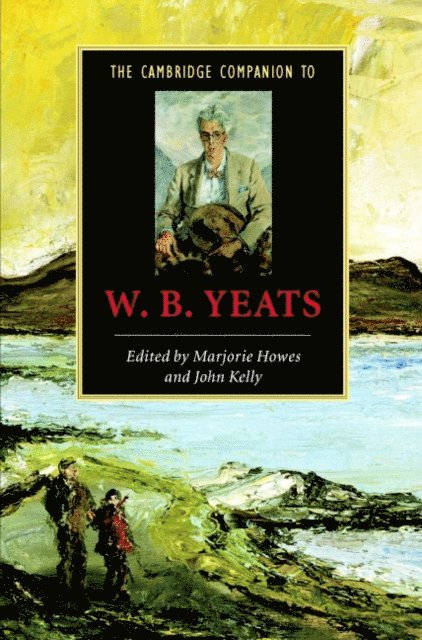
This accessible and thought-provoking Companion is designed to help students experience the pleasures and challenges offered by one of the twentieth century's greatest poets. A team of international contributors examine Yeats's poetry, drama and prose in their historical and national contexts. The essays explain and synthesise major aspects and themes of his life and work: his lifelong engagement with Ireland, his complicated relationship to the English literary tradition, his literary, social, and political criticism and the evolution of his complex spiritual and religious sense. First-time readers of Yeats as well as more advanced scholars will welcome this comprehensive account of Yeats's career with its useful chronological outline and survey of the most important trends in Yeats scholarship. Taken as a whole, this Companion comprises an essential introduction for students and teachers of Yeats.
428 kr
Skickas inom 7-10 vardagar
This accessible and thought-provoking Companion is designed to help students experience the pleasures and challenges offered by one of the twentieth century's greatest poets. A team of international contributors examine Yeats's poetry, drama and prose in their historical and national contexts. The essays explain and synthesise major aspects and themes of his life and work: his lifelong engagement with Ireland, his complicated relationship to the English literary tradition, his literary, social, and political criticism and the evolution of his complex spiritual and religious sense. First-time readers of Yeats as well as more advanced scholars will welcome this comprehensive account of Yeats's career with its useful chronological outline and survey of the most important trends in Yeats scholarship. Taken as a whole, this Companion comprises an essential introduction for students and teachers of Yeats.
644 kr
Skickas inom 7-10 vardagar
James Joyce's fiction constantly engages with an Ireland whose present and past is marked by the long struggle to achieve full independence from Britain. Semicolonial Joyce is a collection of essays addressing the importance of Ireland's colonial situation in understanding Joyce's work. The volume brings together leading commentators on the Irish dimension of Joyce's writing, such as Vincent J. Cheng, Seamus Deane, Enda Duffy, Luke Gibbons, David Lloyd, and Emer Nolan, to present a range of voices rather than a single position on a topic which has had a major impact on Joyce criticism in recent years. Contributors explore Joyce's ambivalent and shifting response to Irish nationalism and reconsider his writing in the context of the history of Western colonialism. The essays both draw on and question the achievements of postcolonial theory, and provide insights into Joyce's resourceful engagement with political issues that remain highly topical today.
479 kr
Skickas inom 7-10 vardagar
The Irish Revival has inspired a richly diverse and illuminating body of scholarship that has enlarged our understanding of the movement and its influence. The general tenor of recent scholarly work has involved an emphasis on inclusion and addition, exploring previously neglected texts, authors, regional variations, and international connections. Such work, while often excellent, tends to see various revivalist figures and projects as part of a unified endeavor, such as political resistance or self-help. In contrast, The Irish Revival: A Complex Vision seeks to reimagine the field by interpreting the Revival through the concept of "complexity," a theory recently developed in the information and biological sciences.Taken as a whole, these essays show that the Revival’s various components operated as parts of a network but without any overarching aim or authority. In retrospect, the Revival’s elements can be seen to have come together under the heading of a single objective; for example, decolonization broadly construed. But this volume highlights how revivalist thinkers differed significantly on what such an aspiration might mean or lead to: ethnic authenticity, political autonomy, or greater collective prosperity and well-being. Contributors examine how relationships among the Revival’s individual parts involved conflict and cooperation, difference and similarity, continuity and disruption. It is this combination of convergence without unifying purpose and divergence within a broad but flexible coherence that Valente and Howes capture by reinterpreting the Revival through complexity theory.
1 056 kr
Skickas inom 10-15 vardagar
The Irish Revival has inspired a richly diverse and illuminating body of scholarship that has enlarged our understanding of the movement and its influence. The general tenor of recent scholarly work has involved an emphasis on inclusion and addition, exploring previously neglected texts, authors, regional variations, and international connections. Such work, while often excellent, tends to see various revivalist figures and projects as part of a unified endeavor, such as political resistance or self-help. In contrast, The Irish Revival: A Complex Vision seeks to reimagine the field by interpreting the Revival through the concept of "complexity," a theory recently developed in the information and biological sciences.Taken as a whole, these essays show that the Revival’s various components operated as parts of a network but without any overarching aim or authority. In retrospect, the Revival’s elements can be seen to have come together under the heading of a single objective; for example, decolonization broadly construed. But this volume highlights how revivalist thinkers differed significantly on what such an aspiration might mean or lead to: ethnic authenticity, political autonomy, or greater collective prosperity and well-being. Contributors examine how relationships among the Revival’s individual parts involved conflict and cooperation, difference and similarity, continuity and disruption. It is this combination of convergence without unifying purpose and divergence within a broad but flexible coherence that Valente and Howes capture by reinterpreting the Revival through complexity theory.
546 kr
Kommande
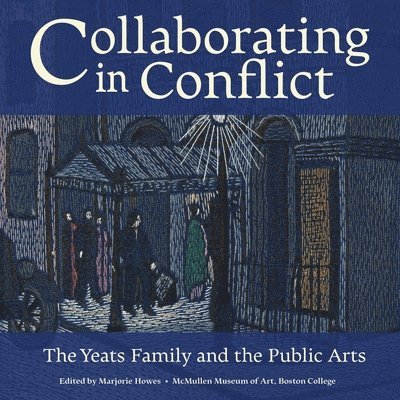
A thorough exploration of the artistic accomplishments and public influence of the Yeats family, focusing on the contributions of its lesser-known members.Collaborating in Conflict accompanies an innovative multimedia exhibition exploring the prolific artistic accomplishments of the Yeats family over three generations. The important contributions of lesser-known members of the Yeats family—John Butler Yeats, Susan Mary (Lily) Yeats, Elizabeth Corbet Yeats, and Anne Butler Yeats—are illuminated alongside those of its more famous figures, Jack Butler Yeats and William Butler Yeats. Featuring an enormous range of objects that are illustrated in full color, some of which have never been exhibited publicly before, it celebrates the extraordinary impact this talented family had on cultural life in Ireland during the crucial decades leading up to and following Irish independence in 1922. The volume also sheds light on the fascinating private dramas that unfolded as individual family members struggled financially, worked together peacefully in some instances, and came into bitter conflict in others.An interdisciplinary team of scholars from the United States, the United Kingdom, and Ireland offers new insights into historical contexts and interpretive frameworks for studying the Yeatses. Fifteen essays explore the family’s complicated personal and working relationships and examine their developments in composition and artistic techniques. The volume highlights the achievements of the Yeats women in printing, painting, and embroidery. Essays analyze the importance that locations such as Sligo held for various family members and investigate how shifting political landscapes and world events were reflected in their work. Writers also discuss the interconnections among music, theater, visual art, and poetry in the Yeatses’ artistic output.