Joseph Valente - Böcker
Visar alla böcker från författaren Joseph Valente. Handla med fri frakt och snabb leverans.
17 produkter
17 produkter
494 kr
Skickas inom 7-10 vardagar
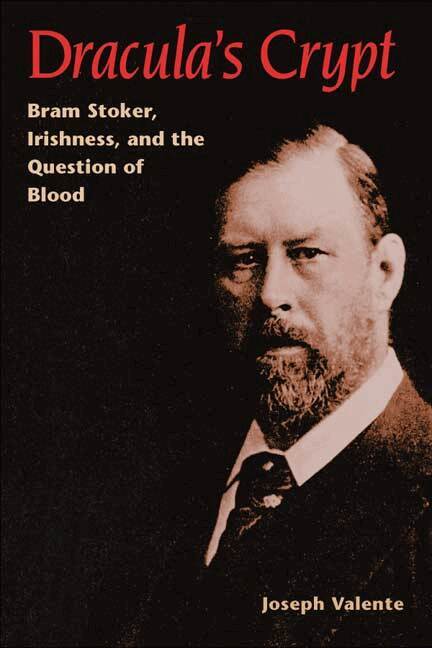
Dracula's Crypt unearths the Irish roots of Bram Stoker's gothic masterpiece, offering a fresh interpretation of the author's relationship to his novel and to the politics of blood that consumes its characters. An ingenious reappraisal of a classic text, Dracula's Crypt presents Stoker's novel as a subtly ironic commentary on England's preoccupation with racial purity. Probing psychobiographical, political, and cultural elements of Stoker's background and milieu, Joseph Valente distinguishes Stoker's viewpoint from that of his virulently racist, hypermasculine vampire hunters, showing how the author's dual Anglo-Celtic heritage and uncertain status as an Irish parvenu among London's theatrical elite led him to espouse a progressive racial ideology at odds with the dominant Anglo-Saxon supremacism. In the light of Stoker's experience, the shabby-genteel Count Dracula can be seen as a doppelgÄnger, an ambiguous figure who is at once the blood-conscious landed aristocrat and the bloodthirsty foreign invader. Stoker also confronts gender ideals and their implications, exposing the "inner vampire" in men like Jonathan Harker who dominate and absorb the women who become their wives. Ultimately, Valente argues, the novel celebrates a feminine heroism, personified by Mina Harker, that upholds an ethos of social connectivity against the prevailing obsession with blood as a vehicle of identity. Revealing a profound and heretofore unrecognized ethical and political message, Dracula's Crypt maintains that the real threat delineated in Dracula is not racial degeneration but the destructive force of racialized anxiety itself. Stoker's novel emerges as a powerful critique of the very anxieties it has previously been taken to express: anxieties concerning the decline of the British empire, the deterioration of Anglo-Saxon culture, and the contamination of the Anglo-Saxon race.
579 kr
Skickas inom 7-10 vardagar
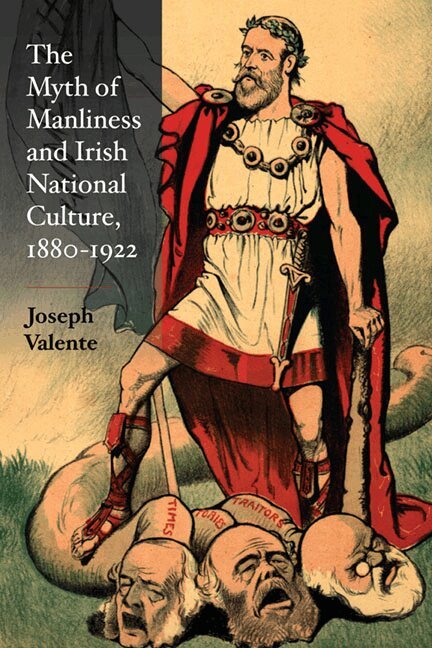
This study aims to supply the first contextually precise account of the male gender anxieties and ambivalences haunting the culture of Irish nationalism in the period between the Act of Union and the founding of the Irish Free State. To this end, Joseph Valente focuses upon the Victorian ethos of manliness or manhood, the specific moral and political logic of which proved crucial to both the translation of British rule into British hegemony and the expression of Irish rebellion as Irish psychomachia. The influential operation of this ideological construct is traced through a wide variety of contexts, including the career of Ireland's dominant Parliamentary leader, Charles Stewart Parnell; the institutions of Irish Revivalism--cultural, educational, journalistic, and literary; the writings of both canonical authors (Yeats, Synge, Gregory, and Joyce) and subcanonical authors (James Stephens, Patrick Pearse, Lennox Robinson); and major political movements of the time, including suffragism, Sinn Fein, Na Fianna E Éireann, and the Volunteers. The construct of manliness remains very much alive today, underpinning the neo-imperialist marriage of ruthless aggression and the sanctities of duty, honor, and sacrifice. Mapping its earlier colonial and postcolonial formations can help us to understand its continuing geopolitical appeal and danger.
881 kr
Skickas inom 11-20 vardagar
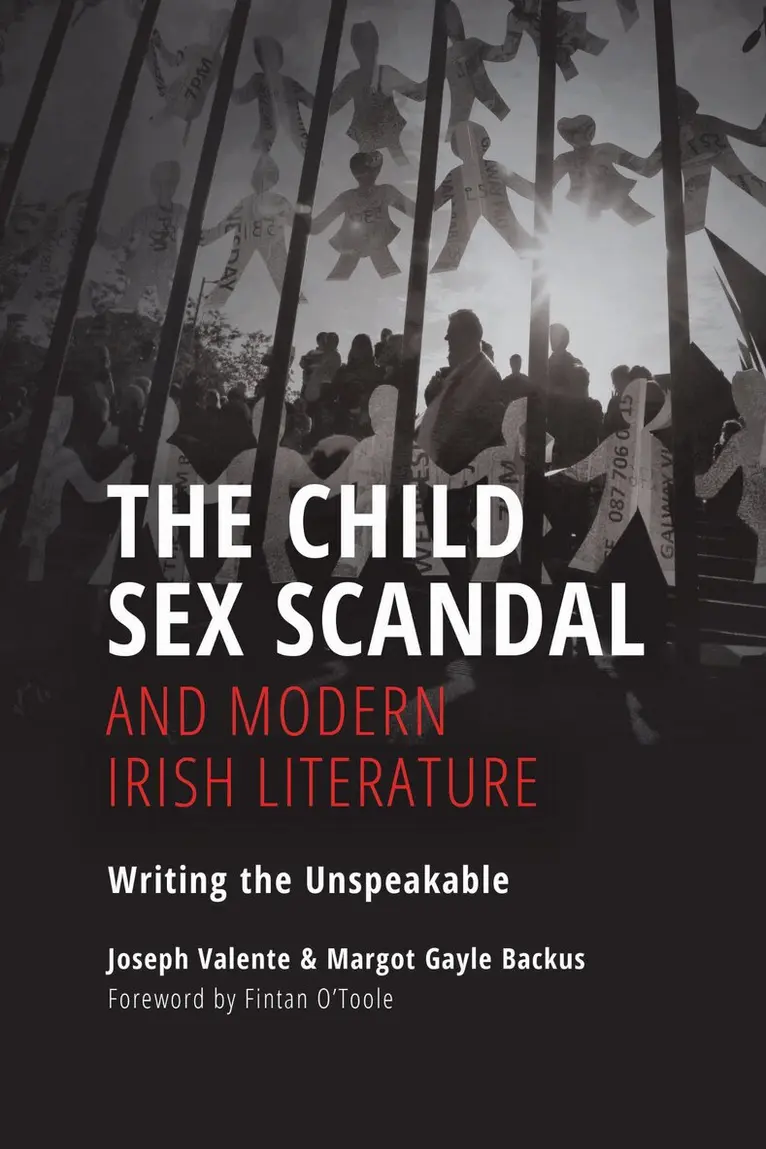
Even though the Irish child sex abuse scandals in the Catholic Church have appeared steadily in the media, many children remain in peril. In The Child Sex Scandal and Modern Irish Literature, Joseph Valente and Margot Gayle Backus examine modern cultural responses to child sex abuse in Ireland. Using descriptions of these scandals found in newspapers, historiographical analysis, and 20th- and 21st-century literature, Valente and Backus expose a public sphere ardently committed to Irish children's souls and piously oblivious to their physical welfare. They offer historically contextualized and psychoanalytically informed readings of scandal narratives by nine notable modern Irish authors who actively, pointedly, and persistently question Ireland's responsibilities regarding its children. Through close, critical readings, a more nuanced and troubling account emerges of how Ireland's postcolonial heritage has served to enable such abuse. The Child Sex Scandal and Modern Irish Literature refines the debates on why so many Irish children were lost by offering insight into the lived experience of both the children and those who failed them.
332 kr
Skickas inom 10-15 vardagar
Even though the Irish child sex abuse scandals in the Catholic Church have appeared steadily in the media, many children remain in peril. In The Child Sex Scandal and Modern Irish Literature, Joseph Valente and Margot Gayle Backus examine modern cultural responses to child sex abuse in Ireland. Using descriptions of these scandals found in newspapers, historiographical analysis, and 20th- and 21st-century literature, Valente and Backus expose a public sphere ardently committed to Irish children's souls and piously oblivious to their physical welfare. They offer historically contextualized and psychoanalytically informed readings of scandal narratives by nine notable modern Irish authors who actively, pointedly, and persistently question Ireland's responsibilities regarding its children. Through close, critical readings, a more nuanced and troubling account emerges of how Ireland's postcolonial heritage has served to enable such abuse. The Child Sex Scandal and Modern Irish Literature refines the debates on why so many Irish children were lost by offering insight into the lived experience of both the children and those who failed them.
409 kr
Skickas inom 10-15 vardagar
In Yeats and Afterwords, contributors articulate W. B. Yeats's powerful, multilayered sense of belatedness as part of his complex literary method. They explore how Yeats deliberately positioned himself at various historical endpoints—of Romanticism, of the Irish colonial experience, of the Ascendancy, of civilization itself—and, in doing so, created a distinctively modernist poetics of iteration capable of registering the experience of finality and loss. While the crafting of such a poetics remained a constant throughout Yeats's career, the particular shape it took varied over time, depending on which lost object Yeats was contemplating. By tracking these vicissitudes, the volume offers new ways of thinking about the overarching trajectory of Yeats's poetic engagements.Yeats and Afterwords proceeds in three stages, involving past-pastness, present-pastness, and future-pastness. The first, "The Last Romantics," examines how Yeats repeats classic motifs and verbal formulations from his literary forebears in order to express the circumscribed cultural options with which he struggles. The essays in this section often uncover Yeats's relation to sources and precursors that are surprising or have been relatively neglected by scholars. The second section, "Yeats and Afterwords," looks at how Yeats subjects his own past sentiments, insights, and styles to critical negation, crafting his own afterwords in various ways. The last section, "Yeats's Aftertimes," explores how, thanks to the stature Yeats achieved through its invention, his style of belatedness itself comes to be reiterated by other writers. Yeats is a towering figure in literary history, hard to follow and harder to avoid, and later writers often found themselves producing words that were, in some sense, his afterwords.
1 549 kr
Skickas inom 10-15 vardagar
In Yeats and Afterwords, contributors articulate W. B. Yeats's powerful, multilayered sense of belatedness as part of his complex literary method. They explore how Yeats deliberately positioned himself at various historical endpoints—of Romanticism, of the Irish colonial experience, of the Ascendancy, of civilization itself—and, in doing so, created a distinctively modernist poetics of iteration capable of registering the experience of finality and loss. While the crafting of such a poetics remained a constant throughout Yeats's career, the particular shape it took varied over time, depending on which lost object Yeats was contemplating. By tracking these vicissitudes, the volume offers new ways of thinking about the overarching trajectory of Yeats's poetic engagements.Yeats and Afterwords proceeds in three stages, involving past-pastness, present-pastness, and future-pastness. The first, "The Last Romantics," examines how Yeats repeats classic motifs and verbal formulations from his literary forebears in order to express the circumscribed cultural options with which he struggles. The essays in this section often uncover Yeats's relation to sources and precursors that are surprising or have been relatively neglected by scholars. The second section, "Yeats and Afterwords," looks at how Yeats subjects his own past sentiments, insights, and styles to critical negation, crafting his own afterwords in various ways. The last section, "Yeats's Aftertimes," explores how, thanks to the stature Yeats achieved through its invention, his style of belatedness itself comes to be reiterated by other writers. Yeats is a towering figure in literary history, hard to follow and harder to avoid, and later writers often found themselves producing words that were, in some sense, his afterwords.
James Joyce and the Problem of Justice
Negotiating Sexual and Colonial Difference
Häftad, Engelska, 2009
493 kr
Skickas inom 7-10 vardagar
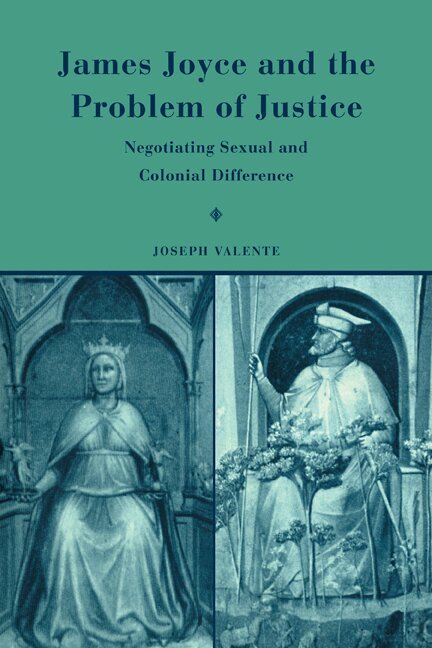
This is the first full-length study of James Joyce to subject his work to ethical and political analysis. It addresses important issues in contemporary literary and cultural studies surrounding problems of justice, as well as discussions of gender, homosociality and the colonial condition. Valente uses an original theory and psychology of justice through which to explore both the well-known and the more obscure of Joyce's works. He traces the remarkable formal and stylistic evolution that defined Joyce's career, and his progressive attempt to negotiate the context of social difference in racial, colonial, class and sexual terms. By analysing Joyce's verbal strategies within both the psychobiographical and sociohistorical contexts, Valente unlocks the politics of Joyce's unconscious and reveals the legacy of Western political thought.
James Joyce and the Problem of Justice
Negotiating Sexual and Colonial Difference
Inbunden, Engelska, 1995
1 371 kr
Skickas inom 7-10 vardagar
This is the first full-length study of James Joyce to subject his work to ethical and political analysis. It addresses important issues in contemporary literary and cultural studies surrounding problems of justice, as well as discussions of gender, homosociality and the colonial condition. Valente uses an original theory and psychology of justice through which to explore both the well-known and the more obscure of Joyce's works. He traces the remarkable formal and stylistic evolution that defined Joyce's career, and his progressive attempt to negotiate the context of social difference in racial, colonial, class and sexual terms. By analysing Joyce's verbal strategies within both the psychobiographical and sociohistorical contexts, Valente unlocks the politics of Joyce's unconscious and reveals the legacy of Western political thought.
690 kr
Skickas inom 7-10 vardagar
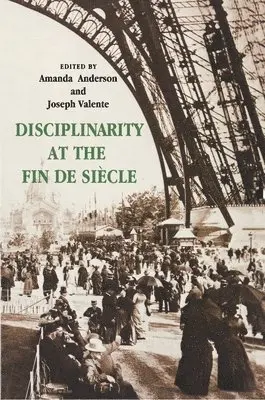
Contemporary celebrations of interdisciplinary scholarship in the humanities and social sciences often harbor a distrust of traditional disciplines, which are seen as at best narrow and unimaginative, and at worst complicit in larger forms of power and policing. Disciplinarity at the Fin de Siecle questions these assumptions by examining, for the first time, in so sustained a manner, the rise of a select number of academic disciplines in a historical perspective. This collection of twelve essays focuses on the late Victorian era in Great Britain but also on Germany, France, and America in the same formative period. The contributors--James Buzard, Lauren M. E. Goodlad, Liah Greenfeld, John Guillory, Simon Joyce, Henrika Kuklick, Christopher Lane, Jeff Nunokawa, Arkady Plotnitsky, Ivan Strenski, Athena Vrettos, and Gauri Viswanathan--examine the genealogy of various fields including English, sociology, economics, psychology, and quantum physics. Together with the editors' cogent introduction, they challenge the story of disciplinary formation as solely one of consolidation, constraint, and ideological justification.Addressing a broad range of issues--disciplinary formations, disciplinarity and professionalism, disciplines of the self, discipline and the state, and current disciplinary debates--the book aims to dislodge what the editors call the "comfortable pessimism" that too readily assimilates disciplines to techniques of management or control. It advances considerably the effort to more fully comprehend the complex legacy of the human sciences.
479 kr
Skickas inom 7-10 vardagar
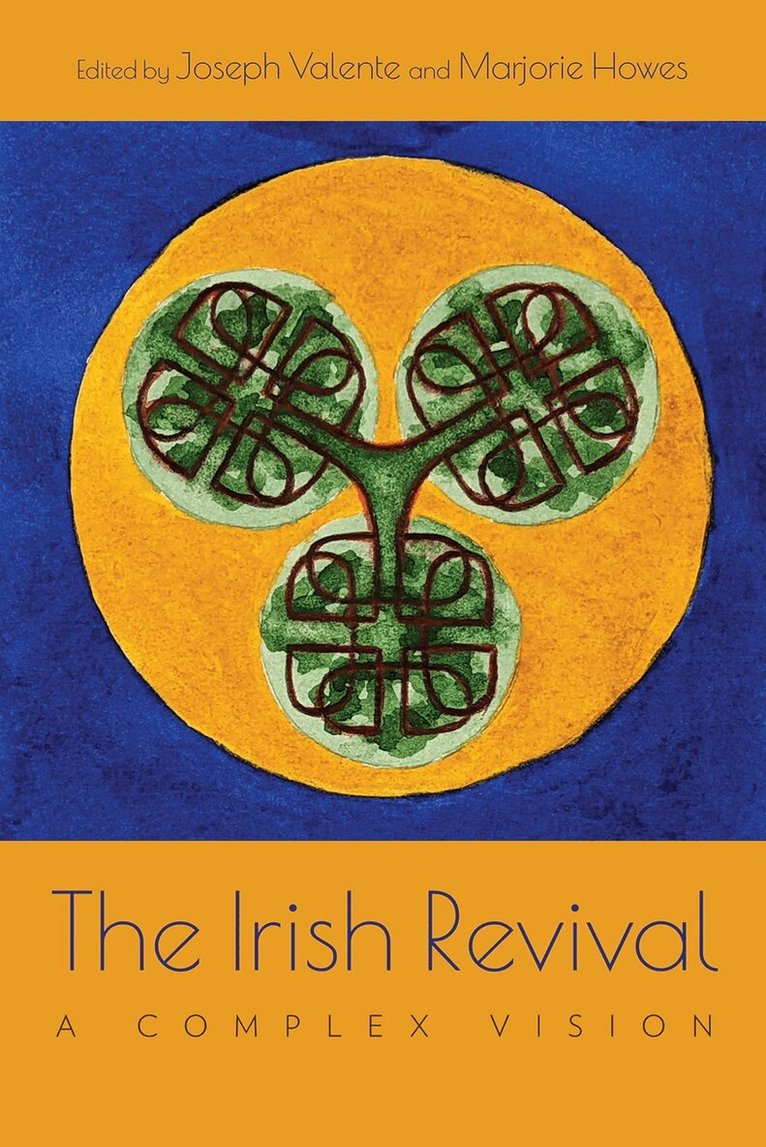
The Irish Revival has inspired a richly diverse and illuminating body of scholarship that has enlarged our understanding of the movement and its influence. The general tenor of recent scholarly work has involved an emphasis on inclusion and addition, exploring previously neglected texts, authors, regional variations, and international connections. Such work, while often excellent, tends to see various revivalist figures and projects as part of a unified endeavor, such as political resistance or self-help. In contrast, The Irish Revival: A Complex Vision seeks to reimagine the field by interpreting the Revival through the concept of "complexity," a theory recently developed in the information and biological sciences.Taken as a whole, these essays show that the Revival’s various components operated as parts of a network but without any overarching aim or authority. In retrospect, the Revival’s elements can be seen to have come together under the heading of a single objective; for example, decolonization broadly construed. But this volume highlights how revivalist thinkers differed significantly on what such an aspiration might mean or lead to: ethnic authenticity, political autonomy, or greater collective prosperity and well-being. Contributors examine how relationships among the Revival’s individual parts involved conflict and cooperation, difference and similarity, continuity and disruption. It is this combination of convergence without unifying purpose and divergence within a broad but flexible coherence that Valente and Howes capture by reinterpreting the Revival through complexity theory.
1 056 kr
Skickas inom 10-15 vardagar
The Irish Revival has inspired a richly diverse and illuminating body of scholarship that has enlarged our understanding of the movement and its influence. The general tenor of recent scholarly work has involved an emphasis on inclusion and addition, exploring previously neglected texts, authors, regional variations, and international connections. Such work, while often excellent, tends to see various revivalist figures and projects as part of a unified endeavor, such as political resistance or self-help. In contrast, The Irish Revival: A Complex Vision seeks to reimagine the field by interpreting the Revival through the concept of "complexity," a theory recently developed in the information and biological sciences.Taken as a whole, these essays show that the Revival’s various components operated as parts of a network but without any overarching aim or authority. In retrospect, the Revival’s elements can be seen to have come together under the heading of a single objective; for example, decolonization broadly construed. But this volume highlights how revivalist thinkers differed significantly on what such an aspiration might mean or lead to: ethnic authenticity, political autonomy, or greater collective prosperity and well-being. Contributors examine how relationships among the Revival’s individual parts involved conflict and cooperation, difference and similarity, continuity and disruption. It is this combination of convergence without unifying purpose and divergence within a broad but flexible coherence that Valente and Howes capture by reinterpreting the Revival through complexity theory.
1 277 kr
Skickas
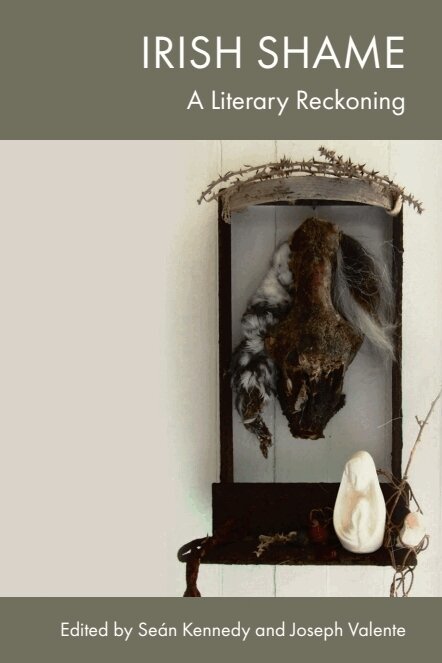
Shame has haunted Ireland since the inception of Irishness itself. As such, it has come to seem an ineluctable modality of Irish life. In fact, the contours of Irish shame have evolved over time, shifting with alterations in their colonial predicament, and in their response, whether complicit or resistant, to economic, political, and cultural dispossession. Irish Shame offers an anatomy of that condition. In twelve essays, it traces the ethnic, religious, biopolitical, psychosocial and neurodiverse parameters of shame as a force in Irish life.
342 kr
Kommande
Shame has haunted Ireland since the inception of Irishness itself. As such, it has come to seem an ineluctable modality of Irish life. In fact, the contours of Irish shame have evolved over time, shifting with alterations in their colonial predicament, and in their response, whether complicit or resistant, to economic, political, and cultural dispossession. Irish Shame offers an anatomy of that condition. In twelve essays, it traces the ethnic, religious, biopolitical, psychosocial and neurodiverse parameters of shame as a force in Irish life.
652 kr
Kommande
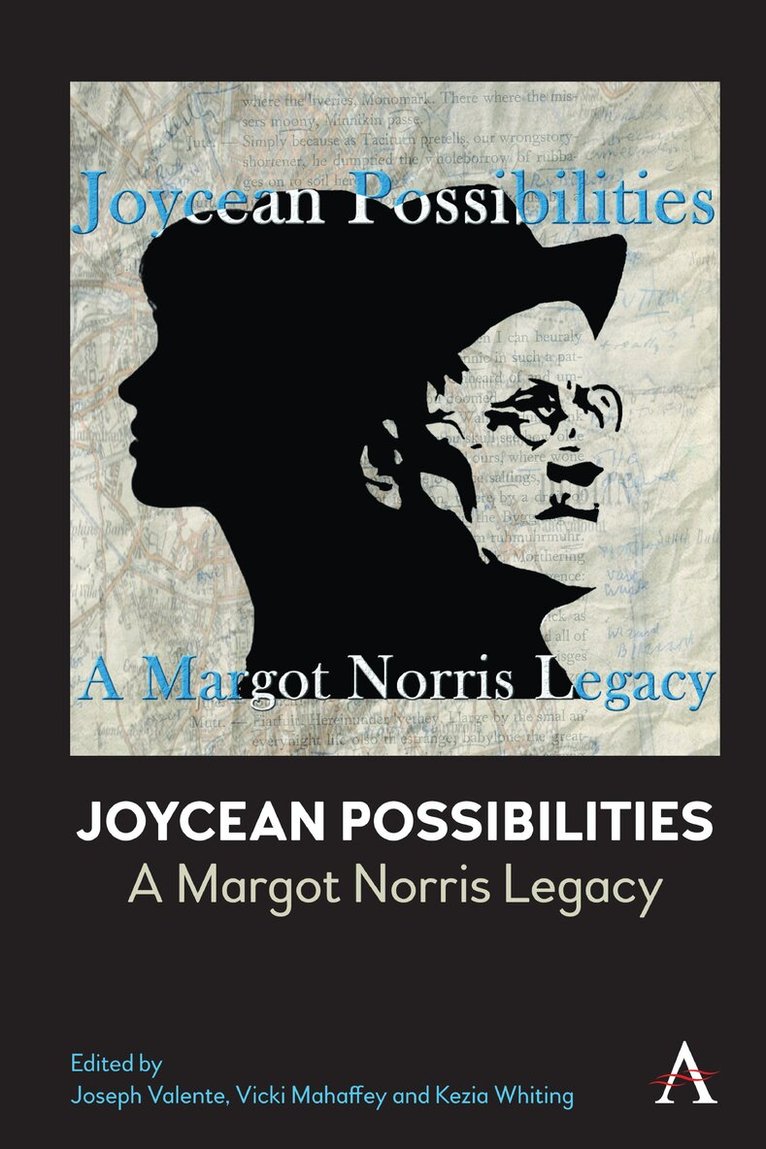
This volume proposes to honor the trenchant, influential scholarship of Professor Margot Norris in essays that amplify her illumination of Joyce’s oeuvre. The common denominator running through her work is her openness to Joyce’s various modes of innovation; she pioneered alternative ways of regarding his fiction, the readers it addresses, the narrative and generic forms it alters, the world to which it refers, and the nature of the socio-historical status quo it exposes. These categories anchor and organize the collection: Joyce’s textual plurivalence, formal innovations, possible worlds, emergent histories (including those of women), and variegated readerships.
1 442 kr
Skickas inom 5-8 vardagar
This volume proposes to honor the trenchant, influential scholarship of Professor Margot Norris in essays that amplify her illumination of Joyce’s oeuvre. The common denominator running through her work is her openness to Joyce’s various modes of innovation; she pioneered alternative ways of regarding his fiction, the readers it addresses, the narrative and generic forms it alters, the world to which it refers, and the nature of the socio-historical status quo it exposes. These categories anchor and organize the collection: Joyce’s textual plurivalence, formal innovations, possible worlds, emergent histories (including those of women), and variegated readerships.
512 kr
Tillfälligt slut
512 kr
Tillfälligt slut