• Fri frakt över 249 kr
  • •
  • Snabba leveranser
  • •
  • Billiga böcker
Kundservice

Du är på sajten för privatpersoner.

Företag, bibliotek eller offentlig verksamhet?

Du handlar på classic.bokus.com, där alla dina funktioner finns intakta.
Till classic.bokus.com
Bokus logotyp. Gå till startsidan.
  • Erbjudanden
  • Nyheter
  • Student
  • Topplistor
  • Barn & ungdom
  • Bokus Play
  • E-böcker
  • Pocketböcker
  • Spel & pussel

10% studentrabatt med kod TERM26

Sidfot

Mina sidor

    Hjälp

    • Kundservice
    • Vanliga frågor och svar
    • Frakt och leverans
    • Retur vid ångerrätt
    • Reklamera vara
    • Betalning
    • Köpvillkor
    • Allmänna villkor
    • Information om webbplatsens tillgänglighet

    Om Bokus

    • Om oss
    • Pressrum
    • För studenter
    • För företag
    • För bibliotek och offentlig verksamhet
    • För leverantörer
    • Hållbarhet

    Populärt

    • Aktuella erbjudanden
    • Presentkort
    • Studentlitteratur
    • Nya böcker
    • Topplistor
    • Signerade böcker
    • Engelska böcker

    Inspiration

    • Boktips
    • BookTok
    • Populära bokserier
    • Barnbokskaraktärer
    • Populära författare
    Logotyp för Bokus
    Följ oss på Facebook (extern länk)Följ oss på Instagram (extern länk)Följ oss på YouTube (extern länk)Följ oss på TikTok (extern länk)
    bokus @ CookiesAnpassa cookiesIntegritetspolicyKöpvillkor
    Till Citymail hemsida (extern länk)Till Budbee hemsida (extern länk)Till Postnord hemsida (extern länk)Till Schenker hemsida (extern länk)Till Early Bird hemsida (extern länk)Till Walleys hemsida (extern länk)
    1. Historia och arkeologi
    2. Historia
    3. Historia: särskilda händelser och ämnen
    4. Socialhistoria och kulturhistoria

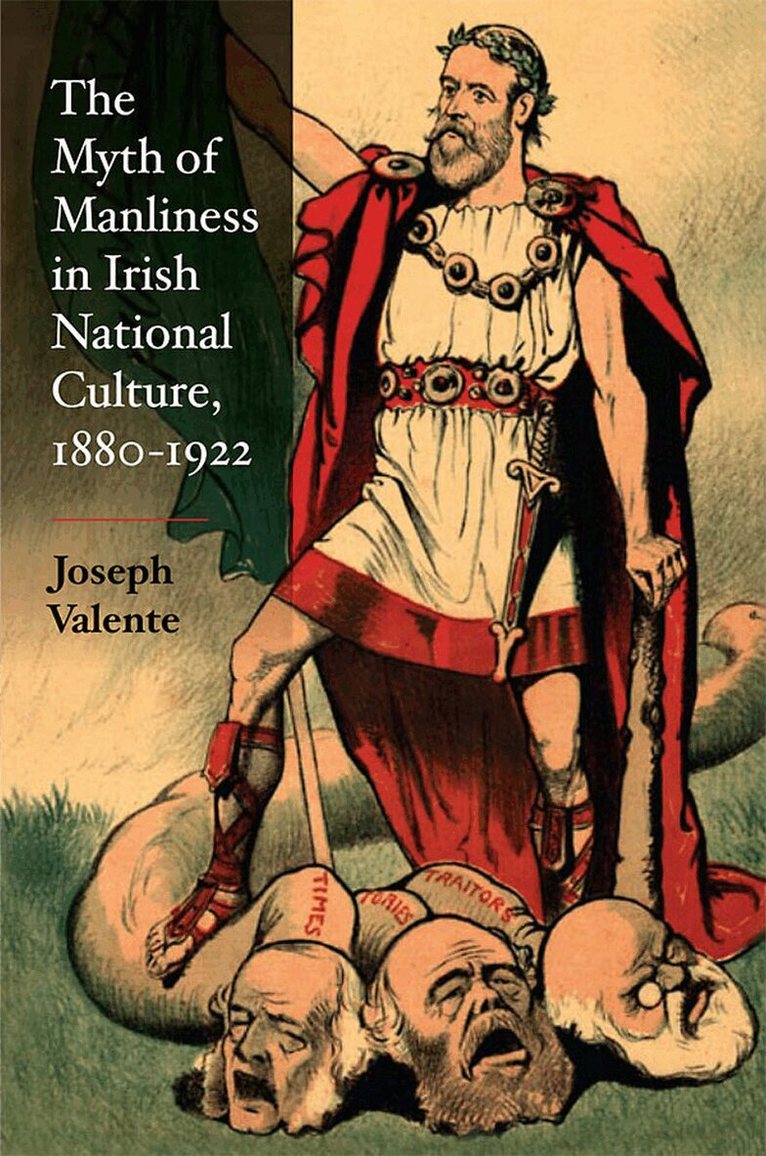
    Myth of Manliness in Irish National Culture, 1880-1922

    AvJoseph Valente

    Inbunden, Engelska, 2010

    599 kr

    Beställningsvara. Skickas inom 5-8 vardagar. Fri frakt över 249 kr.

    Fler format och utgåvor

    E-bok

    632 kr

    Beskrivning

    This study aims to supply the first contextually precise account of the male gender anxieties and ambivalences haunting the culture of Irish nationalism in the period between the Act of Union and the founding of the Irish Free State. To this end, Joseph Valente focuses upon the Victorian ethos of manliness or manhood, the specific moral and political logic of which proved crucial to both the translation of British rule into British hegemony and the expression of Irish rebellion as Irish psychomachia. The influential operation of this ideological construct is traced through a wide variety of contexts, including the career of Ireland's dominant Parliamentary leader, Charles Stewart Parnell; the institutions of Irish Revivalism--cultural, educational, journalistic, and literary; the writings of both canonical authors (Yeats, Synge, Gregory, and Joyce) and subcanonical authors (James Stephens, Patrick Pearse, Lennox Robinson); and major political movements of the time, including suffragism, Sinn Fein, Na Fianna E Éireann, and the Volunteers. The construct of manliness remains very much alive today, underpinning the neo-imperialist marriage of ruthless aggression and the sanctities of duty, honor, and sacrifice. Mapping its earlier colonial and postcolonial formations can help us to understand its continuing geopolitical appeal and danger.
    Produktinformation

    • Utgivningsdatum:2010-12-20
    • Mått:156 x 235 x 25 mm
    • Vikt:567 g
    • Format:Inbunden
    • Språk:Engelska
    • Antal sidor:304
    • Förlag:University of Illinois Press
    • ISBN:9780252035715

    Utforska kategorier

    • Socialhistoria och kulturhistoria inom Historia och arkeologi
    • Genusvetenskap inom Samhälle och politik

    Mer om författaren

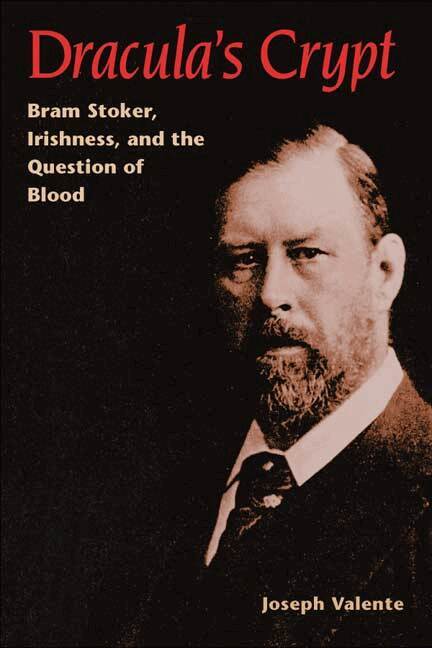
    Joseph Valente, a professor of English at the University at Buffalo, is the author of Dracula's Crypt: Bram Stoker, Irishness, and the Question of Blood and other works.

    Recensioner i media

    "The Myth of Manliness is a work of exemplary scholarship and astute analysis. Fluently written and beautifully presented, it marks an original and very significant contribution to the study of Irish culture in this remarkably formative period."--Modernism/Modernity "Required reading for all interested in gender studies in both Irish and postcolonial contexts, and a landmark in the field of masculinity studies, Valente's book is a major, and lasting intervention."--Irish University Review  "Joseph Valente's densely argued, path-breaking study of the cultural dynamics of manliness in late-nineteenth and early-twentieth century Ireland and England deserves to be as widely read and discussed as his earlier seminal work on the queer dimensions of Joyce's writing. . . . Rewarding and challenging.  Valente's path-breaking contribution to understanding Joyce and his cultural context engages, in a committed, extraordinarily rewarding way. --James Joyce Quarterly"This is undoubtedly a pioneering study. It discusses constructions of Irish manhood in one of the most decisive periods of Irish nationalist mobilization with a degree of ingenuity, authority, and commitment that is simply unmatched in the field."--Joe Cleary, author of Outrageous Fortune: Capital and Culture in Modern Ireland "Joseph Valente's book on manliness and Irish nationalism is one of the most startlingly illuminating books I have ever read on Irish literature, and I have read many; it is not only historically informed, like much of the finest critical work of the last fifteen years, it has also uncovered new historical material and intertwined those discoveries with a sophisticated and original theoretical model about how the ideal of manliness operated in both Victorian England and pre-treaty Ireland."--Vicki Mahaffey, author of Reauthorizing Joyce "[The Myth of Manliness] successfully links socio-political dimensions to gender performance."--Victoriographies "In a work of soaring ambition and equivalent achievement, Joseph Valente's study of the Victorian trope of manliness in Irish national culture has the potential not only to influence postcolonial studies beyond its subfield-Irish studies-but also to bring the subfield itself into broader geopolitical circuits of scholarly exchange." -- Interventions"Gender identity and its formation have . . . become dominant critical and theoretical problems in Irish Studies. Joseph Valente's new book, The Myth of Manliness, explores the vital importance of masculinity for our understanding of these problems, especially in a nationalist framework."--Irish Literary Supplement"The book convincingly demonstrates how gendered norms shaped British imperialism and Irish political resistance."--Nineteenth-Century Gender Studies"Sheds interesting light on Irish nationalism and its complex appropriation of Victorian gendered norms."--Études irlandaises"This book's strengths are undoubted, and are mainly in the perspicacious double-bind of manliness that is in evidence in spheres political, cultural and literary; its power is thus immeasurable."--Irish Studies Review"A growing number of publications [address] Irish masculinities. Joe Valente's recent The Myth of Manliness in Irish National Culture (2011) has set the bar in this area, and it will take some time before it is surpassed."--Beckett Circle Book Reviews"A significant contribution to the field of Irish literary and gender studies. . . . A new map for reading some of the foundational texts of twentieth-century Irish literature."--Modern Fiction Studies"Rewarding and challenging."--James Joyce Quarterly"One of the most important contributions to Irish Victorian studies in recent years. . . . This is a major study from one of our preeminent critics. It challenges and extends received wisdom on every page. It rewards careful reading and deserves a wide audience."--Victorian Studies"There is not only a powerful analysis of Victorian manliness to be found in this book, but also invaluable pockets of surprising information and new readings for historians, feminist and queer critics, scholars of the Renaissance and modernism, and those interested in Irish literature, theater, and culture."--College Literature"Valente proceeds to significantly reshape our sense of what the major ideological structures of Irish nationalist culture were during this period. He demonstrates so convincingly that his conception of manliness was absolutely crucial to a wide range of cultural discourses that, by the time I finished I was wondering why no one had seen all this before. But no one had."--Marjorie Howes, author of Colonial Crossings: Figures in Irish Literary History