Mark A. Wolfgram - Böcker
Visar alla böcker från författaren Mark A. Wolfgram. Handla med fri frakt och snabb leverans.
3 produkter
3 produkter
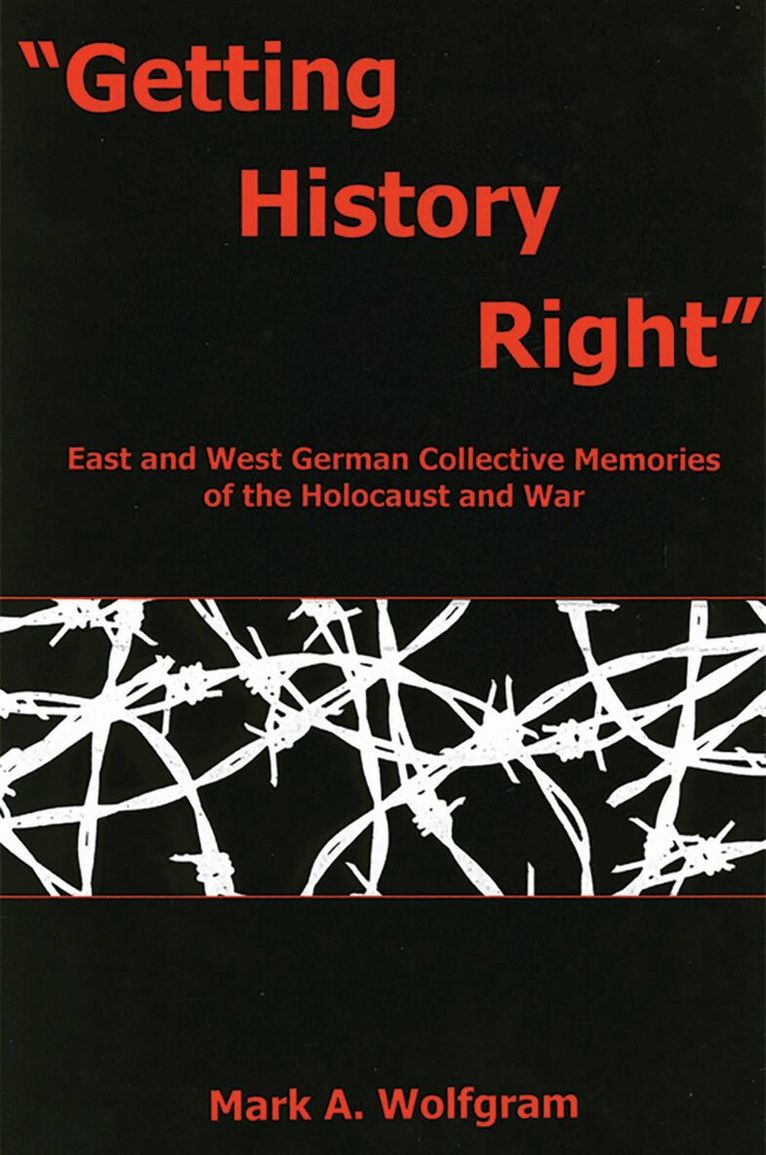
"Getting History Right"
East and West German Collective Memories of the Holocaust and War
Inbunden, Engelska, 2010
1 039 kr
Skickas inom 10-15 vardagar
How do individuals, societies, and nations deal with their difficult pasts? "Getting History Right" examines this question in a comparative context by looking at an authoritarian East Germany and a pluralistic, democratic West Germany. Eschewing a narrow focus on elites, this work draws extensively on societal level discussions of the past in popular culture, such as film, television, radio, and newspapers. It examines how societal level discussions of the past shaped individual perceptions and interpretations of the past; and how individual perceptions and struggles over the meaning of the past shaped societal level discussions. These struggles over meaning and "getting history right" are not only shaped by political power, but are also a source of symbolic power.To understand political life, scholars must embrace not only material political power, but also the symbolic and cultural roots of power. The research presented here makes extensive use of public opinion data, cinema attendance, and television viewer data, as well as other sources, to look at the multiple meanings that East and West Germans assigned to the Holocaust and World War II across time. Rather than culture merely being an extension of political power, this work argues that culture and the boundaries of the cultural matrix shape the use of political power by different social actors. Getting history right is not only a reflection of political power; it is a source of power itself.
"Getting History Right"
East and West German Collective Memories of the Holocaust and War
Häftad, Engelska, 2013
695 kr
Skickas inom 10-15 vardagar
How do individuals, societies, and nations deal with their difficult pasts? "Getting History Right" examines this question in a comparative context by looking at an authoritarian East Germany and a pluralistic, democratic West Germany. Eschewing a narrow focus on elites, this work draws extensively on societal level discussions of the past in popular culture, such as film, television, radio, and newspapers. It examines how societal level discussions of the past shaped individual perceptions and interpretations of the past; and how individual perceptions and struggles over the meaning of the past shaped societal level discussions. These struggles over meaning and "getting history right" are not only shaped by political power, but are also a source of symbolic power.To understand political life, scholars must embrace not only material political power, but also the symbolic and cultural roots of power. The research presented here makes extensive use of public opinion data, cinema attendance, and television viewer data, as well as other sources, to look at the multiple meanings that East and West Germans assigned to the Holocaust and World War II across time. Rather than culture merely being an extension of political power, this work argues that culture and the boundaries of the cultural matrix shape the use of political power by different social actors. Getting history right is not only a reflection of political power; it is a source of power itself.
373 kr
Skickas inom 7-10 vardagar
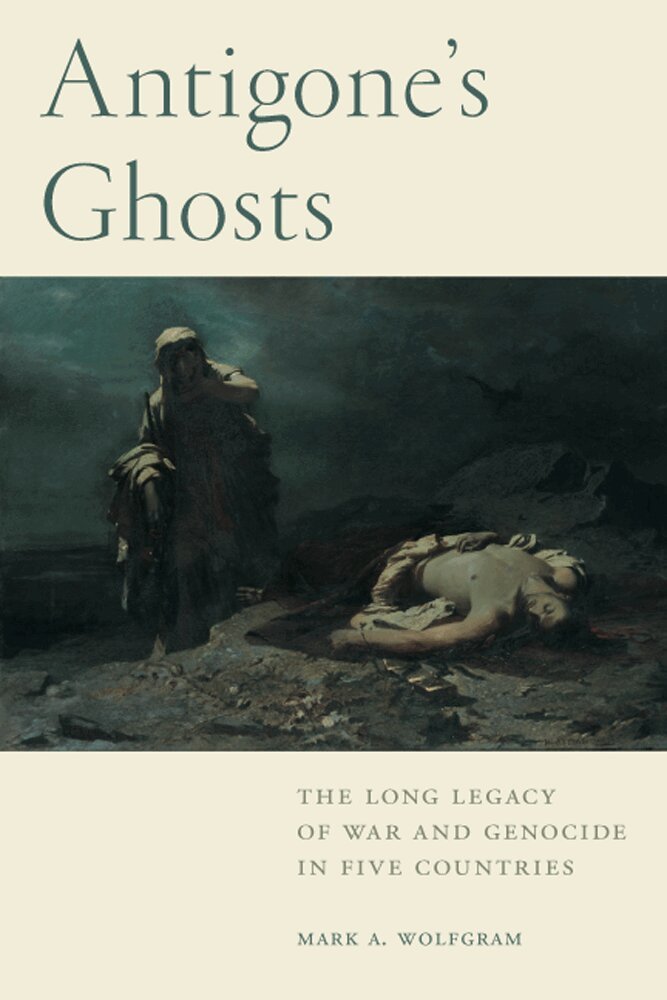
Sophocles' play Antigone is a starting point for understanding the perpetual problems of human societies, families, and individuals who are caught up in the terrible aftermath of mass violence. What is one to do after the killing has stopped? What can be done to prevent a round of new violence? The tragic and dramatic tension in the play is put in motion by setting an unyielding Antigone against King Creon. As we see through the investigation of how Germany, Japan, Spain, Yugoslavia and Turkey have dealt with their histories of mass violence and genocide in the 20th century, the forces represented by Antigone and Creon remain very much part of our world today. Through a comparison of the five countries, their political institutions, and cultural traditions, we begin to appreciate the different pathways that societies have taken when confronting their violent histories. Published by Bucknell University Press. Distributed worldwide by Rutgers University Press.