Mark Anstey - Böcker
Visar alla böcker från författaren Mark Anstey. Handla med fri frakt och snabb leverans.
4 produkter
4 produkter
The Slippery Slope to Genocide
Reducing Identity Conflicts and Preventing Mass Murder
Inbunden, Engelska, 2012
1 236 kr
Skickas inom 5-8 vardagar
Genocide results from the culmination of conflicts over identity. A group of people that feels threatened by extinction resorts to genocide as a pathologically defensive reaction. This poses a security dilemma that can only be broken by quelling the feelings of threat and fear that prompt mass violence. In order to prevent genocide, it is essential to understand the internal dynamics of identity conflict. It is also important to intervene at the early stages of identity conflict; the parties involved require external help to ease tensions. In this volume, noted thinkers and practitioners of conflict management, who hail from ten different countries, present ideas on how to prevent identity issues from causing fear and escalating into genocide. They focus on measures for handling the internal dynamics of parties facing identity conflicts, as well as considerations for arranging external assistance. Contributors address the problem of outbidders, actors whose non-conciliatory attitudes put them in positions of leadership in their identity groups. Since political extremism and violence can signal resolve and commitment to a group cause, moderates give way to hardliners. Spoilers, who believe that peace undermines their interests and power, also play a key role in the dynamics of conflicts. Careful attention is necessary to select appropriate third parties who can pull conflicting parties off the course of conflict. The authors discuss the concepts and practices involved in changing structures and attitudes to ease tensions, as well as the measures interveners must take to work in the midst of conflicting groups.
1 411 kr
Skickas inom 5-8 vardagar
Rapid systemic change within and across nations is disrupting traditional processes of identity formation and the ways groups manage their differences. The result is fragmentation: multiple identity groups making maximalist claims on governments and on one another. Internationally, a new tripolar imperialism is emerging, globalisation is weakening under US protectionism, and the United Nations’ capacity to fulfil its mission has been eroded. Within states, democracy has been in retreat for two decades. Some governments build physical or digital walls to exclude outsiders; others push vulnerable groups out or deny minorities autonomy, while minorities resist majority rule. Traditional religions are divided over gender, sexuality, and human rights. As intolerance grows and interest in accommodation declines, we must rethink diplomacy, political design, and how identity can be negotiated in an era reshaped by cyber communication and AI.
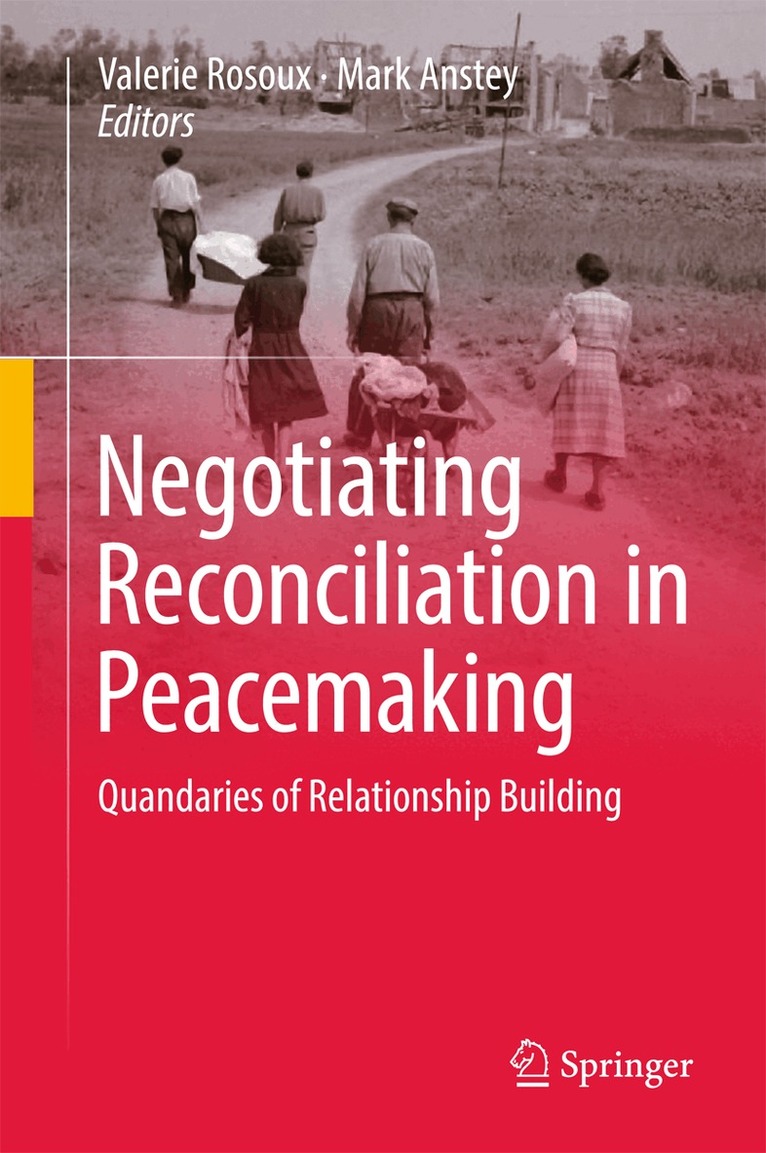
Negotiating Reconciliation in Peacemaking
Quandaries of Relationship Building
Inbunden, Engelska, 2017
1 240 kr
Skickas inom 10-15 vardagar
This book offers a unique approach to reconciliation as a matter for negotiation, bringing together two bodies of theory in order to offer insights into resolving conflicts and achieving lasting peace. It argues that reconciliation should not be simply accepted as an ‘agreed-upon norm’ within peacemaking processes, but should receive serious attention from belligerents and peace-brokers seeking to end violent conflicts through negotiation.The book explores different meanings the term ‘reconciliation’ might hold for parties in conflict - the end of overt hostilities, a transformation in the quality of relations between warring groups, a vehicle of accountability and punishment of human rights abusers or the means through which they might somehow acquire amnesty, and as a means of atonement and to material reparation. It considers what gives energy to the idea of reconciliation in a conflict situation—why do belligerents become interested in settling their differences and changingtheir attitudes to one another? Using a range of case studies and thematic discussion, chapters in this book seek to tackle these tough questions from a multidisciplinary perspective. Contributions to the book reveal some of the complexities of national and international reconciliation projects, but particularly diverse understandings of reconciliation and how to achieve it. All conflicts reflect unique dynamics, aspirations and power realities. It is precisely because parties in conflict differ in expectations of reconciliation outcomes that its processes should be negotiated. This book is a valuable resource for both scholars and practitioners engaged in resolving conflicts and transforming fragmented relations in conflict and post-conflict situations.
880 kr
Skickas inom 10-15 vardagar
This book offers a unique approach to reconciliation as a matter for negotiation, bringing together two bodies of theory in order to offer insights into resolving conflicts and achieving lasting peace. It argues that reconciliation should not be simply accepted as an ‘agreed-upon norm’ within peacemaking processes, but should receive serious attention from belligerents and peace-brokers seeking to end violent conflicts through negotiation.The book explores different meanings the term ‘reconciliation’ might hold for parties in conflict - the end of overt hostilities, a transformation in the quality of relations between warring groups, a vehicle of accountability and punishment of human rights abusers or the means through which they might somehow acquire amnesty, and as a means of atonement and to material reparation. It considers what gives energy to the idea of reconciliation in a conflict situation—why do belligerents become interested in settling their differences and changingtheir attitudes to one another? Using a range of case studies and thematic discussion, chapters in this book seek to tackle these tough questions from a multidisciplinary perspective. Contributions to the book reveal some of the complexities of national and international reconciliation projects, but particularly diverse understandings of reconciliation and how to achieve it. All conflicts reflect unique dynamics, aspirations and power realities. It is precisely because parties in conflict differ in expectations of reconciliation outcomes that its processes should be negotiated. This book is a valuable resource for both scholars and practitioners engaged in resolving conflicts and transforming fragmented relations in conflict and post-conflict situations.