Mark B. Smith – författare
Visar alla böcker från författaren Mark B. Smith. Handla med fri frakt och snabb leverans.
10 produkter
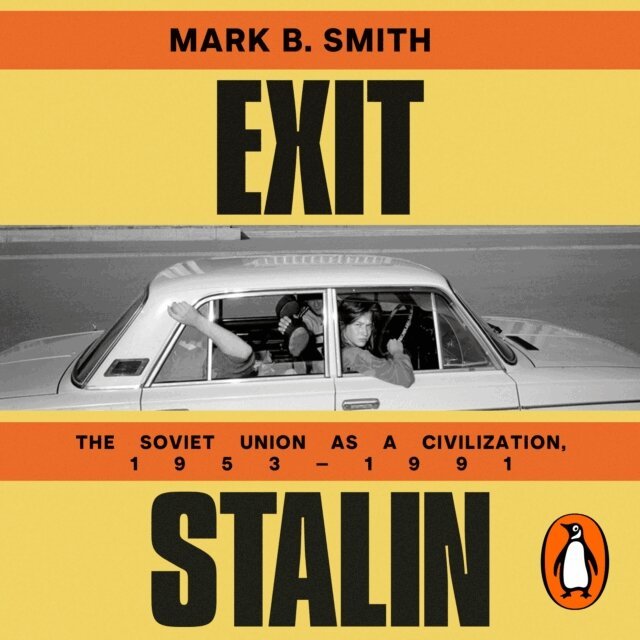
Exit Stalin
The Soviet Union as a Civilization, 1953-1991
Inbunden, 2026
443 kr
Lägg i varukorg
'Superb... Immensely important... This is a tragic story, and Smith tells it magnificently' The TelegraphOne of the most anticipated books of 2026 according to Financial Times and New StatesmanAn extraordinarily atmospheric and powerful history of the world's largest state and its decline and fall …
Exit Stalin
The Soviet Union as a Civilization, 1953-1991
Ljudbok, 2026
206 kr
Lägg i varukorg
Brought to you by Penguin.An extraordinarily atmospheric and powerful history of the world's largest country and its decline and fall.With Stalin's death, the Soviet Union remained a repressive, harsh and belligerent place, but one which became more predictable for its citizens and one which made a …
Exit Stalin – The Soviet Union as a Civilization, 1953–1991
The Soviet Union as a Civilization, 1953-1991
Inbunden, 2026
541 kr
Lägg i varukorg
To those of us in the West, the Soviet Union is synonymous with Stalinism. The common view of the USSR is of a brutal regime that squelched dissent and oversaw a drab, terrified society. Yet as Cambridge historian Mark B. Smith demonstrates in Exit Stalin , after the death of the murderous Joseph …
Exit Stalin
The Soviet Union as a Civilization, 1953-1991
Häftad, 2027
192 kr
Kommande
'Superb... Immensely important... This is a tragic story, and Smith tells it magnificently' The TelegraphOne of the most anticipated books of 2026 according to Financial Times and New StatesmanAn extraordinarily atmospheric and powerful history of the world's largest state and its decline and fall …
Russia Anxiety
And How History Can Resolve It
Häftad, 2020
167 kr
Lägg i varukorg
'This exciting and provocative book blows apart misconceptions about the Russian past' Lara Douds, Times Higher Education Russia is an exceptional country, the biggest in the world. It is both European and exotic, powerful and weak, brilliant and flawed. Why are we so afraid of it?Time and again, …
Russia Anxiety
And How History Can Resolve It
E-bok, 2019
136 kr
Lägg i varukorg
'This exciting and provocative book blows apart misconceptions about the Russian past' Lara Douds, Times Higher Education Russia is an exceptional country, the biggest in the world. It is both European and exotic, powerful and weak, brilliant and flawed. Why are we so afraid of it?Time and again, …
Exit Stalin
The Soviet Union as a Civilization, 1953-1991
E-bok, 2026
170 kr
Lägg i varukorg
'Superb... Immensely important... This is a tragic story, and Smith tells it magnificently' The TelegraphOne of the most anticipated books of 2026 according to Financial Times and New StatesmanAn extraordinarily atmospheric and powerful history of the world's largest state and its decline and fall …
Russia Anxiety
And How History Can Resolve It
Ljudbok, 2019
166 kr
Lägg i varukorg
Brought to you by Penguin. Russia is an exceptional country, the biggest in the world. It is both European and exotic, powerful and weak, brilliant and flawed. Why are we so afraid of it? Time and again, we judge Russia by unique standards. We have usually assumed that it possesses higher levels of …
Property of Communists
The Urban Housing Program from Stalin to Khrushchev
Inbunden, 2010
589 kr
Lägg i varukorg
Within fifteen years of the end of the Second World War, many tens of millions of Soviet city dwellers had been rehoused—liberated from shelters and overcrowded communal dwellings—and the paradox of housing ownership rights under proto-communism had been clarified. The transformation of the Soviet …
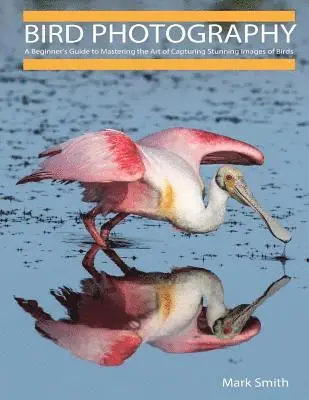
Bird Photography: A Beginner's Guide to Mastering the Art of Capturing Stunning Images of Birds
Häftad
320 kr
Lägg i varukorg