Inbunden, Engelska, 2015
1 491 kr
Skickas inom 5-8 vardagar
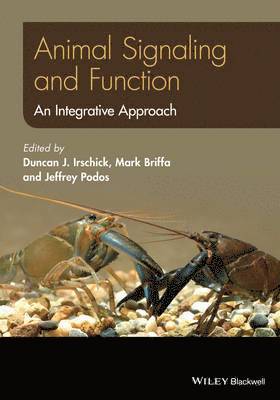
The diversity of animal signals has been widely documented, and the generality of animal signals also tantalizingly suggests that there are common mechanisms that have selected for their origin. However, while much progress has been made on some fronts, we still lack a general theory about why the diversity of signaling structures exist. Our compilation will directly address this gap by focusing on an exciting new arena of sexual selection, namely using functional approaches to understand signaling. This approach is rooted in the idea that many signals are designed to transmit important functional imformation that is both important for issues of male quality (and hence male competition), and female choice. The increasing use of technology in sexual selection studies has enabled researchers to test whether signaling is either constrained by, or accurately transmits information about functional capacities. Further, in animals that fight vigorously, functional capacities such as endurance or strength may make the difference between winning and losing. This volume brings together a diverse collection of researchers who are actively investigating how function and signaling are related. These researchers use both a variety of methods and taxa to study animal signaling, and we believe that this integrative view is important to open up fresh vistas for why animal signals have evolved.