Mark D. Metzler - Böcker
Visar alla böcker från författaren Mark D. Metzler. Handla med fri frakt och snabb leverans.
2 produkter
2 produkter
Capital As Will and Imagination
Schumpeter's Guide to the Postwar Japanese Miracle
Inbunden, Engelska, 2013
694 kr
Skickas inom 10-15 vardagar
Joseph Schumpeter's conceptions of entrepreneurship, innovation, and creative destruction have been hugely influential. He pioneered the study of economic development and of technological paradigm shifts and was a forerunner of the emerging field of evolutionary economics. He is not thought of as a theorist of credit-supercharged high-speed growth, but this is what he became in postwar Japan. As Mark Metzler shows in Capital as Will and Imagination, economists and planners in postwar Japan seized upon Schumpeter's ideas and put them directly to work. The inflationary creation of credit, as theorized by Schumpeter, was a vital but mostly unrecognized aspect of the successful stabilization of Japanese capitalism after World War II and was integral to Japan's postwar success. It also helps to explain Japan's bubble, and the global bubbles that have followed it. The heterodox analysis presented in Capital as Will and Imagination goes beyond the economic history of postwar Japan; it opens up a new view of the core circuits of modern capital in general.
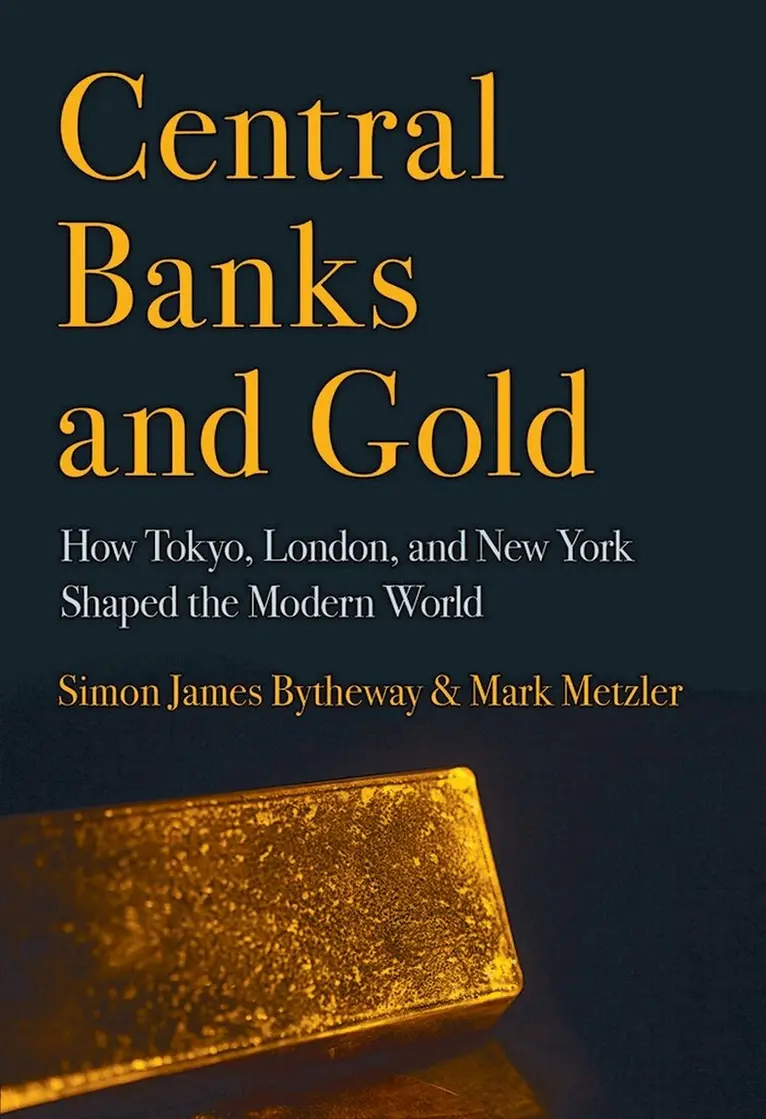
Central Banks and Gold
How Tokyo, London, and New York Shaped the Modern World
Inbunden, Engelska, 2016
557 kr
Skickas inom 10-15 vardagar
In recent decades, Tokyo, London, and New York have been the sites of credit bubbles of historically unprecedented magnitude. Central bankers have enjoyed almost unparalleled power and autonomy. They have cooperated to construct and preserve towering structures of debt, reshaping relations of power and ownership around the world. In Central Banks and Gold, Simon James Bytheway and Mark Metzler explore how this financialized form of globalism first took shape a century ago, when Tokyo first joined London and New York as a major financial center.As revealed here for the first time, close cooperation between central banks began along an unexpected axis, between London and Tokyo, around the year 1900, with the Bank of England's secret use of large Bank of Japan funds to intervene in the London markets. Central-bank cooperation became multilateral during World War I—the moment when Japan first emerged as a creditor country. In 1919 and 1920, as Japan, Great Britain, and the United States adopted deflation policies, the results of cooperation were realized in the world's first globally coordinated program of monetary policy. It was also in 1920 that Wall Street bankers moved to establish closer ties with Tokyo. Bytheway and Metzler tell the story of how the first age of central-bank power and pride ended in the disaster of the Great Depression, when a rush for gold brought the system crashing down. In all of this, we see also the quiet but surprisingly central place of Japan. We see it again today, in the way that Japan has unwillingly led the world into a new age of post-bubble economics.