Mark Dery - Böcker
Visar alla böcker från författaren Mark Dery. Handla med fri frakt och snabb leverans.
6 produkter
6 produkter
123 kr
Skickas
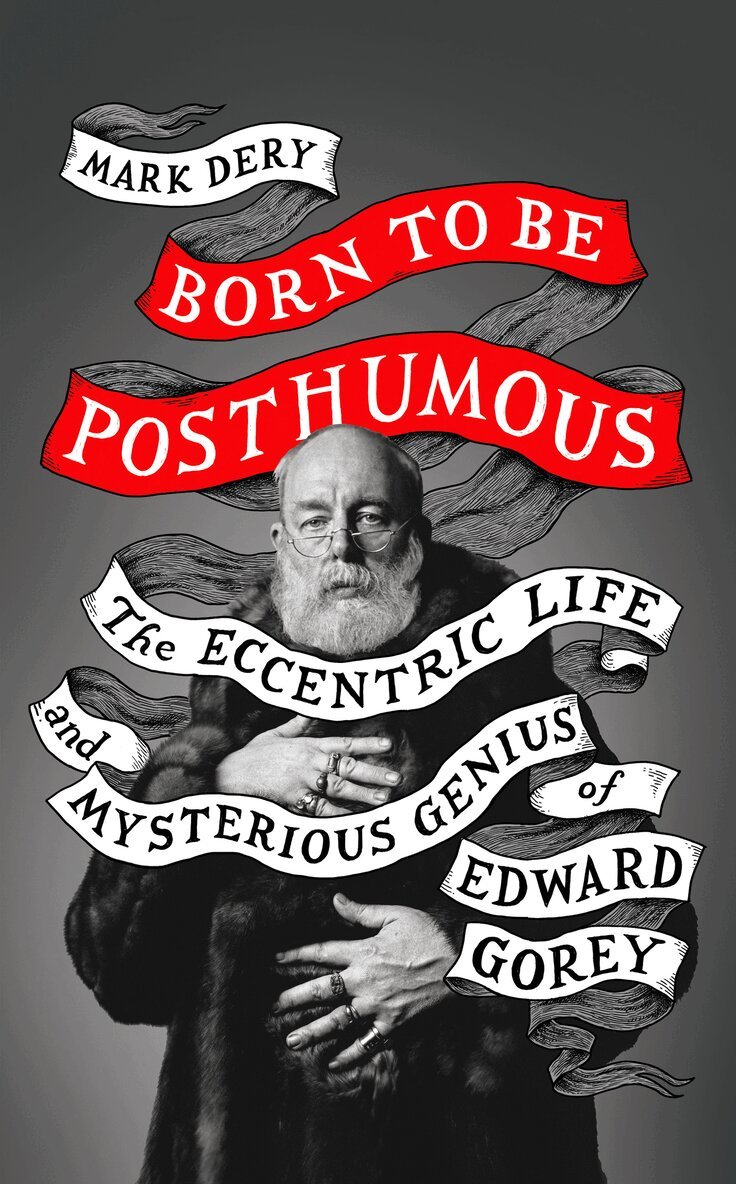
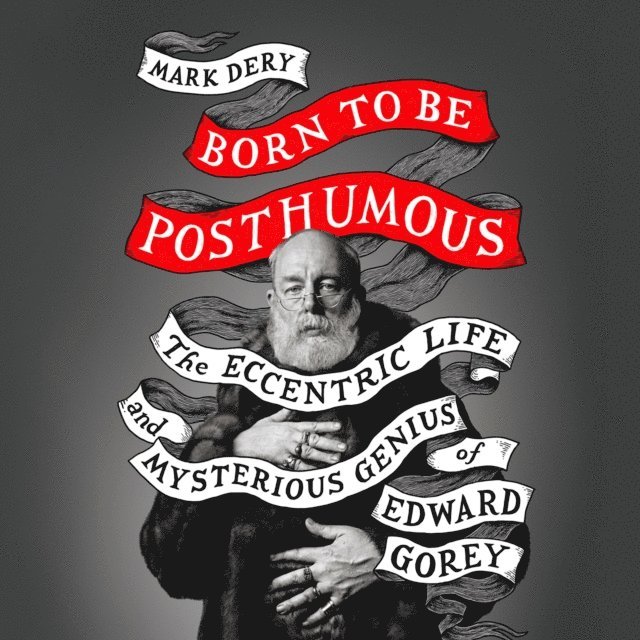
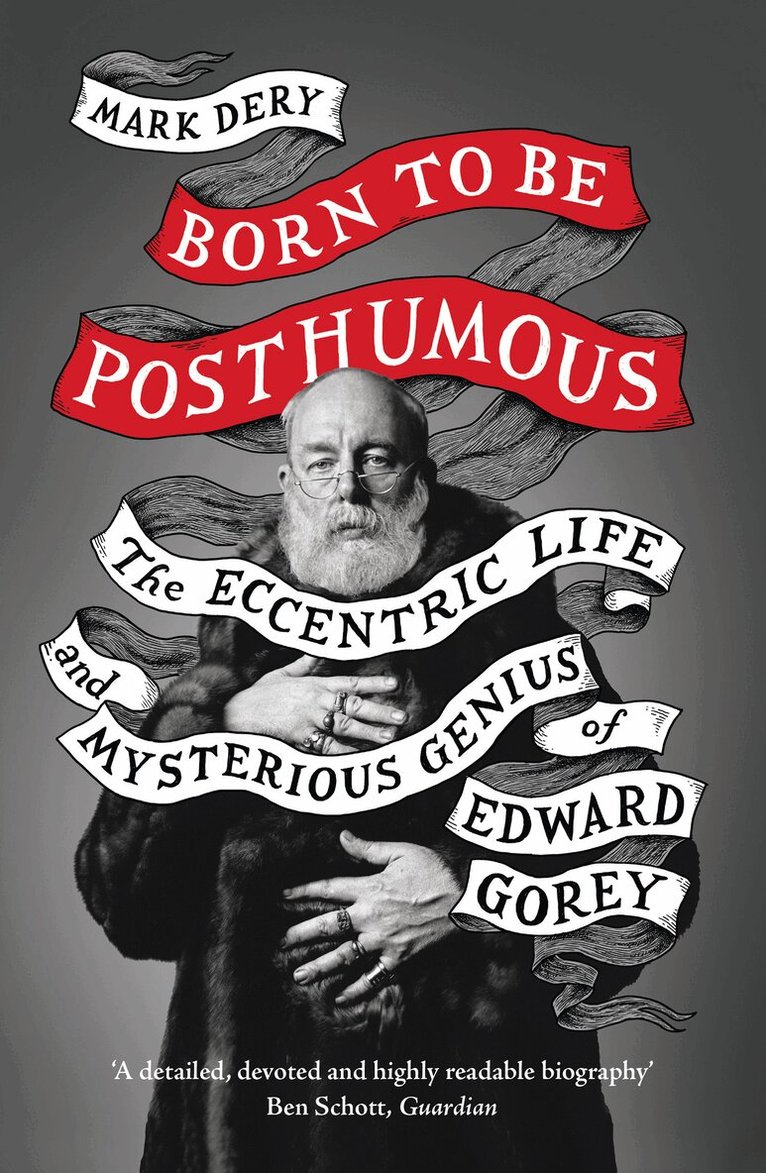
The definitive biography of Edward Gorey, the eccentric master of macabre nonsense. ’A genius book about a bookish genius’ Daniel Handler, author of A Series of Unfortunate Events From The Gashlycrumb Tinies to The Doubtful Guest, Edward Gorey's wickedly funny and deliciously sinister little books have influenced our culture in innumerable ways, from the works of Tim Burton and Neil Gaiman to Lemony Snicket. Some even call him the Grandfather of Goth.But who was this man, who lived with over twenty thousand books and six cats, who roomed with Frank O'Hara at Harvard, and was known – in the late 1940s, no less – to traipse around in full-length fur coats, clanking bracelets, and an Edwardian beard? An eccentric, a gregarious recluse, an enigmatic auteur of whimsically morbid masterpieces, yes – but who was the real Edward Gorey behind the Oscar Wildean pose?He published over a hundred books and illustrated works by Samuel Beckett, T.S. Eliot, Edward Lear, John Updike, Charles Dickens, Hilaire Belloc, Muriel Spark, Bram Stoker, Gilbert & Sullivan, and others. At the same time, he was a deeply complicated and conflicted individual, a man whose art reflected his obsessions with the disquieting and the darkly hilarious.Based on newly uncovered correspondence and interviews with personalities as diverse as John Ashbery, Donald Hall, Lemony Snicket, Neil Gaiman, and Anna Sui, Born to be Posthumous draws back the curtain on the eccentric genius and mysterious life of Edward Gorey.
Born to Be Posthumous: The Eccentric Life and Mysterious Genius of Edward Gorey
Inbunden, Engelska, 2018
400 kr
Skickas inom 3-6 vardagar
250 kr
Skickas inom 3-6 vardagar
I Must not Think Bad Thoughts
Drive-by Essays on American Dread, American Dreams
Häftad, Engelska, 2014
237 kr
Skickas inom 10-15 vardagar
From the cultural critic Wired called “provocative and cuttingly humorous” comes a viciously funny, joltingly insightful collection of drive-by critiques of contemporary America where chaos is the new normal. Exploring the darkest corners of the national psyche and the nethermost regions of the self-the gothic, the grotesque, and the carnivalesque-Mark Dery makes sense of the cultural dynamics of the American madhouse early in the twenty-first century.Here are essays on the pornographic fantasies of Star Trek fans, Facebook as Limbo of the Lost, George W. Bush’s fear of his inner queer, the theme-parking of the Holocaust, the homoerotic subtext of the Super Bowl, the hidden agendas of IQ tests, Santa’s secret kinship with Satan, the sadism of dentists, Hitler’s afterlife on YouTube, the sexual identity of 2001’s HAL, the suicide note considered as a literary genre, the surrealist poetry of robot spam, the zombie apocalypse, Lady Gaga, the Church of Euthanasia, toy guns in the dream lives of American boys, and the polymorphous perversity of Madonna’s big toe.Dery casts a critical eye on the accepted order of things, boldly crossing into the intellectual no-fly zones demarcated by cultural warriors on both sides of America’s ideological divide: controversy-phobic corporate media, blinkered academic elites, and middlebrow tastemakers. Intellectually omnivorous and promiscuously interdisciplinary, Dery’s writing is a generalist’s guilty pleasure in an age of nanospecialization and niche marketing. From Menckenesque polemics on American society and deft deconstructions of pop culture to unflinching personal essays in which Dery turns his scalpel-sharp wit on himself, I Must Not Think Bad Thoughts is a head-spinning intellectual ride through American dreams and American nightmares.
1 236 kr
Skickas inom 7-10 vardagar
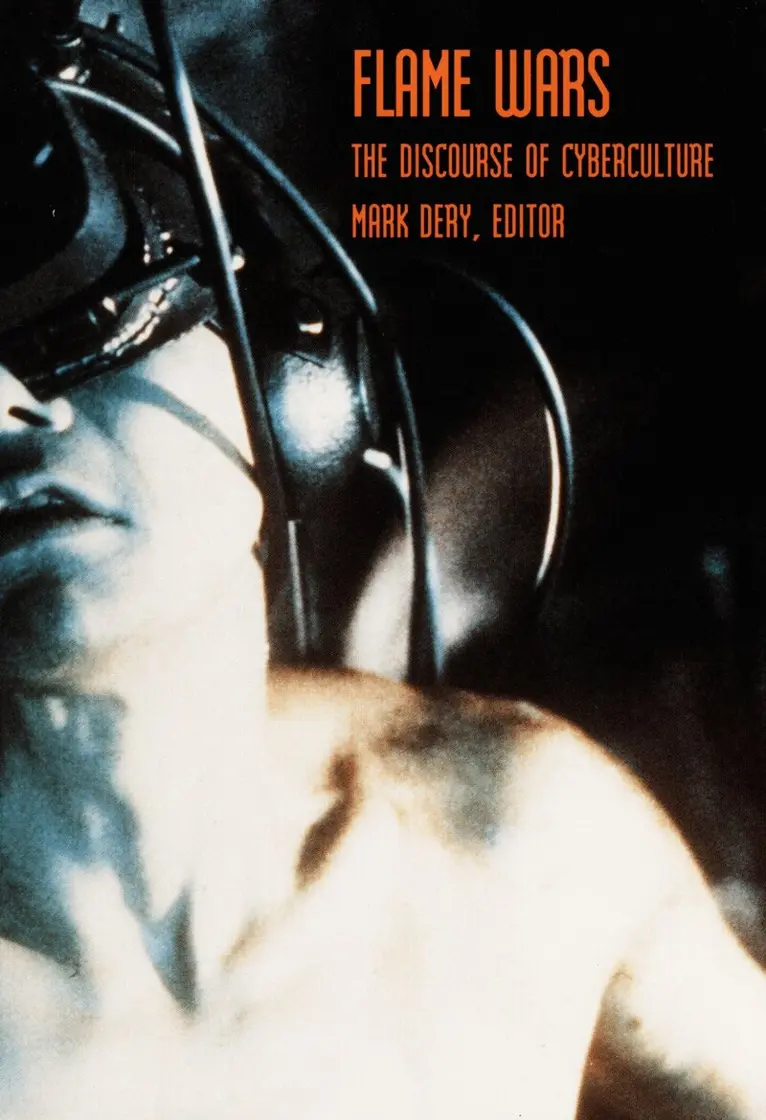
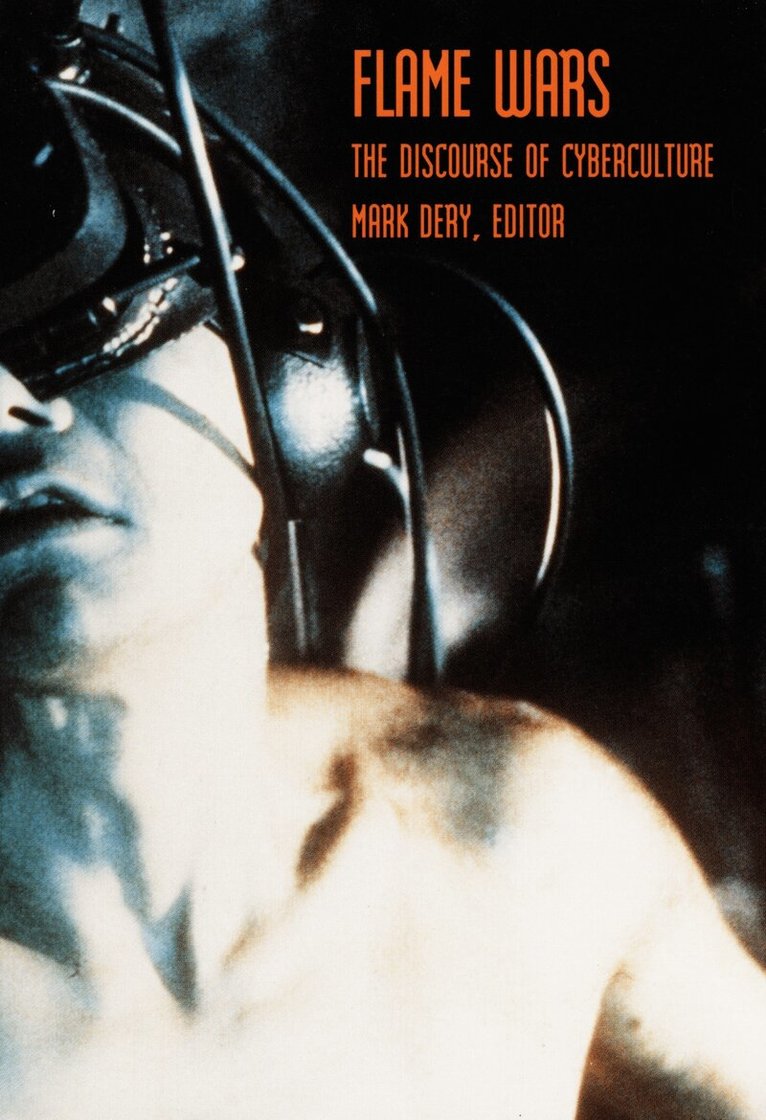
"Flame Wars," the verbal firefights that take place between disembodied combatants on electronic bulletin boards, remind us that our interaction with the world is increasingly mediated by computers. Bit by digital bit we are being "Borged," as devotees of Star Trek: The Next Generation would have it-transformed into cyborgian hybrids of technology and biology through our ever more frequent interaction with machines, or with one another through technological interfaces. The subcultural practices of the "incurably informed," to borrow the cyberpunk novelist Pat Cadigan’s coinage, offer a precognitive glimpse of mainstream culture in the near future, when many of us will be part-time residents in virtual communities. Yet, as the essays in this expanded edition of a special issue of the South Atlantic Quarterly confirm, there is more to fringe computer culture than cyberspace. Within these pages, readers will encounter flame warriors; new age mutant ninja hackers; technopagans for whom the computer is an occult engine; and William Gibson’s "Agrippa," a short story on software that can only be read once because it gobbles itself up as soon as the last page is reached. Here, too, is Lady El, an African American cleaning woman reincarnated as an all-powerful cyborg; devotees of on-line swinging, or "compu-sex"; the teleoperated weaponry and amok robots of the mechanical performance art group, Survival Research Laboratories; an interview with Samuel Delany, and more.Rallying around Fredric Jameson’s call for a cognitive cartography that "seeks to endow the individual subject with some new heightened sense of place in the global system," the contributors to Flame Wars have sketched a corner of that map, an outline for a wiring diagram of a terminally wired world. Contributors. Anne Balsamo, Gareth Branwyn, Scott Bukatman, Pat Cadigan, Gary Chapman, Erik Davis, Manuel De Landa, Mark Dery, Julian Dibbell, Marc Laidlaw, Mark Pauline, Peter Schwenger, Vivian Sobchack, Claudia Springer
412 kr
Skickas inom 7-10 vardagar
"Flame Wars," the verbal firefights that take place between disembodied combatants on electronic bulletin boards, remind us that our interaction with the world is increasingly mediated by computers. Bit by digital bit we are being "Borged," as devotees of Star Trek: The Next Generation would have it-transformed into cyborgian hybrids of technology and biology through our ever more frequent interaction with machines, or with one another through technological interfaces. The subcultural practices of the "incurably informed," to borrow the cyberpunk novelist Pat Cadigan’s coinage, offer a precognitive glimpse of mainstream culture in the near future, when many of us will be part-time residents in virtual communities. Yet, as the essays in this expanded edition of a special issue of the South Atlantic Quarterly confirm, there is more to fringe computer culture than cyberspace. Within these pages, readers will encounter flame warriors; new age mutant ninja hackers; technopagans for whom the computer is an occult engine; and William Gibson’s "Agrippa," a short story on software that can only be read once because it gobbles itself up as soon as the last page is reached. Here, too, is Lady El, an African American cleaning woman reincarnated as an all-powerful cyborg; devotees of on-line swinging, or "compu-sex"; the teleoperated weaponry and amok robots of the mechanical performance art group, Survival Research Laboratories; an interview with Samuel Delany, and more.Rallying around Fredric Jameson’s call for a cognitive cartography that "seeks to endow the individual subject with some new heightened sense of place in the global system," the contributors to Flame Wars have sketched a corner of that map, an outline for a wiring diagram of a terminally wired world. Contributors. Anne Balsamo, Gareth Branwyn, Scott Bukatman, Pat Cadigan, Gary Chapman, Erik Davis, Manuel De Landa, Mark Dery, Julian Dibbell, Marc Laidlaw, Mark Pauline, Peter Schwenger, Vivian Sobchack, Claudia Springer