
Mark E Rushefsky – författare
778 kr
Skickas inom 10-15 vardagar
918 kr
Läs direkt efter köp
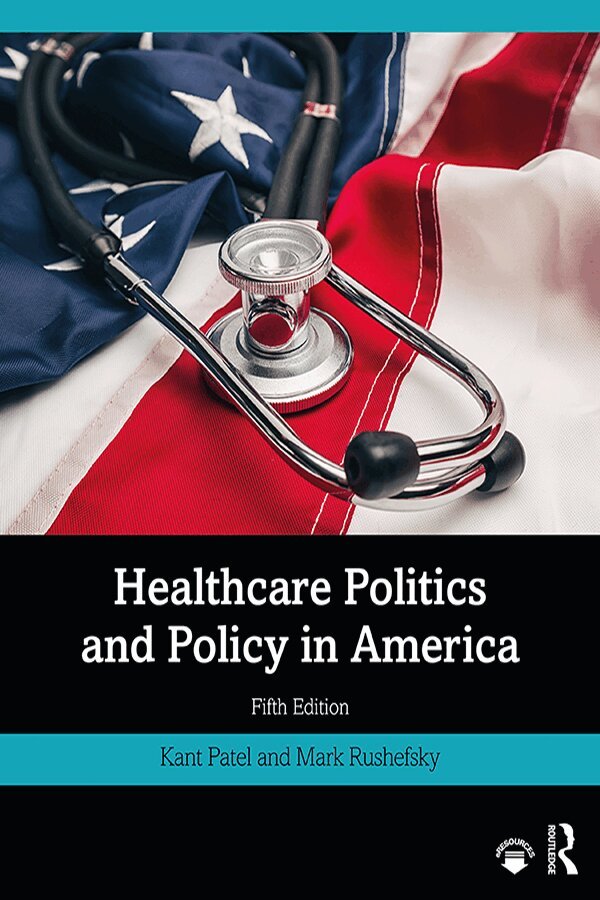
Health policy in the United States has been shaped by the political, socioeconomic, and ideological environment, with important roles played by public and private actors, as well as institutional and individual entities, in designing the contemporary American healthcare system. Now in a fully updated fifth edition, this book gives expanded attention to pressing issues for our policymakers, including the aging American population, physician shortages, gene therapy, specialty drugs, and the opioid crisis. A new chapter has been added on the Trump administration''s failed attempts at repealing and replacing the Affordable Care Act and subsequent attempts at undermining it via executive orders.
Authors Kant Patel and Mark Rushefsky address the key problems of healthcare cost, access, and quality through analyses of Medicare, Medicaid, the Veterans Health Administration, and other programs, and the ethical and cost implications of advances in healthcare technology. Each chapter concludes with discussion questions and a comprehensive reference list. This textbook will be required reading for courses on health and healthcare policy, as well as all those interested in the ways in which American healthcare has evolved over time.
918 kr
Läs direkt efter köp
Health policy in the United States has been shaped by the political, socioeconomic, and ideological environment, with important roles played by public and private actors, as well as institutional and individual entities, in designing the contemporary American healthcare system. Now in a fully updated fifth edition, this book gives expanded attention to pressing issues for our policymakers, including the aging American population, physician shortages, gene therapy, specialty drugs, and the opioid crisis. A new chapter has been added on the Trump administration''s failed attempts at repealing and replacing the Affordable Care Act and subsequent attempts at undermining it via executive orders.
Authors Kant Patel and Mark Rushefsky address the key problems of healthcare cost, access, and quality through analyses of Medicare, Medicaid, the Veterans Health Administration, and other programs, and the ethical and cost implications of advances in healthcare technology. Each chapter concludes with discussion questions and a comprehensive reference list. This textbook will be required reading for courses on health and healthcare policy, as well as all those interested in the ways in which American healthcare has evolved over time.
1 287 kr
Skickas inom 10-15 vardagar

429 kr
Skickas inom 10-15 vardagar
400 kr
Skickas inom 10-15 vardagar

2 508 kr
Skickas inom 10-15 vardagar

749 kr
Skickas inom 10-15 vardagar
2 406 kr
Skickas inom 10-15 vardagar
723 kr
Läs direkt efter köp
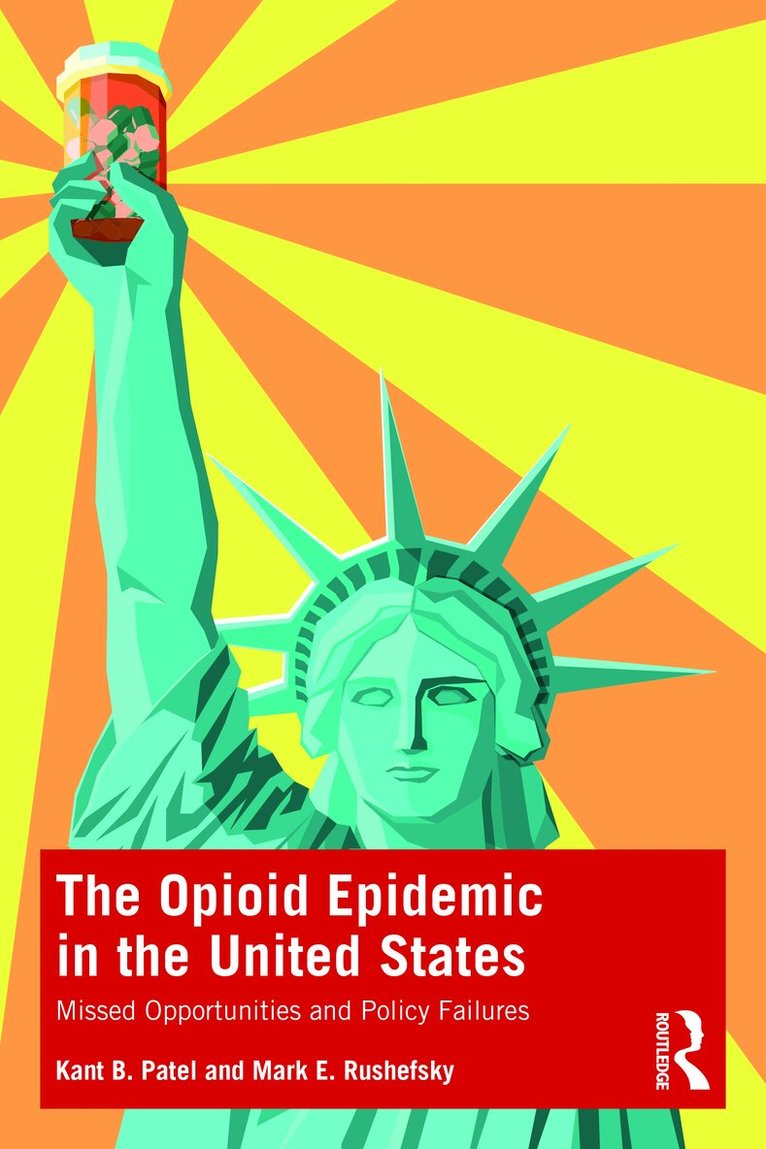
The current opioid epidemic in the United States began in the mid-1990s with the introduction of a new drug, OxyContin, viewed as a safer and more effective opiate for chronic pain management. By 2017, the opioid epidemic had become a full-blown crisis as over two million Americans had become dependent on and abused prescription pain pills and street drugs.
This book examines the origins, development, and rise of the opioid epidemic in the United States from the perspective of the public policy process. The authors, political scientists Kant Patel and Mark Rushefsky, discuss institutional features of the American political system that impact the making of public policy, arguing that the fragmentation of that system hinders the ability to coherently address policy problems, taking the opioid epidemic as an example. The book begins with a brief historical examination of the history of the problem of opioid addiction and crises in the United States and public policy responses to past crises, but the main focus is on the current national public health emergency. The book analyzes the following:
The origins of the current crisis
Indicators and warning signs pointing to the emergence of a significant public problem
Factors that contributed to the opioid crisis
Why the crisis emerged in the United States and not in other Western countries
The nature and scope of the opioid crisis, including socioeconomic and demographic characteristics and the human, social, and economic costs
Presidential administrations’ public response, and nonresponse, to the opioid crisis
Parallels between the role played by opioid manufacturers and tobacco/cigarette manufacturers in creating the problem of addiction, resulting in high mortality rates, and the public policy response to both
This book explores the national policy response to the opioid crisis, as well as state and local government responses and separation of powers, including how the three branches of government deal with the opioid problem. The authors conclude with a discussion of how accurate problem definition, problem diagnosis, and appropriate and timely responses could have produced a more appropriate and robust policy response—policy process tools that will be essential in fighting both the current crisis and the next one. The Opioid Epidemic in the United States is essential reading for policy analysis courses in political science, health, and social work programs, as well as for United States policymakers at the local, state, and national levels.
723 kr
Läs direkt efter köp
The current opioid epidemic in the United States began in the mid-1990s with the introduction of a new drug, OxyContin, viewed as a safer and more effective opiate for chronic pain management. By 2017, the opioid epidemic had become a full-blown crisis as over two million Americans had become dependent on and abused prescription pain pills and street drugs.
This book examines the origins, development, and rise of the opioid epidemic in the United States from the perspective of the public policy process. The authors, political scientists Kant Patel and Mark Rushefsky, discuss institutional features of the American political system that impact the making of public policy, arguing that the fragmentation of that system hinders the ability to coherently address policy problems, taking the opioid epidemic as an example. The book begins with a brief historical examination of the history of the problem of opioid addiction and crises in the United States and public policy responses to past crises, but the main focus is on the current national public health emergency. The book analyzes the following:
The origins of the current crisis
Indicators and warning signs pointing to the emergence of a significant public problem
Factors that contributed to the opioid crisis
Why the crisis emerged in the United States and not in other Western countries
The nature and scope of the opioid crisis, including socioeconomic and demographic characteristics and the human, social, and economic costs
Presidential administrations’ public response, and nonresponse, to the opioid crisis
Parallels between the role played by opioid manufacturers and tobacco/cigarette manufacturers in creating the problem of addiction, resulting in high mortality rates, and the public policy response to both
This book explores the national policy response to the opioid crisis, as well as state and local government responses and separation of powers, including how the three branches of government deal with the opioid problem. The authors conclude with a discussion of how accurate problem definition, problem diagnosis, and appropriate and timely responses could have produced a more appropriate and robust policy response—policy process tools that will be essential in fighting both the current crisis and the next one. The Opioid Epidemic in the United States is essential reading for policy analysis courses in political science, health, and social work programs, as well as for United States policymakers at the local, state, and national levels.
614 kr
Skickas inom 10-15 vardagar
2 435 kr
Skickas inom 10-15 vardagar
720 kr
Skickas inom 10-15 vardagar
2 508 kr
Skickas inom 10-15 vardagar
849 kr
Läs direkt efter köp
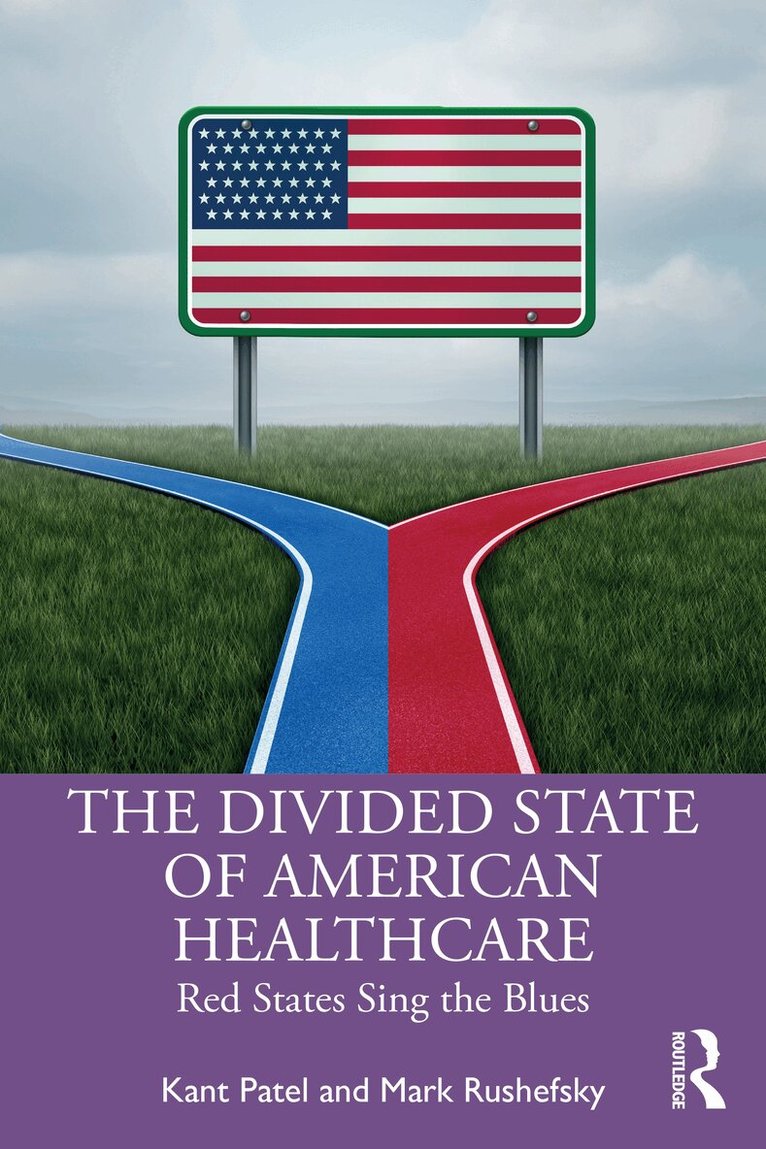
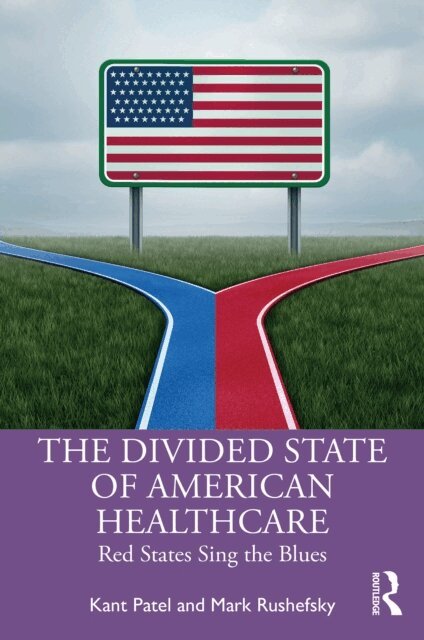
Political polarization among ‘red’ and ‘blue’ states in the United States is reflected in major divides that exist along social, economic, educational, geographic, and demographic lines, but nowhere is polarization and political divide more evident than in the field of American healthcare. This book examines the healthcare divide between the red and blue states.
In this book, authors Kant Patel and Mark Rushefsky analyze how political polarization at the state level has impacted state health policymaking, policy outputs, and policy outcomes and led red and blue states to create vastly different healthcare and health policies. And, as state governments enjoy a considerable amount of authority and discretionary power, the authors further examine how polarization has influenced the implementation of national health policies by the red and blue states. The book begins with an exploration of the origins and evolution of political polarization and the factors that have contributed to it at the national level. This is followed by an analysis of how political polarization separates red and blue states and how they differ from each other in political, economic, demographic, and racial dimensions. It then considers how the health profiles of red and blue states differ in health indicators such as the uninsured or underinsured population, healthcare spending, and healthcare access. The book analyzes how political polarization has produced vastly different sets of health policies on issues including the Affordable Care Act (ACA), Medicaid, reproductive rights, and the COVID-19 pandemic. The book concludes with a critical examination of proposed solutions to political polarization and the dangers of our current deeply divided political climate.
Written in an accessible and jargon-free style, The Divided State of American Healthcare is vital reading for undergraduate and graduate courses on health policy, public policy, political science, and public health. It will also be of keen interest to healthcare professionals in the public and private sectors.
849 kr
Läs direkt efter köp
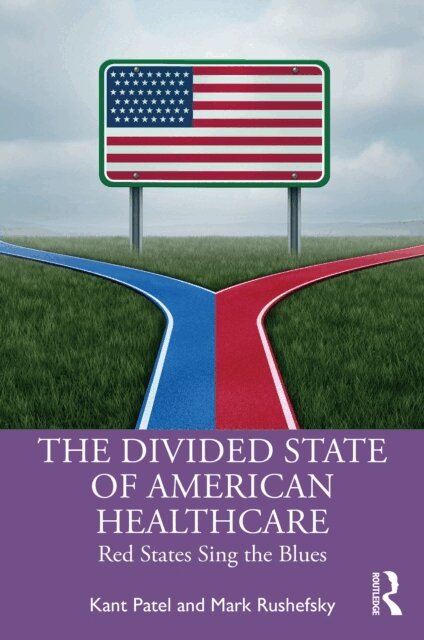
Political polarization among ‘red’ and ‘blue’ states in the United States is reflected in major divides that exist along social, economic, educational, geographic, and demographic lines, but nowhere is polarization and political divide more evident than in the field of American healthcare. This book examines the healthcare divide between the red and blue states.
In this book, authors Kant Patel and Mark Rushefsky analyze how political polarization at the state level has impacted state health policymaking, policy outputs, and policy outcomes and led red and blue states to create vastly different healthcare and health policies. And, as state governments enjoy a considerable amount of authority and discretionary power, the authors further examine how polarization has influenced the implementation of national health policies by the red and blue states. The book begins with an exploration of the origins and evolution of political polarization and the factors that have contributed to it at the national level. This is followed by an analysis of how political polarization separates red and blue states and how they differ from each other in political, economic, demographic, and racial dimensions. It then considers how the health profiles of red and blue states differ in health indicators such as the uninsured or underinsured population, healthcare spending, and healthcare access. The book analyzes how political polarization has produced vastly different sets of health policies on issues including the Affordable Care Act (ACA), Medicaid, reproductive rights, and the COVID-19 pandemic. The book concludes with a critical examination of proposed solutions to political polarization and the dangers of our current deeply divided political climate.
Written in an accessible and jargon-free style, The Divided State of American Healthcare is vital reading for undergraduate and graduate courses on health policy, public policy, political science, and public health. It will also be of keen interest to healthcare professionals in the public and private sectors.
1 295 kr
Läs direkt efter köp
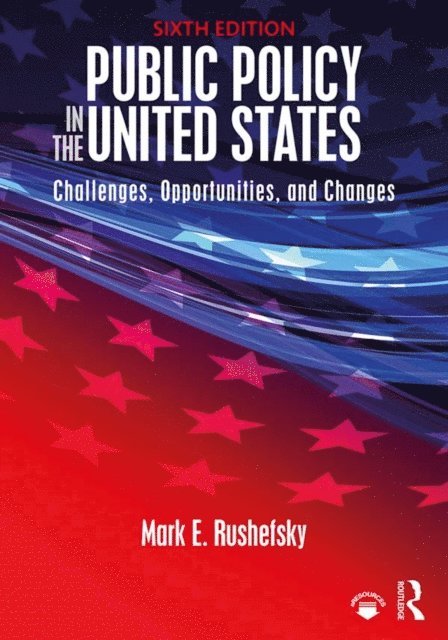
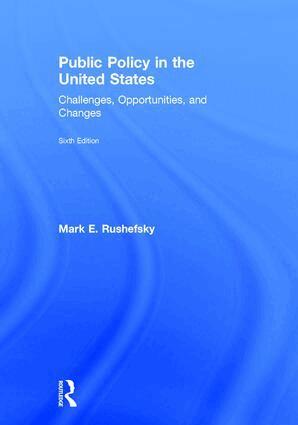
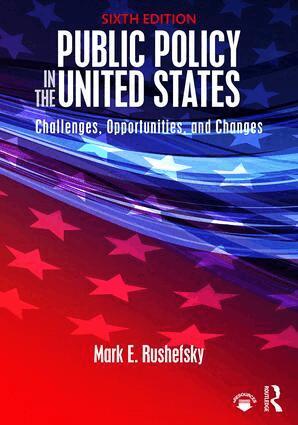
Offering the widest breadth of policy issue coverage on the market, the sixth edition of this well-regarded text covers events through the 2016 elections and beyond. Though the content has been extensively and thoughtfully revised and updated, the sixth edition maintains its clear approach, without an overreliance on policy theory, and popular threefold structure: First, it introduces readers to the American approach to public policy making as it has been shaped by our political institutions, changing circumstances, and ideology. Second, it surveys all of the major policy areas from foreign policy to health care policy to environmental policy, and does so with well-selected illustrations, case studies, terms, and study questions. Third, it provides readers with analytical tools and frameworks to examine current problems and be able to understand and critique proposed public policy solutions. New to the sixth edition is an exploration of:
The Affordable Care Act and its implementation, controversies, and impact The American economy since the end of the Great Recession, trade policy, and economic equality issues Foreign policy including relations with Russia, China, and Iran, as well as the civil war in Syria, the continuing conflicts in Iraq, and the challenge of ISIS The US Criminal Justice system and its incarceration challenges as well as issues of minorities, police, and crime.This new edition includes, for the first time, a test bank with multiple choice, short answer, and discussion/essay questions as well as an instructor’s manual. Public Policy in the United States, 6e is an ideal undergraduate text for introductory courses on American Public Policy and Politics, and can be used as supplementary reading in undergraduate courses on policy process, policy analysis, and American government.
1 295 kr
Läs direkt efter köp
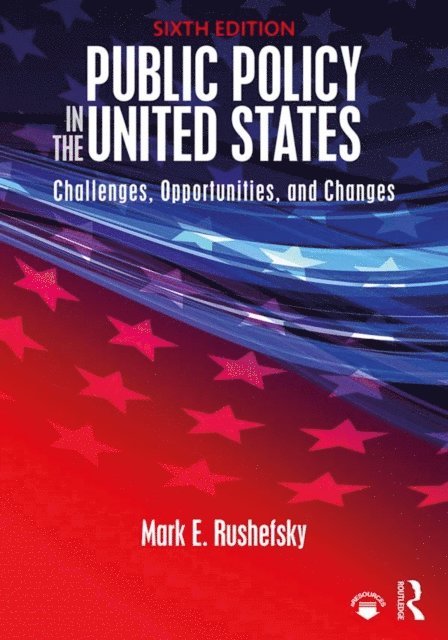
Offering the widest breadth of policy issue coverage on the market, the sixth edition of this well-regarded text covers events through the 2016 elections and beyond. Though the content has been extensively and thoughtfully revised and updated, the sixth edition maintains its clear approach, without an overreliance on policy theory, and popular threefold structure: First, it introduces readers to the American approach to public policy making as it has been shaped by our political institutions, changing circumstances, and ideology. Second, it surveys all of the major policy areas from foreign policy to health care policy to environmental policy, and does so with well-selected illustrations, case studies, terms, and study questions. Third, it provides readers with analytical tools and frameworks to examine current problems and be able to understand and critique proposed public policy solutions. New to the sixth edition is an exploration of:
The Affordable Care Act and its implementation, controversies, and impact The American economy since the end of the Great Recession, trade policy, and economic equality issues Foreign policy including relations with Russia, China, and Iran, as well as the civil war in Syria, the continuing conflicts in Iraq, and the challenge of ISIS The US Criminal Justice system and its incarceration challenges as well as issues of minorities, police, and crime.This new edition includes, for the first time, a test bank with multiple choice, short answer, and discussion/essay questions as well as an instructor’s manual. Public Policy in the United States, 6e is an ideal undergraduate text for introductory courses on American Public Policy and Politics, and can be used as supplementary reading in undergraduate courses on policy process, policy analysis, and American government.
3 325 kr
Skickas inom 10-15 vardagar
1 094 kr
Skickas inom 10-15 vardagar
502 kr
Läs direkt efter köp
502 kr
Läs direkt efter köp
468 kr
Läs direkt efter köp
468 kr
Läs direkt efter köp
502 kr
Läs direkt efter köp
502 kr
Läs direkt efter köp
883 kr
Läs direkt efter köp
883 kr
Läs direkt efter köp
1 388 kr
Skickas inom 10-15 vardagar