Mark Hale - Böcker
Visar alla böcker från författaren Mark Hale. Handla med fri frakt och snabb leverans.
4 produkter
4 produkter
369 kr
Skickas inom 7-10 vardagar
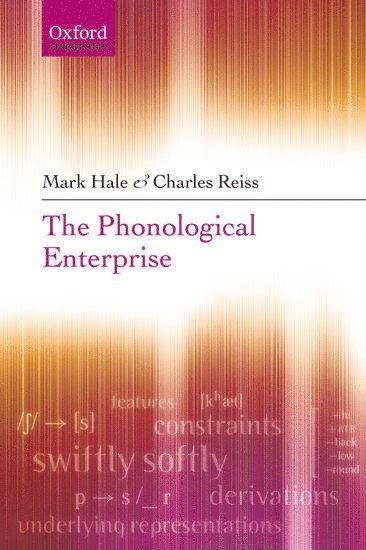
This book scrutinizes recent work in phonological theory from the perspective of Chomskyan generative linguistics and argues that progress in the field depends on taking seriously the idea that phonology is best studied as a mental computational system derived from an innate base, phonological Universal Grammar. Two simple problems of phonological analysis provide a frame for a variety of topics throughout the book. The competence-performance distinction and markedness theory are both addressed in some detail, especially with reference to phonological acquisition. Several aspects of Optimality Theory, including the use of Output-Output Correspondence, functionalist argumentation and dependence on typological justification are critiqued. The authors draw on their expertise in historical linguistics to argue that diachronic evidence is often mis-used to bolster phonological arguments, and they present a vision of the proper use of such evidence. Issues of general interest for cognitive scientists, such as whether categories are discrete and whether mental computation is probabilistic are also addressed. The book ends with concrete proposals to guide future phonological research.The breadth and depth of the discussion, ranging from details of current analyses to the philosophical underpinnings of linguistic science, is presented in a direct style with as little recourse to technical language as possible.
667 kr
Skickas inom 7-10 vardagar
This book scrutinizes recent work in phonological theory from the perspective of Chomskyan generative linguistics and argues that progress in the field depends on taking seriously the idea that phonology is best studied as a mental computational system derived from an innate base, phonological Universal Grammar. Two simple problems of phonological analysis provide a frame for a variety of topics throughout the book. The competence-performance distinction and markedness theory are both addressed in some detail, especially with reference to phonological acquisition. Several aspects of Optimality Theory, including the use of Output-Output Correspondence, functionalist argumentation and dependence on typological justification are critiqued. The authors draw on their expertise in historical linguistics to argue that diachronic evidence is often mis-used to bolster phonological arguments, and they present a vision of the proper use of such evidence. Issues of general interest for cognitive scientists, such as whether categories are discrete and whether mental computation is probabilistic are also addressed. The book ends with concrete proposals to guide future phonological research.The breadth and depth of the discussion, ranging from details of current analyses to the philosophical underpinnings of linguistic science, is presented in a direct style with as little recourse to technical language as possible.
1 496 kr
Skickas inom 7-10 vardagar
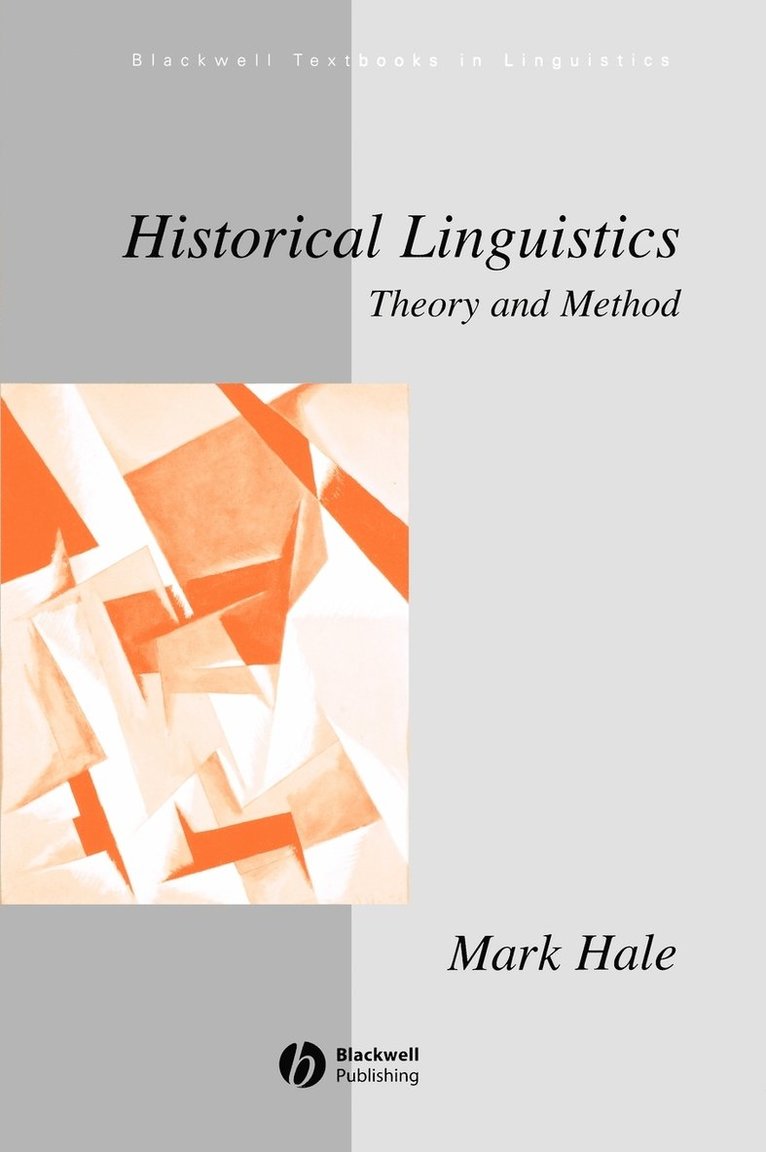
This book goes beyond the boundaries of a standard text, using controversial and compelling ideas to explore the relationship between fundamental concepts in historical linguistics. An original and engaging introduction to the subject of historical linguistics Presents controversial but compelling ideas in developing a clear understanding as to why historical linguistics has had significant success in some domains, such as phonological history, and why it is considerably less successful in others Explores the relationship between fundamental concepts in historical linguistics, topics such as 'language' and 'change', and corresponding notions in contemporary (synchronic) linguistic theory Features extensive discussion of traditional and theoretically-oriented historical work in the domains of phonology and syntax.
488 kr
Skickas inom 7-10 vardagar
This book goes beyond the boundaries of a standard text, using controversial and compelling ideas to explore the relationship between fundamental concepts in historical linguistics. An original and engaging introduction to the subject of historical linguistics Presents controversial but compelling ideas in developing a clear understanding as to why historical linguistics has had significant success in some domains, such as phonological history, and why it is considerably less successful in others Explores the relationship between fundamental concepts in historical linguistics, topics such as 'language' and 'change', and corresponding notions in contemporary (synchronic) linguistic theory Features extensive discussion of traditional and theoretically-oriented historical work in the domains of phonology and syntax.