Mark J. Stern – författare
Visar alla böcker från författaren Mark J. Stern. Handla med fri frakt och snabb leverans.
2 produkter
2 produkter
361 kr
Skickas inom 5-8 vardagar
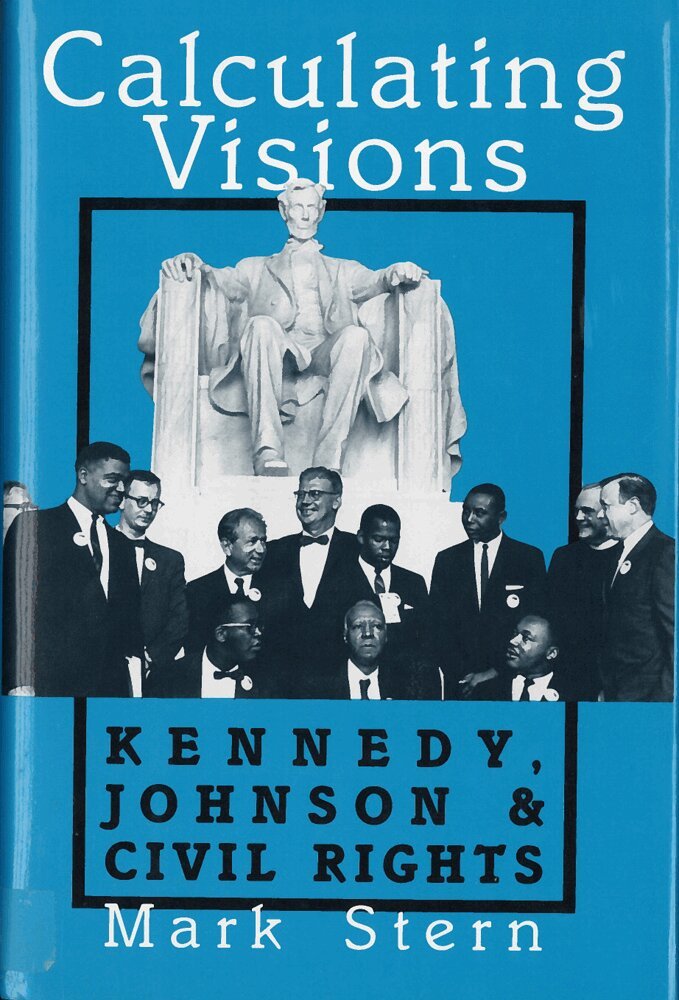
In June 1963, in the midst of national turmoil brought about by civil rights demonstrations, John Kennedy sent his administration's first major civil rights bill to the Congress. Still unsure about this move, he asked his brother Robert, "Do you think we did the right thing?" Within days of assuming the presidency, Lyndon Johnson publicly committed himself to civil rights as a "memorial" to his predecessor. Privately he told Georgia's Senator Richard Russell, the leader of the South in Congress, "Dick, you've got to get out of my way. I'm going to run you over." President Johnson would not compromise or equivocate on civil rights. John Kennedy of Massachusetts yielded to the pressure of events and became an ally of the movement, despite his fear that supporting civil rights could cost him votes in Congress and the nation. Lyndon Johnson of Texas, whom liberals loathed because he often gutted their prize legislation, became the committed champion of civil rights. Together their administrations became synonymous with the Second Reconstruction, though neither president had a prior record of strong civil rights commitment. Mark Stern explains how each man pursued power and votes, and ultimately redirected his own course of action and altered the nation's future.
376 kr
Tillfälligt slut
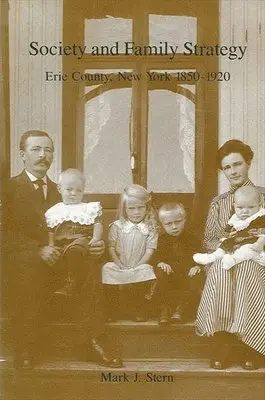
Using one of the largest quantitative data bases ever compiled on a single representative community, Stern explains and substantiates the reasons for the decline of the fertility rate during the nineteenth and early twentieth centuries. He integrates demographic and social history to determine the implications of this aspect of the modernization of America. Society and Family Strategy describes the impact of capitalism, and changing class and ethnic structure on family economy, life cycle, and ideology. The author evaluates recent studies by social historians on the family, social class, and ethnicity in light of the Erie County experience, examines theories of social and cultural change, and proposes a non-evolutionary model of their relationship.