Mark Martinko – författare
Visar alla böcker från författaren Mark Martinko. Handla med fri frakt och snabb leverans.
4 produkter
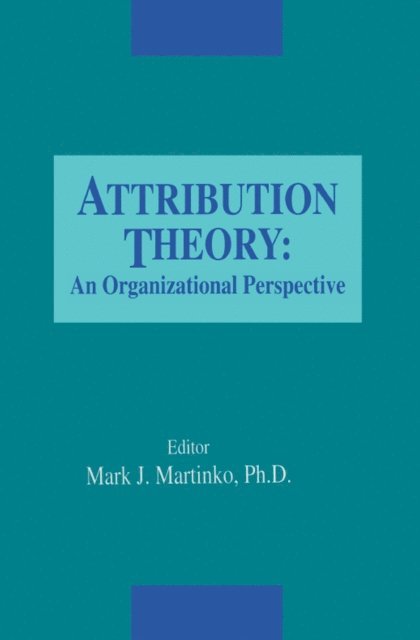
Attribution Theory
An Organizational Perspective
E-bok, 2018
2541 kr
Lägg i varukorg
With Special Contributions from Bernard Weiner Ph.D. (UCLA) and Robert Lord Ph.D. (Univ. of Akron) Attribution theory is concerned with peoples causal explanation for outcomes: successes and failures. The basic premise is that beliefs about outcomes are a primary determinant of expectations and, …
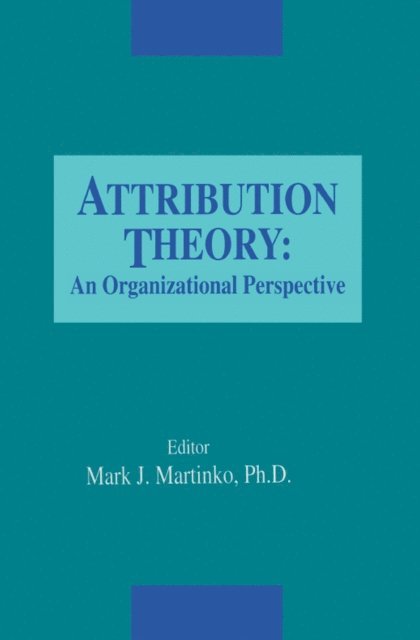
Attribution Theory
An Organizational Perspective
E-bok, 2018
2541 kr
Lägg i varukorg
With Special Contributions from Bernard Weiner Ph.D. (UCLA) and Robert Lord Ph.D. (Univ. of Akron) Attribution theory is concerned with peoples causal explanation for outcomes: successes and failures. The basic premise is that beliefs about outcomes are a primary determinant of expectations and, …
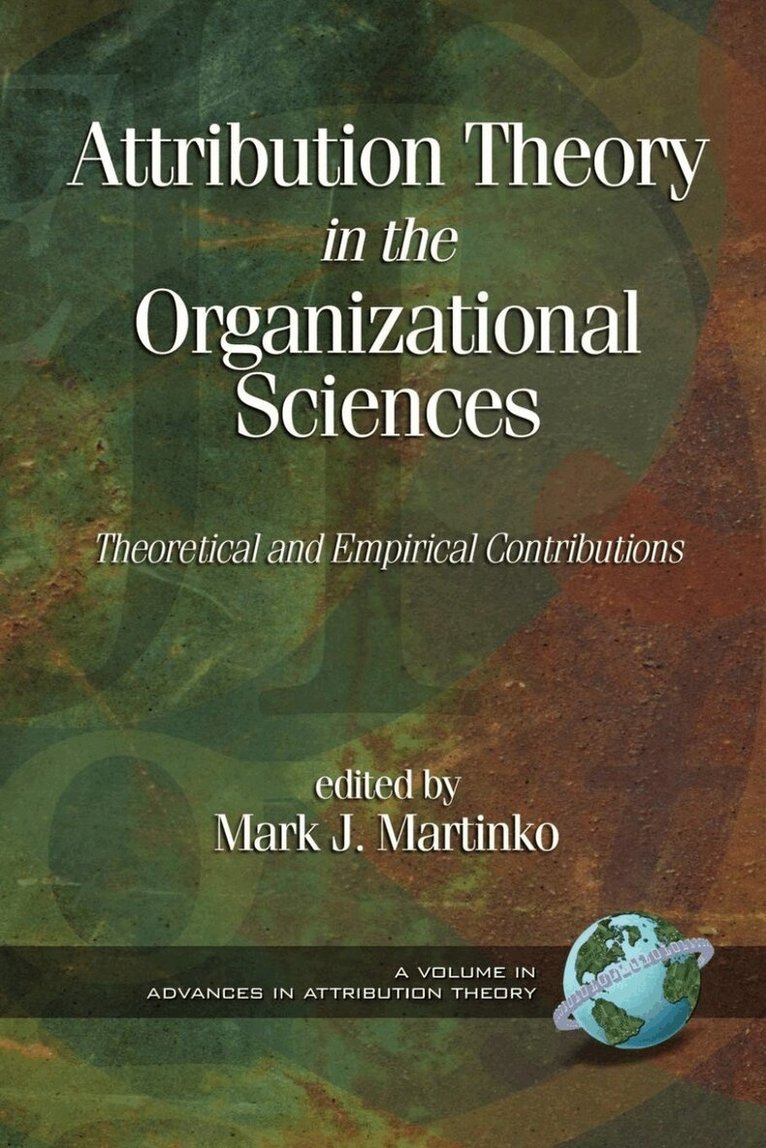
Attribution Theory in the Organizational Sciences
Theoretical and Empirical Contributions
Av J. S. Piven, Mark J. Martinko m. fl.
Häftad, 2000
621 kr
Lägg i varukorg
This book argues that conventional interpretations of Freudian psychology have not accounted for the existence and complexity of death anxiety and its intrinsic relation to the creation of illusions and delusions. This book contends that there is sufficient evidence to support the view that death …
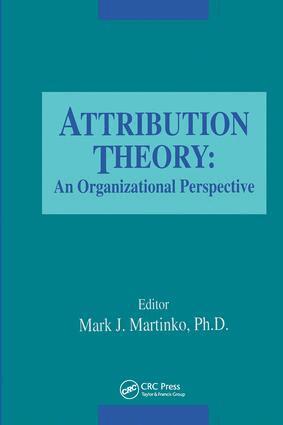
Attribution Theory
An Organizational Perspective
Inbunden, 1995
2446 kr
Lägg i varukorg
With Special Contributions from Bernard Weiner Ph.D. (UCLA) and Robert Lord Ph.D. (Univ. of Akron)Attribution theory is concerned with peoples causal explanation for outcomes: successes and failures. The basic premise is that beliefs about outcomes are a primary determinant of expectations and, …