Mark Rowe - Böcker
Visar alla böcker från författaren Mark Rowe. Handla med fri frakt och snabb leverans.
10 produkter
10 produkter
217 kr
Skickas
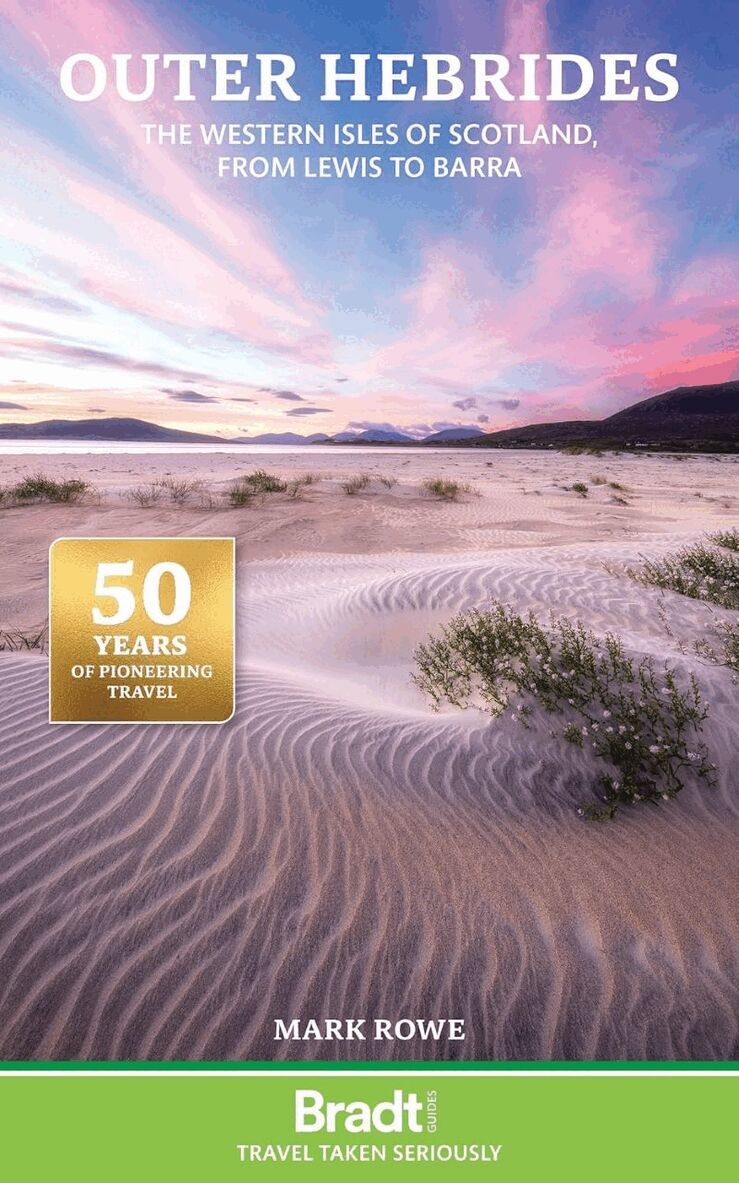
This new, thoroughly updated third edition of Bradt's Outer Hebrides is the only up-to-date guidebook to focus solely on Scotland's Western Isles: the islands of Lewis, Harris, St Kilda, Berneray, North Uist, Benbecula, South Uist, Eriskay, Barra and Vatersay. Informed and intimate, this guidebook is ideal for people who travel with curious minds to discover places of great cultural, historical and wildlife interest.The Outer Hebrides is an archipelago of 15 inhabited islands and more than 50 others that are free of human footprint. It is perfect for a staycation where you can get off the beaten track, switching off from the modern world. Huge variations in landscape are found across the islands - from Lewisian gneiss, which dates back almost three billion years, to rugged Harris with its magnificent, almost unbroken sands running down its western flanks, and the undulating flatness and jagged sea lochs of the Uists. Here Gaelic is increasingly spoken (driven both by a strong sense of regional identity but also, unexpectedly, boosted by commitment from many incomers). Ancient monuments abound, from enigmatic 2,000-year-old brochs to Tobha Mor, the earliest Christian site on the Outer Hebrides. Here too are the Standing Stones of Callanish (where a vibrant new visitor centre opens in 2026) and the Uig peninsula (where the 'Lewis Chessmen' were uncovered nearly 200 years ago). Nature-lovers can watch stunning seabird colonies, birds of prey, seals and red deer - or become absorbed in the machair, grassy coastal zones that are transformed into glorious carpets of wildflowers in late spring and summer. Walkers have an impressive choice of routes, while cyclists can enjoy the new Hebridean Way cycle trail. Alongside providing all the practical details you could ever need, experienced journalist Mark Rowe contextualises your visit with detailed and enlightening background information - from geography and geology to art and architecture, via extensive coverage of wildlife. New elements of this third edition include advice on camping and campervanning, a round-up of deserted villages and details of the first malt whisky produced on Harris. Whatever floats your boat, Bradt's Outer Hebrides is your perfect travel companion.
928 kr
Skickas inom 10-15 vardagar
The diversity of contemporary investigative approaches included in this volume provides an exciting account of our current understanding of brain mechanisms responsible for sensory and perceptual experience in the areas of touch, kinesthesia, and pain.Postgraduate research students in sensory physiology, neurology, psychology and anatomy, and researchers themselves will find that this volume addresses many of the key issues in our attempts to understand the neural mechanisms that mediate sensory experience arising from the body as a whole, the so-called somatic senses, in particular for touch and pain. The volume provides a record of the occasion of the St Petersburg IUPS symposium, chaired by the editors of this volume, and includes some added recent contributions from other leading international figures in the field. Brought together under the sponsoring banner of the IUPS Commission for Somatosensory Physiology and Pain, these scientists with their different experimental approaches seek collectively to understand the brain mechanisms that underlie our own nature and experience.
Vitality Mark
Your prescription for feeling energised, invigorated, enthusiastic and optimistic each day
Häftad, Engelska, 2022
188 kr
Skickas
A prescription for feeling energised, invigorated, enthusiastic and optimistic each day. Written by GP and lifestyle-medicine practitioner Dr Mark Rowe, whose own experience of burnout helped him to develop the programme for living with vitality set out in this book.
1 638 kr
Tillfälligt slut
From 1840-57, Heinrich Ernst was one of the most famous and significant European musicians, and performed on stage, often many times, with Berlioz, Mendelssohn, Chopin, Liszt, Wagner, Alkan, Clara Schumann, and Joachim. It is a sign of his importance that, in 1863, Brahms gave two public performances in Vienna of his own and Ernst's music to raise money for the now mortally ill violinist. Berlioz described Ernst as 'one of the artists whom I love the most, and with whose talent I am most sympathetique', while Joachim was in no doubt that Ernst was 'the greatest violinist I ever heard; he towered above the others'. Many felt that he surpassed the expressive and technical achievements of Paganini, but Ernst, unlike his great predecessor, was also a tireless champion of public chamber music, and did more than any other early nineteenth-century violinist to make Beethoven's late quartets widely known and appreciated. Ernst was not only a great virtuoso but also an accomplished composer. He wrote two of the most popular pieces of the nineteenth century - the Elegy and the Carnival of Venice - and he is best known today for two solo pieces which represent the ne plus ultra of technical difficulty: the transcription of Schubert's Erlking, and the sixth of his Polyphonic Studies, the variations on The Last Rose of Summer. Perhaps he made his greatest contribution to music through his influence on Liszt's outstanding masterpiece, the B minor piano sonata. In 1849, Liszt conducted Ernst playing his own Concerto Pathétique, a substantial single-movement work, in altered sonata form, using thematic transformation. Soon after this performance, Liszt wrote his Grosses Konzertsolo (1849-50), his first extended single-movement work, using altered sonata form, and thematic transformation. This is now universally acknowledged to be the immediate forerunner of the sonata, which refines and develops all these techniques. Liszt made his debt clear when, three years after completi
845 kr
Skickas inom 10-15 vardagar
From 1840-57, Heinrich Ernst was one of the most famous and significant European musicians, and performed on stage, often many times, with Berlioz, Mendelssohn, Chopin, Liszt, Wagner, Alkan, Clara Schumann, and Joachim. It is a sign of his importance that, in 1863, Brahms gave two public performances in Vienna of his own and Ernst's music to raise money for the now mortally ill violinist. Berlioz described Ernst as 'one of the artists whom I love the most, and with whose talent I am most sympathetique', while Joachim was in no doubt that Ernst was 'the greatest violinist I ever heard; he towered above the others'. Many felt that he surpassed the expressive and technical achievements of Paganini, but Ernst, unlike his great predecessor, was also a tireless champion of public chamber music, and did more than any other early nineteenth-century violinist to make Beethoven's late quartets widely known and appreciated. Ernst was not only a great virtuoso but also an accomplished composer. He wrote two of the most popular pieces of the nineteenth century - the Elegy and the Carnival of Venice - and he is best known today for two solo pieces which represent the ne plus ultra of technical difficulty: the transcription of Schubert's Erlking, and the sixth of his Polyphonic Studies, the variations on The Last Rose of Summer. Perhaps he made his greatest contribution to music through his influence on Liszt's outstanding masterpiece, the B minor piano sonata. In 1849, Liszt conducted Ernst playing his own Concerto Pathétique, a substantial single-movement work, in altered sonata form, using thematic transformation. Soon after this performance, Liszt wrote his Grosses Konzertsolo (1849-50), his first extended single-movement work, using altered sonata form, and thematic transformation. This is now universally acknowledged to be the immediate forerunner of the sonata, which refines and develops all these techniques. Liszt made his debt clear when, three years after completi
195 kr
Skickas
This brand-new guide to the Isle of Wight forms part of Bradt's top-selling, award-winning series of Slow travel guides to UK regions. Written by expert author and journalist Mark Rowe, who has visited the island over 30 times since first spending childhood holidays there, it is the perfect companion to help you get the most out of your visit, replete with not just all the practical information you could need, but also all the descriptive detail, anecdote and insider tips to make time spent there truly enjoyable and memorable.The Isle of Wight is an island that is astonishingly - and unexpectedly - rich in food producers, wildlife, natural beauty, history, archaeology and dramatic landscapes. This is all the more remarkable for it being so close to the densely populated southern edges of England. At just 25 miles x 13 miles, in no other equivalent-sized area of Britain is there such a variety of landscapes (downland, estuaries, hills, saltmarshes, meadows, riverine, beach) or such a concentration of food producers (50+ independents at the last count). Here there is a real Island culture, a creative spirit that is quite quirky and independent.Bradt's Isle of Wight includes where to go to see red squirrels, where to hire e-bikes, where to go foraging and where is best for families. It also covers historic and present quirks, curiosities and attractions, including Jimi Hendrix's unusual love affair with the island, a day in the life of a ferry master, tree climbing, World War II history, night-time wildlife, the annual walk at low tide to explore the wildlife underneath Ryde's grand Victorian pier, the island's award-winning wines and its dinosaur fossil-rich beaches - of which it has more than anywhere else in the UK!With 20 maps, including regional, walking and cycling maps, you'll be well placed to navigate your way from one point of interest to another. Whatever your interest, Bradt's Isle of Wight will help you to plan and enjoy a visit to remember.
198 kr
Skickas
In this inspiring and practical book, Dr. Mark Rowe reveals the most important things we can do today to improve our lives tomorrow, with benefits that are so impressive you’ll want to get started straightaway.
206 kr
Skickas
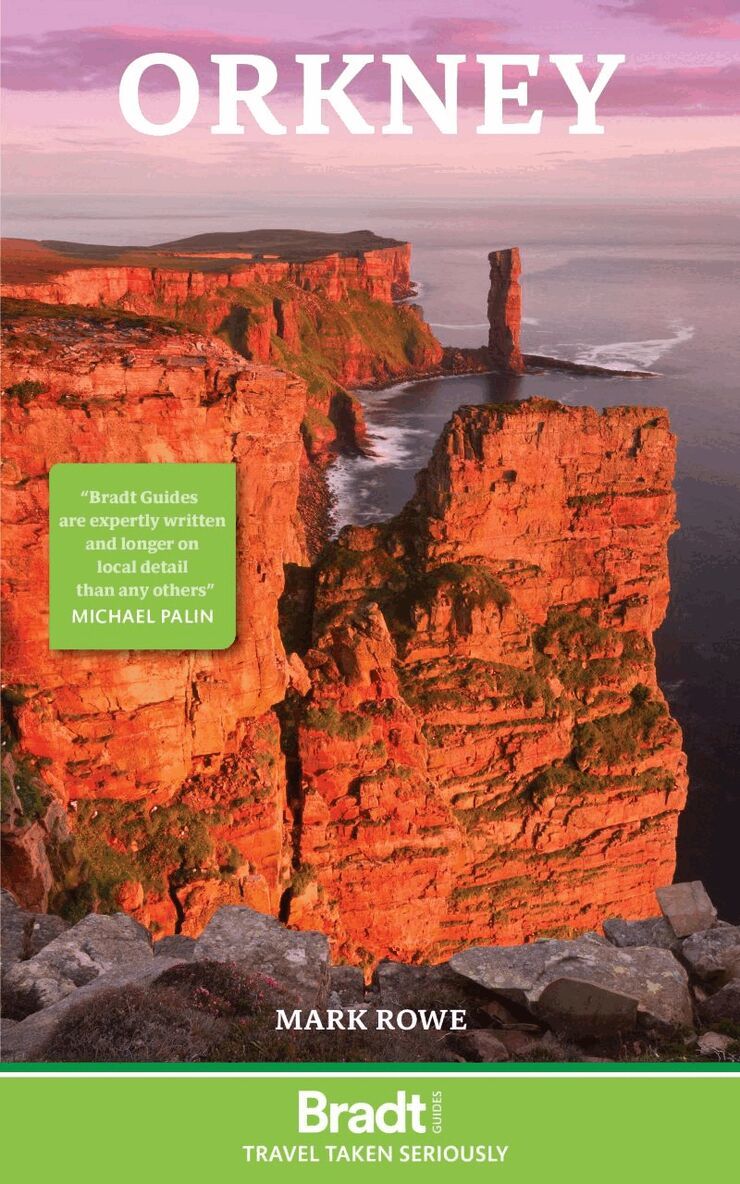
This thoroughly updated second edition of Bradt's guidebook to the alluring Scottish archipelago of Orkney is written by experienced author and journalist Mark Rowe, who is something of a specialist on the more remote parts of Scotland. Bradt's guidebook combines all the practical details a traveller could need (when to visit, suggested itineraries, local culture, accommodation, and where to eat and drink) together with insightful background that ranges from geography and geology to architecture and archaeology, plus significant coverage of wildlife.Comprising 70 islands, of which just 19 are inhabited, Orkney is extraordinary. The World Heritage Site of Neolithic Orkney harbours many archaeological treasures, including Skara Brae, the most important Stone-Age village in northern Europe, and Maeshowe chambered tomb, whose entrance is aligned with the setting sun on the winter solstice. Here you'll also find the Old Man of Hoy, a spectacular 140m-high sea stack; Scapa Flow, scene of the dramatic scuttling of the German fleet in 1919; and dramatic nature reserves with cliffs upon which one in six UK seabirds nests. The deeper you delve - made easy with Bradt's Orkney - the more you uncover. Foodies will be delighted by an astonishing number of local food outlets and family producers, some going back more than 100 years. Discover Scotland's first carbon-neutral island (or that's the plan!), the island whose past may have included sky burials, and the world's shortest scheduled commercial flight (just 60 seconds!). Or why not attend one of the world's leading science festivals or Scotland's sole wine festival?New for this edition are additional mapped walks; greater detail on history; expanded coverage of archaeological developments, the outer isles, new or enhanced visitor attractions including croft tours - all in the UK's top destination for cruise ships and an increasingly popular location for family staycations.With much to enchant archaeology enthusiasts, walkers, cyclists, wildlife watchers, beach lovers and genealogists, Bradt's Orkney is the ideal guide for those who travel with curious minds to discover far-flung places of great cultural, historical and wildlife interest.
206 kr
Kommande
Part of Bradt's distinctive, award-winning series of 'Slow' travel guides to UK regions, the new, thoroughly updated second edition of Isle of Wight (Slow Travel) remains by far the longest and most detailed guidebook to this charming English island. Written by expert travel journalist Mark Rowe, who has visited the island over 30 times since childhood, it is the perfect companion to help you get the most out of your visit, replete with not just all the practical information you could need, but also all the intimate detail, anecdote and insider tips to make time spent there deeply rewarding. The Isle of Wight is an island that is astonishingly and unexpectedly rich in wildlife, natural beauty, history, archaeology, classy museums and Victoriana. This is all the more remarkable for it being so close to the densely populated southern edges of England. Covering just 25 miles by 13 miles, no other equivalent-sized area of Britain boasts such a variety of landscapes (downland, estuaries, hills, saltmarshes, meadows, riverine, beach) or such an intense concentration of food producers (50+ independents). Here there is a real island culture, a creative spirit that favours the independent and idiosyncratic. There is urban fascination too: Cowes is famous for its sailing jamboree, but is also packed with interest from narrow, medieval streets to local one-of-a-kind shops. Bradt's Isle of Wight encompasses the island's strong associations with British royalty from Queen Victoria's final home to the castle where Charles I was imprisoned and architectural history, including 15th-century manor houses. It also covers quirks, curiosities and attractions, including Jimi Hendrix's unusual love affair with the island, a day in the life of a ferry master, World War II history, the annual walk at low tide to look for marine creatures underneath Ryde's grand Victorian pier, award-winning wines and more dinosaur fossil-rich beaches than anywhere else in Britain! Twenty maps will help you navigate from one point of interest to another, take walks and enjoy cycle rides. Indeed, whatever your interest, Bradt's Isle of Wight (Slow Travel) will help you to plan and enjoy a visit to remember. AUTHOR: Mark Rowe is a wildlife and outdoors journalist with 20+ years' experience who has explored the Isle of Wight more than 30 times first as a teenager, then as a walker and birdwatcher, and now as a parent. He knows Wight inside out, taking delight in the quirky and unusual side of island life, which is very much part of the visitor's experience. Using his eye for detail, he feels strongly that the Isle of Wight has a great deal to offer a wide range of visitors interested in food, wildlife, stunning coastal landscapes and much more besides. He considers that this book celebrating slow travel on the sheltered climes of an island off the south coast of England is a reward for good behaviour and the many winters endured researching Bradt's guides to the Outer Hebrides and Orkney.
2 634 kr
Skickas inom 10-15 vardagar
The diversity of contemporary investigative approaches included in this volume provides an exciting account of our current understanding of brain mechanisms responsible for sensory and perceptual experience in the areas of touch, kinesthesia, and pain.Postgraduate research students in sensory physiology, neurology, psychology and anatomy, and researchers themselves will find that this volume addresses many of the key issues in our attempts to understand the neural mechanisms that mediate sensory experience arising from the body as a whole, the so-called somatic senses, in particular for touch and pain. The volume provides a record of the occasion of the St Petersburg IUPS symposium, chaired by the editors of this volume, and includes some added recent contributions from other leading international figures in the field. Brought together under the sponsoring banner of the IUPS Commission for Somatosensory Physiology and Pain, these scientists with their different experimental approaches seek collectively to understand the brain mechanisms that underlie our own nature and experience.