Mark S. Mosko – författare
Visar alla böcker från författaren Mark S. Mosko. Handla med fri frakt och snabb leverans.
4 produkter
4 produkter
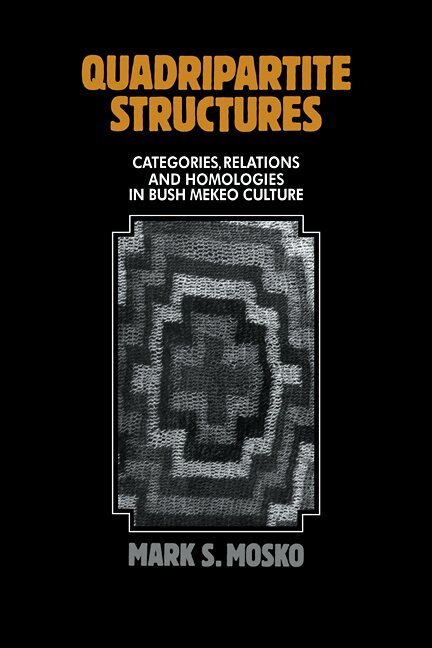
Quadripartite Structures
Categories, Relations and Homologies in Bush Mekeo Culture
Häftad, Engelska, 2009
531 kr
Skickas inom 7-10 vardagar
Despite almost a century of contact with Europeans, the Bush Mekeo people of Papua New Guinea are still essentially unknown to the anthropological world. This book was the first detailed, comprehensive study of Bush Mekeo culture and society. Using a rigourous structuralist approach to interpret in a consistent and systematic way the principal meanings and social practices of this South Seas way of life, Mark Mosko provides a convincing portrayal of Bush Mekeo culture and society as a unified, coherent and logical 'whole'. The main force of the book is to explore empirically the logic by which Bush Mekeo symbols are connected. Beginning with native symbolic constructions of space and time, Professor Mosko carefully unfolds the associated beliefs and practices pertaining to the body, to the relations between genders, to the system of social organisation and to the dramatic and resplendent Bush Mekeo mortuary ceremonial.
594 kr
Skickas inom 3-6 vardagar
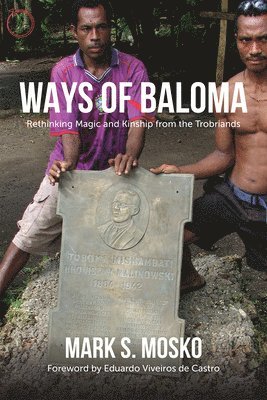
Bronislaw Malinowski's path-breaking research in the Trobriand Islands shaped much of modern anthropology's disciplinary paradigm. Yet many conundrums remain. For example, Malinowski asserted that baloma spirits of the dead were responsible for procreation but had limited influence on their living descendants in magic and other matters, claims largely unchallenged by subsequent field investigators, until now. Based on extended fieldwork at Omarakana village home of the Tabalu "Paramount Chief" Mark S. Mosko argues instead that these and virtually all contexts of indigenous sociality are conceived as sacrificial reciprocities between the mirror worlds that baloma and humans inhabit. Informed by a synthesis of Strathern's model of "dividual personhood" and Levy-Bruhl's theory of "participation," Mosko upends a century of discussion and debate extending from Malinowski to anthropology's other leading thinkers.His account of the intimate interdependencies of humans and spirits in the cosmic generation and coordination of "life" (momova) and "death" (kaliga) strikes at the nexus of anthropology's received wisdom, and Ways of Baloma will inevitably lead practitioners and students to reflect anew on the discipline's multifold theories of personhood, ritual agency, and sociality.
1 956 kr
Skickas inom 3-6 vardagar
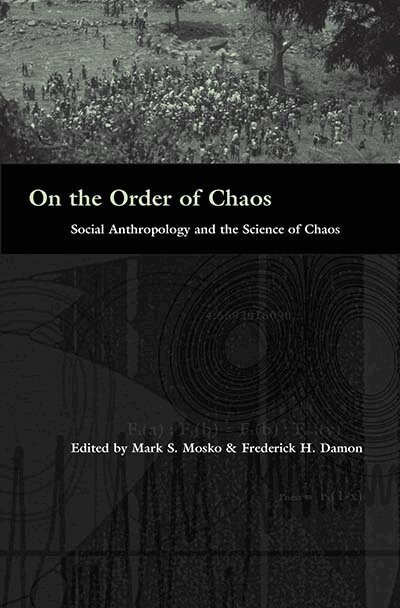
Over the past two decades, “chaos theory” – the perception of order previously hidden in phenomena of apparent randomness and disorder – has fundamentally transformed the natural sciences. In recent years, numerous scholars in the social sciences and humanities have attempted to adapt the insights of chaos theory to their studies of human cultural and social systems. Several of the world’s leading anthropologists, such as Roy Wagner, Marshall Sahlins, Marilyn Strathern, and Arjun Appadurai – have similarly drawn upon particular elements of chaos theory for their inspiration, but as yet there is no focused, comprehensive treatment of the applicability of chaos theory to anthropology’s distinctive ethnographic and cross-cultural materials. This edited volume fills the gap, with both accessible theoretical discussions of chaos theory applications in anthropology and detailed ethnographic and historical illustrations from Africa and Melanesia.
554 kr
Skickas inom 3-6 vardagar
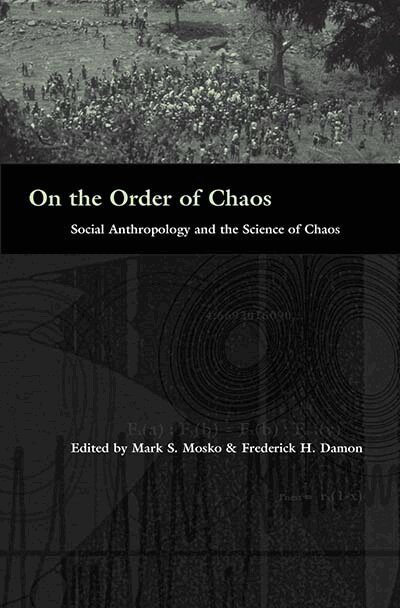
Over the past two decades, “chaos theory” – the perception of order previously hidden in phenomena of apparent randomness and disorder – has fundamentally transformed the natural sciences. In recent years, numerous scholars in the social sciences and humanities have attempted to adapt the insights of chaos theory to their studies of human cultural and social systems. Several of the world’s leading anthropologists, such as Roy Wagner, Marshall Sahlins, Marilyn Strathern, and Arjun Appadurai – have similarly drawn upon particular elements of chaos theory for their inspiration, but as yet there is no focused, comprehensive treatment of the applicability of chaos theory to anthropology’s distinctive ethnographic and cross-cultural materials. This edited volume fills the gap, with both accessible theoretical discussions of chaos theory applications in anthropology and detailed ethnographic and historical illustrations from Africa and Melanesia.