Mark Schroeder - Böcker
Visar alla böcker från författaren Mark Schroeder. Handla med fri frakt och snabb leverans.
15 produkter
15 produkter
1 051 kr
Skickas inom 7-10 vardagar
Existentialist philosophy has, at times, been exceptionally popular. This is because of its promise of possibility, both in doctrine and in style: Its doctrine promises that we can break free from the shackles of cognitive or social structures we are thrown into, and we can overcome our marred personal or collective history. Its style promises that philosophy can be exciting, moving, exhilarating, and funny. Analytic Existentialism brings together ten essays in which analytic philosophers engage with existentialism. The essays take up central existentialist themes, such as freedom, consciousness, and bad faith. Some bring existentialist ideas to bear on issues in contemporary analytic philosophy; some engage analytically with existentialist concerns; some employ the methods of analytic philosophy to interpret existentialist texts; and some articulate how existentialist insights speak to ongoing matters of concern outside of philosophy. All essays, taken together, make good on the existentialist promise for analytic philosophy: Even as analytic philosophers, we can embrace the thought that freedom is at the heart of our being. And even as analytic philosophers, we can write philosophical texts that capture the imagination. We trust that these essays can rekindle the excitement of philosophical thought.
1 091 kr
Skickas inom 7-10 vardagar
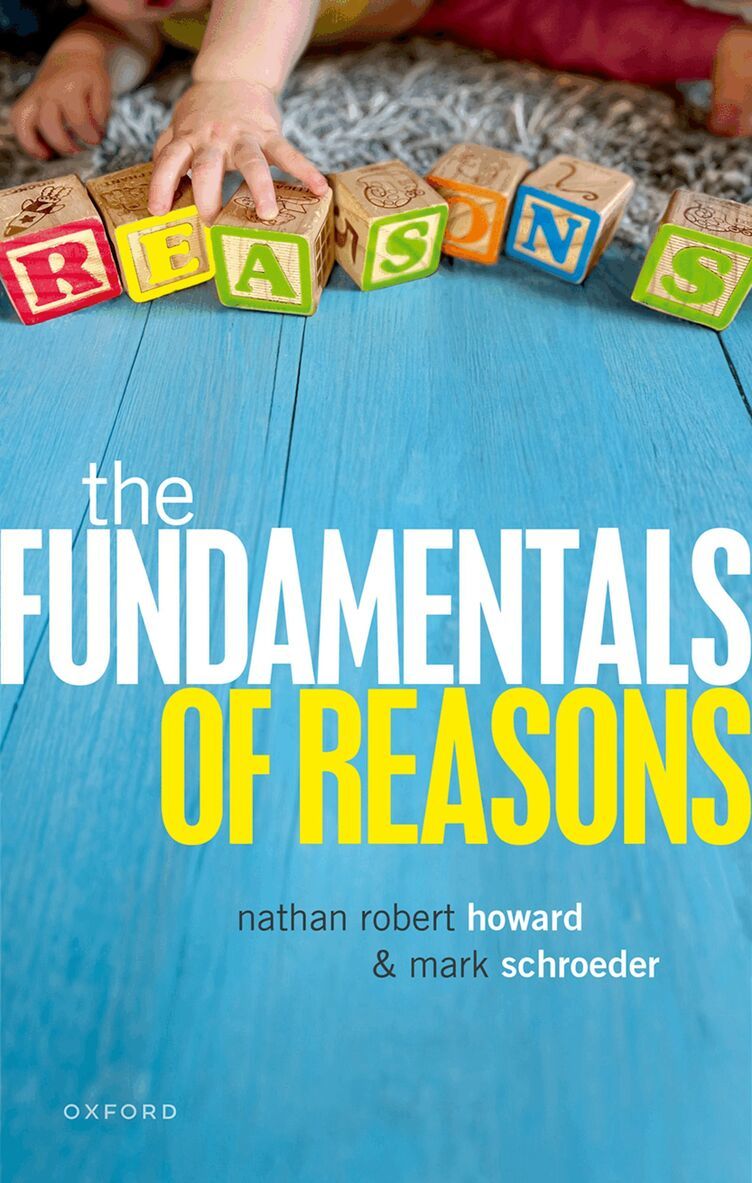
The concept of a reason is now central to many areas of contemporary philosophy. Key theses in ethics, epistemology, political philosophy, philosophy of action, and the philosophy of the emotions, among others, have come to be framed in terms of reasons. And yet, despite their centrality, theorists seem to take inconsistent things for granted about how reasons work, what kinds of things can be reasons, what reasons favor, and more. Somehow reasons have come to be both indispensable and impenetrable.The Fundamentals of Reasons offers a comprehensive introduction to the philosophy of reasons. Focusing on the twin roles of reasons in explanation and deliberation, the book not only emphasizes what has made reasons central across philosophy but it also explores why philosophers have such incompatible pictures about what reasons are and how they work. Working from the inside out, Howard and Schroeder identify contentious assumptions about not only the internal structure of reasons but also their relationship to other important concepts, and then show how these contentious assumptions shape the many downstream applications of reasons in ethics, epistemology, political philosophy, and beyond.This mildly opinionated exploration of key questions about the significance and nature of reasons helps the reader to navigate this important part of the philosophical landscape and to get clearer about why reasons seem important and what their import, ultimately, is.
255 kr
Skickas inom 5-8 vardagar
The concept of a reason is now central to many areas of contemporary philosophy. Key theses in ethics, epistemology, political philosophy, philosophy of action, and the philosophy of the emotions, among others, have come to be framed in terms of reasons. And yet, despite their centrality, theorists seem to take inconsistent things for granted about how reasons work, what kinds of things can be reasons, what reasons favor, and more. Somehow reasons have come to be both indispensable and impenetrable.The Fundamentals of Reasons offers a comprehensive introduction to the philosophy of reasons. Focusing on the twin roles of reasons in explanation and deliberation, the book not only emphasizes what has made reasons central across philosophy but it also explores why philosophers have such incompatible pictures about what reasons are and how they work. Working from the inside out, Howard and Schroeder identify contentious assumptions about not only the internal structure of reasons but also their relationship to other important concepts, and then show how these contentious assumptions shape the many downstream applications of reasons in ethics, epistemology, political philosophy, and beyond.This mildly opinionated exploration of key questions about the significance and nature of reasons helps the reader to navigate this important part of the philosophical landscape and to get clearer about why reasons seem important and what their import, ultimately, is.
Explaining the Reasons We Share
Explanation and Expression in Ethics, Volume 1
Inbunden, Engelska, 2014
921 kr
Skickas inom 5-8 vardagar
Normative ethical theories generally purport to be explanatory--to tell us not just what is good, or what conduct is right, but why. Drawing on both historical and contemporary approaches, Mark Schroeder offers a distinctive picture of how such explanations must work, and of the specific commitments that they incur. According to Schroeder, explanatory moral theories can be perfectly general only if they are reductive, offering accounts of what it is for something to be good, right, or what someone ought to do. So ambitious, highly general normative ethical theorizing is continuous with metaethical inquiry. Moreover, he argues that such explanatory theories face a special challenge in accounting for reasons or obligations that are universally shared, and develops an autonomy-based strategy for meeting this challenge, in the case of requirements of rationality.Explaining the Reasons We Share pulls together over a decade of work by one of the leading figures in contemporary metaethics. One new and ten previously published papers weave together treatments of reasons, reduction, supervenience, instrumental rationality, and legislation, to paint a sharp contrast between two plausible but competing pictures of the nature and limits of moral explanation--one from Cudworth and one indebted to Kant. A substantive new introduction provides a map to reading these essays as a unified argument, and qualifies their conclusions in light of Schroeder's current views. Along with its sister volume, Expressing Our Attitudes, this volume advances the theme that metaethical inquiry is continuous with other areas of philosophy.
1 078 kr
Skickas inom 5-8 vardagar
When the logical positivists espoused emotivism as a theory of moral discourse, they assumed that their general theories of meaning could be straightforwardly applied to the subject of metaethics. The philosophical research program of expressivism, emotivism's contemporary heir, has called this assumption into question. In this volume Mark Schroeder argues that the only plausible ways of developing expressivism or similar views require us to re-think what we may have thought that we knew about propositions, truth, and the nature of attitudes like belief and desire. Informed by detailed scrutiny of the structural problems about understanding complex thoughts, he develops a range of alternative expressivist frameworks in detail as illustrations of general lessons, and applies them not just to metaethics, but to epistemic expressions and even to truth itself.Expressing Our Attitudes pulls together over a decade of work by one of the leading figures in contemporary metaethics. Two new and seven previously published papers weave treatments of propositions, truth, and the attitudes together with detailed development of competing alternative expressivist frameworks and discussion of their relative advantages. A substantial new introduction both offers new arguments of its own, and provides a map to reading these essays as a unified argument.Along with its sister volume, Explaining the Reasons We Share, this volume advances the theme that metaethical inquiry is continuous with other areas of philosophy.
478 kr
Skickas inom 7-10 vardagar
In the last five decades, ethical theory has been preoccupied by a turn to reasons. The vocabulary of reasons has become a common currency not only in ethics, but in epistemology, action theory, and many related areas. It is now common, for example, to see central theses such as evidentialism in epistemology and egalitarianism in political philosophy formulated in terms of reasons. And some have even claimed that the vocabulary of reasons is so useful precisely because reasons have analytical and explanatory priority over other normative concepts-that reasons in that sense come first.Reasons First systematically explores both the benefits and burdens of the hypothesis that reasons do indeed come first in normative theory, against the conjecture that theorizing in both ethics and epistemology can only be hampered by neglect of the other. Bringing two decades of work on reasons in both ethics and epistemology to bear, Mark Schroeder argues that some of the most important challenges to the idea that reasons could come first are themselves the source of some of the most obstinate puzzles in epistemology: about how perceptual experience could provide evidence about the world, and about what can make evidence sufficient to justify belief. Schroeder shows that, along with moral worth, one of the very best cases for the fundamental explanatory power of reasons in normative theory actually comes from knowledge.
420 kr
Skickas inom 5-8 vardagar
Normative ethical theories generally purport to be explanatory - to tell us not just what is good, or what conduct is right, but why. Drawing on both historical and contemporary approaches, Mark Schroeder offers a distinctive picture of how such explanations must work, and of the specific commitments that they incur. According to Schroeder, explanatory moral theories can be perfectly general only if they are reductive, offering accounts of what it is for something to be good, right, or what someone ought to do. So ambitious, highly general normative ethical theorizing is continuous with metaethical inquiry. Moreover, he argues that such explanatory theories face a special challenge in accounting for reasons or obligations that are universally shared, and develops an autonomy-based strategy for meeting this challenge, in the case of requirements of rationality.Explaining the Reasons We Share pulls together over a decade of work by one of the leading figures in contemporary metaethics. One new and ten previously published papers weave together treatments of reasons, reduction, supervenience, instrumental rationality, and legislation, to paint a sharp contrast between two plausible but competing pictures of the nature and limits of moral explanation-one from Cudworth and one indebted to Kant. A substantive new introduction provides a map to reading these essays as a unified argument, and qualifies their conclusions in light of Schroeder's current views.Along with its sister volume, Expressing Our Attitudes, this volume advances the theme that metaethical inquiry is continuous with other areas of philosophy.
292 kr
Skickas inom 5-8 vardagar
In the last five decades, ethical theory has been preoccupied by a turn to reasons. The vocabulary of reasons has become a common currency not only in ethics, but in epistemology, action theory, and many related areas. It is now common, for example, to see central theses such as evidentialism in epistemology and egalitarianism in political philosophy formulated in terms of reasons. And some have even claimed that the vocabulary of reasons is so useful precisely because reasons have analytical and explanatory priority over other normative concepts—that reasons in that sense come first.Reasons First systematically explores both the benefits and burdens of the hypothesis that reasons do indeed come first in normative theory, against the conjecture that theorizing in both ethics and epistemology can only be hampered by neglect of the other. Bringing two decades of work on reasons in both ethics and epistemology to bear, Mark Schroeder argues that some of the most important challenges to the idea that reasons could come first are themselves the source of some of the most obstinate puzzles in epistemology: about how perceptual experience could provide evidence about the world, and about what can make evidence sufficient to justify belief. Schroeder shows that, along with moral worth, one of the very best cases for the fundamental explanatory power of reasons in normative theory actually comes from knowledge.
1 269 kr
Skickas inom 5-8 vardagar
Long claimed to be the dominant conception of practical reason, the Humean theory that reasons for action are instrumental, or explained by desires, is the basis for a range of worries about the objective prescriptivity of morality. As a result, it has come under intense attack in recent decades. A wide variety of arguments have been advanced which purport to show that it is false, or surprisingly, even that it is incoherent. Slaves of the Passions aims to set the record straight, by advancing a version of the Humean theory of reasons which withstands this sophisticated array of objections.Mark Schroeder defends a radical new view which, if correct, means that the commitments of the Humean theory have been widely misunderstood. Along the way, he raises and addresses questions about the fundamental structure of reasons, the nature of normative explanations, the aims of and challenges facing reductive views in metaethics, the weight of reasons, the nature of desire, moral epistemology, and most importantly, the relationship between agent-relational and agent-neutral reasons for action.
991 kr
Skickas inom 5-8 vardagar
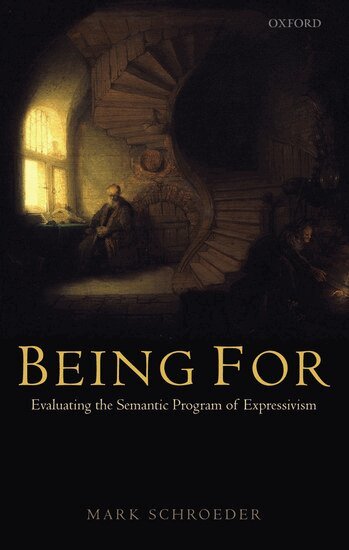
Expressivism - the sophisticated contemporary incarnation of the noncognitivist research program of Ayer, Stevenson, and Hare - is no longer the province of metaethicists alone. Its comprehensive view about the nature of both normative language and normative thought has also recently been applied to many topics elsewhere in philosophy - including logic, probability, mental and linguistic content, knowledge, epistemic modals, belief, the a priori, and even quantifiers. Yet the semantic commitments of expressivism are still poorly understood and have not been very far developed. As argued within, expressivists have not yet even managed to solve the 'negation problem' - to explain why atomic normative sentences are inconsistent with their negations. As a result, it is far from clear that expressivism even could be true, let alone whether it is.Being For seeks to evaluate the semantic commitments of expressivism, by showing how an expressivist semantics would work, what it can do, and what kind of assumptions would be required, in order for it to do it. Building on a highly general understanding of the basic ideas of expressivism, it argues that expressivists can solve the negation problem - but only in one kind of way. It shows how this insight paves the way for an explanatorily powerful, constructive expressivist semantics, which solves many of what have been taken to be the deepest problems for expressivism. But it also argues that no account with these advantages can be generalized to deal with constructions like tense, modals, or binary quantifiers. Expressivism, the book argues, is coherent and interesting, but false.
441 kr
Skickas inom 5-8 vardagar
Long claimed to be the dominant conception of practical reason, the Humean theory that reasons for action are instrumental, or explained by desires, is the basis for a range of worries about the objective prescriptivity of morality. As a result, it has come under intense attack in recent decades. A wide variety of arguments have been advanced which purport to show that it is false, or surprisingly, even that it is incoherent. Slaves of the Passions aims to set the record straight, by advancing a version of the Humean theory of reasons which withstands this sophisticated array of objections. Mark Schroeder defends a radical new view which, if correct, means that the commitments of the Humean theory have been widely misunderstood. Along the way, he raises and addresses questions about the fundamental structure of reasons, the nature of normative explanations, the aims of and challenges facing reductive views in metaethics, the weight of reasons, the nature of desire, moral epistemology, and most importantly, the relationship between agent-relational and agent-neutral reasons for action.
546 kr
Skickas inom 5-8 vardagar
Expressivism - the sophisticated contemporary incarnation of the noncognitivist research program of Ayer, Stevenson, and Hare - is no longer the province of metaethicists alone. Its comprehensive view about the nature of both normative language and normative thought has also recently been applied to many topics elsewhere in philosophy - including logic, probability, mental and linguistic content, knowledge, epistemic modals, belief, the a priori, and even quantifiers. Yet the semantic commitments of expressivism are still poorly understood and have not been very far developed. As argued within, expressivists have not yet even managed to solve the 'negation problem' - to explain why atomic normative sentences are inconsistent with their negations. As a result, it is far from clear that expressivism even could be true, let alone whether it is.Being For seeks to evaluate the semantic commitments of expressivism, by showing how an expressivist semantics would work, what it can do, and what kind of assumptions would be required, in order for it to do it. Building on a highly general understanding of the basic ideas of expressivism, it argues that expressivists can solve the negation problem - but only in one kind of way. It shows how this insight paves the way for an explanatorily powerful, constructive expressivist semantics, which solves many of what have been taken to be the deepest problems for expressivism. But it also argues that no account with these advantages can be generalized to deal with constructions like tense, modals, or binary quantifiers. Expressivism, the book argues, is coherent and interesting, but false.
574 kr
Skickas inom 10-15 vardagar
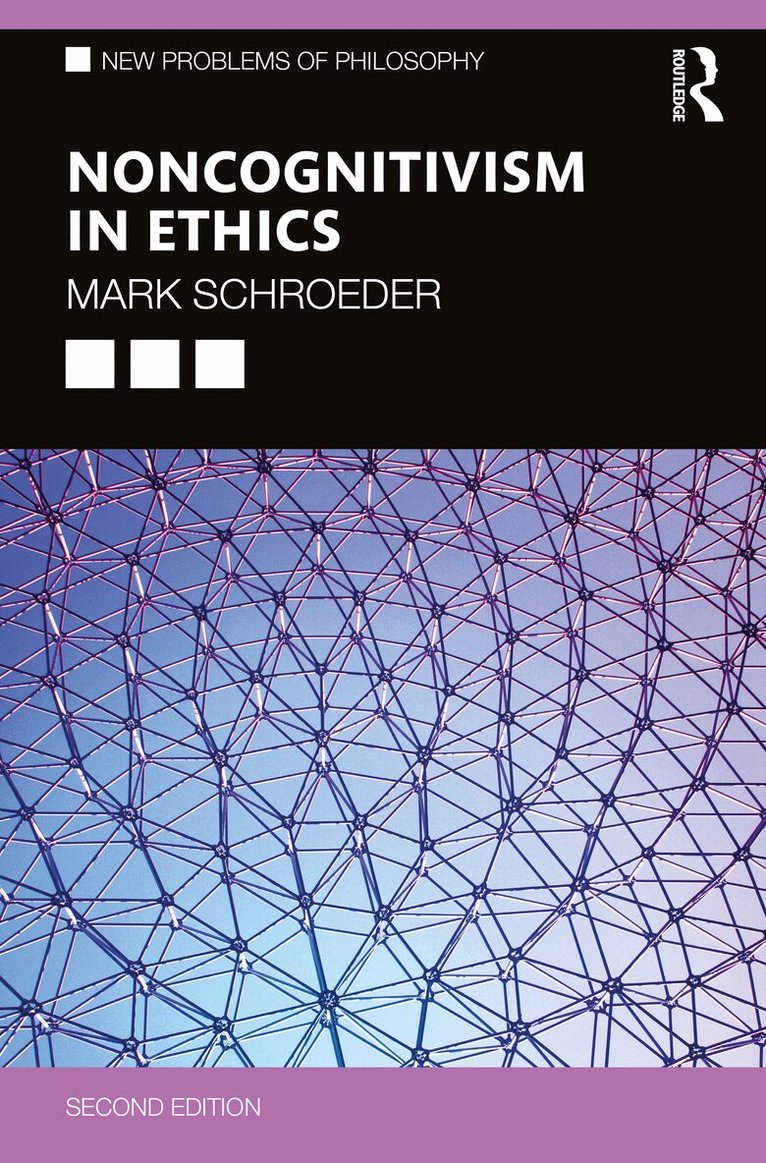
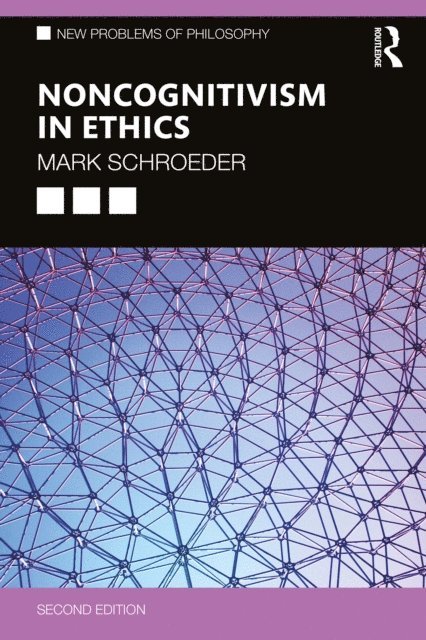
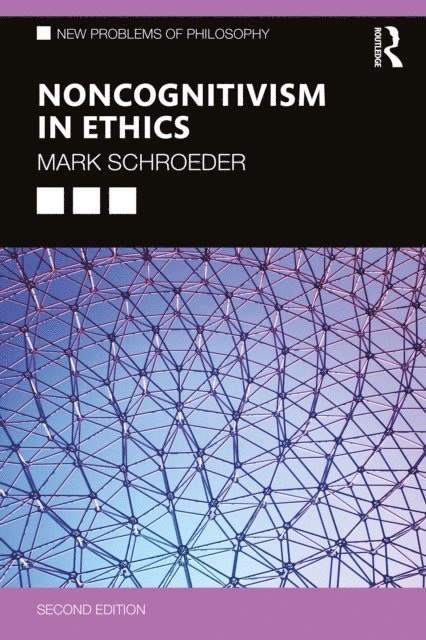
According to noncognitivists, when we say that stealing is wrong, what we are doing is more like venting our feelings about stealing or encouraging one another not to steal, than like stating facts about morality. These ideas challenge the core not only of much thinking about morality and metaethics, but also of much philosophical thought about language and meaning. Noncognitivism in Ethics is an outstanding introduction to these theories, ranging from their early history through the latest contemporary developments. Beginning with a general introduction to metaethics, Mark Schroeder introduces and assesses three principal kinds of noncognitivist theory: the speech-act theories of Ayer, Stevenson, and Hare; the expressivist theories of Blackburn and Gibbard; and hybrid theories. He pays particular attention both to the philosophical problems about what moral facts could be about or how they could matter, which noncognitivism seeks to solve, and to the deep problems that it faces, including the task of explaining both the nature of moral thought and the complexity of moral attitudes, and the ‘Frege–Geach’ problem. This second edition has been revised and updated throughout. It includes new sections on whether expressivism is a metasemantic thesis; the rise of relational expressivism; the idea that expressivism leads us to a novel understanding of the nature of propositions; and expressivism and epistemic modals, deontic modals, probability, and truth. Schroeder makes even the most difficult material accessible by offering crucial background along the way. Also included are exercises at the end of each chapter, chapter summaries, and a glossary of technical terms, making Noncognitivism in Ethics essential reading for all students of ethics and metaethics.
2 100 kr
Skickas inom 10-15 vardagar
According to noncognitivists, when we say that stealing is wrong, what we are doing is more like venting our feelings about stealing or encouraging one another not to steal, than like stating facts about morality. These ideas challenge the core not only of much thinking about morality and metaethics, but also of much philosophical thought about language and meaning. Noncognitivism in Ethics is an outstanding introduction to these theories, ranging from their early history through the latest contemporary developments. Beginning with a general introduction to metaethics, Mark Schroeder introduces and assesses three principal kinds of noncognitivist theory: the speech-act theories of Ayer, Stevenson, and Hare; the expressivist theories of Blackburn and Gibbard; and hybrid theories. He pays particular attention both to the philosophical problems about what moral facts could be about or how they could matter, which noncognitivism seeks to solve, and to the deep problems that it faces, including the task of explaining both the nature of moral thought and the complexity of moral attitudes, and the ‘Frege–Geach’ problem. This second edition has been revised and updated throughout. It includes new sections on whether expressivism is a metasemantic thesis; the rise of relational expressivism; the idea that expressivism leads us to a novel understanding of the nature of propositions; and expressivism and epistemic modals, deontic modals, probability, and truth. Schroeder makes even the most difficult material accessible by offering crucial background along the way. Also included are exercises at the end of each chapter, chapter summaries, and a glossary of technical terms, making Noncognitivism in Ethics essential reading for all students of ethics and metaethics.
251 kr
Kommande
How to avoid the trap of taking conflicts so personallyWe’re all imperfect. Good relationships require seeing each other through these imperfections—distinguishing what is signal, and what is noise. But sometimes we mistake noise for signal—or worse, signal for noise. And even when we get things right, the other person can be getting them wrong. In When Things Get Personal, Mark Schroeder shows that the better we can learn to tell the difference between signal and noise in our relationships, the better we can predict and avoid everyday misunderstandings that, if left unchecked, can lead to “discord”—fundamental, sometimes chronic failures to see eye to eye that lead us to take things personally that we shouldn’t, to treat others in ways that they take personally, to abandon relationships that are worthwhile, and to stay in relationships that we’d be better off without.Engagingly written, story-driven, and rich with powerful ideas and insights, When Things Get Personal addresses conflicts between colleagues, friends, and partners—and between parents and their children. Along the way, it explores the role discord plays in abusive relationships, in tragic coming-out stories, in political polarization, in small ongoing disagreements over things like how to load the dishwasher, and much more.Discord gets us all into serious trouble. But unrecognized discord is even worse. When Things Get Personal teaches you to recognize the causes and symptoms of discord, allowing you to escape many of its worst effects. You will understand other people better—and maybe yourself, as well.