Marko Attila Hoare - Böcker
Visar alla böcker från författaren Marko Attila Hoare. Handla med fri frakt och snabb leverans.
3 produkter
3 produkter
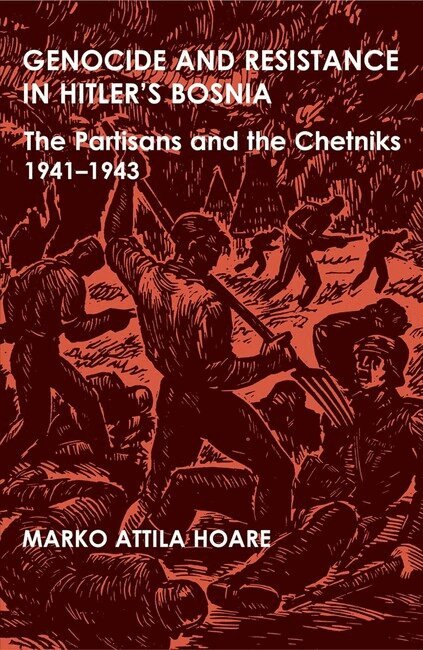
Genocide and Resistance in Hitler's Bosnia
The Partisans and the Chetniks, 1941-1943
Inbunden, Engelska, 2006
1 493 kr
Skickas inom 7-10 vardagar
This volume is a study of revolution, genocide and national identity in Bosnia-Hercegovina during World War II. It explains the civil war between two rival guerrilla movements - the Partisans and the Chetniks - both in terms of long-term socio-economic and cultural fissures in Bosnia-Hercegovina, and in terms of short-term differences in policy and ideology. A chronological narrative history of the Bosnian Partisan movement allows the reader to understand how it evolved, as it first provoked the emergence of its Chetnik rival, and was then forced to adapt under pressure from the latter. This volume will be essential reading for scholars and students of the former Yugoslavia, and for all those interested in Communism, nationalism, revolution, or genocide.
399 kr
Skickas inom 7-10 vardagar
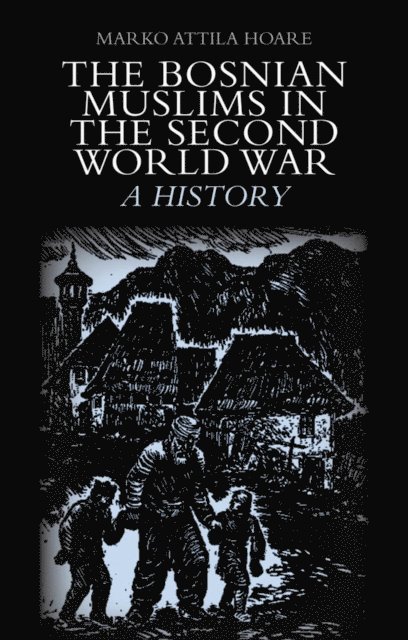
Bosnia-Hercegovina dominated news coverage in the 1990s, yet the country remains the most misunderstood in Europe, frequently stereotyped as a land of perennial ethnic violence or occasionally admired as a former haven of multinational coexistence. In this, the first comprehensive study of national identity in Bosnia-Hercegovina, the author seeks to explain what being Bosnian has really meant for successive generations of Muslims, Serbs, Croats, and Jews. Hoare examines the origins of Bosnia and of its constituent peoples, tracing their evolution through periods of Ottoman, Habsburg and Yugoslav rule, through the genocidal atrocities of World War II, Communist-led revolution and dictatorship, the Bosnian declaration of independence in 1992 and the violence that followed. He shows how different Bosnians related to the common homeland in different ways, depending on their religion, class or political persuasion; and how this provided the basis among them both for cooperation and for conflict.
850 kr
Skickas inom 7-10 vardagar
This is the first in-depth, English-language history of modern Serbia in nearly half a century. It covers the period from the Serbian state's revolutionary rebirth in the early nineteenth century, under the rebel leaders Karadorde Petrovic and Milos Obrenovic; its turbulent history of wars, uprisings and dynastic rivalries; the triumph of Yugoslav unification in 1918; and the catastrophe of occupation by Nazi Germany in 1941. It shows how the birth of the modern nation-state involved the creation of a new elite-dynasty, army and bureaucracy-whose rule over the peasantry generated a popular resistance that would ultimately take form in Nikola Pasic's mighty People's Radical Party. The resulting struggle between elitist Westernisers and pro-Russian populists became entwined with the struggle for pan-Serb and Yugoslav liberation and unification. These causes came together with the Sarajevo assassination of 1914, which triggered the First World War.Existing histories of the Yugoslav kingdom that emerged from that war focus on the national conflict between Serbs, Croats, Bosnian Muslims and others, but Marko Attila Hoare challenges this narrative. He shows how the new kingdom's politics continued to be dominated by the ongoing internal Serbian power struggle, bringing renewed disaster to Yugoslavia and its peoples.