Marshall Sahlins – författare
Visar alla böcker från författaren Marshall Sahlins. Handla med fri frakt och snabb leverans.
20 produkter
20 produkter
166 kr
Skickas inom 11-20 vardagar
Reflecting the decline in college courses on Western Civilization, Marshall Sahlins aims to accelerate the trend by reducing "Western Civ" to about two hours. He cites Nietzsche to the effect that deep issues are like cold baths; one should get into and out of them as quickly as possible. The deep issue here is the ancient Western specter of a presocial and antisocial human nature: a supposedly innate self-interest that is represented in our native folklore as the basis or nemesis of cultural order.Yet these Western notions of nature and culture ignore the one truly universal character of human sociality: namely, symbolically constructed kinship relations. Kinsmen are members of one another: they live each other's lives and die each other's deaths. But where the existence of the other is thus incorporated in the being of the self, neither interest, nor agency nor even experience is an individual fact, let alone an egoistic disposition. "Sorry, beg your pardon," Sahlins concludes, "Western civilization has been built on a perverse and mistaken idea of human nature."
171 kr
Skickas inom 5-8 vardagar
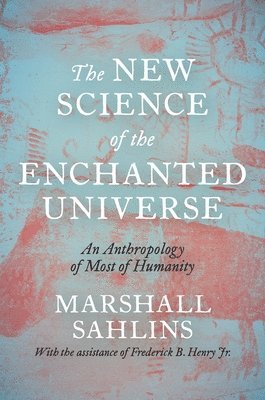
One of the world’s preeminent cultural anthropologists leaves a last work that fundamentally reconfigures how we study most other culturesFrom the perspective of Western modernity, humanity inhabits a disenchanted cosmos. Gods, spirits, and ancestors have left us for a transcendent beyond, no longer living in our midst and being involved in all matters of everyday life from the trivial to the dire. Yet the vast majority of cultures throughout human history treat spirits as very real persons, members of a cosmic society who interact with humans and control their fate. In most cultures, even today, people are but a small part of an enchanted universe misconstrued by the transcendent categories of “religion” and the “supernatural.” The New Science of the Enchanted Universe shows how anthropologists and other social scientists must rethink these cultures of immanence and study them by their own lights.In this, his last, revelatory book, Marshall Sahlins announces a new method and sets an exciting agenda for the field. He takes readers around the world, from Inuit of the Arctic Circle to pastoral Dinka of East Africa, from Araweté swidden gardeners of Amazonia to Trobriand Island horticulturalists. In the process, Sahlins sheds new light on classical and contemporary ethnographies that describe these cultures of immanence and reveals how even the apparently mundane, all-too-human spheres of “economics” and “politics” emerge as people negotiate with, and ultimately usurp, the powers of the gods.The New Science of the Enchanted Universe offers a road map for a new practice of anthropology that takes seriously the enchanted universe and its transformations from ancient Mesopotamia to contemporary America.
698 kr
Skickas inom 10-15 vardagar
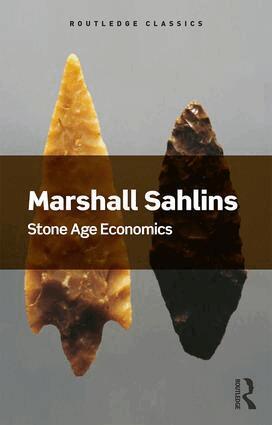
Stone Age Economics is a classic study of anthropological economics, first published in 1974. Ambitiously tackling the nature of economic life and how to study it comparatively, the book includes six studies which reflect the author's ideas on revising traditional views of the hunter-gatherer and so-called primitive societies, revealing them to be the original affluent society. The book examines notions of production, distribution and exchange in early communities and examines the link between economics and cultural and social factors. It consists of a set of detailed and closely related studies of tribal economies, of domestic production for livelihood, and of the submission of domestic production to the material and political demands of society at large.
220 kr
Skickas inom 5-8 vardagar
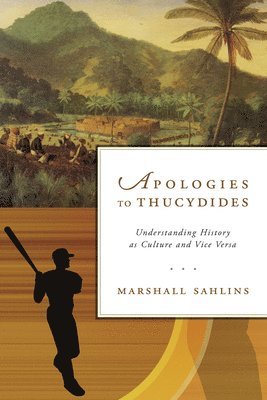
Thucydides' classic work on the history of the Peloponnesian War is the root of Western conceptions of history - including the ethnocentric idea that Thucydides' historiography was universally valid, applicable to all societies at all times. Here, however, Marshall Sahlins takes on Thucydides' history with a groundbreaking book that shows how different cultures develop different modes of historical production. Ranging from the Peloponnesian War to the nineteenth-century fight over the Fiji Islands to Bobby Thomson's "shot heard round the world" for the 1951 Giants to the history-making of Napoleon, he demonstrates again and again the necessity of taking culture into account in the creation of history - with apologies to Thucydides, who too often did not.
150 kr
Skickas inom 5-8 vardagar
What Kinship Is-And Is Not offers, on its surface, a simple theoretical argument, laid out in the titles of its mere two chapters: kinship is culture, not biology. But along the way to proving his point, Marshall Sahlins engages a dazzling array of thinkers, from Aristotle to Emile Durkheim to Marilyn Strathern, bolstering that conversation with an equally dazzling array of ethnographic examples from around the globe. The result is a thrilling combination of clarity and erudition almed at the heart of human relationships and their meaning.
237 kr
Skickas inom 5-8 vardagar
270 kr
Skickas inom 5-8 vardagar
Anahulu: The Anthropology of History in the Kingdom of Hawaii, Volume 1
Historical Ethnography
Häftad, Engelska, 1994
745 kr
Skickas inom 3-6 vardagar
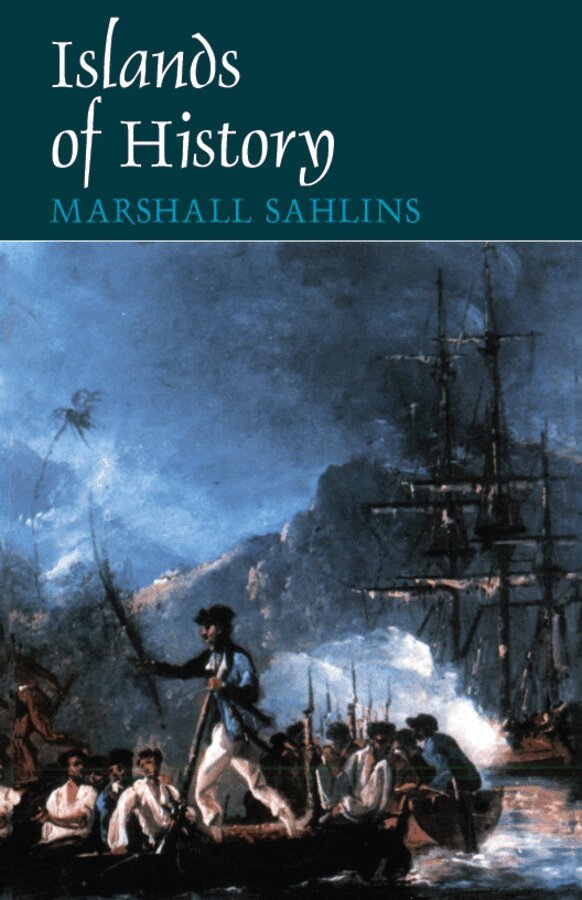
From the late 1700s, Hawaiian society began to change rapidly as it responded to the growing world system of capital whose trade routes and markets criss-crossed the islands. Reflecting many years of collaboration between Marshall Sahlins, a prominent social anthropologist, and Patrick V. Kirch, a leading archaeologist of Oceania, "Anahulu" seeks out the traces of this transformation in a typical local centre of the kingdom founded by Kamehameha: the Anahulu river valley of northwestern Oahu. Volume I shows the surprising effects of the encounter with the imperial forces of commerce and Christianity - the distinctive ways the Hawaiian people culturally organized the experience, from the structure of the kingdom to the daily life of ordinary people. Volume II examines the material record of changes in local social organization, economy and production, population, and domestic settlement arrangements.
Anahulu: The Anthropology of History in the Kingdom of Hawaii, Volume 2
The Archaeology of History
Häftad, Engelska, 1994
821 kr
Skickas inom 3-6 vardagar
From the late 1700's, Hawaiian society began to change rapidly as it responded to the growing world system of capital whose trade routs and markets criss-crossed the islands. Reflecting many years of collaboration between Marshall Sahlins, a prominent social anthropologist, and Patrick V. Kirch, a leading archaeologist of Oceania, "Anahulu" seeks out the traces of this transformation in a typical local center of the kingdom founded by Kamehameha: the Anahulu river valley of Northwestern Oahu. Volume I shows the suprising effects of the encounter with the imperial forces of commerce and Christianity - the distinctive ways the Hawaiian people culturally organized the experience, from the structure of the kingdom to the daily life of ordinary people. Voulme II examines the material record of changes in local social organizations, economy and production, population, and domestic settlement arrangements.
310 kr
Skickas inom 5-8 vardagar
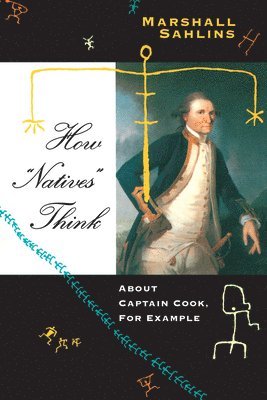
When Western scholars write about non-Western societies, do they inevitably perpetuate the myths of European imperialism? Can they ever articulate the meanings and logics of non-Western peoples? Who has the right to speak for whom? Questions such as these are debated in this text. Marshall Sahlins addresses these issues head on, while building a case for the ability of anthropologists working in the Western tradition to understand other cultures. In recent years, these questions have arisen in debates over the death and deification of Captain James Cook on Hawaii Island in 1779. Did the Hawaiians truly receive Cook as a manifestation of their own god Lono? Or were they too pragmatic, too worldly-wise to accept the foreigner as a god? Moreover, can a "non-native" scholar give voice to a "native" point of view? This volume seeks to go far beyond specialized debates about the alleged superiority of Western traditions. The culmination of Sahlins's ethnohistorical research on Hawaii, is a reaffirmation for understanding difference.
795 kr
Skickas inom 5-8 vardagar
In this pithy two-part essay, Marshall Sahlins reinvigorates the debates on what constitutes kinship, building on some of the best scholarship in the field to produce an original outlook on the deepest bond humans can have. Covering thinkers from Aristotle and Levy-Bruhl to Emile Durkheim and David Schneider, and communities from the Maori and the English to the Korowai of New Guinea, he draws on a breadth of theory and a range of ethnographic examples to form an acute definition of kinship, what he calls the "mutuality of being." Kinfolk are persons who are parts of one another to the extent that what happens to one is felt by the other. Meaningfully and emotionally, relatives live each other's lives and die each other's deaths. In the second part of his essay, Sahlins shows that mutuality of being is a symbolic notion of belonging, not a biological connection by "blood." Quite apart from relations of birth, people may become kin in ways ranging from sharing the same name or the same food to helping each other survive the perils of the high seas.In a groundbreaking argument, he demonstrates that even where kinship is reckoned from births, it is because the wider kindred or the clan ancestors are already involved in procreation, so that the notion of birth is meaningfully dependent on kinship rather than kinship on birth. By formulating this reversal, Sahlins identifies what kinship truly is: not nature, but culture.
310 kr
Skickas inom 5-8 vardagar
One of the world’s preeminent cultural anthropologists leaves a last work that fundamentally reconfigures how we study most other culturesFrom the perspective of Western modernity, humanity inhabits a disenchanted cosmos. Gods, spirits, and ancestors have left us for a transcendent beyond, no longer living in our midst and being involved in all matters of everyday life from the trivial to the dire. Yet the vast majority of cultures throughout human history treat spirits as very real persons, members of a cosmic society who interact with humans and control their fate. In most cultures, even today, people are but a small part of an enchanted universe misconstrued by the transcendent categories of “religion” and the “supernatural.” The New Science of the Enchanted Universe shows how anthropologists and other social scientists must rethink these cultures of immanence and study them by their own lights.In this, his last, revelatory book, Marshall Sahlins announces a new method and sets an exciting agenda for the field. He takes readers around the world, from Inuit of the Arctic Circle to pastoral Dinka of East Africa, from Araweté swidden gardeners of Amazonia to Trobriand Island horticulturalists. In the process, Sahlins sheds new light on classical and contemporary ethnographies that describe these cultures of immanence and reveals how even the apparently mundane, all-too-human spheres of “economics” and “politics” emerge as people negotiate with, and ultimately usurp, the powers of the gods.The New Science of the Enchanted Universe offers a road map for a new practice of anthropology that takes seriously the enchanted universe and its transformations from ancient Mesopotamia to contemporary America.
278 kr
Skickas inom 5-8 vardagar
286 kr
Skickas inom 5-8 vardagar
In anthropology as much as in popular imagination, kings are figures of fascination and intrigue, heroes or tyrants in ways presidents and prime ministers can never be. This collection of essays by two of the world’s most distinguished anthropologists—David Graeber and Marshall Sahlins—explores what kingship actually is, historically and anthropologically. As they show, kings are symbols for more than just sovereignty: indeed, the study of kingship offers a unique window into fundamental dilemmas concerning the very nature of power, meaning, and the human condition.Reflecting on issues such as temporality, alterity, and utopia—not to mention the divine, the strange, the numinous, and the bestial—Graeber and Sahlins explore the role of kings as they have existed around the world, from the BaKongo to the Aztec to the Shilluk and beyond. Richly delivered with the wit and sharp analysis characteristic of Graeber and Sahlins, this book opens up new avenues for the anthropological study of this fascinating and ubiquitous political figure.
114 kr
Skickas inom 5-8 vardagar
This is the long-awaited fifth edition of Marshall Sahlins' classic series of bon mots, ruminations, and musings on the ancients, anthropology, and much else in between. It's been twenty-five years since Sahlins first devised some after-dinner entertainment at a decennial meeting of the Association of Social Anthropologists in Great Britain, published soon thereafter by Prickly Paradigm's first incarnation, Prickly Pear. What the Foucault? contains all the old chestnuts, but has been thoroughly updated, and is laced through with all the wit and wisdom we've come to expect.
843 kr
Skickas inom 10-15 vardagar
Since its first publication over forty years ago Marshall Sahlins's Stone Age Economics has established itself as a classic of modern anthropology and arguably one of the founding works of anthropological economics. Ambitiously tackling the nature of economic life and how to study it comparatively, Sahlins radically revises traditional views of the hunter-gatherer and so-called primitive societies, revealing them to be the original "affluent society." Sahlins examines notions of production, distribution and exchange in early communities and examines the link between economics and cultural and social factors. A radical study of tribal economies, domestic production for livelihood, and of the submission of domestic production to the material and political demands of society at large, Stone Age Economics regards the economy as a category of culture rather than behaviour, in a class with politics and religion rather than rationality or prudence. Sahlins concludes, controversially, that the experiences of those living in subsistence economies may actually have been better, healthier and more fulfilled than the millions enjoying the affluence and luxury afforded by the economics of modern industrialisation and agriculture.This Routledge Classics edition includes a new foreword by David Graeber, London School of Economics.
265 kr
Skickas
Since its first publication over forty years ago Marshall Sahlins's Stone Age Economics has established itself as a classic of modern anthropology and arguably one of the founding works of anthropological economics. Ambitiously tackling the nature of economic life and how to study it comparatively, Sahlins radically revises traditional views of the hunter-gatherer and so-called primitive societies, revealing them to be the original "affluent society." Sahlins examines notions of production, distribution and exchange in early communities and examines the link between economics and cultural and social factors. A radical study of tribal economies, domestic production for livelihood, and of the submission of domestic production to the material and political demands of society at large, Stone Age Economics regards the economy as a category of culture rather than behaviour, in a class with politics and religion rather than rationality or prudence. Sahlins concludes, controversially, that the experiences of those living in subsistence economies may actually have been better, healthier and more fulfilled than the millions enjoying the affluence and luxury afforded by the economics of modern industrialisation and agriculture.This Routledge Classics edition includes a new foreword by David Graeber, London School of Economics.
346 kr
Skickas inom 3-6 vardagar
292 kr
Skickas inom 3-6 vardagar
Del 83 - Fröhliche Wissenschaft
Das Menschenbild des Westens - Ein Missverständnis?
Häftad, Tyska, 2017
183 kr
Skickas inom 3-6 vardagar