Marta E. Sánchez - Böcker
Visar alla böcker från författaren Marta E. Sánchez. Handla med fri frakt och snabb leverans.
2 produkter
2 produkter
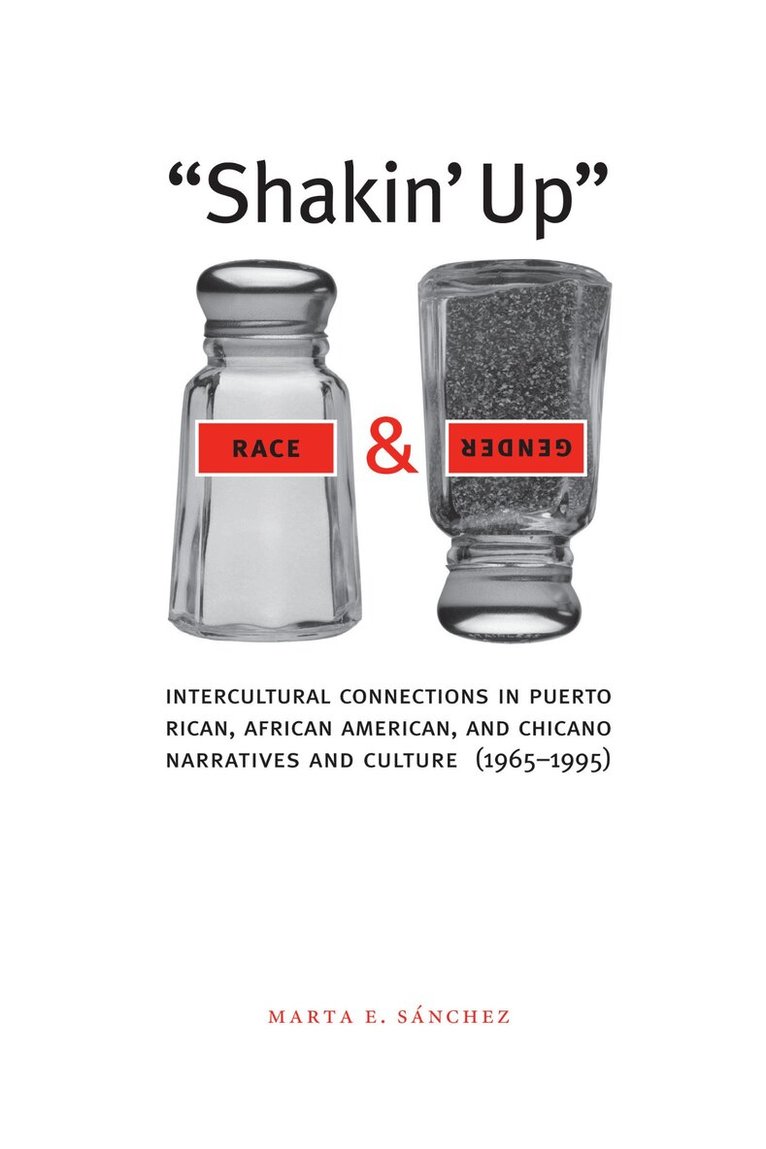
Shakin' Up Race and Gender
Intercultural Connections in Puerto Rican, African American, and Chicano Narratives and Culture (1965–1995)
Häftad, Engelska, 2006
298 kr
Skickas inom 10-15 vardagar
The second phase of the civil rights movement (1965-1973) was a pivotal period in the development of ethnic groups in the United States. In the years since then, new generations have asked new questions to cast light on this watershed era. No longer is it productive to consider only the differences between ethnic groups; we must also study them in relation to one another and to U.S. mainstream society.In "Shakin' Up" Race and Gender, Marta E. SÁnchez creates an intercultural frame to study the historical and cultural connections among Puerto Ricans, African Americans, and Chicanos/as since the 1960s. Her frame opens up the black/white binary that dominated the 1960s and 1970s. It reveals the hidden yet real ties that connected ethnics of color and "white" ethnics in a shared intercultural history. By using key literary works published during this time, SÁnchez reassesses and refutes the unflattering portrayals of ethnics by three leading intellectuals (Octavio Paz, Daniel Patrick Moynihan, and Oscar Lewis) who wrote about Chicanos, African Americans, and Puerto Ricans. She links their implicit misogyny to the trope of La Malinche from Chicano culture and shows how specific characteristics of this trope-enslavement, alleged betrayal, and cultural negotiation-are also present in African American and Puerto Rican cultures. SÁnchez employs the trope to restore the agency denied to these groups. Intercultural contact-encounters between peoples of distinct ethnic groups-is the theme of this book.
672 kr
Skickas inom 7-10 vardagar
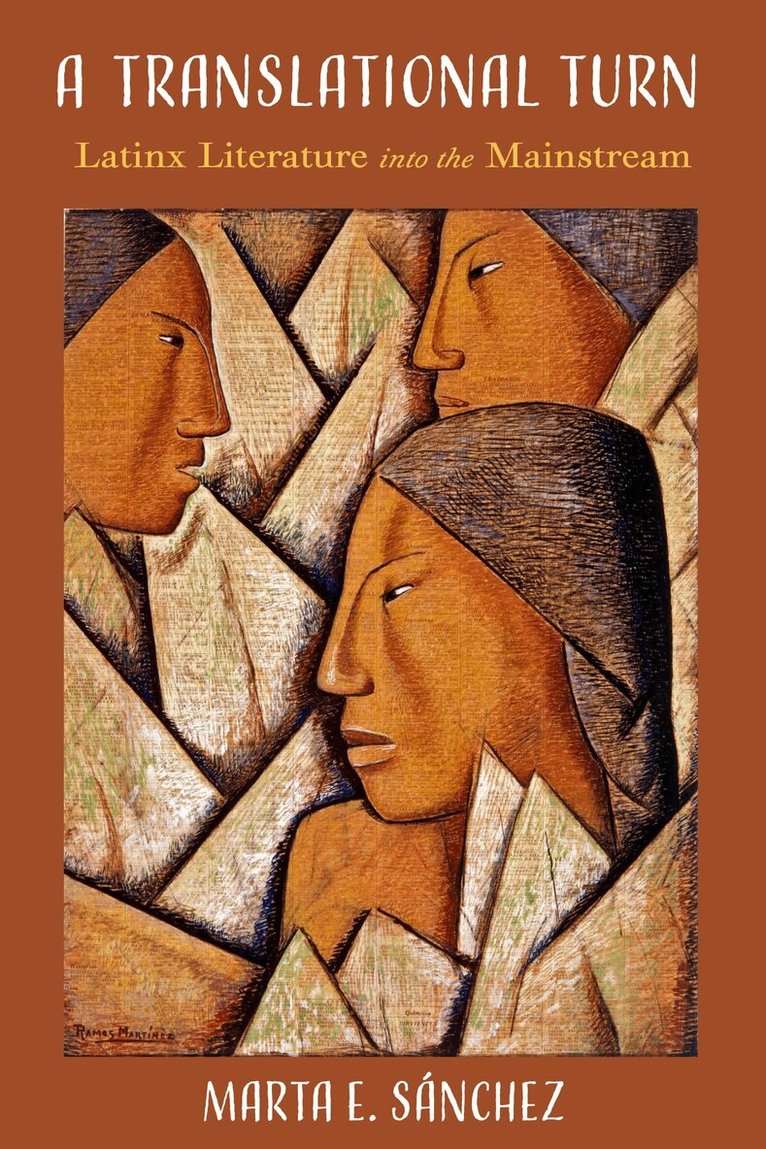
No contemporary development underscores the transnational linkage between the United States and Spanish-language América today more than the wave of in-migration from Spanish-language countries during the 1980s and 1990s. This development, among others, has made clear what has always been true, that the United States is part of Spanish-language América. Translation and oral communication from Spanish to English have been constant phenomena since before the annexation of the Mexican Southwest in 1848. The expanding number of counter-national translations from English to Spanish of Latinx fictional narratives by mainstream presses between the 1990s and 2010 is an indication of significant change in the relationship. A Translational Turn explores both the historical reality of Spanish to English translation and the “new” counter-national English to Spanish translation of Latinx narratives. More than theorizing about translation, this book underscores long-standing contact, such as code-mixing and bi-multilingualism, between the two languages in U.S. language and culture. Although some political groups in this country persist in seeing and representing this country as having a single national tongue and community, the linguistic ecology of both major cities and the suburban periphery, here and in the global world, is bilingualism and multilingualism.