Martha J. Cutter - Böcker
Visar alla böcker från författaren Martha J. Cutter. Handla med fri frakt och snabb leverans.
6 produkter
6 produkter
Lost and Found in Translation
Contemporary Ethnic American Writing and the Politics of Language Diversity
Häftad, Engelska, 2005
514 kr
Skickas inom 10-15 vardagar
This book examines translation as trope in ethnic literature. Starting with Salman Rushdie's assertion that even though something is always lost in translation, something can always be gained, Martha J. Cutter examines the trope of translation in twenty English-language novels and autobiographies by contemporary ethnic American writers. She argues that these works advocate a politics of language diversity - a literary and social agenda that validates the multiplicity of ethnic cultures and tongues in the United States. Cutter studies works by Asian American, Native American, African American, and Mexican American authors. She argues that translation between cultures, languages, and dialects creates a new language that, in its diversity, constitutes the true heritage of the United States. Through the metaphor of translation, Cutter demonstrates, writers such as Maxine Hong Kingston, Sherman Alexie, Toni Morrison, and Richard Rodriguez establish a place within American society for the many languages spoken by multiethnic and multicultural individuals. Cutter concludes with an analysis of contemporary debates over language policy, such as English-only legislation, the recognition of Ebonics, and the growing acceptance of bilingualism. The focus on translation by so many multiethnic writers, she contends, offers hope in our postmodern culture for a new condition in which creatively fused languages renovate the communications of the dominant society and create new kinds of identity for multicultural individuals.
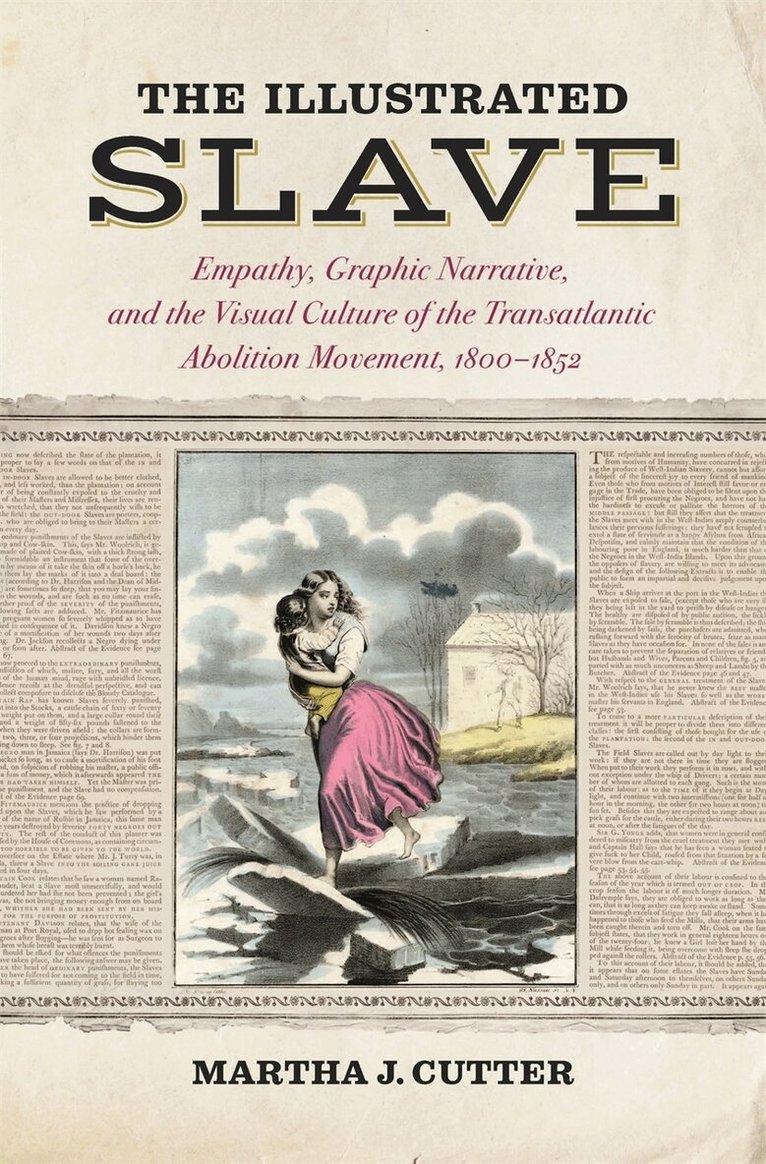
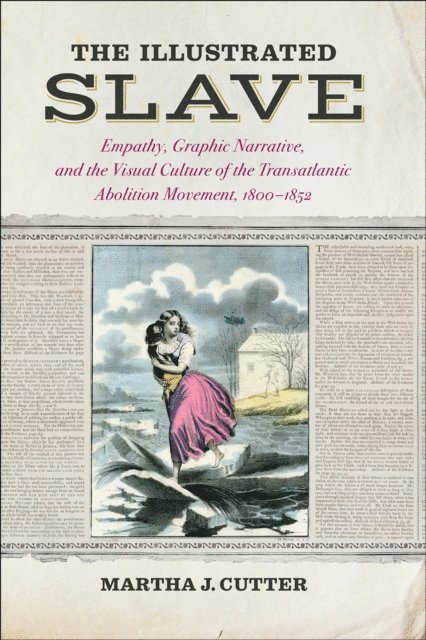
Illustrated Slave
Empathy, Graphic Narrative, and the Visual Culture of the Transatlantic Abolition Movement, 1800–1852
Inbunden, Engelska, 2017
857 kr
Skickas inom 7-10 vardagar
From the 1787 Wedgwood antislavery medallion featuring the image of an enchained and pleading black body to Quentin Tarantino’s Django Unchained (2012) and Steve McQueen’s Twelve Years a Slave (2013), slavery as a system of torture and bondage has fascinated the optical imagination of the transatlantic world. Scholars have examined various aspects of the visual culture that was slavery, including its painting, sculpture, pamphlet campaigns, and artwork. Yet an important piece of this visual culture has gone unexamined: the popular and frequently reprinted antislavery illustrated books published prior to Harriet Beecher Stowe’s Uncle Tom’s Cabin (1852) that were utilized extensively by the antislavery movement in the first half of the nineteenth century.The Illustrated Slave analyzes some of the more innovative works in the archive of antislavery illustrated books published from 1800 to 1852 alongside other visual materials that depict enslavement. Martha J. Cutter argues that some illustrated narratives attempt to shift a viewing reader away from pity and spectatorship into a mode of empathy and interrelationship with the enslaved. She also contends that some illustrated books characterize the enslaved as obtaining a degree of control over narrative and lived experiences, even if these figurations entail a sense that the story of slavery is beyond representation itself. Through exploration of famous works such as Uncle Tom’s Cabin, as well as unfamiliar ones by Amelia Opie, Henry Bibb, and Henry Box Brown, she delineates a mode of radical empathy that attempts to destroy divisions between the enslaved individual and the free white subject and between the viewer and the viewed.
693 kr
Skickas inom 5-8 vardagar
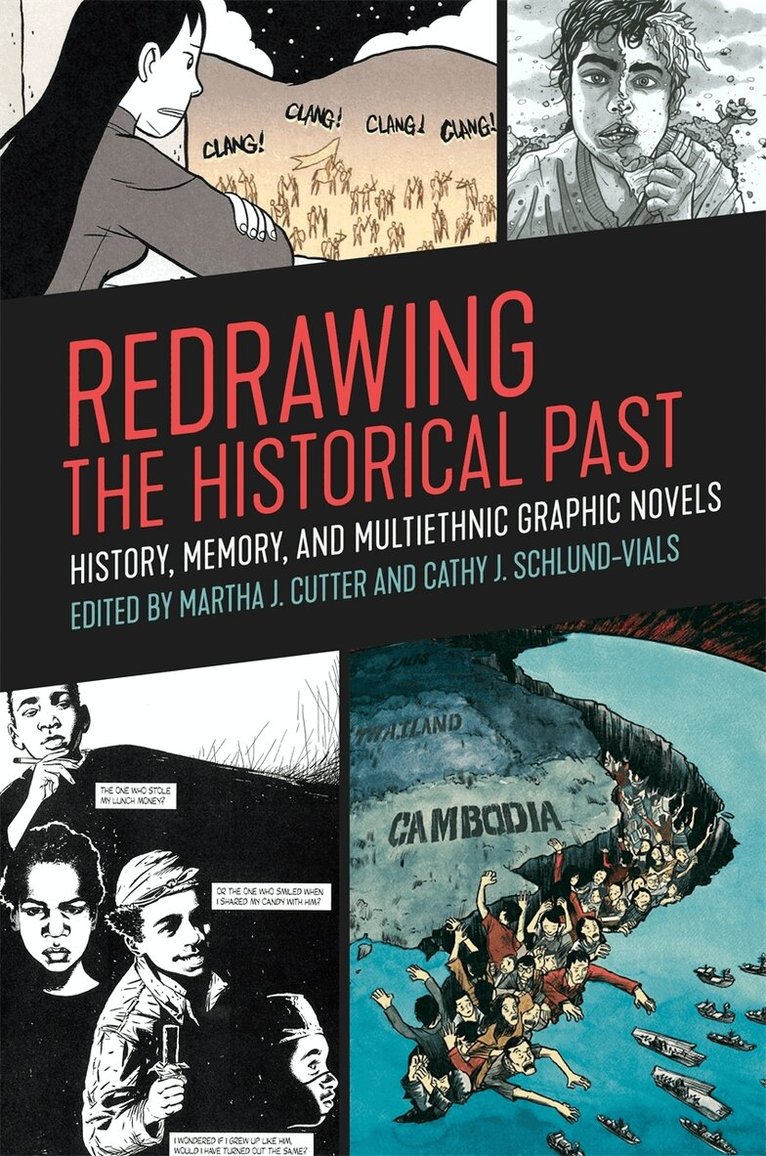
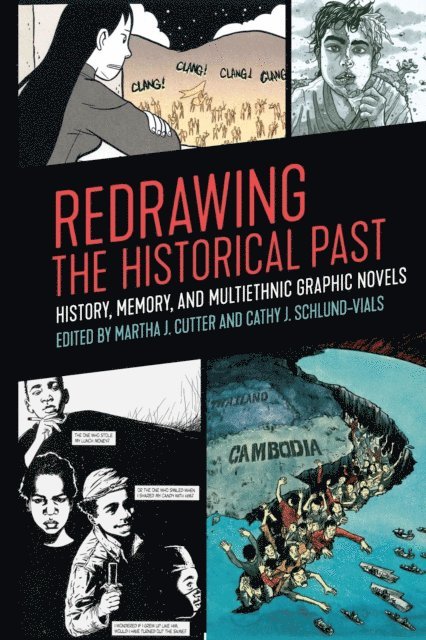
Redrawing the Historical Past examines how multiethnic graphic novels portray and revise U.S. history. This is the first collection to focus exclusively on the interplay of history and memory in multiethnic graphic novels. Such interplay enables a new understanding of the past. The twelve essays explore Mat Johnson and Warren Pleece’s Incognegro, Gene Luen Yang’s Boxers and Saints, GB Tran’s Vietnamerica, Scott McCloud’s The New Adventures of Abraham Lincoln, Art Spiegelman’s post-Maus work, and G. Neri and Randy DuBurke’s Yummy: The Last Days of a Southside Shorty, among many others.The collection represents an original body of criticism about recently published works that have received scant scholarly attention. The chapters confront issues of history and memory in contemporary multiethnic graphic novels, employing diverse methodologies and approaches while adhering to three main guidelines. First, using a global lens, contributors reconsider the concept of history and how it is manifest in their chosen texts. Second, contributors consider the ways in which graphic novels, as a distinct genre, can formally renovate or intervene in notions of the historical past. Third, contributors take seriously the possibilities and limitations of these historical revisions with regard to envisioning new, different, or even more positive versions of both the present and future. As a whole, the volume demonstrates that graphic novelists use the open and flexible space of the graphic narrative page—in which readers can move not only forward but also backward, upward, downward, and in several other directions—to present history as an open realm of struggle that is continually being revised.Contributors: Frederick Luis Aldama, Julie Buckner Armstrong, Katharine Capshaw, Monica Chiu, Jennifer Glaser, Taylor Hagood, Caroline Kyungah Hong, Angela Lafien, Catherine H. Nguyen, Jeffrey Santa Ana, and Jorge Santos.
Redrawing the Historical Past
History, Memory, and Multiethnic Graphic Novels
Inbunden, Engelska, 2018
1 700 kr
Skickas inom 5-8 vardagar
Redrawing the Historical Past examines how multiethnic graphic novels portray and revise U.S. history. This is the first collection to focus exclusively on the interplay of history and memory in multiethnic graphic novels. Such interplay enables a new understanding of the past. The twelve essays explore Mat Johnson and Warren Pleece’s Incognegro, Gene Luen Yang’s Boxers and Saints, GB Tran’s Vietnamerica, Scott McCloud’s The New Adventures of Abraham Lincoln, Art Spiegelman’s post-Maus work, and G. Neri and Randy DuBurke’s Yummy: The Last Days of a Southside Shorty, among many others.The collection represents an original body of criticism about recently published works that have received scant scholarly attention. The chapters confront issues of history and memory in contemporary multiethnic graphic novels, employing diverse methodologies and approaches while adhering to three main guidelines. First, using a global lens, contributors reconsider the concept of history and how it is manifest in their chosen texts. Second, contributors consider the ways in which graphic novels, as a distinct genre, can formally renovate or intervene in notions of the historical past. Third, contributors take seriously the possibilities and limitations of these historical revisions with regard to envisioning new, different, or even more positive versions of both the present and future. As a whole, the volume demonstrates that graphic novelists use the open and flexible space of the graphic narrative page—in which readers can move not only forward but also backward, upward, downward, and in several other directions—to present history as an open realm of struggle that is continually being revised.Contributors: Frederick Luis Aldama, Julie Buckner Armstrong, Katharine Capshaw, Monica Chiu, Jennifer Glaser, Taylor Hagood, Caroline Kyungah Hong, Angela Lafien, Catherine H. Nguyen, Jeffrey Santa Ana, and Jorge Santos.
Illustrated Slave
Empathy, Graphic Narrative, and the Visual Culture of the Transatlantic Abolition Movement, 1800–1852
Häftad, Engelska, 2020
611 kr
Skickas inom 3-6 vardagar
From the 1787 Wedgwood antislavery medallion featuring the image of an enchained and pleading black body to Quentin Tarantino’s Django Unchained (2012) and Steve McQueen’s Twelve Years a Slave (2013), slavery as a system of torture and bondage has fascinated the optical imagination of the transatlantic world. Scholars have examined various aspects of the visual culture that was slavery, including its painting, sculpture, pamphlet campaigns, and artwork. Yet an important piece of this visual culture has gone unexamined: the popular and frequently reprinted antislavery illustrated books published prior to Harriet Beecher Stowe’s Uncle Tom’s Cabin (1852) that were utilized extensively by the antislavery movement in the first half of the nineteenth century.The Illustrated Slave analyzes some of the more innovative works in the archive of antislavery illustrated books published from 1800 to 1852 alongside other visual materials that depict enslavement. Martha J. Cutter argues that some illustrated narratives attempt to shift a viewing reader away from pity and spectatorship into a mode of empathy and interrelationship with the enslaved. She also contends that some illustrated books characterize the enslaved as obtaining a degree of control over narrative and lived experiences, even if these figurations entail a sense that the story of slavery is beyond representation itself. Through exploration of famous works such as Uncle Tom’s Cabin, as well as unfamiliar ones by Amelia Opie, Henry Bibb, and Henry Box Brown, she delineates a mode of radical empathy that attempts to destroy divisions between the enslaved individual and the free white subject and between the viewer and the viewed.
422 kr
Skickas inom 10-15 vardagar
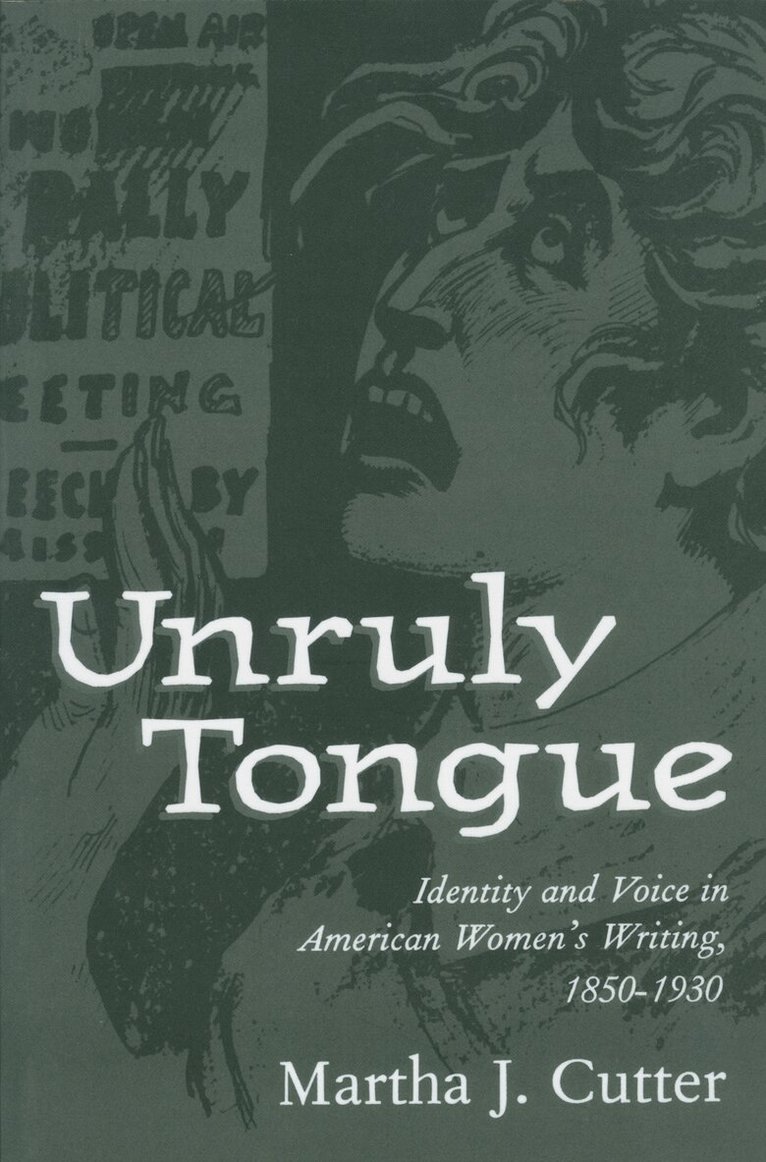
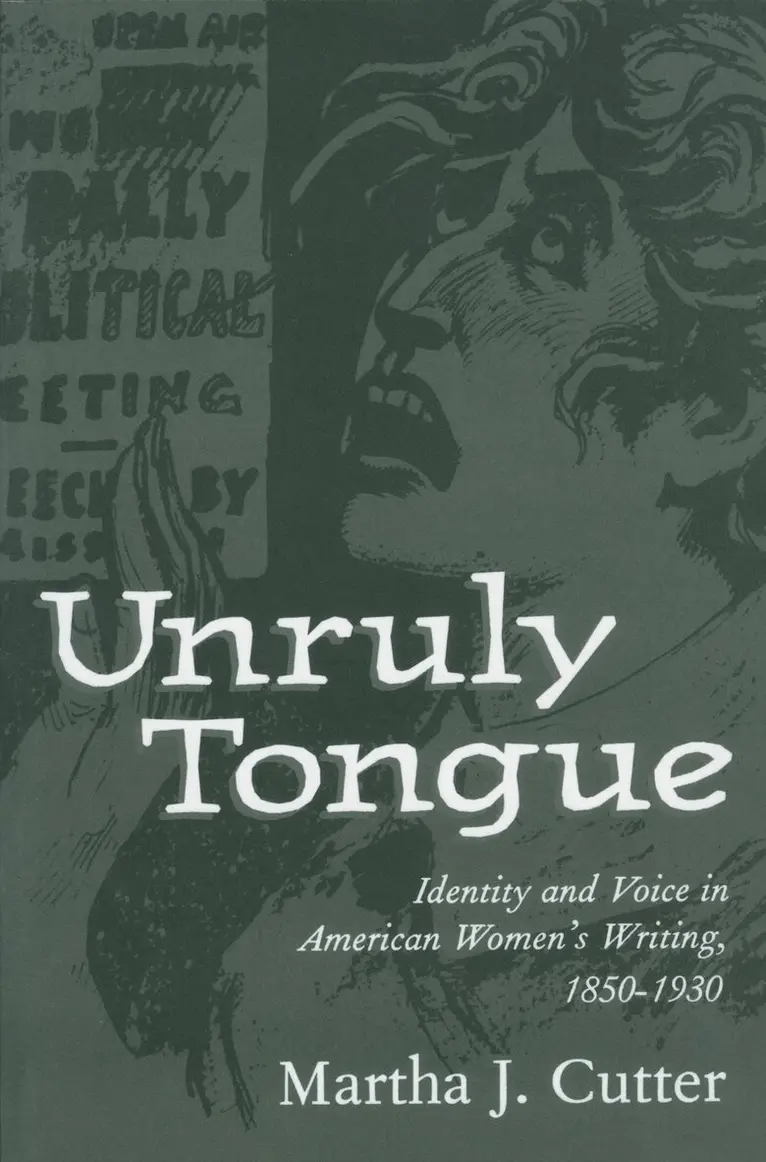
Women should be seen and not heard."" That was a well-known maxim in nineteenth century America. American women writers--such as Louisa May Alcott, Kate Chopin, and Willa Cather--devised a brilliant method for crashing that barrier to creativity. In her new book, UNRULY TONGUE: IDENTITY AND VOICE IN AMERICAN WOMEN'S WRITING, 1850-1930 (University Press of Mississippi, $40, cloth) Martha Cutter says the ten African American and Anglo American women she studied wrote as inside agitators. Over time they created a new theory of language. Cutter says, ""From 1780 to 1860 American writers were preoccupied with the feminine virtues of purity, piety, submissiveness, and domesticity--a constellation of attributes known as the domestic saint, or True Woman."" But that soon changed. As more women were educated and more women began to work outside the home, women writers found a need to express themselves with a growing sense of independence. In the first years covered by her book, Cutter found writers Fanny Fern, Harriet Wilson, and Louisa May Alcott employing female characters who stayed within their domestic roles and stuck to a very submissive script. ""The years from 1850 to 1930 reflected a great deal of cultural change,"" Cutter says, ""as the New Woman gradually displaced the True Woman, and the domestic voice was replaced by one that was more concerned with the theoretical basis of women's silencing."" In this atmosphere, Cutter finds writers Anna Julia Cooper, Mary Wilkins Freeman, Charlotte Perkins Gilman, Frances Harper, and Kate Chopin writing about women who bring unruly tongues and independent thinking to traditional female roles. These writers enabled those that followed, such as Willa Cather and Jessie Fauset, to create characters with masculine and racist voices and undermine those characters from the inside. Throughout her book, Cutter discovers how these ten writers, even those who wrote in what appears to be a purely feminine and domestic voice, found ways to rethink language and create new identities and new voices that were both feminine and unruly. Martha J. Cutter is an assistant professor of English at Kent State University. She has contributed critical essays to Mary Wilkins Freeman: A Study of Short Fiction, The Politics of Passing, The Canon in the Classroom, and many scholarly journals.