Martin Beck Matuštík - Böcker
Visar alla böcker från författaren Martin Beck Matuštík. Handla med fri frakt och snabb leverans.
5 produkter
5 produkter
354 kr
Skickas inom 10-15 vardagar
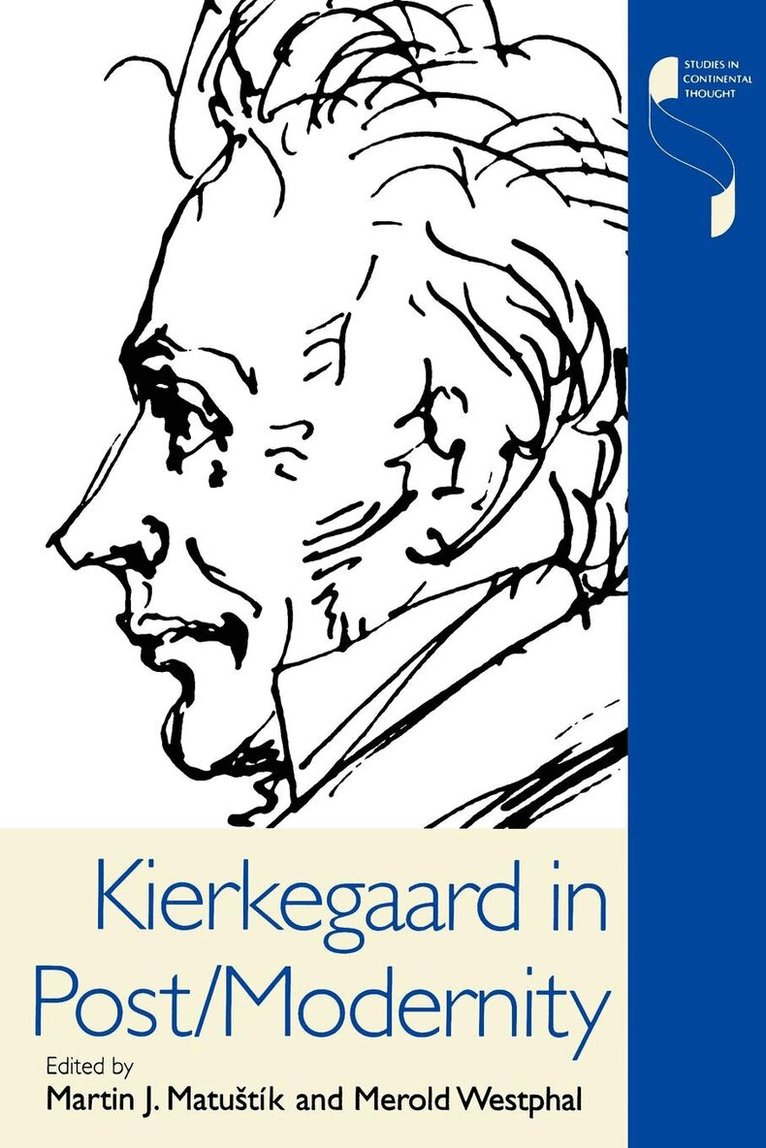
"This volume represents a fine assessment of the continuing applicability of Kierkegaard's thought for the 21st century." —The Reader's Review"Matustík and Westphal have set some agile minds to the task of drawing out the threads of Kierkegaard's influence on postmodern and contemporary philosophy, from gender to politics and from Buber to Derrida." —Choice". . . Usefully and effectively establishes Kierkegaard as a living presence in contemporary thought. It will help students of Kierkegaard attend to aspects of his thought that have eluded their attention, and it will challenge those engaged with contemporary continental philosophy not to shelter themselves from the provocations and interrogrations still uncomfortably pressing in Kierkegaard's writings." —International Philosophical Quarterly"The standard of the essays and the calibre of the contributors are uniformly high. This is indeed one of the better collections relating to Kierkegaard published in recent years, and should do much to extend discussion of his work . . ." —Modern Believing ". . . a text of immense significance and value. . . . As a research tool it will surely prove indispensable." —Søren Kierkegaard Newsletter"It will be a helpful supplementary areading for teaching . . . the contemporary readings of Kierkegaard introduced here continue to reveal new and more exciting depths to his extraordinary philosophy." —Teaching PhilosophyThese essays engage Kierkegaard in conversation with critical social theory and postmodern thought. Covering a diversity of themes, this collection still reflects consensus—Kierkegaard is to be taken seriously as a philosopher at the turn of the twenty-first century.
257 kr
Skickas inom 7-10 vardagar
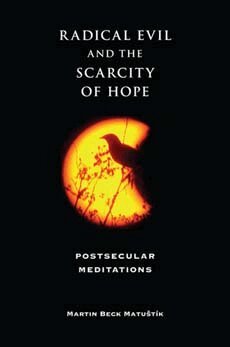
No one will deny that we live in a world where evil exists. But how are we to come to grips with human atrocity and its diabolical intensity? Martin Beck Matuštík considers evil to be even more radically evil than previously thought and to have become all too familiar in everyday life. While we can name various moral wrongs and specific cruelties, Matuštík maintains that radical evil understood as a religious phenomenon requires a religious response where the language of hope, forgiveness, redemption, and love can take us beyond unspeakable harm and irreparable violence. Drawing upon the work of Kant, Schelling, Kierkegaard, Levinas, Derrida, and Marion, this work is written as a series of meditations. Matuštík presents a bold new way of dealing with one of humanity's most intractable problems.
1 964 kr
Skickas inom 10-15 vardagar
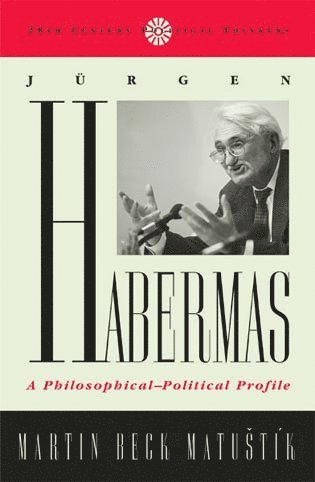
This philosophical-political profile offers the first of its kind intellectual reconstruction of Habermas’s defining existential and historical situations, his generational profile and interventions, his impact on as well as the discontents that his life work generates in others. Written as a lively dramatic engagement with major themes of Habermas’s adult life in postwar Germany, the entire study occupies a unique place between the standard genres of a biography and a theoretical commentary on the oeuvre. In this work the reader is taken on a journey with Habermas through the 20th-century intellectual and political history from the defeat of Nazism, to the Cold War restoration of the '50s, the student movement of the '60s, the historical revisions of the '70s and '80s, the hope of the post-Wall era after 1989, all the way to the controversies surrounding the allied wars of intervention against Iraq and Serbia in the 1990s. Both beginning and advanced readers of 20th century socio-political thought gain greater insight into the existential, political, and philosophical influences that proved to be formative of Habermas’s writing and activism in the public sphere. The first part of the study emphasizes the unfolding, linear view of Habermas’s postwar history, punctuated by the major existential and political situations of his young adult life from 1945 to 2000. The second part returns to the same time-span in order to reconstruct Habermas’s mature post-Wall intellectual profile in contrast to the profiles of the preceding generation of 1945 and the later protesting generation of 1968. The third part examines the tremendous Habermas-effect exercised on 20th-century thought and public policy. The concluding chapters discuss critically the lasting place as well as the limits of Habermas’s achievement in contribution to a development of new critical theory. The book is enhanced by an introduction that provides a historical and conceptual background to the major themes discussed, twelve helpful thematic table
742 kr
Skickas inom 10-15 vardagar
This philosophical-political profile offers the first of its kind intellectual reconstruction of Habermas’s defining existential and historical situations, his generational profile and interventions, his impact on as well as the discontents that his life work generates in others. Written as a lively dramatic engagement with major themes of Habermas’s adult life in postwar Germany, the entire study occupies a unique place between the standard genres of a biography and a theoretical commentary on the oeuvre. In this work the reader is taken on a journey with Habermas through the 20th-century intellectual and political history from the defeat of Nazism, to the Cold War restoration of the '50s, the student movement of the '60s, the historical revisions of the '70s and '80s, the hope of the post-Wall era after 1989, all the way to the controversies surrounding the allied wars of intervention against Iraq and Serbia in the 1990s. Both beginning and advanced readers of 20th century socio-political thought gain greater insight into the existential, political, and philosophical influences that proved to be formative of Habermas’s writing and activism in the public sphere. The first part of the study emphasizes the unfolding, linear view of Habermas’s postwar history, punctuated by the major existential and political situations of his young adult life from 1945 to 2000. The second part returns to the same time-span in order to reconstruct Habermas’s mature post-Wall intellectual profile in contrast to the profiles of the preceding generation of 1945 and the later protesting generation of 1968. The third part examines the tremendous Habermas-effect exercised on 20th-century thought and public policy. The concluding chapters discuss critically the lasting place as well as the limits of Habermas’s achievement in contribution to a development of new critical theory. The book is enhanced by an introduction that provides a historical and conceptual background to the major themes discussed, twelve helpful thematic table
Postnational Identity: Critical Theory and Existential Philosophy in Habermas, Kierkegaard, and Havel
Häftad, Engelska
300 kr
Skickas inom 3-6 vardagar