Martin Chanock – författare
Visar alla böcker från författaren Martin Chanock. Handla med fri frakt och snabb leverans.
11 produkter
11 produkter
600 kr
Skickas inom 7-10 vardagar
The development of the South African legal system in the early twentieth century was crucial to the establishment and maintenance of the systems which underpinned the racist state, including control of the population, the running of the economy, and the legitimization of the regime. Martin Chanock's highly illuminating and definitive perspective on that development examines all areas of the law: criminal law and criminology; the Roman-Dutch law; the State's African law; and land, labour and 'rule of law' questions. His revisionist analysis of the construction of South African legal culture illustrates the larger processes of legal colonization, while the consideration of the interaction between imported doctrine and legislative models with local contexts and approaches also provides a basis for understanding the re-fashioning of law under circumstances of post-colonialism and globalization.
649 kr
Skickas inom 7-10 vardagar
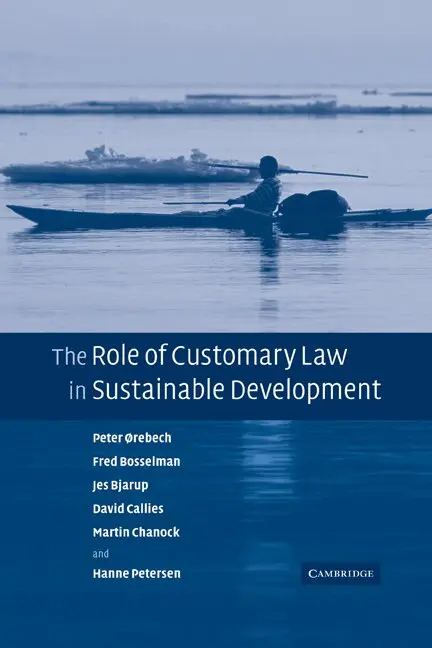
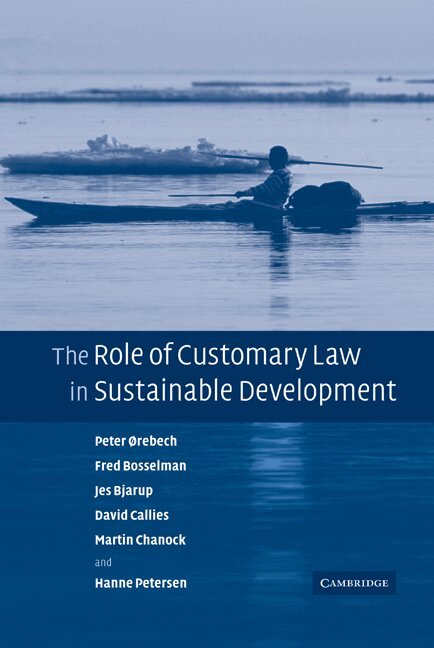
For many nations, a key challenge is how to achieve sustainable development without a return to centralized planning. Using case studies from Greenland, Hawaii and northern Norway, this 2006 book examines whether 'bottom-up' systems such as customary law can play a critical role in achieving viable systems for managing natural resources. Customary law consists of underlying social norms that may become the acknowledged law of the land. The key to determining whether a custom constitutes customary law is whether the public acts as if the observance of the custom is legally obligated. While the use of customary law does not always produce sustainability, the study of customary methods of resource management can produce valuable insights into methods of managing resources in a sustainable way.
507 kr
Skickas inom 7-10 vardagar
Anthony Woodiwiss's pathbreaking book was the first substantive contribution to a sociology of human rights. In it, he takes up the question of whether so-called Asian values are compatible with human rights discourse and argues against human rights issues being the major obstacle to East-West co-operation. Dr Woodiwiss's sociological and post-structuralist approach to the concept of rights, and his incorporation of the transnational dimension into sociological theory, enable him to demonstrate how the global human rights regime can accommodate Asian patriarchalism, while Pacific Asia is itself adapting by means of what he calls 'enforceable benevolence'. His studies of Hong Kong, the Philippines, Malaysia, and Singapore highlight similarities between Pacific-Asian and Western societies and offer a positive view of the social forces obtaining in these territories.
560 kr
Skickas inom 7-10 vardagar
While associated with comfort and pleasure, alcohol has been and is a 'problem' substance, both for medical and political authorities and for many drinkers. In this broad-ranging and innovative historical-sociological investigation, Valverde explores the ways in which both authorities and individual consumers have defined and managed the pleasures and dangers of alcoholic beverages. The author explores the question of free will versus determinism and how it has been challenged by ideas about addiction, morality and psychology during the last 150 years. The book draws on sources from the US, UK, Canada and elsewhere, and covers topics including nineteenth century 'dipsomania', the history of inebriate homes, Alcoholics Anonymous, fetal alcohol education and liquor control. It will appeal to readers in legal studies, criminology, sociology, psychology, social theory and the history of medicine.
552 kr
Skickas inom 7-10 vardagar
The Ritual of Rights in Japan challenges the conventional wisdom that the assertion of rights is fundamentally incompatible with Japanese legal, political and social norms. It discusses the creation of a Japanese translation of the word 'rights', Kenri; examines the historical record for words and concepts similar to 'rights'; and highlights the move towards recognising patients' rights in the 1960s and 1970s. Two policy studies are central to the book. One concentrates on Japan's 1989 AIDS Prevention Act, and the other examines the protracted controversy over whether brain death should become a legal definition of death. Rejecting conventional accounts that recourse to rights is less important to resolving disputes than other cultural forms,The Ritual of Rights in Japan uses these contemporary cases to argue that the invocation of rights is a critical aspect of how conflicts are articulated and resolved.
The Making of South African Legal Culture 1902-1936
Fear, Favour and Prejudice
Inbunden, Engelska, 2001
1 642 kr
Skickas inom 7-10 vardagar
The development of the South African legal system in the early twentieth century was crucial to the establishment and maintenance of the systems which underpinned the racist state, including control of the population, the running of the economy, and the legitimization of the regime. Martin Chanock's highly illuminating and definitive perspective on that development examines all areas of the law: criminal law and criminology; the Roman-Dutch law; the State's African law; and land, labour and 'rule of law' questions. His revisionist analysis of the construction of South African legal culture illustrates the larger processes of legal colonization, while the consideration of the interaction between imported doctrine and legislative models with local contexts and approaches also provides a basis for understanding the re-fashioning of law under circumstances of post-colonialism and globalization.
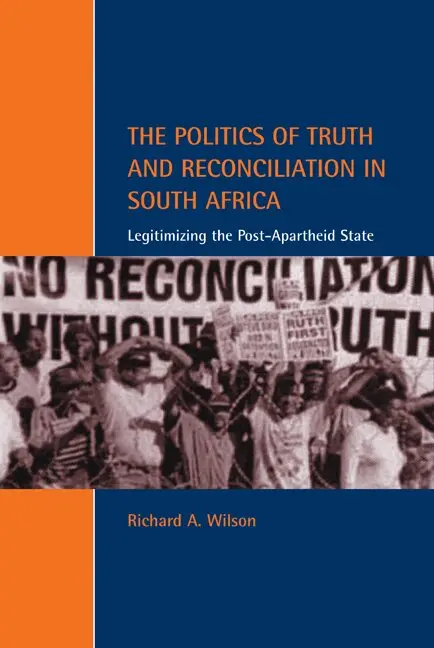
The Politics of Truth and Reconciliation in South Africa
Legitimizing the Post-Apartheid State
Inbunden, Engelska, 2001
1 266 kr
Skickas inom 7-10 vardagar
The South African Truth and Reconciliation Commission (TRC) was set up to deal with the human rights violations of apartheid during the years 1960-1994. However, as Wilson shows, the TRC's restorative justice approach to healing the nation did not always serve the needs of communities at a local level. Based on extended anthropological fieldwork, this book illustrates the impact of the TRC in urban African communities in Johannesburg. While a religious constituency largely embraced the commission's religious-redemptive language of reconciliation, Wilson argues that the TRC had little effect on popular ideas of justice as retribution. This provocative study deepens our understanding of post-apartheid South Africa and the use of human rights discourse. It ends on a call for more cautious and realistic expectations about what human rights institutions can achieve in democratizing countries.
1 145 kr
Skickas inom 7-10 vardagar
Existing approaches to the relation of law and society have for a long time seen law as either autonomous or grounded in society. Drawing on untapped resources in social theory, Fitzpatrick finds law pivotally placed in and beyond modernity. Being itself of the modern, law takes impetus and identity from modern society and, through incorporating 'pre-modern' elements of savagery and the sacred, it comes to constitute that very society. When placing law in such a crucial position for modernity, Fitzpatrick ranges widely from the colonizations of the Americas, through the thought of the European Enlightenment, and engages finally with contemporary arrogations of the 'global'. By extending his previous work on the origins of modernity, this book makes a significant contribution to continuing developments in law and society, legal philosophy, and jurisprudence.
1 521 kr
Skickas inom 7-10 vardagar
This interdisciplinary study explores the relationship between conceptions of nature and (largely American) legal thought and practice. It focuses on the politics and pragmatics of nature talk as expressed in both extra-legal disputes and their transformation and translation into forms of legal discourse (tort, property, contract, administrative law, criminal law and constitutional law). Delaney begins by considering the pragmatics of nature in connection with the very idea of law and the practice of American legal theorization. He then traces a set of specific political-legal disputes and arguments. The set consists of a series of contexts and cases organized around a conventional distinction between 'external' and 'internal nature': forces of nature, endangered species, animal experiments, bestiality, reproductive technologies, genetic screening, biological defenses in criminal cases, and involuntary medication of inmates. He demonstrates throughout that nearly any construal of 'nature' entails an interpretation of what it is to be (distinctively) human.
1 218 kr
Skickas inom 7-10 vardagar
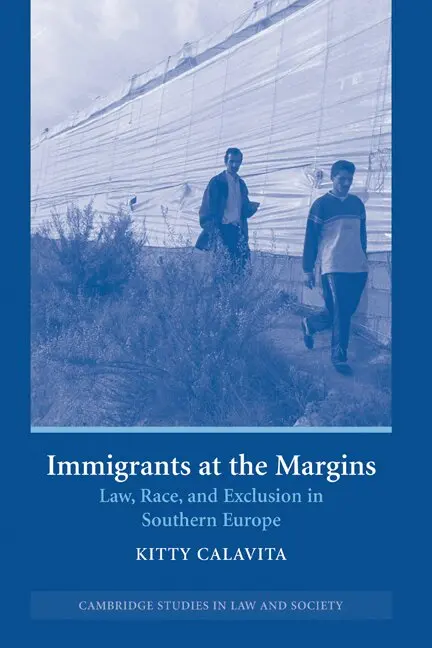
Spain and Italy have recently become countries of large-scale immigration. This provocative book explores immigration law and the immigrant experience in these southern European nations, and exposes the tension between the temporary and contingent legal status of most immigrants, and the government emphasis on integration. This book reveals that while law and the rhetoric of policymakers stress the urgency of integration, not only are they failing in that effort, but law itself plays a role in that failure. In addressing this paradox, the author combines theoretical insights and extensive data from myriad sources collected over more than a decade to demonstrate the connections among immigrants' role as cheap labor - carefully inscribed in law - and their social exclusion, criminalization, and racialization. Extrapolating from this economics of alterité, this book engages more general questions of citizenship, belonging, race and community in this global era.
1 581 kr
Skickas inom 7-10 vardagar
For many nations, a key challenge is how to achieve sustainable development without a return to centralized planning. Using case studies from Greenland, Hawaii and northern Norway, this 2006 book examines whether 'bottom-up' systems such as customary law can play a critical role in achieving viable systems for managing natural resources. Customary law consists of underlying social norms that may become the acknowledged law of the land. The key to determining whether a custom constitutes customary law is whether the public acts as if the observance of the custom is legally obligated. While the use of customary law does not always produce sustainability, the study of customary methods of resource management can produce valuable insights into methods of managing resources in a sustainable way.