Martin Loughlin - Böcker
Visar alla böcker från författaren Martin Loughlin. Handla med fri frakt och snabb leverans.
18 produkter
18 produkter
111 kr
Skickas inom 5-8 vardagar
Very Short Introductions: Brilliant, Sharp, Inspiring The British constitution is regarded as unique among the constitutions of the world. What are the main characteristics of Britain's peculiar constitutional arrangements? How has the British constitution altered in response to the changing nature of its state - from England, to Britain, to the United Kingdom? What impact has the UK's developing relations with the European Union caused?These are some of the questions that Martin Loughlin addresses in this Very Short Introduction. As a constitution, it is one that has grown organically in response to changes in the economic, political, and social environment, and which is not contained in a single authoritative text.By considering the nature and authority of the current British constitution, and placing it in the context of others, Loughlin considers how the traditional idea of a constitution came to be retained, what problems have been generated as a result of adapting a traditional approach in a modern political world, looking at what the future prospects for the British constitution are.In this new edition of the Very Short Introduction, Loughlin includes a disucssion of the impact of developments over the decade since its first publication, examining Brexit, the Scottish independence referendum of 2014, and the settlement in Northern Ireland.ABOUT THE SERIES: The Very Short Introductions series from Oxford University Press contains hundreds of titles in almost every subject area. These pocket-sized books are the perfect way to get ahead in a new subject quickly. Our expert authors combine facts, analysis, perspective, new ideas, and enthusiasm to make interesting and challenging topics highly readable.
1 424 kr
Skickas inom 5-8 vardagar
This book seeks to trace the main dimensions of recent conflicts between central departments of governments and local authorities and to reveal something of their significance. It does so by focusing on the role of law in shaping the central-local government relations which is neglected in many contemporary studies and yet is of vital importance in identifying the character of that relationship. Precisely why they should be so is not self-evident. The main objective of this introduction therefore is to highlight the importance of this dimension to the study of central-local relations and then to explain the way in which the key themes of the study are to be addressed.One highly significant aspect of the study is the identification of a process of juridfication which is only gradually becoming clear. This has not only been a major undertaking, it has also been a highly complex, ambiguous, confusing, and frustrating activity. This has caused problems for government and for the judiciary and not surprisingly there have been expressions of discomfort on all sides. This book helps to explain where the process may have gone wrong and why ultimately it may be an objective which cannot be realised.Ultimately what the book seeks to demonstrate is that the issues raised by the government of central-local relations transcend the institution of local government and are directly linked to our system of parliamentary democracy. Furthermore the author argues that the system of central-local government relations has evolved in such a way that it reveals a great deal about our tradition of public law. An examination of these issues through an explication of the themes of legality and locality therefore requires the reader to address basic questions about the nature of contemporary British government.
775 kr
Skickas inom 5-8 vardagar
The study of public law in the UK has been hampered for many years by an inadequate appreciation among scholars and students of the importance of understanding the different political theories which underpin different models of public law. This short and highly readable work offers students a straightforward introduction to the relationship between public law and political theory and helps them to comprehend the rich literature on both subjects.
1 252 kr
Skickas inom 5-8 vardagar
Political jurisprudence is the branch of jurisprudence that treats law as an aspect of human experience called 'the political'. This is an approach that many contemporary jurists, those whose work presupposes the autonomy of legal order, tend to suppress. In this book, Martin Loughlin assesses the contribution made by political jurists and explains its contemporary significance. Political jurists maintain that the essential characteristics of modern legal order can only be revealed by considering how political authority is constituted. The political is orientated to the fact that people are organized into territorially-bounded units within which authoritative governing arrangements have been established, but the authority of this way of viewing the world is strengthened only through institution-building. Law may be an aspect of the political, but to perform its authority-generating functions effectively it must operate relatively autonomously. The political and the legal operate relationally, without one being reduced to the other. Loughlin introduces the rich literature of political jurisprudence through essays on innovative political jurists such as Hobbes, Burke, Constant, Romano, and Schmitt, and on such central themes as political right, institutionalism, constitutional legality, and reason of state. Building on his earlier books, The Idea of Public Law (OUP 2003) and Foundations of Public Law (OUP 2010), this collection extends his account of this influential strand of European legal thought.
1 857 kr
Skickas inom 5-8 vardagar
Foundations of Public Law offers an account of the formation of the discipline of public law with a view to identifying its essential character, explaining its particular modes of operation, and specifying its unique task. Building on the framework first outlined in The Idea of Public Law (OUP, 2003), the book conceives public law broadly as a type of law that comes into existence as a consequence of the secularization, rationalization and positivization of the medieval idea of fundamental law. Formed as a result of the changes that give birth to the modern state, public law establishes the authority and legitimacy of modern governmental ordering.Public law today is a universal phenomenon, but its origins are European. Part I of the book examines the conditions of its formation, showing how much the concept borrowed from the refined debates of medieval jurists. Part II then examines the nature of public law. Drawing on a line of juristic inquiry that developed from the late sixteenth to the early nineteenth centuries-extending from Bodin, Althusius, Lipsius, Grotius, Hobbes, Spinoza, Locke and Pufendorf to the later works of Montesquieu, Rousseau, Kant, Fichte, Smith and Hegel-it presents an account of public law as a special type of political reason.The remaining three Parts unpack the core elements of this concept: state, constitution, and government. By taking this broad approach to the subject, Professor Loughlin shows how, rather than being viewed as a limitation on power, law is better conceived as a means by which public power is generated. And by explaining the way that these core elements of state, constitution, and government were shaped respectively by the technological, bourgeois, and disciplinary revolutions of the sixteenth century through to the nineteenth century, he reveals a concept of public law of considerable ambiguity, complexity and resilience.
1 280 kr
Skickas inom 5-8 vardagar
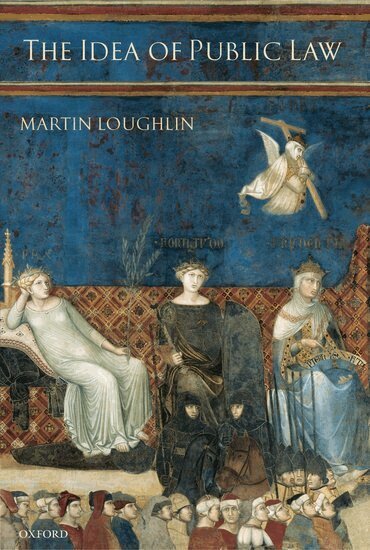
This book offers an answer to the question: what is public law? It suggests that an adequate explanation can only be given once public law is recognized to be an autonomous discipline, with its own distinctive methods and tasks.Martin Loughlin defends this claim by identifying the conceptual foundations of the public law in governing, politics, representation, sovereignty, constituent power, and rights. By explicating these basic elements of the subject, he seeks not only to lay bare its method but also to present a novel account of the idea of public law.
591 kr
Skickas inom 5-8 vardagar
This book offers an answer to the question: what is public law? It suggests that an adequate explanation can only be given once public law is recognized to be an autonomous discipline, with its own distinctive methods and tasks. Martin Loughlin defends this claim by identifying the conceptual foundations of the public law: governing, politics, representation, sovereignty, constituent power, and rights. By explicating these basic elements of the subject, he seeks not only to lay bare its method but also to present a novel account of the idea of public law.
679 kr
Skickas inom 5-8 vardagar
The book sets out to examine some of the key features of what we describe as the paradox of constitutionalism: whether those who have the authority to make a constitution - the 'constituent power' - can do so without effectively surrendering that authority to the institutional sites of power 'constituted' by the constitutional form they enact. In particular, is the constituent power exhausted in the single constitutive act or does it retain a presence, acting as a critical check on the constitutional operating system and/or an alternative source of authority to be invoked in moments of crisis? These questions have been debated both in different national contexts and at the level of constitutional theory, and these debates are acknowledged and developed in the first two sections of the book. Part I includes chapters on how the question of constituent power has been treated in the constitutional histories of USA, France, UK and Germany, while Part II examines the question of constituent power from the perspective of both liberal and non-liberal theories of the state and legal order. The essays in Part III consider the operation of constitutionalism with respect to a series of contemporary challenges to the state, including those from popular movements below the level of the state and challenges from the supranational and international levels, and they analyse how the puzzles associated with the question of constituent power are played out in these increasingly important settings.
2 138 kr
Skickas inom 5-8 vardagar
The concepts and values that underpin traditional constitutionalism are increasingly being challenged by political realities that place substantial power beyond the state. Among the few certainties of a global economy is the growing incongruity between the political (the world of things that need to be ordered collectively in order to sustain society) and the state (the major institution of authoritative political decision-making during modern times). The consequences, and possible remedies, of this double disjunction of politics and state and of state and constitution form the centre of an open debate about 'constitutionalism beyond the state'. The essays gathered in this collection explore the range of issues raised by this debate. The effects of recent changes on two of the main building blocks of constitutionalism - statehood and democracy - are examined in Parts I and II. Since the movement of overcoming statehood has, arguably, been advanced furthest in the European context, the question of the future of constitutionalist ideas in the framework of the EU provides the key theme of Part III. The remaining parts consider possible transformations or substitutes. The engagement of constitutions with international law offers one line of transmutation of constitutionalism (Part IV) and the diffusion of constitutionalism into separate social spheres provides an alternative way of pursuing constitutionalism in a new key (Part VI). Finally, the ability of the theory of global administrative law (examined in Part V) to offer an alternative account of the potential of jurisdictional control of global governing processes is examined.Through these explorations, the book offers cross-disciplinary insights into the impact of recent political and economic changes on modern constitutionalism and an assessment of the prospects for constitutionalism in a transnational environment.
692 kr
Skickas inom 7-10 vardagar
The concepts and values that underpin traditional constitutionalism are increasingly being challenged by political realities that place substantial power beyond the state. Among the few certainties of a global economy is the growing incongruity between the political (the world of things that need to be ordered collectively in order to sustain society) and the state (the major institution of authoritative political decision-making during modern times). The consequences, and possible remedies, of this double disjunction of politics and state and of state and constitution form the centre of an open debate about 'constitutionalism beyond the state'.The essays gathered in this collection explore the range of issues raised by this debate. The effects of recent changes on two of the main building blocks of constitutionalism - statehood and democracy - are examined in Parts I and II. Since the movement of overcoming statehood has, arguably, been advanced furthest in the European context, the question of the future of constitutionalist ideas in the framework of the EU provides the key theme of Part III. The remaining parts consider possible transformations or substitutes. The engagement of constitutions with international law offers one line of transmutation of constitutionalism (Part IV) and the diffusion of constitutionalism into separate social spheres provides an alternative way of pursuing constitutionalism in a new key (Part VI). Finally, the ability of the theory of global administrative law (examined in Part V) to offer an alternative account of the potential of jurisdictional control of global governing processes is examined.Through these explorations, the book offers cross-disciplinary insights into the impact of recent political and economic changes on modern constitutionalism and an assessment of the prospects for constitutionalism in a transnational environment.
728 kr
Skickas inom 7-10 vardagar
Foundations of Public Law offers an account of the formation of the discipline of public law with a view to identifying its essential character, explaining its particular modes of operation, and specifying its unique task. Building on the framework first outlined in The Idea of Public Law (OUP, 2003), the book conceives public law broadly as a type of law that comes into existence as a consequence of the secularization, rationalization, and positivization of the medieval idea of fundamental law. Formed as a result of the changes that give birth to the modern state, public law establishes the authority and legitimacy of modern governmental ordering.Public law today is a universal phenomenon, but its origins are European. Part I of the book examines the conditions of its formation, showing how much the concept borrowed from the refined debates of medieval jurists. Part II then examines the nature of public law. Drawing on a line of juristic inquiry that developed from the late sixteenth to the early nineteenth centuries - extending from Bodin, Althusius, Lipsius, Grotius, Hobbes, Spinoza, Locke, and Pufendorf to the later works of Montesquieu, Rousseau, Kant, Fichte, Smith, and Hegel - it presents an account of public law as a special type of political reason.The remaining three Parts unpack the core elements of this concept: state, constitution, and government. By taking this broad approach to the subject, Loughlin shows how, rather than being viewed as a limitation on power, law is better conceived as a means by which public power is generated. And by explaining the way that these core elements of state, constitution, and government were shaped respectively by the technological, bourgeois, and disciplinary revolutions of the sixteenth century through to the nineteenth century, he reveals a concept of public law of considerable ambiguity, complexity, and resilience.
335 kr
Skickas inom 7-10 vardagar
A New Statesman Book of the YearA critical analysis of the transformation of constitutionalism from an increasingly irrelevant theory of limited government into the most influential philosophy of governance in the world today.Constitutionalism is universally commended because it has never been precisely defined. Martin Loughlin argues that it is not some vague amalgam of liberal aspirations but a specific and deeply contentious governing philosophy. An Enlightenment idea that in the nineteenth century became America’s unique contribution to the philosophy of government, constitutionalism was by the mid-twentieth century widely regarded as an anachronism. Advocating separated powers and limited government, it was singularly unsuited to the political challenges of the times. But constitutionalism has since undergone a remarkable transformation, giving the Constitution an unprecedented role in society. Once treated as a practical instrument to regulate government, the Constitution has been raised to the status of civil religion, a symbolic representation of collective unity.Against Constitutionalism explains why this has happened and its far-reaching consequences. Spearheaded by a “rights revolution” that subjects governmental action to comprehensive review through abstract principles, judges acquire greatly enhanced power as oracles of the regime’s “invisible constitution.” Constitutionalism is refashioned as a theory maintaining that governmental authority rests not on collective will but on adherence to abstract standards of “public reason.” And across the world the variable practices of constitutional government have been reshaped by its precepts.Constitutionalism, Loughlin argues, now propagates the widespread belief that social progress is advanced not through politics, electoral majorities, and legislative action, but through innovative judicial interpretation. The rise of constitutionalism, commonly conflated with constitutional democracy, actually contributes to its degradation.
1 373 kr
Skickas inom 7-10 vardagar
Elgar Advanced Introductions are stimulating and thoughtful introductions to major fields in the social sciences, business and law, expertly written by the world’s leading scholars. Designed to be accessible yet rigorous, they offer concise and lucid surveys of the substantive and policy issues associated with discrete subject areas.In this Advanced Introduction, Martin Loughlin provides a concise analysis of political jurisprudence, a powerful but relatively neglected school of thought that offers a compelling account of the relationship between law and politics in the modern world. After presenting a historical sketch of its evolution in European thought, he outlines the basic conceptual framework of the subject and argues that, notwithstanding current strains, political jurisprudence continues to yield acute insights into the politico-legal challenges of our times.Key features:Identifies the critical themes raised at the intersection of law and politicsExamines the pivotal significance of such basic concepts as authority, state, sovereignty, constitution, freedom and legalityShows that the works of such major figures as Machiavelli, Bodin, Hobbes, Rousseau, Hegel, Marx, Weber and Schmitt are to be read as exemplary texts of political jurisprudenceThe Advanced Introduction to Political Jurisprudence is an essential text for scholars and students of law and politics, legal theory, and constitutional law and a critical resource for anyone interested in public affairs.
249 kr
Skickas inom 7-10 vardagar
Elgar Advanced Introductions are stimulating and thoughtful introductions to major fields in the social sciences, business and law, expertly written by the world’s leading scholars. Designed to be accessible yet rigorous, they offer concise and lucid surveys of the substantive and policy issues associated with discrete subject areas.In this Advanced Introduction, Martin Loughlin provides a concise analysis of political jurisprudence, a powerful but relatively neglected school of thought that offers a compelling account of the relationship between law and politics in the modern world. After presenting a historical sketch of its evolution in European thought, he outlines the basic conceptual framework of the subject and argues that, notwithstanding current strains, political jurisprudence continues to yield acute insights into the politico-legal challenges of our times.Key features:Identifies the critical themes raised at the intersection of law and politicsExamines the pivotal significance of such basic concepts as authority, state, sovereignty, constitution, freedom and legalityShows that the works of such major figures as Machiavelli, Bodin, Hobbes, Rousseau, Hegel, Marx, Weber and Schmitt are to be read as exemplary texts of political jurisprudenceThe Advanced Introduction to Political Jurisprudence is an essential text for scholars and students of law and politics, legal theory, and constitutional law and a critical resource for anyone interested in public affairs.
561 kr
Skickas inom 7-10 vardagar
The Cambridge Companion to the Rule of Law introduces students, scholars, and practitioners to the theory and history of the rule of law, one of the most frequently invoked-and least understood-ideas of legal and political thought and policy practice. It offers a comprehensive re-assessment by leading scholars of one of the world's most cherished traditions. This high-profile collection provides the first global and interdisciplinary account of the histories, moralities, pathologies and trajectories of the rule of law. Unique in conception, and critical in its approach, it evaluates, breaks down, and subverts conventional wisdom about the rule of law for the twenty-first century.
1 660 kr
Skickas inom 7-10 vardagar
The Cambridge Companion to the Rule of Law introduces students, scholars, and practitioners to the theory and history of the rule of law, one of the most frequently invoked-and least understood-ideas of legal and political thought and policy practice. It offers a comprehensive re-assessment by leading scholars of one of the world's most cherished traditions. This high-profile collection provides the first global and interdisciplinary account of the histories, moralities, pathologies and trajectories of the rule of law. Unique in conception, and critical in its approach, it evaluates, breaks down, and subverts conventional wisdom about the rule of law for the twenty-first century.
1 174 kr
Skickas inom 10-15 vardagar
This short and accessible book provides a provocative re-assessment of the various tangled relationships between law and politics and in so doing examines legal and political thinking on such critical areas as justice,the state, constitutionalism and rights. It introduces lawyers especially to certain important themes in some of the key texts in political thought and introduces political scientists to the legal dimensions of a number of central themes of political studies. Written by one of the leading theorists in constitutional law, the book should prove to be an indispensable companion for any student or teacher interested in law and politics. Contents I. Law and Politics in the Conversation of Mankind II. Justice III. The State IV. Constitutionalism V. Conclusions
351 kr
Skickas inom 10-15 vardagar
This short and accessible book provides a provocative re-assessment of the various tangled relationships between law and politics and in so doing examines legal and political thinking on such critical areas as justice,the state, constitutionalism and rights. It introduces lawyers especially to certain important themes in some of the key texts in political thought and introduces political scientists to the legal dimensions of a number of central themes of political studies. Written by one of the leading theorists in constitutional law, the book should prove to be an indispensable companion for any student or teacher interested in law and politics. Contents I. Law and Politics in the Conversation of Mankind II. Justice III. The State IV. Constitutionalism V. Conclusions