Martin P. Starr - Böcker
Visar alla böcker från författaren Martin P. Starr. Handla med fri frakt och snabb leverans.
3 produkter
3 produkter
1 440 kr
Skickas
The Unknown God is the first documentary study of Thelema, a twentieth-century religious movement in the "magical" family, founded by the occultist, poet, and prophet of a new age of personal freedom, Aleister Crowley (1875--1947). Martin P. Starr tells the history of the movement through the biography of its leader, Wilfred Talbot Smith (1885--1957), who took up Crowley's plans for organizations to teach the latter's methods in Western and Eastern esoteric traditions and his laws for a new world order, and established these systems in British Columbia and in California. Crowley provided the concepts; Smith and his associates made them take flesh, applying Crowley's doctrine of "Do what thou wilt" and cementing it a part of the artistic and religious underground of the twentieth century. This account provides a contextual overview of the elements of the resulting bricolage of religions, which included Freemasonry, Theosophy, Rosicrucianism, Neo-Gnosticism and other related forms of esotericism, demonstrating the overlap between apparently disparate ideologies, groups, and participants. Drawing primarily on diaries and letters, Starr gives a rare and fascinating study of the contemporaneous application of Crowley's thought, whose long trail we can see in the Satanism of Anton LaVey, the Scientology of L. Ron Hubbard, and the popularization of many forms of witchcraft, magic, and tantric practices.
1 932 kr
Skickas inom 5-8 vardagar
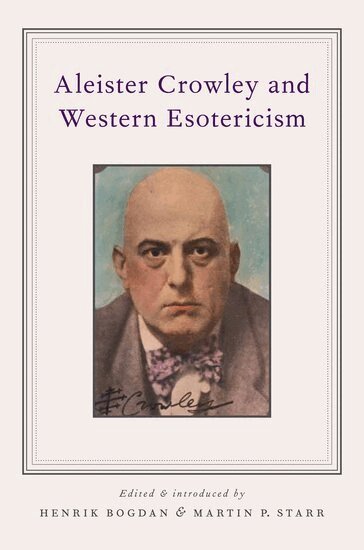
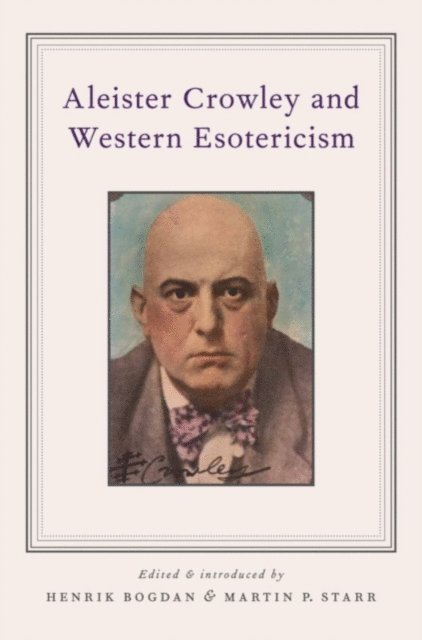
Henrik Bogdan and Martin P. Starr offer the first comprehensive examination of one of the twentieth century's most distinctive occult iconoclasts. Aleister Crowley (1875-1947) was a study in contradictions. He was born into a Fundamentalist Christian family, then educated at Cambridge where he experienced both an intellectual liberation from his religious upbringing and a psychic awakening that led him into the study of magic. He was a stock figure in the tabloid press of his day, vilified during his life as a traitor, drug addict and debaucher; yet he became known as the perhaps most influential thinker in contemporary esotericism. The practice of the occult arts was understood in the light of contemporary developments in psychology, and its advocates, such as William Butler Yeats, were among the intellectual avant-garde of the modernist project. Crowley took a more drastic step and declared himself the revelator of a new age of individualism. Crowley's occult bricolage, Magick, was a thoroughly eclectic combination of spiritual exercises drawing from Western European ceremonial magical traditions as practiced in the nineteenth-century Hermetic Order of the Golden Dawn. Crowley also pioneered in his inclusion of Indic sources for the parallel disciplines of meditation and yoga. The summa of this journey of self-liberation was harnessing the power of sexuality as a magical discipline, an instance of the "sacrilization of the self " as practiced in his co-masonic magical group, the Ordo Templi Orientis. The religion Crowley created, Thelema, legitimated his role as a charismatic revelator and herald of a new age of freedom under the law of ''Do what thou wilt.''The influence of Aleister Crowley is not only to be found in contemporary esotericism-he was, for instance, a major influence on Gerald Gardner and the modern witchcraft movement-but can also be seen in the counter-culture movement of the late 1960s and early 1970s, and in many forms of alternative spirituality and popular culture. This anthology, which features essays by leading scholars of Western esotericism across a wide array of disciplines, provides much-needed insight into Crowley's critical role in the study of western esotericism, new religious movements, and sexuality.
489 kr
Skickas inom 5-8 vardagar
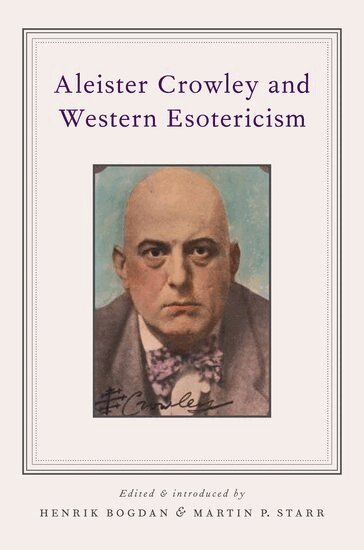
Henrik Bogdan and Martin P. Starr offer the first comprehensive examination of one of the twentieth century's most distinctive occult iconoclasts. Aleister Crowley (1875-1947) was a study in contradictions. He was born into a Fundamentalist Christian family, then educated at Cambridge where he experienced both an intellectual liberation from his religious upbringing and a psychic awakening that led him into the study of magic. He was a stock figure in the tabloid press of his day, vilified during his life as a traitor, drug addict and debaucher; yet he became known as the perhaps most influential thinker in contemporary esotericism. The practice of the occult arts was understood in the light of contemporary developments in psychology, and its advocates, such as William Butler Yeats, were among the intellectual avant-garde of the modernist project. Crowley took a more drastic step and declared himself the revelator of a new age of individualism. Crowley's occult bricolage, Magick, was a thoroughly eclectic combination of spiritual exercises drawing from Western European ceremonial magical traditions as practiced in the nineteenth-century Hermetic Order of the Golden Dawn. Crowley also pioneered in his inclusion of Indic sources for the parallel disciplines of meditation and yoga. The summa of this journey of self-liberation was harnessing the power of sexuality as a magical discipline, an instance of the "sacrilization of the self " as practiced in his co-masonic magical group, the Ordo Templi Orientis. The religion Crowley created, Thelema, legitimated his role as a charismatic revelator and herald of a new age of freedom under the law of ''Do what thou wilt.''The influence of Aleister Crowley is not only to be found in contemporary esotericism-he was, for instance, a major influence on Gerald Gardner and the modern witchcraft movement-but can also be seen in the counter-culture movement of the late 1960s and early 1970s, and in many forms of alternative spirituality and popular culture. This anthology, which features essays by leading scholars of Western esotericism across a wide array of disciplines, provides much-needed insight into Crowley's critical role in the study of western esotericism, new religious movements, and sexuality.