Martin Rama - Böcker
Visar alla böcker från författaren Martin Rama. Handla med fri frakt och snabb leverans.
4 produkter
4 produkter
1 092 kr
Skickas inom 5-8 vardagar
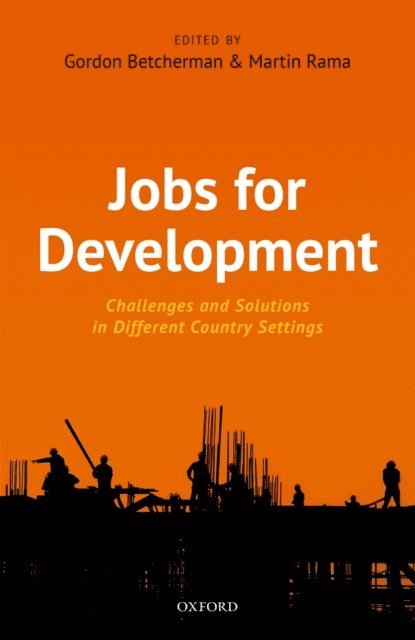
This book is a sequel to the World Bank's World Development Report 2013: Jobs. The central message of that report was that job creation is at the heart of development. Jobs raise living standards and lift people out of poverty, they contribute to gains in aggregate productivity, and they may even foster social cohesion. In doing so, jobs may have spillovers beyond the private returns they offer to those who hold them. Poverty reduction is arguably a public good, making everybody better off; higher productivity spreads across co-workers, clusters, and cities; and social cohesion improves the outcomes of collective decision-making. But which jobs make the greatest contribution to development and what policies can facilitate the creation of more of these jobs? There is no universal answer - it depends on the country's level of development, demography, natural endowments, and institutions. This volume explores the diversity of jobs challenges and solutions through case studies of seven developing countries. These countries, drawn from four continents, represent seven different contexts - a small island nation (St. Lucia), a resource-rich country (Papua New Guinea), agrarian (Mozambique), urbanizing (Bangladesh), and formalizing (Mexico) economies, as well as young (Tunisia) and aging (Ukraine) populations. Using methods drawn from several branches of economics and the social sciences more broadly and analyzing a wide range of data, the authors show the different ways in which jobs have contributed to social and economic development in the countries they have studied and how they can contribute in the future. The policy priorities vary accordingly. They often extend well beyond traditional labor market instruments to include policy areas not typically considered in national growth strategies.
270 kr
Skickas inom 7-10 vardagar
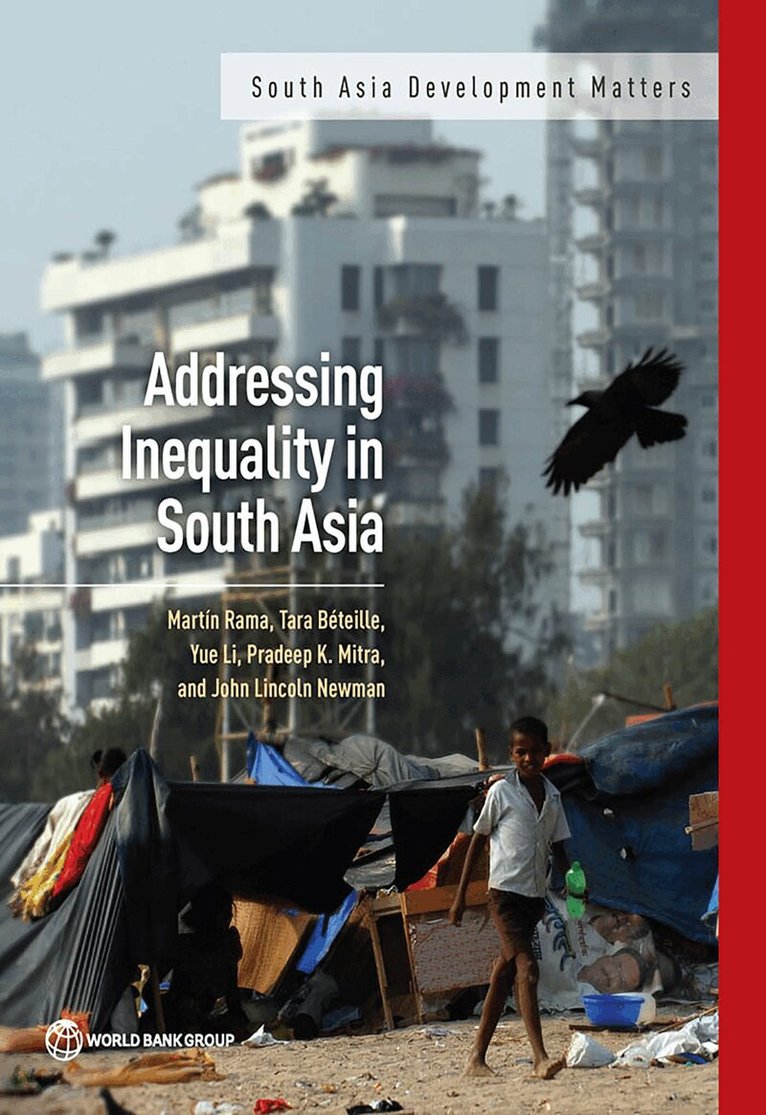
Inequality in South Asia examines the trends in multiple dimensions of inequality, analyses the drivers of inequality, and identifies policies for shared prosperity in South Asia. Part one of the book covers not only inequality of consumption, but also inequality of services and draws upon the most recent household surveys in each country to capture the trends. The South Asian experience is also compared to that of other countries. Part two focuses on the drivers of inequality, the lack of opportunity, insufficient mobility of the poor and the vulnerability of the poor to shocks which are keeping the high rates of growth being generated recently in South Asia from having a larger impact on inequality. Part three addresses policies that could lead to a more equitable path of growth.The book highlights that because of the limited progressivity of tax systems in South Asia to address inequality, most of the public policy impact on inequality will be generated through the effect that expenditure policies have on opportunities and jobs. To ensure that growth generates more equity in the future, investment is needed in both resources to increase opportunities for more and better jobs, and management to address the variation in the quality of implementation in providing services to the poor. At the same time, social protection is needed to ensure that the health, economic, and natural disaster shocks that are so prevalent in South Asia do not make it impossible for the poor to accumulate assets and share in future prosperity.
487 kr
Skickas inom 10-15 vardagar
By using state-of-the-art modeling techniques, this study simulates population, housing, economic activity, commuting times, transport and trade across the 266 unions that constitute Great Dhaka, taking into account flood vulnerability, traffic congestion and other location conditions.
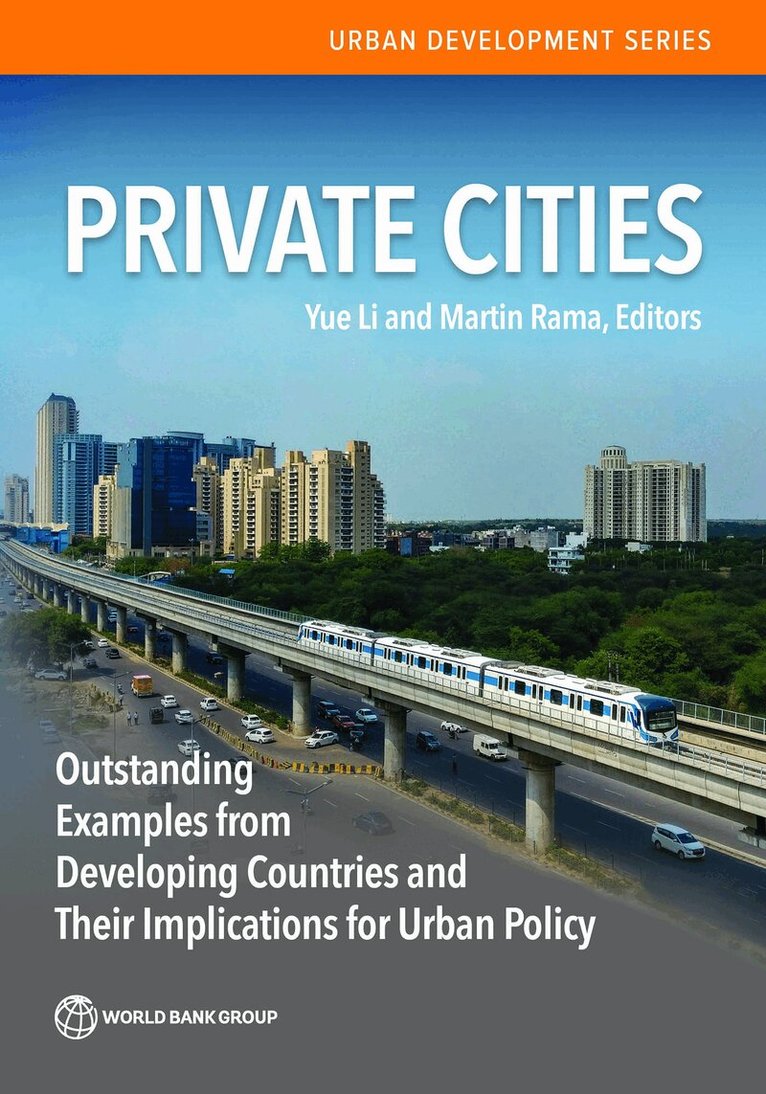
Private Cities
Outstanding Examples from Developing Countries and Their Implications for Urban Policy
Häftad, Engelska, 2023
434 kr
Skickas inom 10-15 vardagar
Institutional weaknesses limit the capacity of local governments to support efficient urbanization in developing countries. They also lead to the emergence of large developers with the clout to build entire cities. This paper analyzes the urbanization process when local governments are weak and large developers are powerful. Results from a non-cooperative game setting with minimal assumptions show that multiple equilibria can emerge depending on key institutional parameters of the model and the nature of the game, but all of them are inefficient. In this simple setting, increasing the capacity of the local government may not lead to better outcomes, because it may crowd out urban land development by the more effective private investor. Subsidizing the large investor can ensure efficiency, but it makes the rest of society worse off. Selling the rights to the city can be Pareto efficient, but only provided that the price at which the rights are sold are sufficiently high. However, more analytical and empirical work is needed before these analyses can be deemed relevant in practice. Competition among jurisdictions, time consistency challenges, and the social implications of private cities deserve special attention.