Martina Piperno – författare
Visar alla böcker från författaren Martina Piperno. Handla med fri frakt och snabb leverans.
2 produkter
2 produkter
1 792 kr
Skickas inom 7-10 vardagar
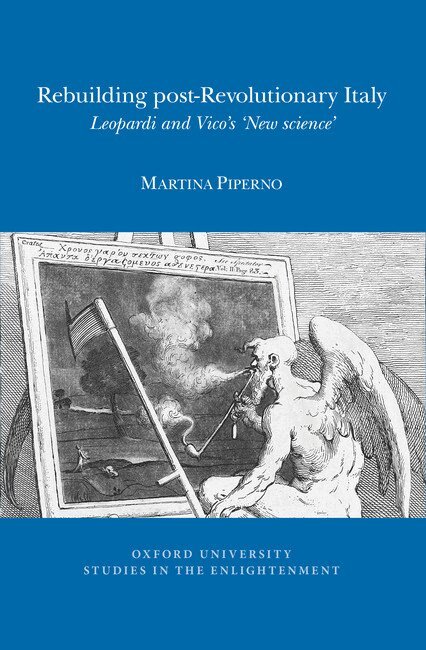
Co-Winner of theModern Language Association’s Aldo and Jeanne Scaglione Prize for ItalianStudies, 2018.The rediscovery of the thought of Giambattista Vico (1668-1774) – especially his New science – is a post-Revolutionary phenomenon. Stressing the elements that keep society together by promoting a sense of belonging, Vico’s philosophy helped shape a new Italian identity and intellectual class. Poet and philosopher Giacomo Leopardi (1798-1837) responded perceptively to the spreading and manipulation of Vico’s ideas, but to what extent can he be considered Vico’s heir?Through examining the reasons behind the success of the New science in early nineteenth-century Italy, Martina Piperno uncovers the cultural trends, debates, and obsessions fostered by Vico’s work. She reconstructs the penetration of Vico-related discourses in circles and environments frequented by Leopardi, and establishes and analyses a latent Vico-Leopardi relationship. Her highly original reading sees Leopardi reacting to the tensions of his time, receiving Vico’s message indirectly without a need to draw directly from the source. By exploring the oblique influence of Vico’s thought on Leopardi, Martina Piperno highlights the unique character of Italian modernity and its tendency to renegotiate tradition and innovation, past and future.
478 kr
Skickas inom 5-8 vardagar
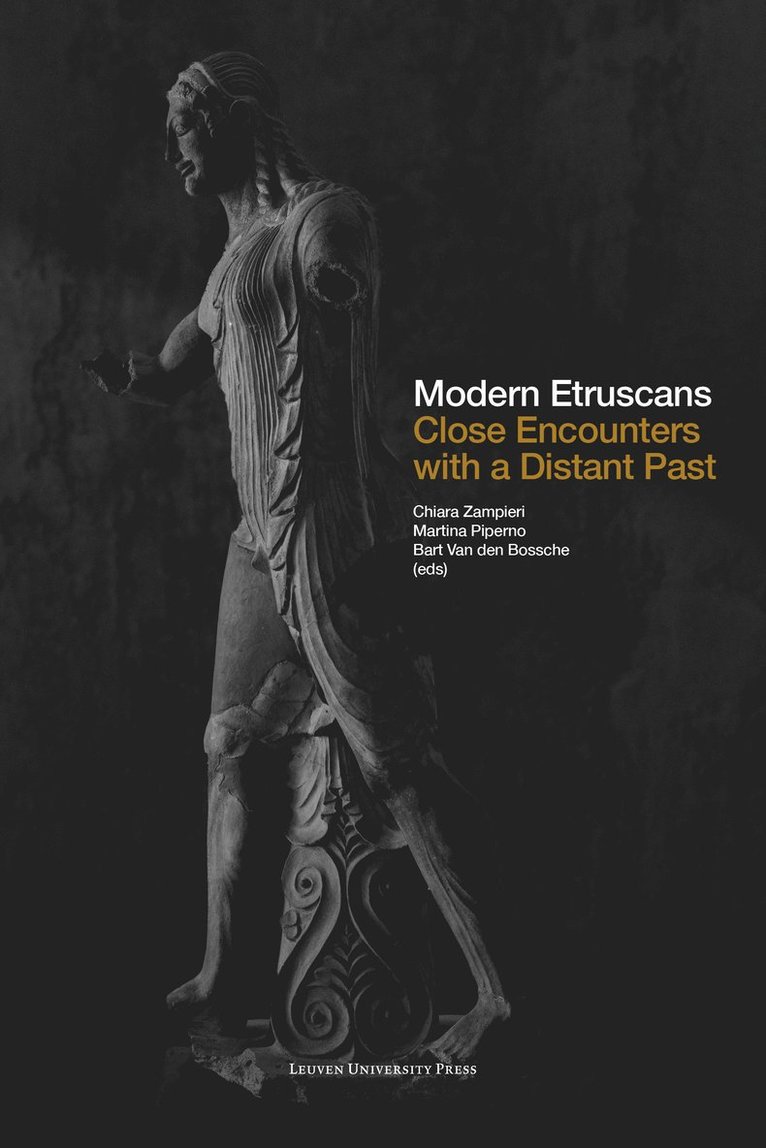
New insights on the reception of Etruscan antiquity in the modernist period.“L’Étrurie est à la mode”, French archaeologist Salomon Reinach bluntly stated in 1927. Since the beginning of the nineteenth century, Etruria had not only been attracting the attention of archaeologists and specialists of all sorts, but it had also been a fascinating and, in some cases, captivating destination for poets, novelists, painters and sculptors from all over Europe. This volume deals with the impact of the constantly expanding knowledge on the Etruscans and their mysterious civilisation on Italian, French, English, and German literature, arts and culture, with particular regard to the modernist period (1890–1950). The volume brings a distinctive point of view to the subject by approaching it from an interdisciplinary and comparative perspective, and by looking at a quite diverse range of topics and artefacts, which includes, but is not limited to, the study of drawings, art works, travel essays, novels, cooking recipes, schoolbooks, photographs, and movies.By exploring a new paradigm to understand ancient cultures, beyond the traditional ideas and models of “reception of the classics”, and by challenging the alleged fracture between the so-called “two cultures” of humanities and natural sciences, Modern Etruscans will be of interest to scholars from various disciplines. Designed as a learning tool for university courses on the interplay between literature and science in the twentieth century, it is suited as recommended reading for students in the humanities.Contributors: Francesca Orestano (Università degli Studi di Milano), Chiara Zampieri (KU Leuven), Bart Van den Bossche (KU Leuven), Lisa C. Pieraccini (University of California, Berkeley), Martin Miller (Italienisches Kulturinstitut Stuttgart), Marie-Laurence Haack (Université de Picardie Jules Verne), Gennaro Ambrosino (University of Warwick), Martina Piperno (Durham University), Andrea Avalli (Scuola Superiore di Studi Storici di San Marino).Ebook available in Open Access. This publication is GPRC-labeled (Guaranteed Peer-Reviewed Content).