Mary Ann McDonald Carolan - Böcker
Visar alla böcker från författaren Mary Ann McDonald Carolan. Handla med fri frakt och snabb leverans.
4 produkter
4 produkter
399 kr
Tillfälligt slut
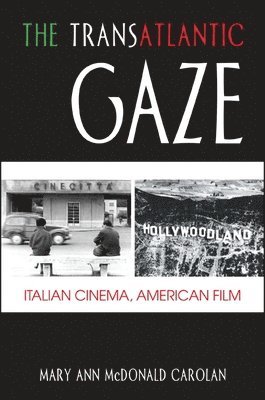
Tracks the influence of Italian cinema on American film from the postwar period to the present.In The Transatlantic Gaze, Mary Ann McDonald Carolan documents the sustained and profound artistic impact of Italian directors, actors, and screenwriters on American film. Working across a variety of genres, including neorealism, comedy, the Western, and the art film, Carolan explores how and why American directors from Woody Allen to Quentin Tarantino have adapted certain Italian trademark techniques and motifs. Allen's To Rome with Love (2012), for example, is an homage to the genius of Italian filmmakers, and to Federico Fellini in particular, whose Lo sceicco bianco/The White Sheik (1952) also resonates with Allen's The Purple Rose of Cairo (1985) as well as with Neil LaBute's Nurse Betty (2000). Tarantino's Kill Bill saga (2003, 2004) plays off elements of Sergio Leone's spaghetti Western C'era una volta il West/Once Upon a Time in the West (1968), a transatlantic conversation about the Western that continues in Tarantino's Oscar-winning Django Unchained (2012). Lee Daniels's Precious (2009) and Spike Lee's Miracle at St. Anna (2008), meanwhile, demonstrate that the neorealism of Roberto Rossellini and Vittorio De Sica, which arose from the political and economic exigencies of postwar Italy, is an effective vehicle for critiquing social issues such as poverty and racism in a contemporary American context. The book concludes with an examination of American remakes of popular Italian films, a comparison that offers insight into the similarities and differences between the two cultures and the transformations in genre, both subtle and obvious, that underlie this form of cross-cultural exchange.
1 442 kr
Tillfälligt slut
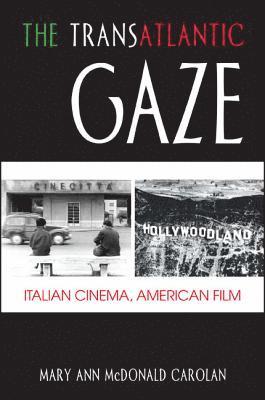
Tracks the influence of Italian cinema on American film from the postwar period to the present.In The Transatlantic Gaze, Mary Ann McDonald Carolan documents the sustained and profound artistic impact of Italian directors, actors, and screenwriters on American film. Working across a variety of genres, including neorealism, comedy, the Western, and the art film, Carolan explores how and why American directors from Woody Allen to Quentin Tarantino have adapted certain Italian trademark techniques and motifs. Allen's To Rome with Love (2012), for example, is an homage to the genius of Italian filmmakers, and to Federico Fellini in particular, whose Lo sceicco bianco/The White Sheik (1952) also resonates with Allen's The Purple Rose of Cairo (1985) as well as with Neil LaBute's Nurse Betty (2000). Tarantino's Kill Bill saga (2003, 2004) plays off elements of Sergio Leone's spaghetti Western C'era una volta il West/Once Upon a Time in the West (1968), a transatlantic conversation about the Western that continues in Tarantino's Oscar-winning Django Unchained (2012). Lee Daniels's Precious (2009) and Spike Lee's Miracle at St. Anna (2008), meanwhile, demonstrate that the neorealism of Roberto Rossellini and Vittorio De Sica, which arose from the political and economic exigencies of postwar Italy, is an effective vehicle for critiquing social issues such as poverty and racism in a contemporary American context. The book concludes with an examination of American remakes of popular Italian films, a comparison that offers insight into the similarities and differences between the two cultures and the transformations in genre, both subtle and obvious, that underlie this form of cross-cultural exchange.
507 kr
Skickas inom 5-8 vardagar
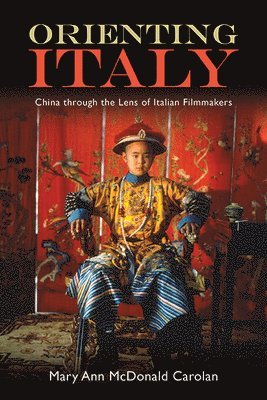
Explores Italian filmmakers' representations of China and the Chinese, both at home and abroad.Winner of the 2022 Book Award for Performance and Visual Culture presented by the American Association of Teachers of Italian Orienting Italy explores contemporary Italian filmmakers' fascination with China and the Chinese in both documentary and fictional films. Delineating the contours of this fascination, the book begins with the works of Carlo Lizzani (Behind the Great Wall, 1958) and Michelangelo Antonioni (Chung Kuo-China, 1972), both of whom ventured to China with the aim of documenting new, yet physically and culturally distant, realities. Their documentary investigations yielded to fictional portrayals, from the lavish view of a historical Middle Kingdom by director Bernardo Bertolucci (The Last Emperor, 1987) to the stark consideration of Italian economic exchange with contemporary China by Gianni Amelio (The Missing Star, 2006). The wave of Chinese migration to Italy in the late twentieth century created a new sense of otherness within Italy as Chinese migrants became the subjects of fictional narratives and documentaries in the works of Stefano Incerti (Gorbaciof, 2010) and Andrea Segre (Shun Li and the Poet, 2011) and Riccardo Cremona and Vincenzo De Cecco (Miss Little China, 2009). In the twenty-first century, a new chapter in the relationship between Italy and China has emerged in the form of transnational collaborations in the art and business of filmmaking.
1 674 kr
Skickas inom 3-6 vardagar
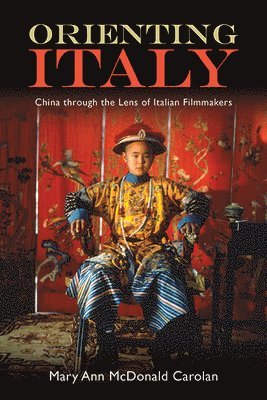
Explores Italian filmmakers' representations of China and the Chinese, both at home and abroad.Winner of the 2022 Book Award for Performance and Visual Culture presented by the American Association of Teachers of Italian Orienting Italy explores contemporary Italian filmmakers' fascination with China and the Chinese in both documentary and fictional films. Delineating the contours of this fascination, the book begins with the works of Carlo Lizzani (Behind the Great Wall, 1958) and Michelangelo Antonioni (Chung Kuo-China, 1972), both of whom ventured to China with the aim of documenting new, yet physically and culturally distant, realities. Their documentary investigations yielded to fictional portrayals, from the lavish view of a historical Middle Kingdom by director Bernardo Bertolucci (The Last Emperor, 1987) to the stark consideration of Italian economic exchange with contemporary China by Gianni Amelio (The Missing Star, 2006). The wave of Chinese migration to Italy in the late twentieth century created a new sense of otherness within Italy as Chinese migrants became the subjects of fictional narratives and documentaries in the works of Stefano Incerti (Gorbaciof, 2010) and Andrea Segre (Shun Li and the Poet, 2011) and Riccardo Cremona and Vincenzo De Cecco (Miss Little China, 2009). In the twenty-first century, a new chapter in the relationship between Italy and China has emerged in the form of transnational collaborations in the art and business of filmmaking.