Mary Ellen Pethel - Böcker
Visar alla böcker från författaren Mary Ellen Pethel. Handla med fri frakt och snabb leverans.
4 produkter
4 produkter
371 kr
Skickas inom 3-6 vardagar
433 kr
Skickas inom 10-15 vardagar
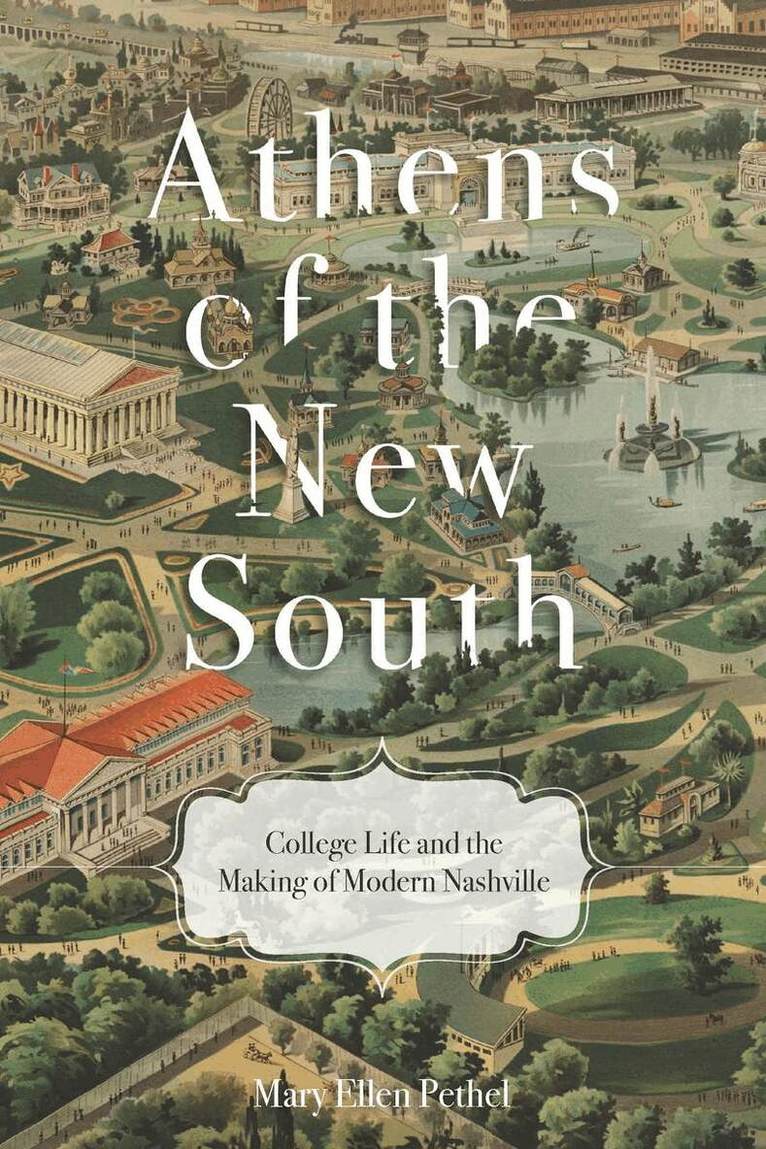
In 2013, the New York Times identified Nashville as America’s “it” city—a leading hub of music, culture, technology, food, and business. But long before, the Tennessee capital was known as the “Athens of the South,” as a reflection of the city’s reputation for and investment in its institutions of higher education, which especially blossomed after the end of the Civil War and through the New South Era from 1865 to 1930.This wide-ranging book chronicles the founding and growth of Nashville’s institutions of higher education and their impressive impact on the city, region, and nation at large. Local colleges and universities also heavily influenced Nashville’s brand of modernity as evidenced by the construction of a Parthenon replica, the centerpiece of the 1897 Centennial Exposition. By the turn of the twentieth century, Vanderbilt University had become one of the country’s premier private schools, while nearby Peabody College was a leading teacher-training institution. Across the racial divide—Fisk University joined the ranks of the nation’s most prestigious black liberal-arts universities, while Meharry Medical College emerged as one of the country’s few training centers for African American medical professionals. Following the agricultural-industrial model, Tennessee A&I became the state’s first black public college. Meanwhile, various other schools— Ward-Belmont, a junior college for women; David Lipscomb College, the instructional arm of the Church of Christ; and Roger Williams University, which trained black men and women as teachers and preachers—made important contributions to the higher educational landscape. In sum, Nashville was distinguished not only by the quantity of its schools but by their quality.Linking these institutions to the progressive and educational reforms of the era, Mary Ellen Pethel also explores their impact in shaping Nashville’s expansion, on changing gender roles, and on leisure activity in the city, which included the rise and popularity of collegiate sports. In her conclusion, she shows that Nashville’s present-day reputation as a dynamic place to live, learn, and work is due in no small part to the role that higher education continues to play in the city’s growth and development.
260 kr
Skickas inom 10-15 vardagar
In June 1972, President Richard Nixon put pen to paper and signed the Educational Amendments of 1972 into law. The nearly 150-page document makes no mention of “gender,” “athletics,” “girls,” or “women.” The closest reference to “sport” is transportation. In fact, the bill did not appear to contain anything earth shattering. But tucked into its final pages, a heading appears, “Title IX—Prohibition of Sex Discrimination.” These 37 words would change the world for girls and women across the United States. On its face, Title IX legally guaranteed equal opportunity in education. In time, Title IX would serve as the tipping point for the modern era of women’s sport. Slowly but surely, women’s athletics at the high school and collegiate levels grew to prominence, and Tennessee fast emerged as a national leader.In Title IX, Pat Summitt, and Tennessee’s Trailblazers, Mary Ellen Pethel introduces readers to past and present pioneers—each instrumental to the success of women’s athletics across the state and nation. Through vibrant profiles, Pethel celebrates the lives and careers of household names like Pat Summitt and Candace Parker, as well as equally important forerunners such as Ann Furrow and Teresa Phillips. Through their lived experiences, these fifty individuals laid the foundation for athletic excellence in Tennessee, which in turn shaped the national landscape for women’s sports. The book also provides readers with a fuller understanding of Title IX, as well as a concise history of women’s athletics in the pre- and post-Title IX eras.With interviewees ranging from age 20 to 93, Pethel artfully combines storytelling with scholarship. Guided by the voices of the athletes, coaches, and administrators, Pethel vividly documents achievement and adversity, wins and losses, and advice for the next generation. This book represents the first statewide compilation of its kind—offering readers a behind-the- scenes perspective of Tennessee women who dedicated their lives to the advancement of sport and gender equality. Readers will delight in Title IX, Pat Summitt, and Tennessee’s Trailblazers: 50 Years, 50 Stories.
342 kr
Skickas inom 7-10 vardagar
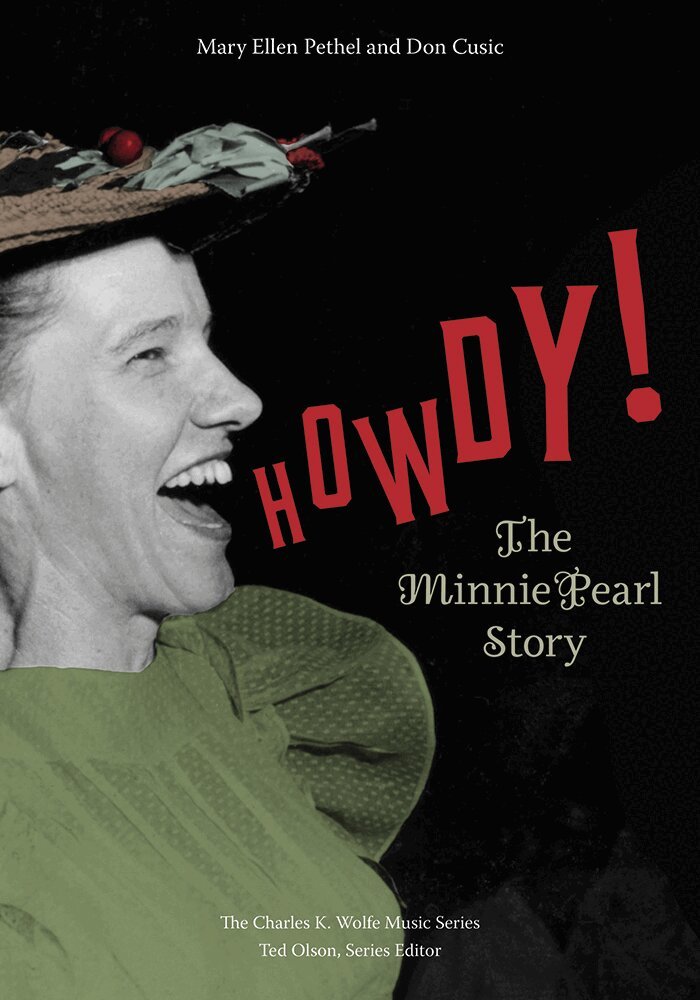
"Take the backroads, not the highways," Minnie Pearl often said—a sentiment that captures her life's winding, unpredictable journey. Born Sarah Ophelia Colley in 1912, she grew up in Centerville, Tennessee. This small-town upbringing inspired her imagined hometown of Grinder's Switch.During the Great Depression, Sarah moved to Nashville to study theater at the Ward-Belmont School. After graduating, she joined a touring theater company and performed throughout the Southeast. It was on the road, in 1936, that she met and stayed with Mattie Burden. Mattie became the inspiration for Minnie Pearl's iconic persona—a witty country girl known for her signature greeting and straw hat with a dangling price tag.Minnie Pearl's big break came in 1940 when a friend of a WSM radio executive saw her perform and recommended her for the Grand Ole Opry. Her debut marked the beginning of a career that spanned more than fifty years. Garth Brooks later remarked, "When she walked out, everybody waited for the 'How-dee!' It's just two syllables, one word, but every time she said it—it felt like it was just for you."At the Opry, the "Queen of Country Comedy" shared the spotlight with legends like Patsy Cline and Hank Williams. After World War II, she became a mentor and matriarch, befriending a young June Carter and warming up the crowd for Johnny Cash's Opry debut in 1955.Throughout her career, Cannon skillfully balanced her dual roles as Minnie and Sarah. Whether at the Opry, on the road, or on Hee Haw, Minnie remained a trusted friend to female performers like Dolly Parton, Tanya Tucker, and Reba McEntire. As k.d. lang noted, "Minnie understood where country music needed to go and who it needed to embrace. She was a visionary."Rich with 155 historic photographs, this definitive biography covers the many chapters of Sarah Cannon's life. Drawing from archives and interviews with those who knew her, Howdy! The Minnie Pearl Story, captures not only Cannon's enduring humor and impact, but also the woman behind the laughter.