Mary Jane Drummond – författare
381 kr
Skickas inom 3-6 vardagar
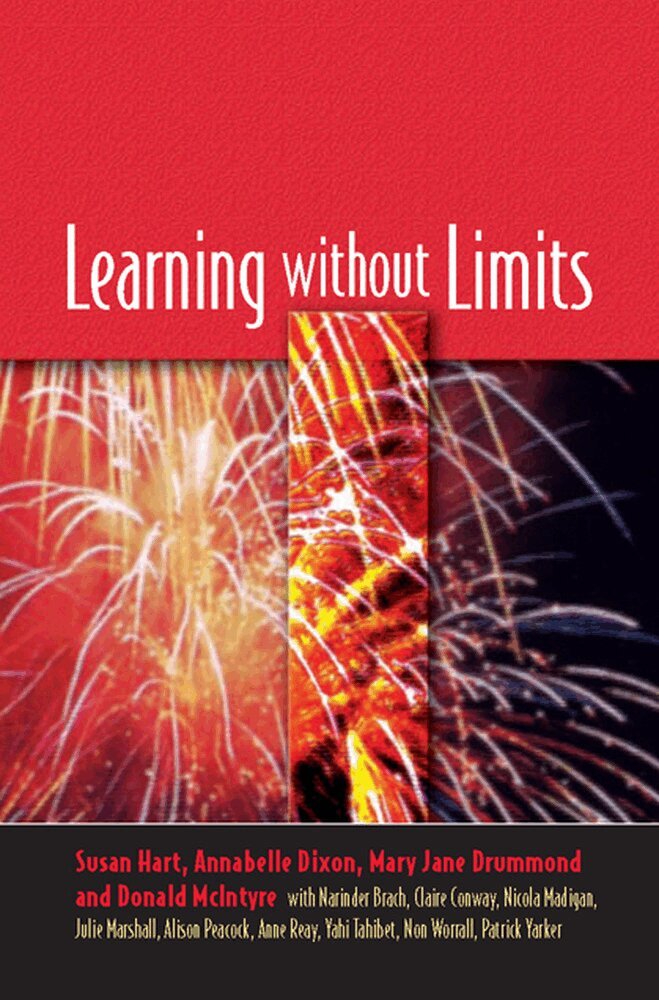
The authors analyze these case studies and identify the key concept of transformability as a distinguishing feature of these teachers' approach. They construct a model of pedagogy based on transformability: the mind-set that children's futures as learners are not pre-determined, and that teachers can help to strengthen and ultimately transform young people's capacity to learn through the choices they make. The book shows how transformability-based teaching can play a central role in constructing an alternative improvement agenda.
This book will inspire teachers, student teachers, lecturers and policy makers, as well as everyone who has a stake in how contemporary education and practice affect children's future lives and life chances.
368 kr
Läs direkt efter köp
The authors analyze these case studies and identify the key concept of transformability as a distinguishing feature of these teachers'' approach. They construct a model of pedagogy based on transformability: the mind-set that children''s futures as learners are not pre-determined, and that teachers can help to strengthen and ultimately transform young people''s capacity to learn through the choices they make. The book shows how transformability-based teaching can play a central role in constructing an alternative improvement agenda.
This book will inspire teachers, student teachers, lecturers and policy makers, as well as everyone who has a stake in how contemporary education and practice affect children''s future lives and life chances.
381 kr
Skickas inom 3-6 vardagar
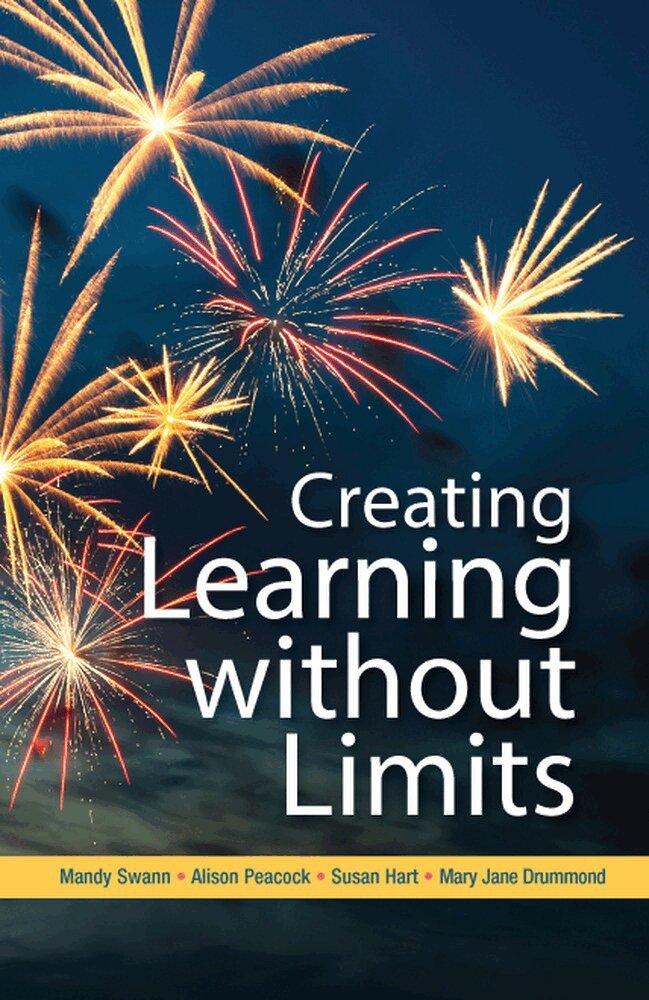
This book tells the story of how one primary school community worked to build a learning environment that is inclusive, humane and enabling for everybody, a place free from the damaging effects of fixed ability thinking and practices. Drawing on compelling accounts of everyday life in the school, it describes how, in just a few years, the school (once in special measures) grew into a thriving community, with distinctive views of learning, curriculum and pedagogy, monitoring and accountability that found expression in every aspect of school life.
The work of the school community was guided by the findings of a previous project, 'Learning without Limits' (Hart, Dixon, Drummond and McIntyre 2004), an empirical study of the classroom practice of individual teachers who had rejected the concept of fixed ability. 'Creating Learning without Limits' explores what becomes possible when the same ideas and principles are used creatively to guide and inspire whole school improvement. This book is not simply a celebration of the success of the school; it engages with the struggles and difficulties encountered by the staff as they set about learning to reshape pedagogy and curriculum by reference to their shared values of inclusion, social justice and human educability. It gives a detailed analysis of how the headteacher harnessed the power of collective action.
The insights generated by this study have enduring relevance and applicability to people in other contexts - for staff groups craving for more equitable school improvement; for individual teachers wondering how best to foster children's learning capacity; for school leaders and teacher educators who find their values increasingly compromised.
"'Creating Learning without Limits' takes on one of the most important issues in education today... This is a must-read for educators, policy makers and parents alike."
Jo Boaler, Professor of Mathematics Education, Stanford University, California. Formerly a teacher and researcher at the Universities of London and Sussex.
"This will undoubtedly turn out to be amongst the most important educational books of the decade...If you want to know why 'the standards agenda' must inevitably fail and what we might do instead, read this book."
Professor Michael Fielding, Institute of Education, University of London, UK
"This is an inspiring and reviving book."
Anne Watson, Professor of Mathematics Education, University of Oxford, UK
"This book provides a grounded demonstration of the importance of educational principles, the most important of which is the understanding that each child's potential for learning is limitless... I urge you to let it influence your thinking too!"
Professor Andrew Pollard, Institute of Education, University of London, UK
"The book deserves a really wide readership."
Professor Clyde Chitty, Institute of Education, University of London, UK
"This book is slim in size but hefty in significance."
Barry Hymer, Professor of Psychology in Education, Education Faculty, University of Cumbria, UK
"A classic for our time, it should be read by all who seek approaches to teaching and learning that are free from externally imposed views of ability and potential.”
Professor Lani Florian, School of Education, University of Aberdeen, UK
"This book could be the catalyst for the educational change that we are all praying for."
Julie Lilly, Head Teacher, UK
368 kr
Läs direkt efter köp
This book tells the story of how one primary school community worked to build a learning environment that is inclusive, humane and enabling for everybody, a place free from the damaging effects of fixed ability thinking and practices. Drawing on compelling accounts of everyday life in the school, it describes how, in just a few years, the school (once in special measures) grew into a thriving community, with distinctive views of learning, curriculum and pedagogy, monitoring and accountability that found expression in every aspect of school life.
The work of the school community was guided by the findings of a previous project, ''Learning without Limits'' (Hart, Dixon, Drummond and McIntyre 2004), an empirical study of the classroom practice of individual teachers who had rejected the concept of fixed ability. ''Creating Learning without Limits'' explores what becomes possible when the same ideas and principles are used creatively to guide and inspire whole school improvement. This book is not simply a celebration of the success of the school; it engages with the struggles and difficulties encountered by the staff as they set about learning to reshape pedagogy and curriculum by reference to their shared values of inclusion, social justice and human educability. It gives a detailed analysis of how the headteacher harnessed the power of collective action.
The insights generated by this study have enduring relevance and applicability to people in other contexts - for staff groups craving for more equitable school improvement; for individual teachers wondering how best to foster children''s learning capacity; for school leaders and teacher educators who find their values increasingly compromised.
"''Creating Learning without Limits'' takes on one of the most important issues in education today... This is a must-read for educators, policy makers and parents alike."
Jo Boaler, Professor of Mathematics Education, Stanford University, California. Formerly a teacher and researcher at the Universities of London and Sussex.
"This will undoubtedly turn out to be amongst the most important educational books of the decade...If you want to know why ''the standards agenda'' must inevitably fail and what we might do instead, read this book."
Professor Michael Fielding, Institute of Education, University of London, UK
"This is an inspiring and reviving book."
Anne Watson, Professor of Mathematics Education, University of Oxford, UK
"This book provides a grounded demonstration of the importance of educational principles, the most important of which is the understanding that each child''s potential for learning is limitless... I urge you to let it influence your thinking too!"
Professor Andrew Pollard, Institute of Education, University of London, UK
"The book deserves a really wide readership."
Professor Clyde Chitty, Institute of Education, University of London, UK
"This book is slim in size but hefty in significance."
Barry Hymer, Professor of Psychology in Education, Education Faculty, University of Cumbria, UK
"A classic for our time, it should be read by all who seek approaches to teaching and learning that are free from externally imposed views of ability and potential.”
Professor Lani Florian, School of Education, University of Aberdeen, UK
"This book could be the catalyst for the educational change that we are all praying for."
Julie Lilly, Head Teacher, UK
2 183 kr
Skickas inom 10-15 vardagar
660 kr
Skickas inom 10-15 vardagar
2 047 kr
Skickas inom 10-15 vardagar
537 kr
Skickas inom 10-15 vardagar
757 kr
Läs direkt efter köp
Learning how to learn is an essential preparation for lifelong learning. Whilst this is widely acknowledged by teachers, they have lacked a rich professional knowledge base from which they can teach their pupils how to learn.
This book makes a major contribution to the creation of such a professional knowledge base for teachers by building on previous work associated with ‘formative assessment’ or ‘assessment for learning’ which has a strong evidence base, and is now being promoted nationally and internationally. However, it adds an important new dimension by reporting the conditions within schools, and across networks of schools, that are conducive to the promotion, in classrooms, of learning how to learn as an extension of assessment for learning.
There is a companion book, Learning How to Learn in Classrooms: Tools for schools (also available from Routledge), which provides practical resources for those teachers looking to put into practice the principles covered in this book.
757 kr
Läs direkt efter köp
Learning how to learn is an essential preparation for lifelong learning. Whilst this is widely acknowledged by teachers, they have lacked a rich professional knowledge base from which they can teach their pupils how to learn.
This book makes a major contribution to the creation of such a professional knowledge base for teachers by building on previous work associated with ‘formative assessment’ or ‘assessment for learning’ which has a strong evidence base, and is now being promoted nationally and internationally. However, it adds an important new dimension by reporting the conditions within schools, and across networks of schools, that are conducive to the promotion, in classrooms, of learning how to learn as an extension of assessment for learning.
There is a companion book, Learning How to Learn in Classrooms: Tools for schools (also available from Routledge), which provides practical resources for those teachers looking to put into practice the principles covered in this book.
710 kr
Läs direkt efter köp
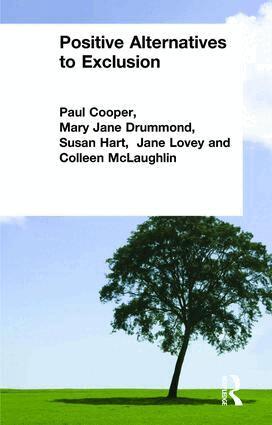
Positive Alternatives to School Exclusion looks at what schools can do to build more harmonious communities and engage students - particularly those at risk of exclusion - more productively in all areas of school life. It describes the Positive Alternatives to School Exclusion Project, a multi-phase, collaborative initiative based at the School of Education, University of Cambridge.Drawing on the perspectives of staff and pupils, the authors provide detailed case studies of the approaches and strategies being adopted in a variety of settings (primary, secondary and FE) to foster inclusion and reduce and prevent exclusion. It also identifies a number of different frameworks, drawn from the case studies, which can be used by practitioners working in other settings to support their own reflection and development work. Particular importance is placed, throughout the book, on valuing the domain of personal experience in the life of the school community. The authors explore this theme in detail, suggesting ways in which it might become a priority focus of further development work in schools.
716 kr
Läs direkt efter köp
Positive Alternatives to School Exclusion looks at what schools can do to build more harmonious communities and engage students - particularly those at risk of exclusion - more productively in all areas of school life. It describes the Positive Alternatives to School Exclusion Project, a multi-phase, collaborative initiative based at the School of Education, University of Cambridge.Drawing on the perspectives of staff and pupils, the authors provide detailed case studies of the approaches and strategies being adopted in a variety of settings (primary, secondary and FE) to foster inclusion and reduce and prevent exclusion. It also identifies a number of different frameworks, drawn from the case studies, which can be used by practitioners working in other settings to support their own reflection and development work. Particular importance is placed, throughout the book, on valuing the domain of personal experience in the life of the school community. The authors explore this theme in detail, suggesting ways in which it might become a priority focus of further development work in schools.
615 kr
Läs direkt efter köp
342 kr
Läs direkt efter köp
128 kr
Läs direkt efter köp