Maryon McDonald - Böcker
Visar alla böcker från författaren Maryon McDonald. Handla med fri frakt och snabb leverans.
6 produkter
6 produkter
2 103 kr
Skickas inom 10-15 vardagar
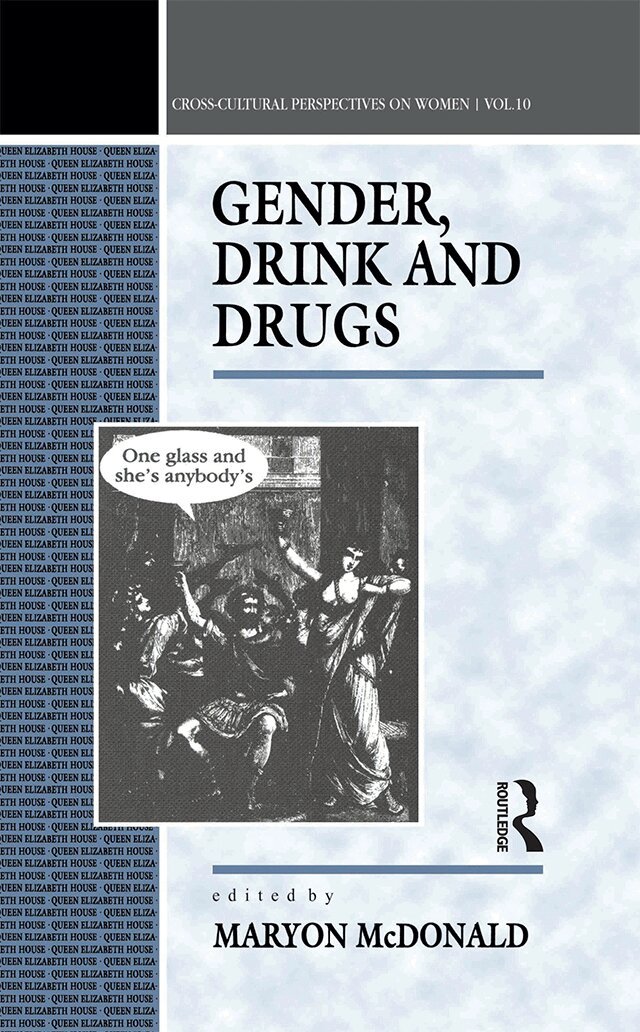
Why do so many people feel compelled to drink alcohol or take drugs? And why do so many men drink and so many women refrain? Using ideas from social anthropology, this book attempts to provide a novel answer to these questions. The introduction surveys both gender and addiction. It points out that we cannot say what men or women are really like, in any culturally innocent sense, for gender is always, even in the realm of biology, a cultural matter. The ethnographic chapters, ranging from Ancient Rome to modern Japan, similarly suggest how any substance - from alcohol to tea to heroin - inevitably takes its meaning or reality in the cultural system in which it exists.This book will be of interest to medical anthropologists, medical sociologists, anyone with an interest in the contemporary direction of anthropology as well as those working in the fields of alcohol and addiction.
580 kr
Skickas inom 10-15 vardagar
Why do so many people feel compelled to drink alcohol or take drugs? And why do so many men drink and so many women refrain? Using ideas from social anthropology, this book attempts to provide a novel answer to these questions. The introduction surveys both gender and addiction. It points out that we cannot say what men or women are really like, in any culturally innocent sense, for gender is always, even in the realm of biology, a cultural matter. The ethnographic chapters, ranging from Ancient Rome to modern Japan, similarly suggest how any substance - from alcohol to tea to heroin - inevitably takes its meaning or reality in the cultural system in which it exists.This book will be of interest to medical anthropologists, medical sociologists, anyone with an interest in the contemporary direction of anthropology as well as those working in the fields of alcohol and addiction.
427 kr
Skickas inom 3-6 vardagar
Overall, the volume is well written and free of unnecessary jargon. Accordingly, it would be very useful for graduate-level courses in medical anthropology, and well suited to sociocultural graduate courses...[It] provides important new theoretical insights on the body and embodiment for a wide readership, the books is an excellent choice for use in teaching. Medical Anthropology Quarterly Social Bodies and most of its individual contributions are compelling, well written, and thought-provoking. One impressive feature of the book is its juxtaposition of anthropological sub-fields (and related fields) that conceptualize what bodies and their constituent parts are, do, and represent in radically different ways. JRAI ...a tightly conceived and interlinked collection sampling some of the best work in contemporary anthropology on the body...Social Bodies is short but rich. The editorial and chapters interrelate well. As a 'whole', it left me challenged by its ideas and ethnography.Anthropology in Action A proliferation of press headlines, social science texts and "ethical" concerns about the social implications of recent developments in human genetics and biomedicine have created a sense that, at least in European and American contexts, both the way we treat the human body and our attitudes towards it have changed. This volume asks what really happens to social relations in the face of new types of transaction - such as organ donation, forensic identification and other new medical and reproductive technologies - that involve the use of corporeal material. Drawing on comparative insights into how human biological material is treated, it aims to consider how far human bodies and their components are themselves inherently "social." The case studies - ranging from animal-human transformations in Amazonia to forensic reconstruction in post-conflict Serbia and the treatment of Native American specimens in English museums - all underline that, without social relations, there are no bodies but only "human remains."The volume gives us new and striking ethnographic insights into bodies as sociality, as well as a potentially powerful analytical reconsideration of notions of embodiment. It makes a novel contribution, too, to "science and society" debates. Helen Lambert is Reader in Medical Anthropology at the University of Bristol, U.K. She has done fieldwork in India and the UK and her research interests include anthropology and public health, HIV, Indian medical traditions, gender and relatedness in South Asia, and notions of evidence. She has numerous publications in the anthropology of India and medical anthropology and is currently working on bonesetters and marginal medicine in India. She contributed the chapter on 'New medical anthropology' to the SAGE Handbook of Social Anthropology (ASA/Sage 2012). Maryon McDonald is Fellow in Social Anthropology at Robinson College, Cambridge, UK. Her research interests include nationalism and supranationalism, medical anthropology, the EU and questions of accountability; her fieldwork has been conducted in France, in EU institutions, and in the UK.She has published on both the anthropology of Europe and medical anthropology, and has contributed the overview 'Medical Anthropology and Anthropological Studies of Science' to Kockel et al (eds.) A Companion to the Anthropology of Europe (2012, Wiley-Blackwell). She is currently completing a large Leverhulme-funded project examining changing perceptions of 'the body.'
2 044 kr
Skickas inom 10-15 vardagar
These essays examine the importance of historical consicousness and the role of historiography in ‘ethnic’ situations, exploring the many ways in which ethnic groups select history, write or rewrite it, rescue appropriate or ignore it, forget or traduce it. Drawing on expert knowledge of regions ranging from the Amazon to contemporary Germany, the contributors bring anthropological and historical understanding to answer these questions, and investigate major topics such as the relationship between ethnic, national and state identifications, and the cultural work of creating them. Examples include Afrikaaners and Northern Ireland Protestants, as well as Mormons and Catalans. Bringing together a variety of themes that have recently become the focus of study – ethnicity, the uses and nature of history and the likelihood of objectivity in historical telling – the book will be of great interest ot students in the social sciences, anthropology, politics, history and international relations.
683 kr
Skickas inom 10-15 vardagar
These essays examine the importance of historical consicousness and the role of historiography in ‘ethnic’ situations, exploring the many ways in which ethnic groups select history, write or rewrite it, rescue appropriate or ignore it, forget or traduce it. Drawing on expert knowledge of regions ranging from the Amazon to contemporary Germany, the contributors bring anthropological and historical understanding to answer these questions, and investigate major topics such as the relationship between ethnic, national and state identifications, and the cultural work of creating them. Examples include Afrikaaners and Northern Ireland Protestants, as well as Mormons and Catalans. Bringing together a variety of themes that have recently become the focus of study – ethnicity, the uses and nature of history and the likelihood of objectivity in historical telling – the book will be of great interest ot students in the social sciences, anthropology, politics, history and international relations.
1 956 kr
Skickas inom 3-6 vardagar
A proliferation of press headlines, social science texts and “ethical” concerns about the social implications of recent developments in human genetics and biomedicine have created a sense that, at least in European and American contexts, both the way we treat the human body and our attitudes towards it have changed.This volume asks what really happens to social relations in the face of new types of transaction – such as organ donation, forensic identification and other new medical and reproductive technologies - that involve the use of corporeal material. Drawing on comparative insights into how human biological material is treated, it aims to consider how far human bodies and their components are themselves inherently “social.”The case studies – ranging from animal-human transformations in Amazonia to forensic reconstruction in post-conflict Serbia and the treatment of Native American specimens in English museums – all underline that, without social relations, there are no bodies but only “human remains.” The volume gives us new and striking ethnographic insights into bodies as sociality, as well as a potentially powerful analytical reconsideration of notions of embodiment. It makes a novel contribution, too, to “science and society” debates.