Marzio Barbagli - Böcker
Visar alla böcker från författaren Marzio Barbagli. Handla med fri frakt och snabb leverans.
3 produkter
3 produkter
Family Life in the Long Nineteenth Century, 1789-1913
The History of the European Family: Volume 2
Häftad, Engelska, 2012
700 kr
Skickas inom 5-8 vardagar
This second of three extraordinary volumes on the history of the family in Europe focuses on family life and the forces that shaped it from the French Revolution to the First World War. The political and economic forces that transformed Europe in these years had a tremendous impact on family life. The contributors to the book examine the changing life experiences of ordinary people from a variety of perspectives and provide new keys to understanding the nature of the emerging modern European family.How did industrialization, new technology, the growth of cities, and the revolution in transport and communication alter daily life? How did the family—the vital social unit that determined not only how and where people lived, but often where they worked—adapt to the demands of the new economy? The contributors explore these questions and more, illuminating the changes the nineteenth century brought about in the family and uncovering a fascinating diversity of family forms and family relations in different parts of Europe and distinguishing different social classes.
862 kr
Skickas inom 7-10 vardagar
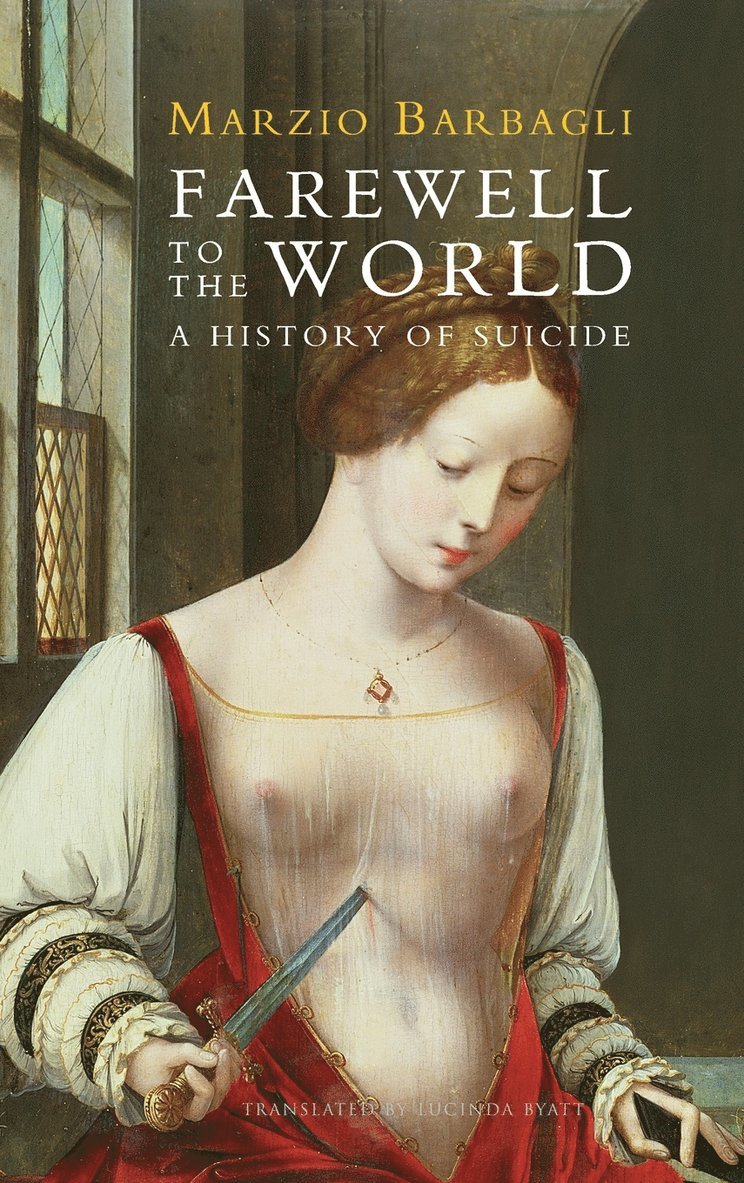
What drives a person to take his or her own life? Why would an individual be willing to strap a bomb to himself and walk into a crowded marketplace, blowing himself up at the same time as he kills and maims the people around him? Does suicide or ‘voluntary death’ have the same meaning today as it had in earlier centuries, and does it have the same significance in China, India and the Middle East as it has in the West? How should we understand this distressing, often puzzling phenomenon and how can we explain its patterns and variations over time?In this wide-ranging comparative study, Barbagli examines suicide as a socio-cultural, religious and political phenomenon, exploring the reasons that underlie it and the meanings it has acquired in different cultures throughout the world. Drawing on a vast body of research carried out by historians, anthropologists, sociologists, political scientists and psychologists, Barbagli shows that a satisfactory theory of suicide cannot limit itself to considering the two causes that were highlighted by the great French sociologist Émile Durkheim – namely, social integration and regulation. Barbagli proposes a new account of suicide that links the motives for and significance attributed to individual actions with the people for whom and against whom individuals take their lives.This new study of suicide sheds fresh light on the cultural differences between East and West and greatly increases our understanding of an often-misunderstood act. It will be the definitive history of suicide for many years to come.
402 kr
Skickas inom 5-8 vardagar
What drives a person to take his or her own life? Why would an individual be willing to strap a bomb to himself and walk into a crowded marketplace, blowing himself up at the same time as he kills and maims the people around him? Does suicide or ‘voluntary death’ have the same meaning today as it had in earlier centuries, and does it have the same significance in China, India and the Middle East as it has in the West? How should we understand this distressing, often puzzling phenomenon and how can we explain its patterns and variations over time?In this wide-ranging comparative study, Barbagli examines suicide as a socio-cultural, religious and political phenomenon, exploring the reasons that underlie it and the meanings it has acquired in different cultures throughout the world. Drawing on a vast body of research carried out by historians, anthropologists, sociologists, political scientists and psychologists, Barbagli shows that a satisfactory theory of suicide cannot limit itself to considering the two causes that were highlighted by the great French sociologist Émile Durkheim – namely, social integration and regulation. Barbagli proposes a new account of suicide that links the motives for and significance attributed to individual actions with the people for whom and against whom individuals take their lives.This new study of suicide sheds fresh light on the cultural differences between East and West and greatly increases our understanding of an often-misunderstood act. It will be the definitive history of suicide for many years to come.