Massimiliano Cali - Böcker
Visar alla böcker från författaren Massimiliano Cali. Handla med fri frakt och snabb leverans.
4 produkter
4 produkter
227 kr
Skickas inom 10-15 vardagar
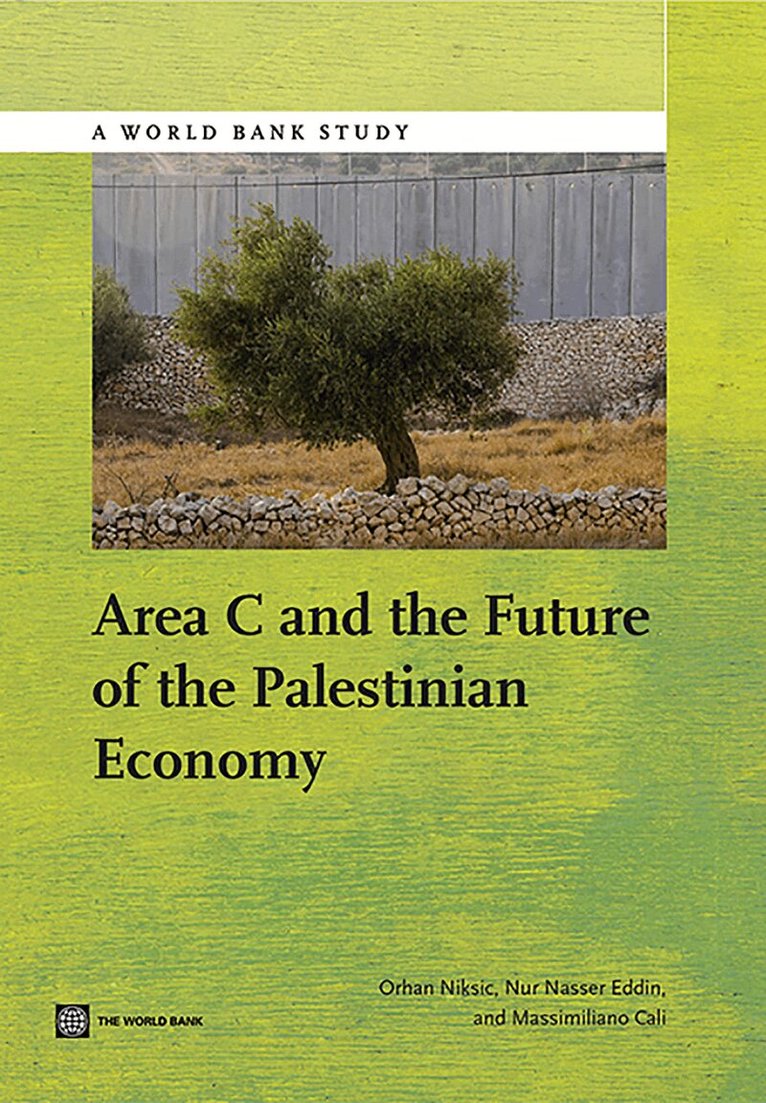
This is the first report to systematically evaluate and quantify the economic potential of Area C, which constitutes approximately 61 percent of the West Bank. The report reveals that lifting the restrictions on economic activity in Area C could have a large positive impact on Palestinian GDP, public finances, and employment prospects. Among other things, access to economic activity in Area C is expected to be a key prerequisite for building a sustainable Palestinian economy. However, full potential of the Area C could be materialised only if other restrictions on free movement of goods, labour and capital are removed and the overall business environment in Palestinian territories has become more attractive. The economic significance of Area C lies in that it is the only contiguous territory in the West Bank, which renders it indispensable to connective infrastructure development across the West Bank, and a relative abundance of natural resources situated therein. Area C offers large potential for the development of several sectors of the Palestinian economy: agriculture, stone and mineral processing, cosmetics, construction, tourism, and telecommunications. The report shows that access to economic activity in Area C could increase the Palestinian GDP by as much as 35 percent, the majority of this impact would stem from agriculture and Dead Sea minerals processing industries, as well as the multiplier effect, which has been estimated at 1.5. Although the importance of building connective infrastructure through Area C is discussed in the report, the quantification of this impact is beyond the scope of this report. An increase in GDP of 35 percent, although thought to be a conservative estimate, would be expected to result in at least $800 million increase in tax revenues for the Palestinian authority, which would drastically reduce its dependence on donor aid for financing chronic budget deficits.
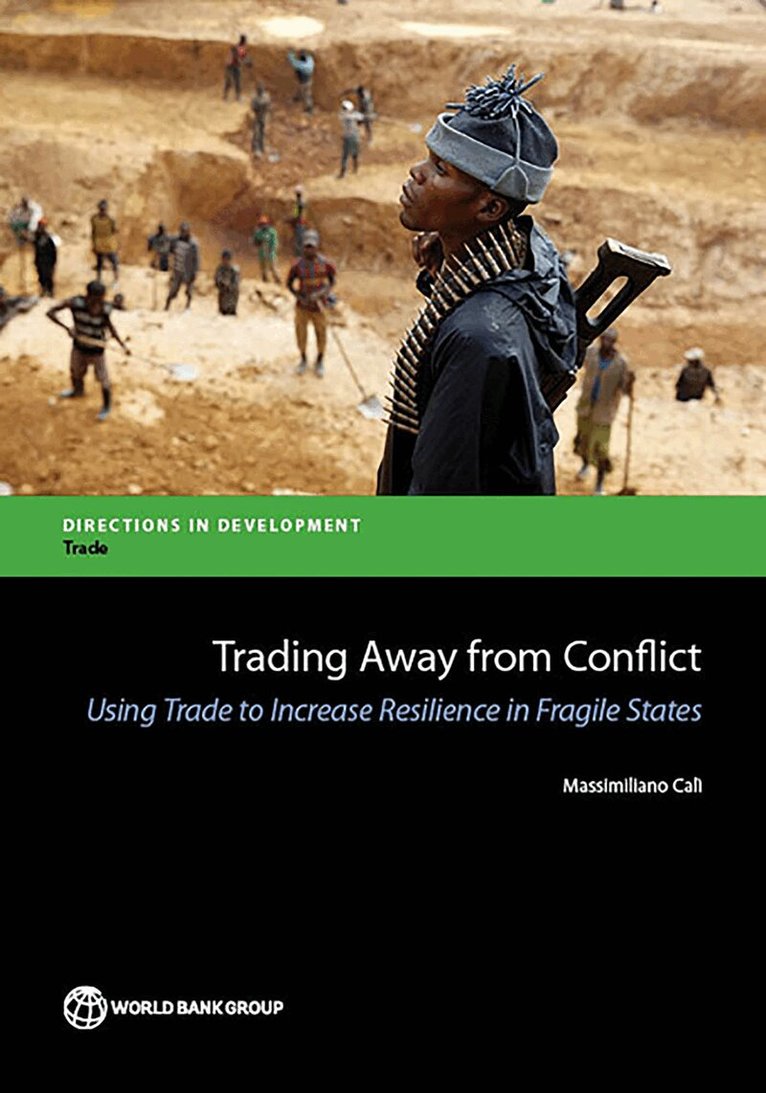
Trading Away from Conflict
Using Trade to Increase Resilience in Fragile States
Häftad, Engelska, 2014
274 kr
Skickas inom 10-15 vardagar
While economic growth in developing countries over the last ten years has lifted more people out of poverty than in any previous time, more than one billion people still live in countries affected by violent conflict. Conflict weakens governance, undermines economic development and threatens both national and regional stability. Trade shocks, in particular, can have widely varying impacts on conflict. This book sets out to empirically test these linkages between trade shocks and conflict via cross-country and intra-country analysis.
Del 89 - Commonwealth Economic Paper Series
Supporting Investment and Private Sector Development in Times of Crisis
Strategies for Small States
Häftad, Engelska, 2010
356 kr
Skickas inom 10-15 vardagar
Small states are vulnerable to the effects of the global financial crisis because of their high dependence on foreign direct investment, the importance for them of export earnings, and high levels of remittances and aid flows. The crisis thus also in turn affects investment and private sector development. This Economic Paper examines the effects of the crisis on three countries: Mauritius, St Lucia and Vanuatu. Only Vanuatu is relatively resilient so far, with the effects on investment in Mauritius and St Lucia being dramatic, though affecting different sectors in each country. The policy responses followed also differ markedly. The authors demonstrate once again the vulnerability of small states to shocks, and emphasise that they are often at the receiving end of global policies, particularly so in the context of the global financial crisis. They argue that more could be done to clarify and address the greater vulnerability of many small states.
Effectiveness of Aid for Trade in Small and Vulnerable Economies
An Empirical Assessment
Häftad, Engelska, 2011
426 kr
Skickas inom 10-15 vardagar
This Economic Paper presents the first analyses of the use and effectiveness of Aid for Trade (AfT), the initiative to help developing countries boost their involvement in the global economy, for small and vulnerable economies (SVEs). It examines in detail the extent to which SVEs have been able to access AfT funds and to what extent this assistance has helped them to improve their trade performance.Well designed trade-related assistance will help SVEs face the challenges posed by their characteristics, particularly when the prospects for small states have been deteriorating further due to preference erosion and the emergence of new and large competitors.