Massimo Rosati – författare
629 kr
Skickas inom 10-15 vardagar
629 kr
Skickas inom 10-15 vardagar
2 206 kr
Skickas inom 10-15 vardagar
485 kr
Skickas inom 3-6 vardagar
768 kr
Skickas inom 10-15 vardagar
730 kr
Läs direkt efter köp
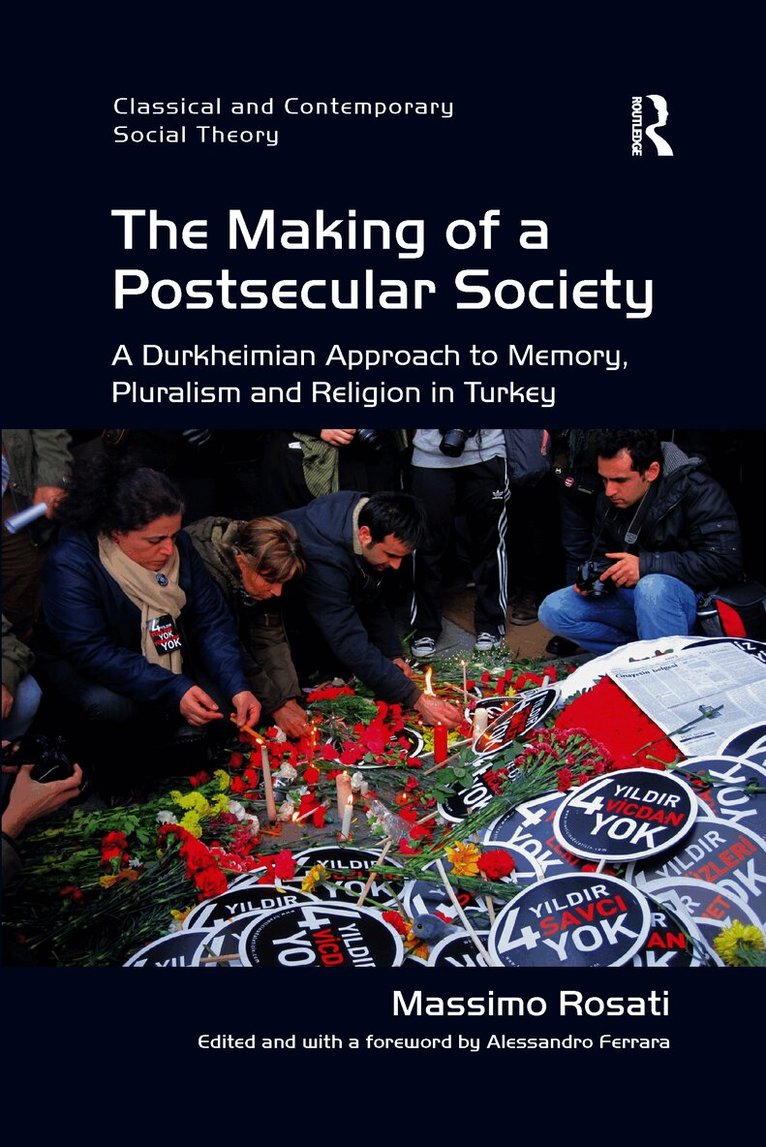
Drawing on the thought of Durkheim, this volume focuses on societal changes at the symbolic level to develop a new conceptualisation of the emergence of postsecular societies. Neo-Durkheimian categories are applied to the case of Turkey, which in recent years has shifted from a strong Republican and Kemalist view of secularism to a more Anglo-Saxon perspective. Turkish society thus constitutes an interesting case that blurs modernist distinctions between the secular and the religious and which could be described as ’postsecular’. Presenting three symbolic case studies - the enduring image of the founder of the Republic Atatürk, the contested site of Ayasofia, and the remembering and commemoration of the murdered journalist Hrant Dink - The Making of a Postsecular Society analyses the cultural relationship that the modern Republic has always had with Europe, considering the possible implications of the Turkish model of secularism for a specifically European self-understanding of modernity. Based on a rigorous construction of theoretical categories and on a close scrutiny of the common challenges confronting Europe and its Turkish neighbour long considered ’other’ with regard to the accommodation of religious difference, this book sheds light on the possibilities for Europe to find new ways of arranging the relationship between the secular and the religious. As such, it will appeal to scholars of social theory, the sociology of religion, secularisation and religious difference, and social change.
730 kr
Läs direkt efter köp
Drawing on the thought of Durkheim, this volume focuses on societal changes at the symbolic level to develop a new conceptualisation of the emergence of postsecular societies. Neo-Durkheimian categories are applied to the case of Turkey, which in recent years has shifted from a strong Republican and Kemalist view of secularism to a more Anglo-Saxon perspective. Turkish society thus constitutes an interesting case that blurs modernist distinctions between the secular and the religious and which could be described as ’postsecular’. Presenting three symbolic case studies - the enduring image of the founder of the Republic Atatürk, the contested site of Ayasofia, and the remembering and commemoration of the murdered journalist Hrant Dink - The Making of a Postsecular Society analyses the cultural relationship that the modern Republic has always had with Europe, considering the possible implications of the Turkish model of secularism for a specifically European self-understanding of modernity. Based on a rigorous construction of theoretical categories and on a close scrutiny of the common challenges confronting Europe and its Turkish neighbour long considered ’other’ with regard to the accommodation of religious difference, this book sheds light on the possibilities for Europe to find new ways of arranging the relationship between the secular and the religious. As such, it will appeal to scholars of social theory, the sociology of religion, secularisation and religious difference, and social change.
682 kr
Läs direkt efter köp
682 kr
Läs direkt efter köp
892 kr
Läs direkt efter köp
892 kr
Läs direkt efter köp
2 220 kr
Skickas inom 10-15 vardagar
2 151 kr
Skickas inom 10-15 vardagar
1 903 kr
Skickas inom 3-6 vardagar
275 kr
Läs direkt efter köp
Until recently the subject of suffering and evil was neglected in the sociological world and was almost absent in Durkheimian studies as well. This book aims to fill the gap, with particular reference to the Durkheimian tradition, by exploring the different meanings that the concepts of evil and suffering have in Durkheim''s works, together with the general role they play in his sociology. It also examines the meanings and roles of these concepts in relation to suffering and evil in the work of other authors within the group of the Année sociologique up until the beginning of World War II. Finally, the Durkheimian legacy in its wider aspects is assessed, with particular reference to the importance of the Durkheimian categories in understanding and conceptualizing contemporary forms of evil and suffering.