Matt Goldish - Böcker
Visar alla böcker från författaren Matt Goldish. Handla med fri frakt och snabb leverans.
6 produkter
6 produkter
708 kr
Skickas inom 10-15 vardagar
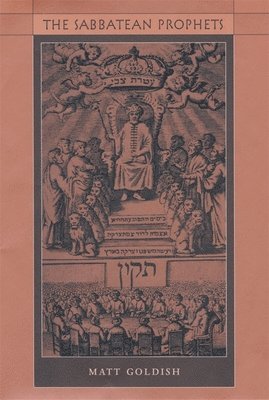
In the mid-seventeenth century, Shabbatai Zvi, a rabbi from Izmir, claimed to be the Jewish messiah, and convinced a great many Jews to believe him. The movement surrounding this messianic pretender was enormous, and Shabbatai's mission seemed to be affirmed by the numerous supporting prophecies of believers. The story of Shabbatai and his prophets has mainly been explored by specialists in Jewish mysticism. Only a few scholars have placed this large-scale movement in its social and historical context.Matt Goldish shifts the focus of Sabbatean studies from the theology of Lurianic Kabbalah to the widespread seventeenth-century belief in latter-day prophecy. The intense expectations of the messiah in Christianity, Judaism, and Islam form the necessary backdrop for understanding the success of Sabbateanism. The seventeenth century was a time of deep intellectual and political ferment as Europe moved into the modern era. The strains of the Jewish mysticism, Christian millenarianism, scientific innovation, and political transformation all contributed to the development of the Sabbatean movement.By placing Sabbateanism in this broad cultural context, Goldish integrates this Jewish messianic movement into the early modern world, making its story accessible to scholars and students alike.
325 kr
Skickas inom 7-10 vardagar
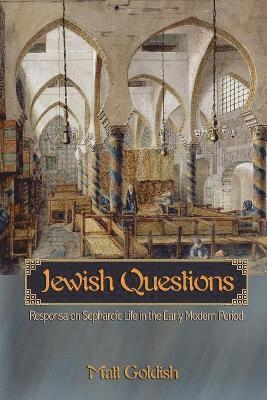
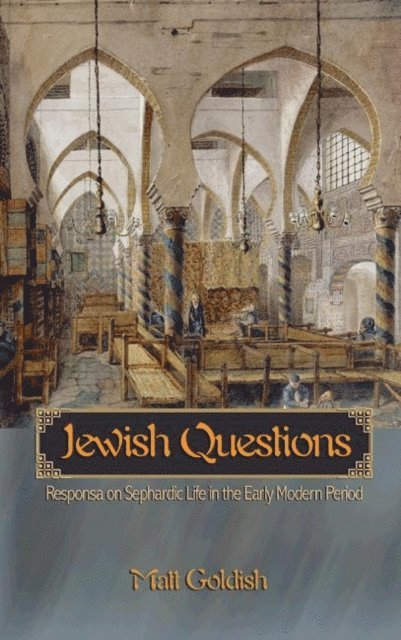
In Jewish Questions, Matt Goldish introduces English readers to the history and culture of the Sephardic dispersion through an exploration of forty-three responsa--questions about Jewish law that Jews asked leading rabbis, and the rabbis' responses. The questions along with their rabbinical decisions examine all aspects of Jewish life, including business, family, religious issues, and relations between Jews and non-Jews. Taken together, the responsa constitute an extremely rich source of information about the everyday lives of Sephardic Jews. The book looks at questions asked between 1492--when the Jews were expelled from Spain--and 1750. Originating from all over the Sephardic world, the responsa discuss such diverse topics as the rules of conduct for Ottoman Jewish sea traders, the trials of an ex-husband accused of a robbery, and the rights of a sexually abused wife. Goldish provides a sizeable introduction to the history of the Sephardic diaspora and the nature of responsa literature, as well as a bibliography, historical background for each question, and short biographies of the rabbis involved.Including cases from well-known communities such as Venice, Istanbul, and Saloniki, and lesser-known Jewish enclaves such as Kastoria, Ragusa, and Nablus, Jewish Questions provides a sense of how Sephardic communities were organized, how Jews related to their neighbors, what problems threatened them and their families, and how they understood their relationship to God and the Jewish people.
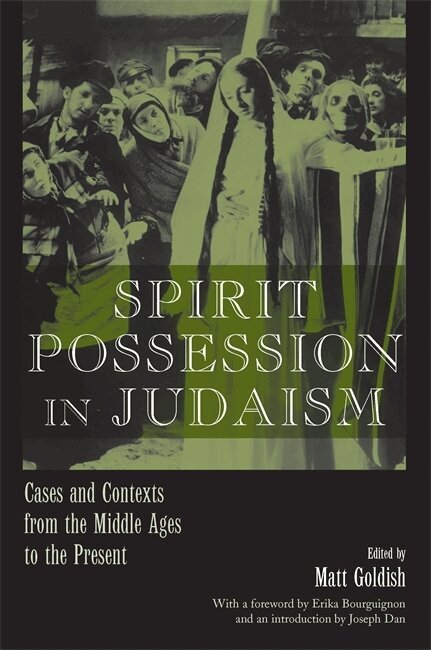
Spirit Possession in Judaism
Cases and Contexts from the Middle Ages to the Present
Inbunden, Engelska, 2003
515 kr
Skickas inom 10-15 vardagar
This extraordinary collection of essays is the first to approach the phenomenon of spirit possession among Jews from a multidisciplinary perspective. What beliefs have Jews held about spirit possession? Have Jewish people believed themselves to be possessed by spirits? If so, what sorts of spirits were they? Have Jews' conceptions of possession been the same as those of their Christian and Muslim neighbors? These are some of the questions addressed in these thirteen essays, which together explore spirit possession in a wide range of temporal and geographic contexts. The phenomena known as spirit possession are both very widespread and very difficult to explain. The late Raphael Patai initiated study of spirit possession as found in the Jewish world in the post-Talmudic period by taking a folkloric and anthropological approach to the subject. Other scholars have opened up new avenues of inquiry through discussions of the topic in connection with Jewish mystical and magical traditions. The essays in this collection expand the variety of approaches to the subject, addressing Jewish possession phenomena from the points of view of religion, mysticism, literature, anthropology, psychology, history, and folklore. Scholarly views and popular traditions, benevolent spirits and malevolent shades, exorcism, social control, messianic implications, madness, literary structure, and a host of other topics are brought into the discussion of spirit possession in Jewish culture. This juxtaposition of approaches among the essays in this volume, some of which analyze the same texts in different ways, creates a broad foundation on which to contemplate the meaning of spirit possession.
Rabbinic Culture and Its Critics
Jewish Authority, Dissent, and Heresy in Medieval and Early Modern Times
Inbunden, Engelska, 2008
582 kr
Skickas inom 10-15 vardagar
2 181 kr
Skickas inom 10-15 vardagar
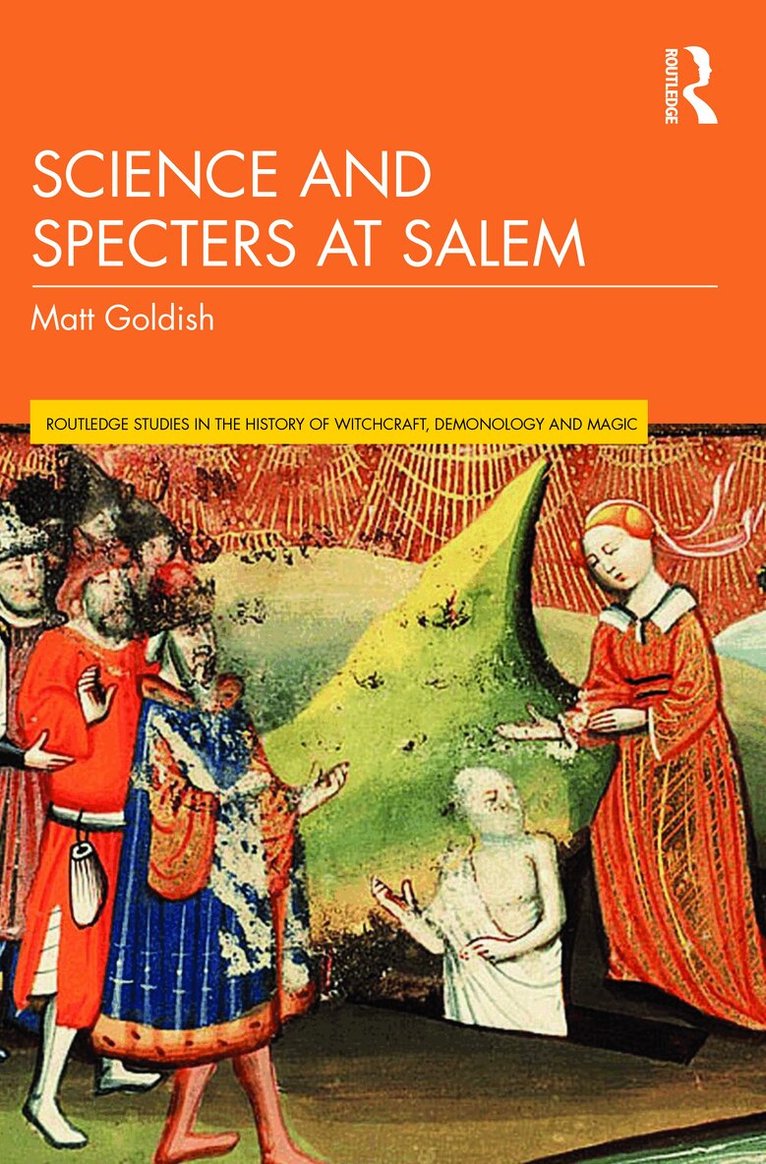
Most studies of the Salem witch trials focus on social history and the dynamics between accused and accusers. Science and Specters at Salem turns instead to the intellectual background of the judges to understand why they accepted controversial types of evidence.The role of judges in a witch trial was central. Goldish argues that in Salem the judges' acceptance of questionable touch tests and spectral evidence was a result of their intellectual commitments. Several of the Salem judges were highly educated, and some of them were adherents of a particular philosophical school in England led by Henry More and Joseph Glanvill which Goldish calls "the anti-Sadducees." He demonstrates how the ideas of these leading thinkers, friends of Robert Boyle and Sir Isaac Newton, could have led to the deaths of twenty accused witches in Salem.This book will interest students and scholars of witch trials, American colonial history, Atlantic history, legal history and early modern Europe, as well as lay readers wanting a better understanding of Salem.
578 kr
Skickas inom 10-15 vardagar
Most studies of the Salem witch trials focus on social history and the dynamics between accused and accusers. Science and Specters at Salem turns instead to the intellectual background of the judges to understand why they accepted controversial types of evidence.The role of judges in a witch trial was central. Goldish argues that in Salem the judges' acceptance of questionable touch tests and spectral evidence was a result of their intellectual commitments. Several of the Salem judges were highly educated, and some of them were adherents of a particular philosophical school in England led by Henry More and Joseph Glanvill which Goldish calls "the anti-Sadducees." He demonstrates how the ideas of these leading thinkers, friends of Robert Boyle and Sir Isaac Newton, could have led to the deaths of twenty accused witches in Salem.This book will interest students and scholars of witch trials, American colonial history, Atlantic history, legal history and early modern Europe, as well as lay readers wanting a better understanding of Salem.