Matt Guardino – författare
Visar alla böcker från författaren Matt Guardino. Handla med fri frakt och snabb leverans.
6 produkter
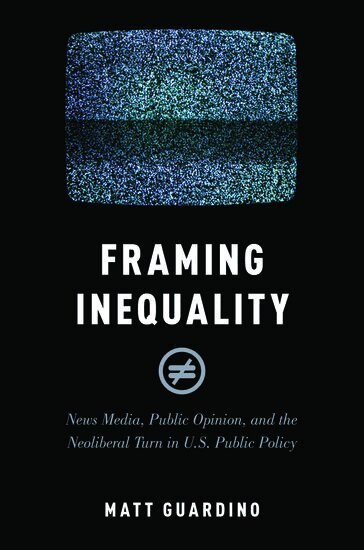
Framing Inequality
News Media, Public Opinion, and the Neoliberal Turn in U.S. Public Policy
Inbunden, 2019
1940 kr
Lägg i varukorg
Neoliberal policy approaches have swept over the American political economy in recent decades. In Framing Inequality, Matt Guardino focuses on the power of corporate news media in shaping how the public understands the pivotal policy debates of this period. Drawing on a wide range of empirical …
Framing Inequality
News Media, Public Opinion, and the Neoliberal Turn in U.S. Public Policy
Häftad, 2019
620 kr
Lägg i varukorg
Neoliberal policy approaches have swept over the American political economy in recent decades. In Framing Inequality, Matt Guardino focuses on the power of corporate news media in shaping how the public understands the pivotal policy debates of this period. Drawing on a wide range of empirical …
Framing Inequality
News Media, Public Opinion, and the Neoliberal Turn in U.S. Public Policy
E-bok, 2019
422 kr
Lägg i varukorg
Neoliberal policy approaches have swept over the American political economy in recent decades. In Framing Inequality , Matt Guardino focuses on the power of corporate news media in shaping how the public understands the pivotal policy debates of this period. Drawing on a wide range of empirical …
Framing Inequality
News Media, Public Opinion, and the Neoliberal Turn in U.S. Public Policy
E-bok, 2019
422 kr
Lägg i varukorg
Neoliberal policy approaches have swept over the American political economy in recent decades. In Framing Inequality , Matt Guardino focuses on the power of corporate news media in shaping how the public understands the pivotal policy debates of this period. Drawing on a wide range of empirical …
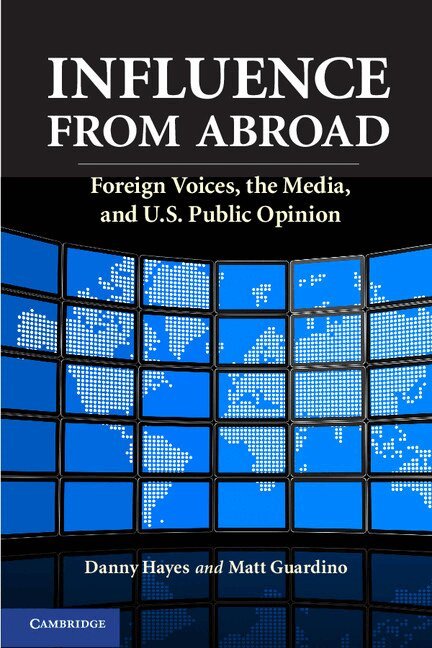
Influence from Abroad
Foreign Voices, the Media, and U.S. Public Opinion
Inbunden, 2013
1019 kr
Lägg i varukorg
In Influence from Abroad, Danny Hayes and Matt Guardino show that United States public opinion about American foreign policy can be shaped by foreign leaders and representatives of international organizations. By studying news coverage, elite debate, and public opinion prior to the Iraq War, the …
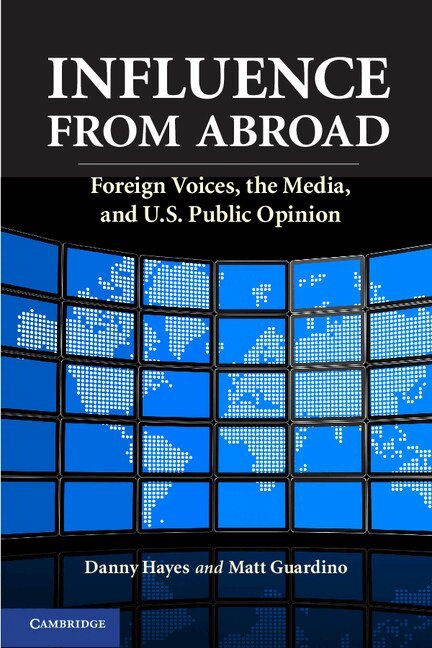
Influence from Abroad
Foreign Voices, the Media, and U.S. Public Opinion
Häftad, 2013
422 kr
Lägg i varukorg
In Influence from Abroad, Danny Hayes and Matt Guardino show that United States public opinion about American foreign policy can be shaped by foreign leaders and representatives of international organizations. By studying news coverage, elite debate, and public opinion prior to the Iraq War, the …