Matthew Alun Ray - Böcker
Visar alla böcker från författaren Matthew Alun Ray. Handla med fri frakt och snabb leverans.
3 produkter
3 produkter
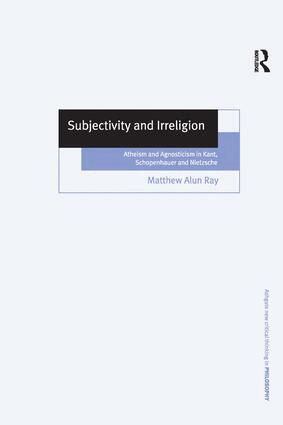
Subjectivity and Irreligion
Atheism and Agnosticism in Kant, Schopenhauer and Nietzsche
Inbunden, Engelska, 2003
2 100 kr
Skickas inom 10-15 vardagar
This book asks specific philosophical questions about the underlying structure of Kant, Schopenhauer and Nietzsche's thoughts on atheism and agnosticism; thoughts that represent one of the most concerted attacks on monotheistic religion in modern philosophy. Yet commentators interested in philosophical atheism have ignored frequently this tradition. Matthew Ray concludes that Kant's moral theology is largely undersupported; Schopenhauer's metaphysical and ethical atheism is flawed in several areas; and Nietzsche's naturalistic attack on Christianity is only partially successful. Taking a critical stance toward the atheistic orthodoxy in modern philosophy, Ray argues that the question of God's existence remains characteristically unresolved in post-Kantian philosophy.
Subjectivity and Irreligion
Atheism and Agnosticism in Kant, Schopenhauer and Nietzsche
Häftad, Engelska, 2016
763 kr
Skickas inom 10-15 vardagar
This book asks specific philosophical questions about the underlying structure of Kant, Schopenhauer and Nietzsche's thoughts on atheism and agnosticism; thoughts that represent one of the most concerted attacks on monotheistic religion in modern philosophy. Yet commentators interested in philosophical atheism have ignored frequently this tradition. Matthew Ray concludes that Kant's moral theology is largely undersupported; Schopenhauer's metaphysical and ethical atheism is flawed in several areas; and Nietzsche's naturalistic attack on Christianity is only partially successful. Taking a critical stance toward the atheistic orthodoxy in modern philosophy, Ray argues that the question of God's existence remains characteristically unresolved in post-Kantian philosophy.
84 kr
Skickas inom 7-10 vardagar
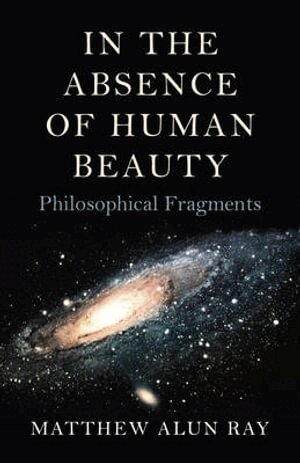
A collection of vivid fragments engaging with ethical and sceptical themes by means of an engagement with several major European thinkers, including Schopenhauer, Nietzsche, Levinas and Wittgenstein.